Helyszín címkék:
Where the Bell Rings: Hungarian School Architecture
Partner content
Article of Hely.hu
What exactly will we be discussing?
- The beginnings of Hungarian school architecture
- The impact of the Reformation and educational reforms on school buildings
- 19th- and 20th-century school construction programs and the era of school palaces
- The transformation of school architecture in the 20th century
The beginnings and development
According to tradition, the first Hungarian school was founded in 996 – before the turn of the millennium and the founding of the state – on St. Martin’s Hill, in what is now called Pannonhalma.
Interestingly, one of Hungary’s oldest surviving educational buildings is not a school, but a “staff residence.”
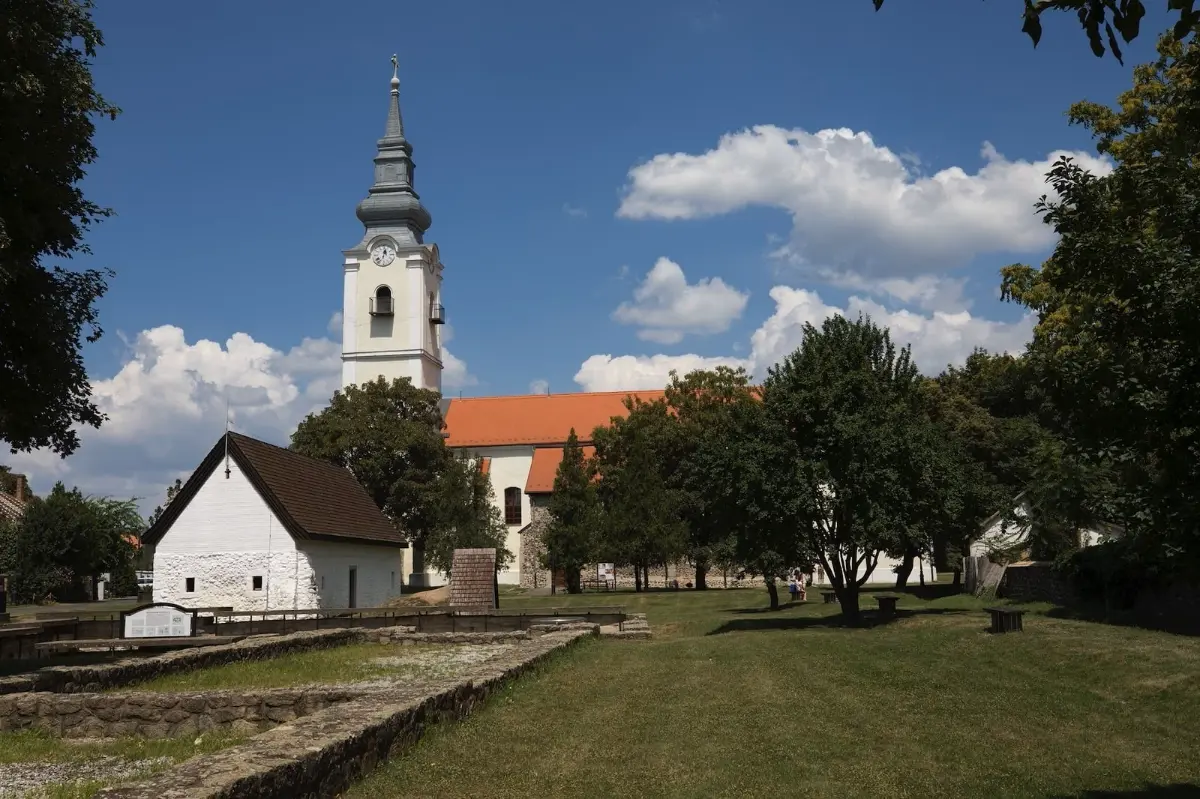
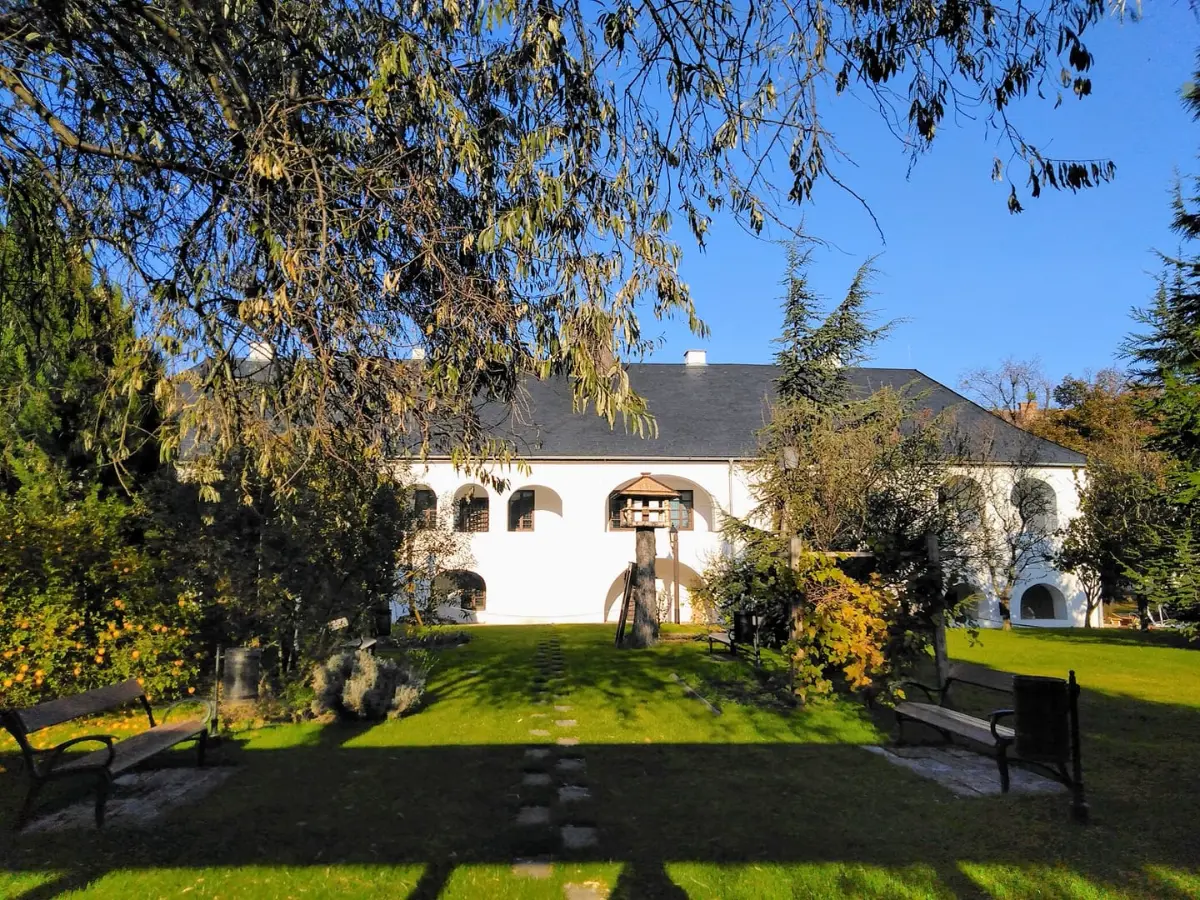
In the center of Pásztó – a town of considerable importance in the Middle Ages – stands a beautiful residential building featuring Gothic details. This is the Schoolmaster’s House; the “scola magistert” who lived there is first mentioned in a will from 1428, when a horse was bequeathed to the undoubtedly upright teacher. The building, situated next to the church – which itself features significant medieval details – served as the official residence of the cantor-teacher of Pásztó from the Middle Ages until 1968(!). It was then that the archaeological excavation and reconstruction of the building began, resulting in a structure that faithfully reflects its medieval form.
In the Middle Ages, in addition to monastic schools, educational institutions operated primarily in towns, especially where trade was vibrant, since “marketable” knowledge was needed in these places.
By this time, there was already a great demand for higher education; it is well known that Hungary’s first university was founded in Pécs in 1367 by King Louis the Great. Unfortunately, the university was unable to flourish, but later on, other Hungarian monarchs also made attempts to develop higher education; for example, King Matthias founded a university in Pozsony (currently: Bratislava). In addition, Hungarian students were keen to attend universities abroad; the yearbooks of Prague, Kraków, Vienna, and Padua contain numerous Hungarian names dating back to the 14th and 15th centuries.
The momentum of the Reformation
The Reformation and the Counter-Reformation brought about a truly great boom in education,
as the issue of schooling effectively became a central concern.
It was during this period that the Reformed diocesan colleges – Hungary’s legendary secondary educational institutions – were established. Debrecen, Sárospatak, and Pápa produced a whole series of outstanding figures for the Hungarian people.
During the Counter-Reformation, the Jesuits, followed by the Piarists, established their school networks in the larger cities.
Naturally, these buildings are architecturally more significant, as both orders were backed by very strict central administration;
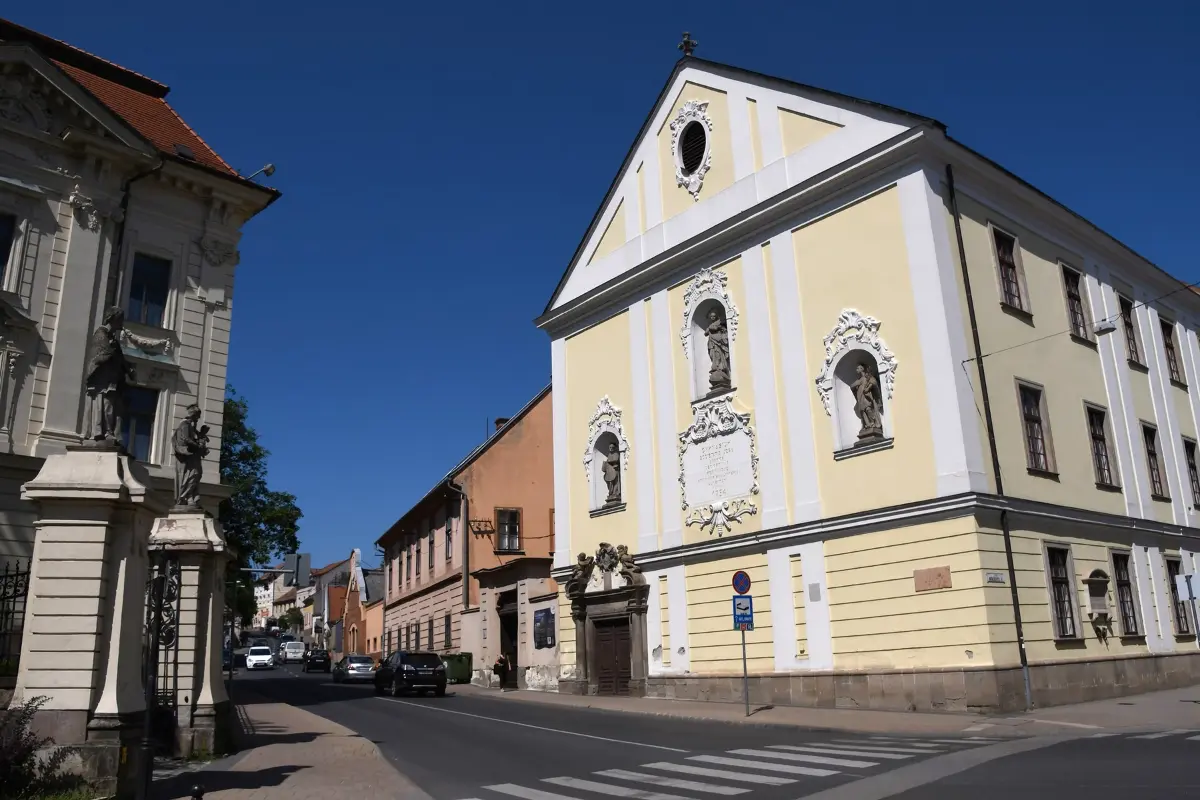
all plans had to be approved by the order’s Roman headquarters, regardless of whether they were intended for Peru, Poland, or even Cluj-Napoca. Moreover, the construction projects received significant support from the monarch and the recatholicized nobility. The monks often arrived alongside the liberating armies; it is no wonder that as early as the year of the reconquest, they founded high schools in Buda, Székesfehérvár, Pécs, and Eger. In the latter city, the Jesuit Order created a particularly beautiful complex: next to the imposing church and the order’s house (which has since been demolished), across the side street leading into the main street, stands the high school’s elaborately shaped side wall.
Just as in church architecture, the Toleration Edict opened up opportunities for Protestant denominations to realize their architectural ambitions in school construction, as well. International ties were strong here, too, though naturally not with Rome: the Sárospatak College received funding from Swiss co-religionists (hence the name of the old college: Berna-sor), while the Késmárk Evangelical Lyceum (located in today’s Kežmarok) was built with German and Swedish donations.
The highly influential *Ratio Educationis*
Naturally, more serious shortcomings were evident in public education. The main reason for this was that in peasant communities, children were viewed primarily as a labour force; thus, Hungarian educational authorities in the 18th and 19th centuries made serious efforts to extend compulsory schooling, at least to those periods when agricultural work was not taking place. In this area as well – as in so many others – significant progress was made during the reign of Maria Theresa.
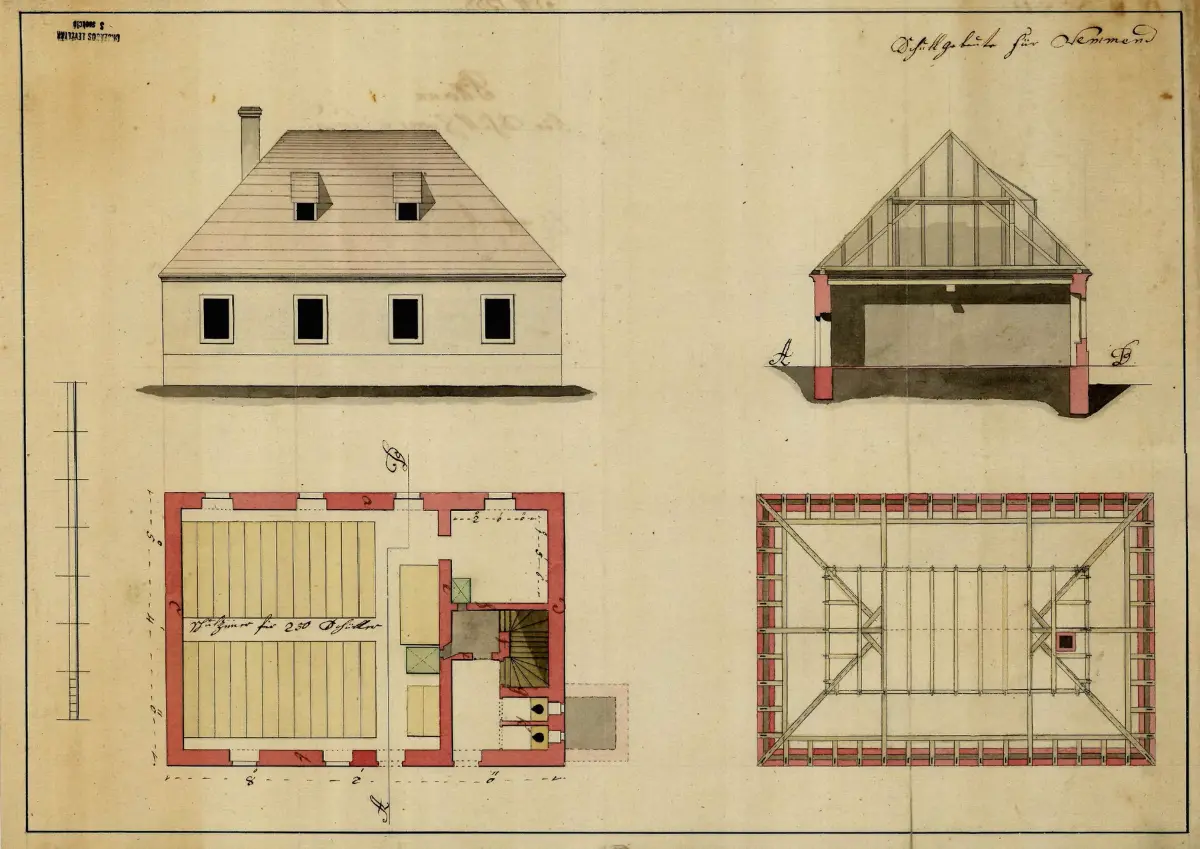
The *ratio educationis*, issued in 1777, not only laid down educational principles that remain relevant to this day but also regulated the design and even the furnishing of school buildings.
The decree had a tremendous impact: hundreds of village school buildings were constructed in the 18th century. These simple, one-room schools seem rather basic when viewed from today’s perspective, but they helped significantly increase the percentage of the population who could read and write.
On to the high school graduation exam!
Somewhat paradoxically, it was the Bach era following the War of Independence that gave Hungarian education another major boost. It was then, in 1851, that the high school graduation exam was introduced based on the Austrian model, and work began on establishing the “realschule” system. This type of school, also of German origin, was similar to the gymnasium, but unlike the gymnasium, the majority of its curriculum consisted not of Ancient Greek, Latin, and history, but of the natural sciences.
THE MAJOR REAL SCHOOLS THAT OPENED IN LARGER CITIES PLAYED A SIGNIFICANT ROLE IN THE EXPLOSIVE DEVELOPMENT OF HUNGARIAN ARCHITECTURE, INDUSTRY, AND THE NATURAL SCIENCES.
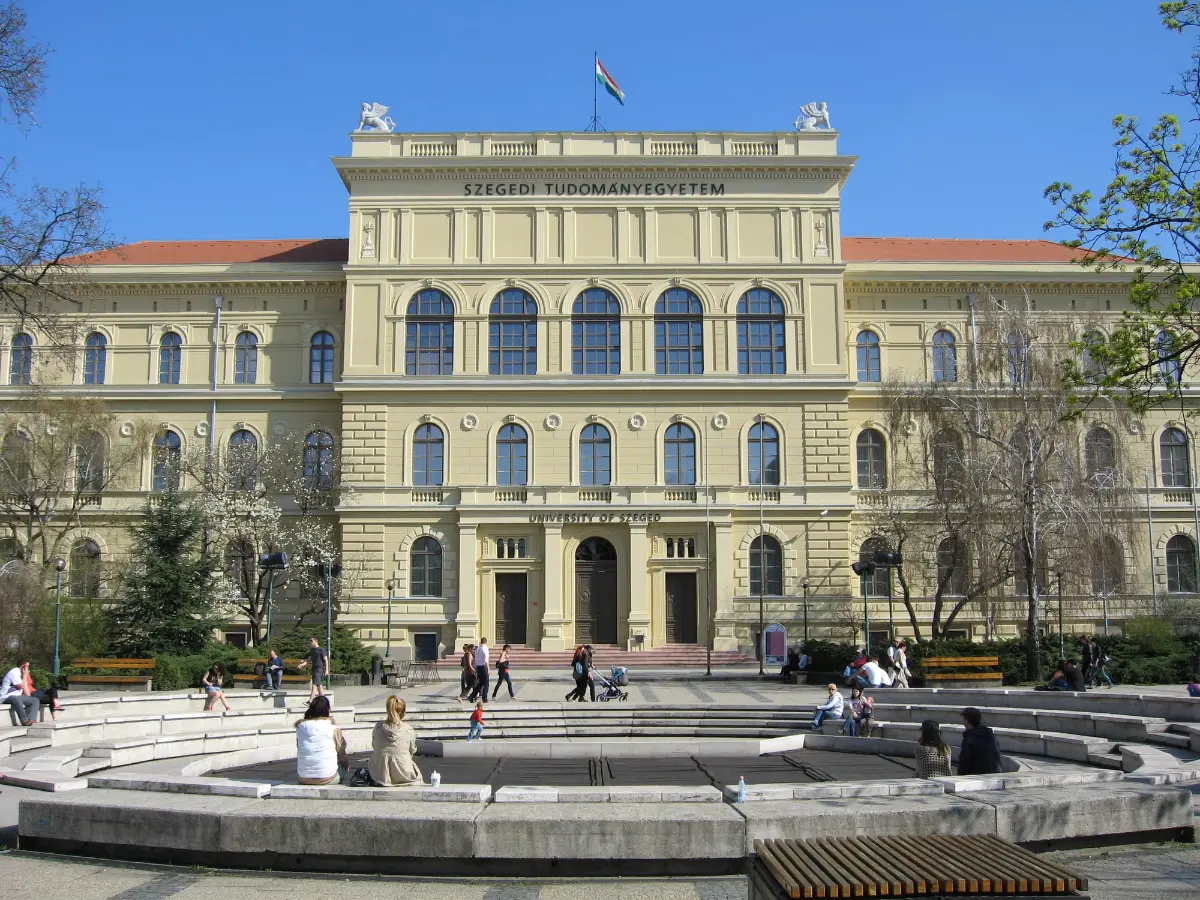
Moreover, these buildings were considered prestigious state projects. It is no coincidence that in Szeged and Pécs, the main university buildings are housed in the former secondary schools, but the Toldy Ferenc High School, the Eötvös József High School, and the Révai High School in Győr were also built as “secondary schools.”
School palaces in the heart of cities
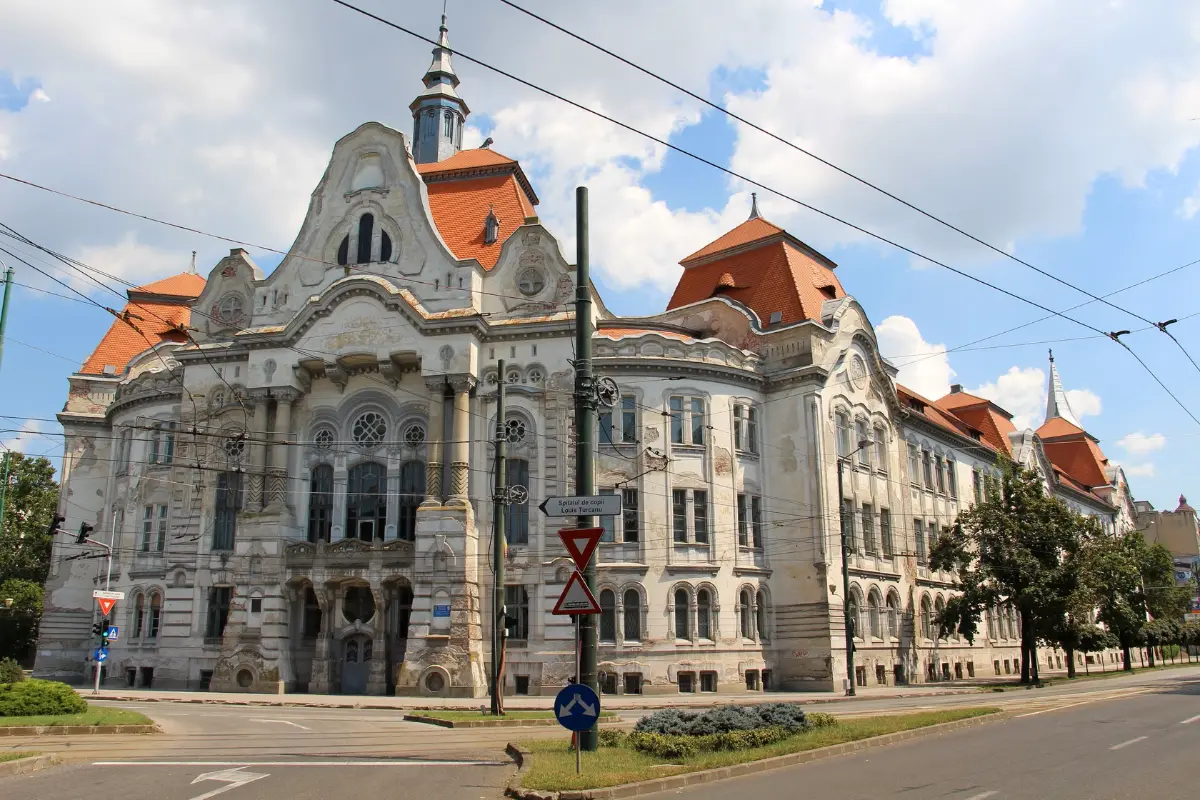
The “happy times of peace” were also the era of school palaces. These imposing buildings defined the cityscape and, in many cases, even shaped the layout of their surrounding neighbourhoods. The churches were not idle either; it was during this time that the Reformed colleges in Pápa and Kecskemét, the Unitarian college in Cluj-Napoca, and the Piarist high schools in Timișoara and Szeged received new buildings. The high schools, science schools, and commercial and industrial schools built during this period shaped the cities of historic Hungary just as much as the courthouses, theatres, and city halls constructed at the same time.
From Kaposvár to Marosvásárhely (Târgu Mureș), from Brassó (Brașov) to Pozsony (Bratislava), thousands – and this is no exaggeration – of school buildings were constructed in city centres,
along the roads leading from the train stations.
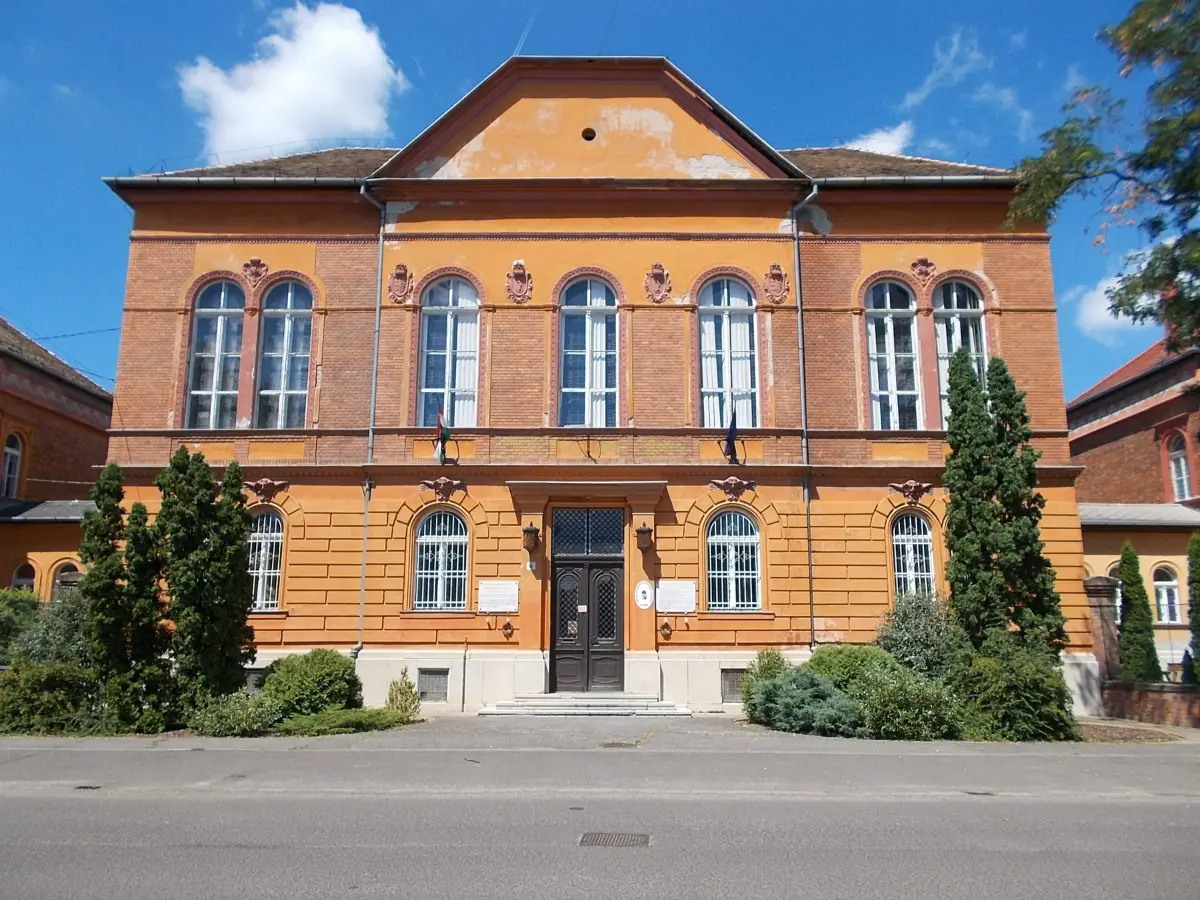
Kecskemét, for example, built its new school complex to mark the end of the main axis of the new residential district established at that time.
School-building frenzy: The Bárczy and Sváb Programs
In cities experiencing explosive growth – and, of course, Budapest in particular – the issue of schools had to be addressed through systematic programs. Mayor István Bárczy launched his rental housing and school construction program in 1909,
under which 36(!) schools and 24 kindergartens(!) were built in just three years(!), and an additional 15 temporary school buildings were erected alongside the rental housing program.
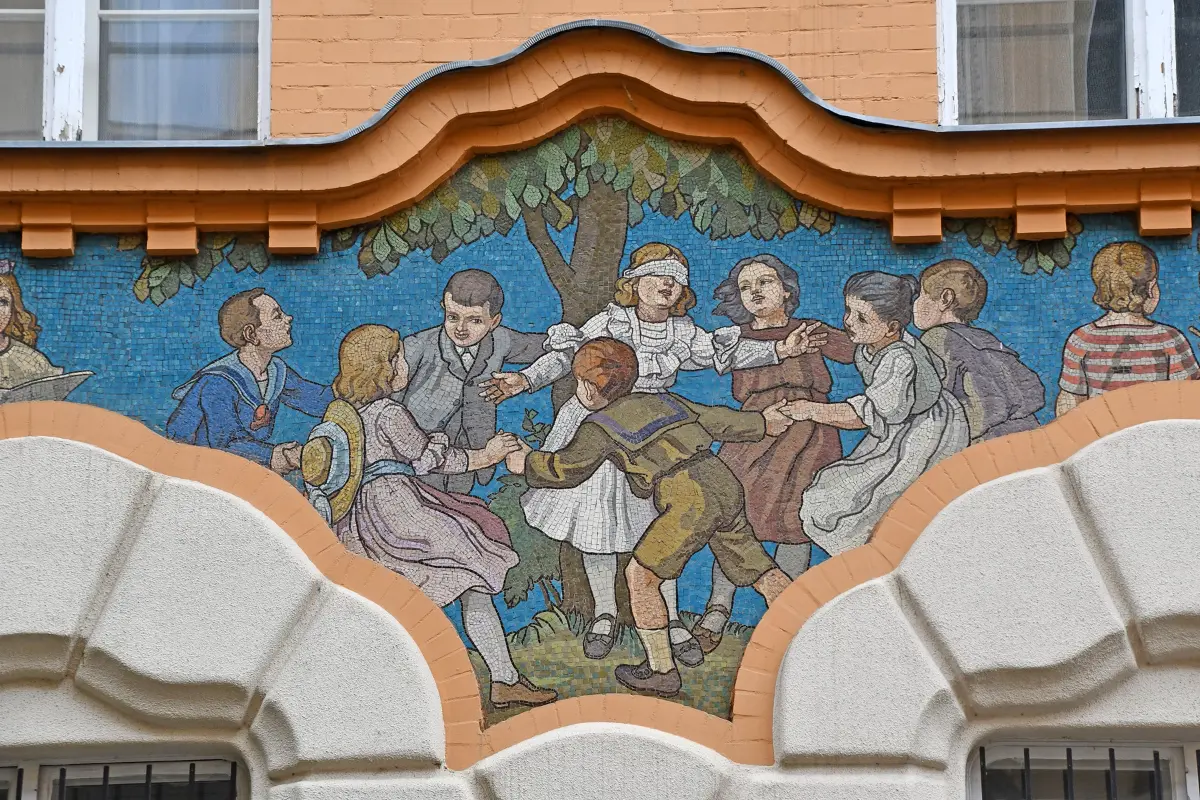
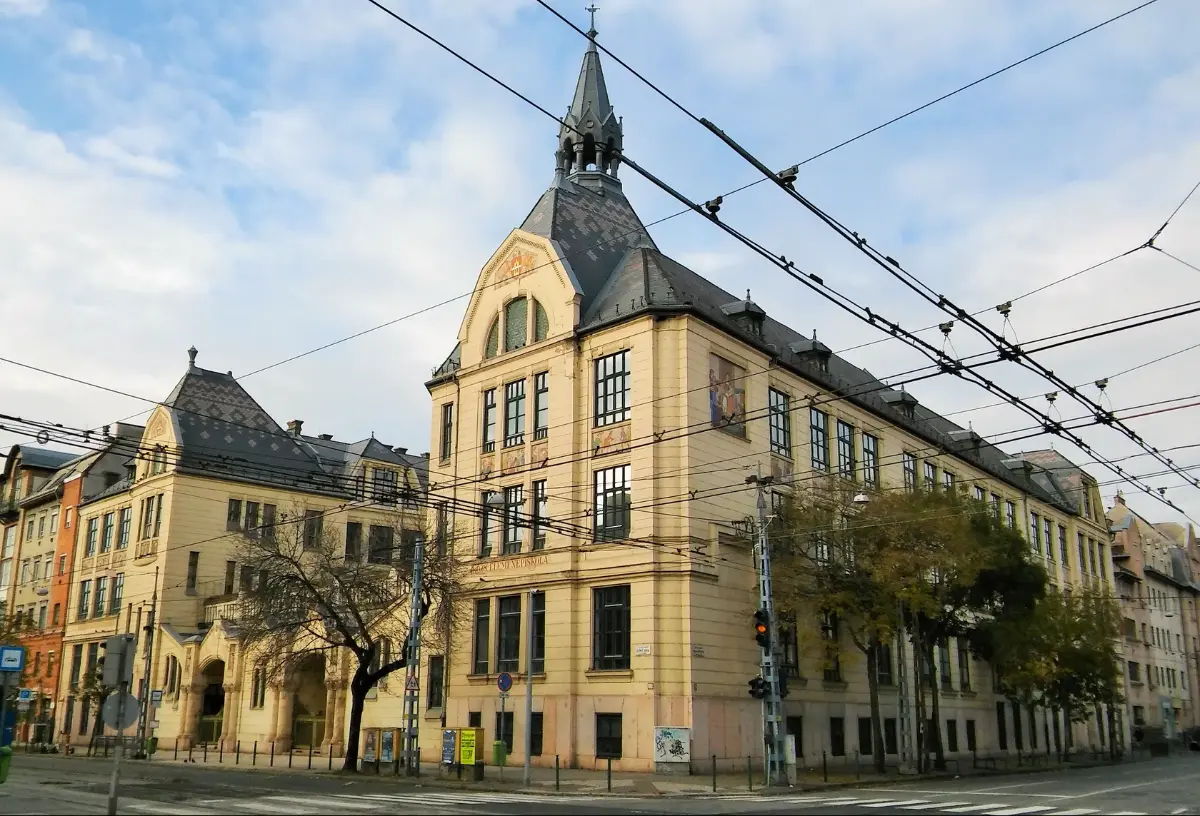
The program was inspired by the Art Nouveau school on Dob Street, which had been inaugurated a few years earlier and is featured in the cover photo. Public taste had shifted significantly in just a few years; the schools built under the Bárczy program, while retaining Art Nouveau elements, already had a distinctly modern appearance. Architects such as Károly Kós, Béla Rerrich (the designer of Dóm Square in Szeged and a pioneering landscape architect), and Béla Lajta participated in the program. In fact, the Commercial School on Vas Street – one of the outstanding works of Hungarian Art Nouveau architecture – was also built as part of the Bárczy Program.
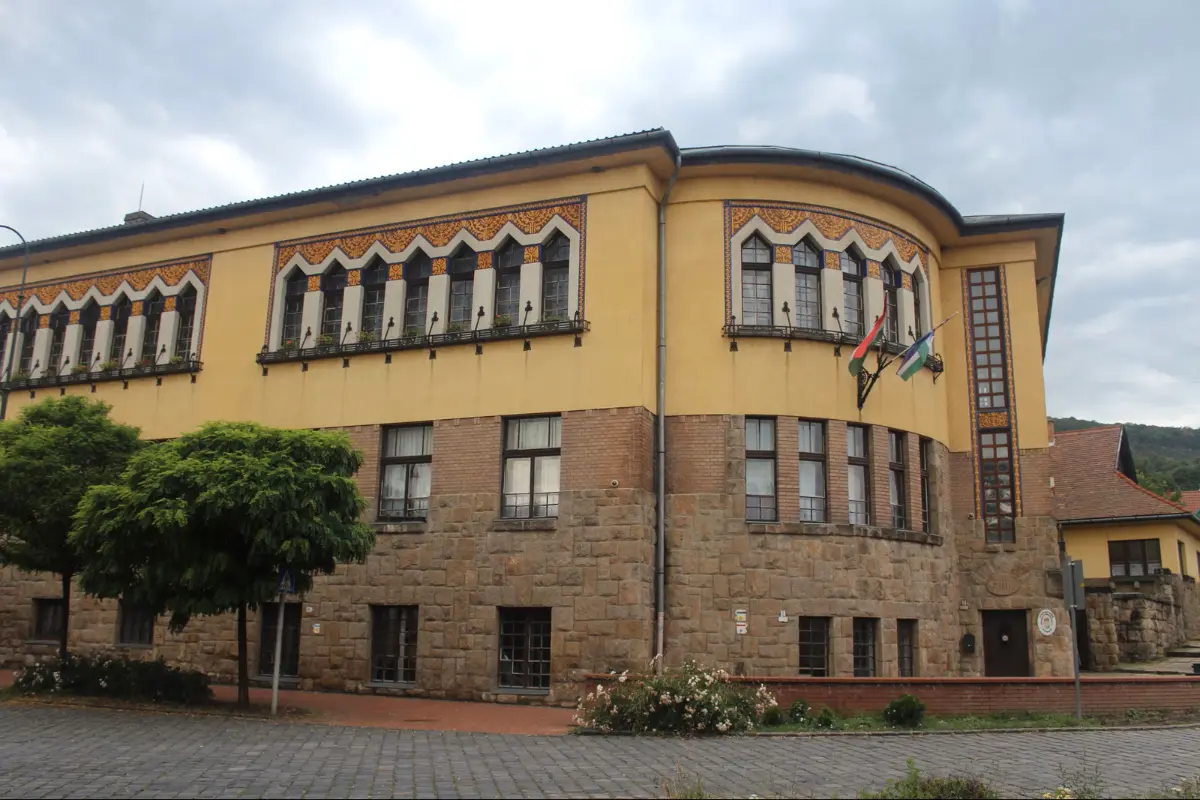
Running parallel to the Bárczy Program was the national school-building program, named after its lead architect, Gyula Sváb. Launched in 1908, the program was halted by World War I,
but no fewer than 139 schools were built over the course of six years.
Under this funding model, the local municipality paid for the land and site preparation, while the state, through the ministry, paid for the building itself. Both the Bárczy and Sváb Programs placed great emphasis on healthy school environments – that is, natural lighting, the ergonomics of the furnishings, and the proper design of hallways, restrooms, and specialized classrooms. Under the Sváb Program, schools were built primarily in peripheral, ethnic minority areas (where illiteracy rates were already higher), therefore the majority of these buildings are located beyond the current border.
After the Treaty of Trianon
Overcoming the consequences of World War I and the Trianon peace dictate required almost heroic efforts. It was at this time that Kunó Klebelsberg began his now almost legendary tenure as minister.
His program was based on cultural supremacy; in his view, the Hungarian people had to prove themselves – and break out of their situation – through their education and their achievements in the sciences and sports.
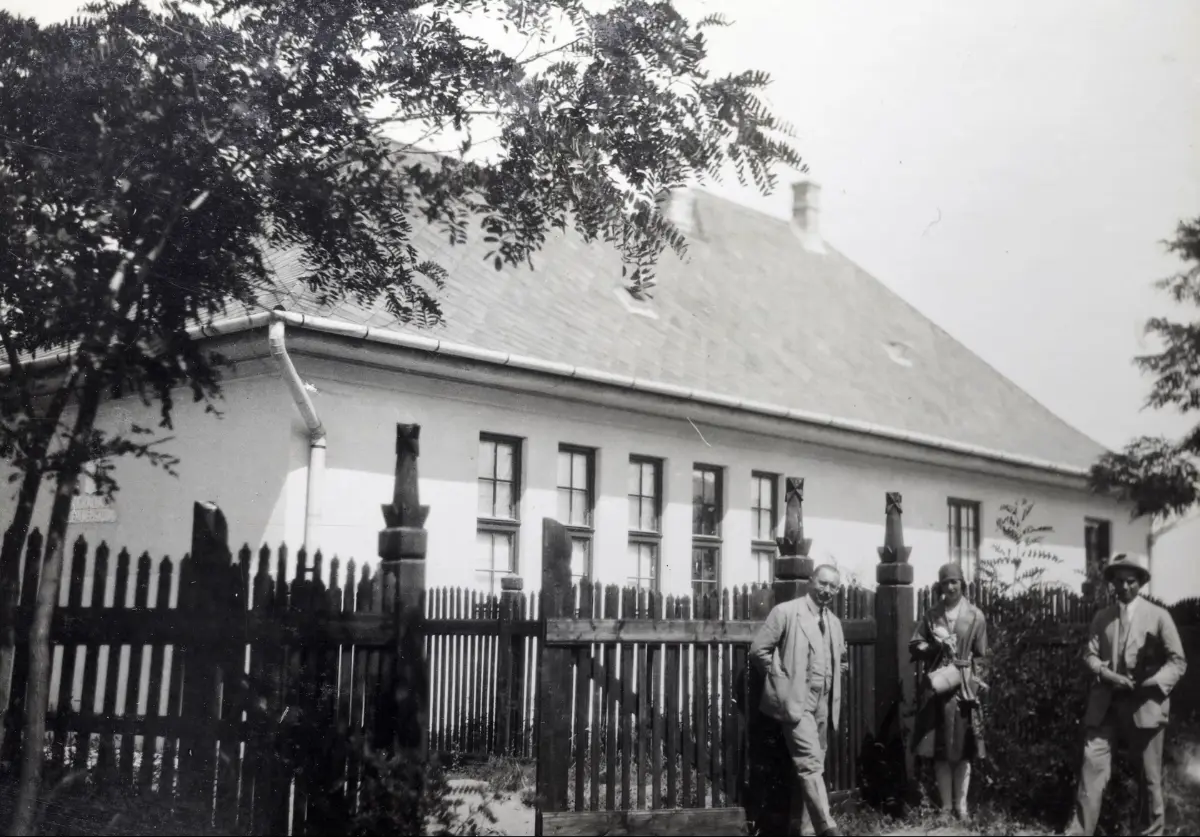
This goal was served by the newly built – or, more precisely, relocated and evacuated – universities in Pécs, Szeged, and Debrecen, the network of Hungarian institutes abroad, furthermore, the numerous sports facilities. They sought to promote broad knowledge and education through a school-building program, focusing primarily on the Great Plain, where there was much to be done in the rural farm communities. Here, too, Klebelsberg relied on Gyula Sváb’s expertise, as Sváb had the most experience in this field due to the aforementioned program. Launched in 1926, the program aimed to build 5,000 “public school units” – that is, classrooms and teachers’ apartments. The program was halted in 1930 due to the Great Depression, but by then the goal had already been achieved: the 5,000th building had been completed, as well as the 502nd school building – the Szeged-Rókusi People’s School was officially opened.
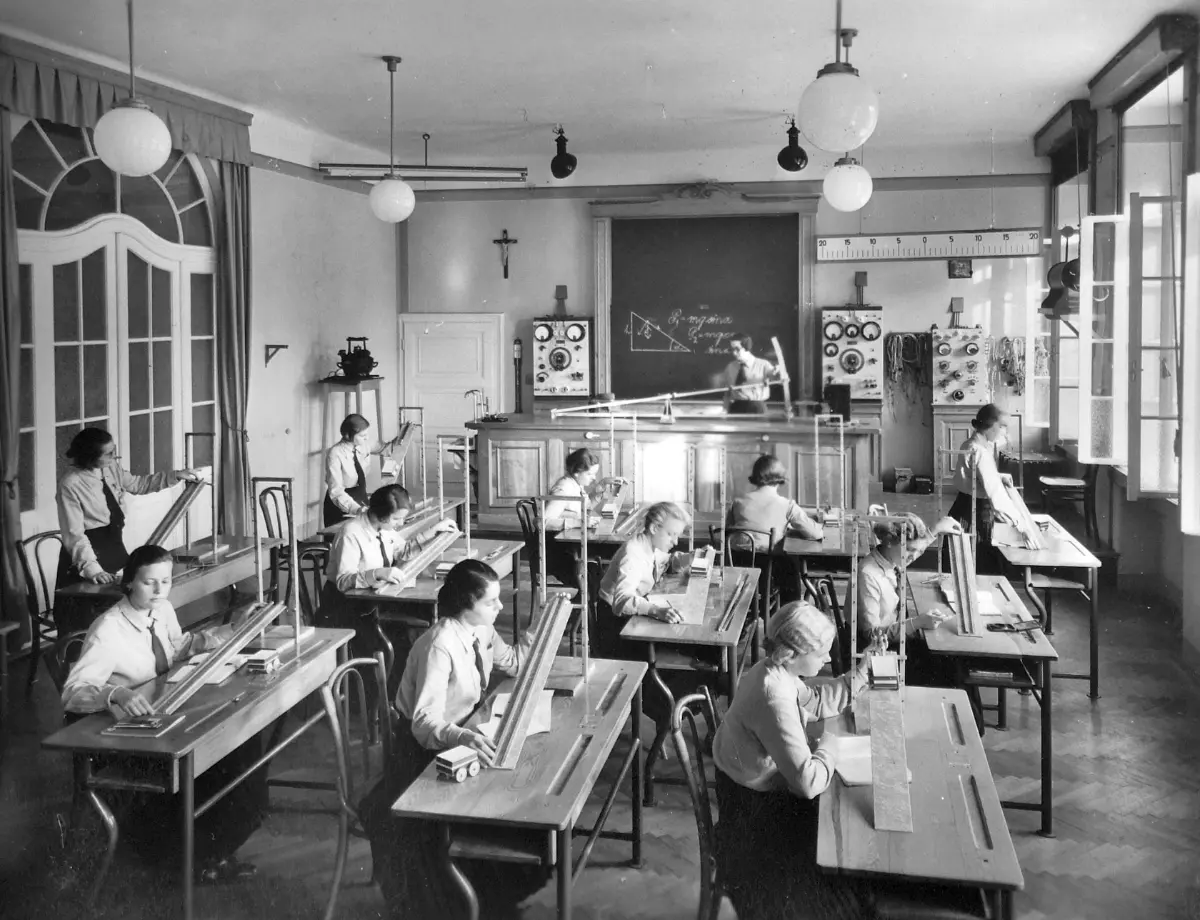
Starting in the 1920s, as the country found its footing, school construction picked up again. The education of women came increasingly to the forefront, which is why progress was made primarily in this area,
and numerous girls’ high schools were built.
Perhaps the most impressive of these is the Szent Margit (St. Margaret) High School, designed by Gáspár Fábián. Fábián had already participated in the Sváb Program, thus he had experience in school design. His body of work consists mainly of Neo-Romanesque churches, making this Neo-Baroque school building an interesting exception. Together with the Klebelsberg-style rural schools, the building illustrates the two social extremes of the era: the school in Újbuda features an elegant, truly palatial entrance hall, staircase, chapel, and theater hall, all surrounded by a vast garden.
From Socialist Realism to housing estate schools
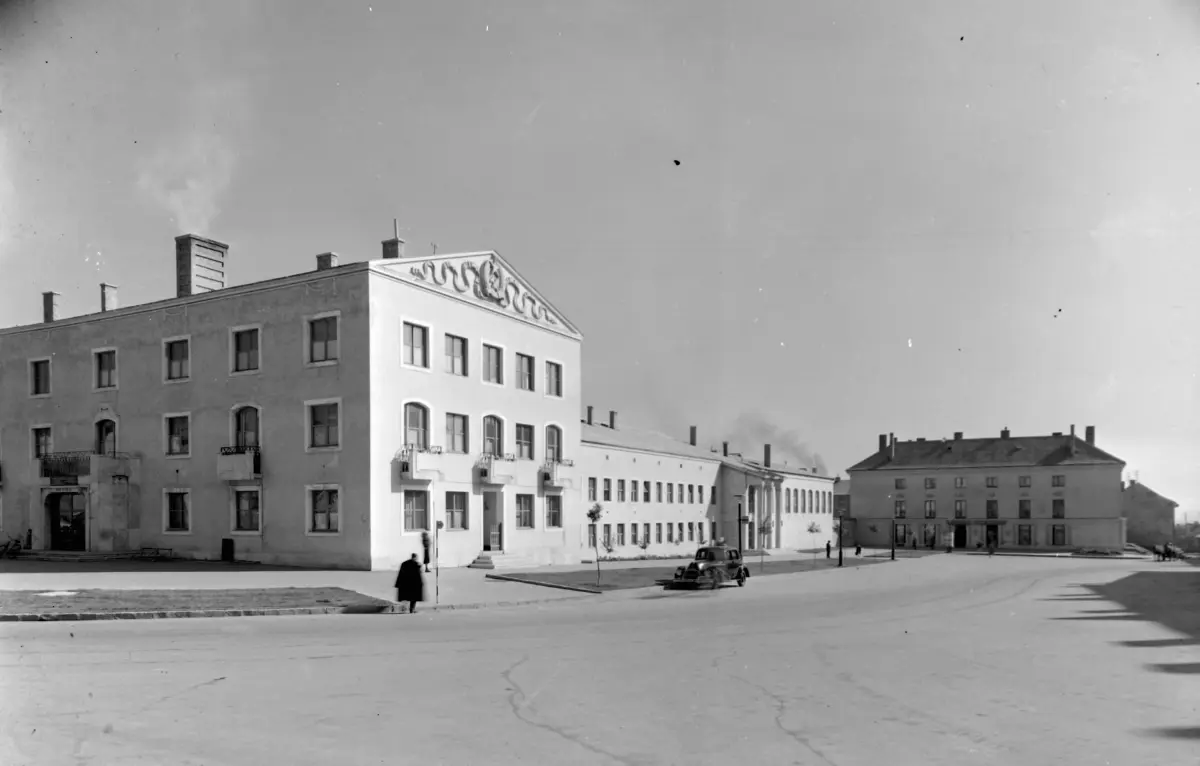
After World War II, during the Rákosi era, Socialist Realist schools were built – with, one might say, Socialist Realist content. Perhaps the most emblematic example of this is the mining school in Várpalota. Located between Veszprém and Székesfehérvár, this town – famous for its medieval castle
– is also perhaps Hungary’s most complete example of a Socialist Realist settlement.
Paradoxically, it turned out too well, with an overly bourgeois character, which is why dogmatic Socialist Realist architects despised the town. Opposite the castle, on the main square, stands the building designed by Gyula Rimanóczi, which essentially evokes the Classicist castles of Transdanubia; indeed, its entrance portico draws inspiration from the late Baroque era of Jakab Fellner.
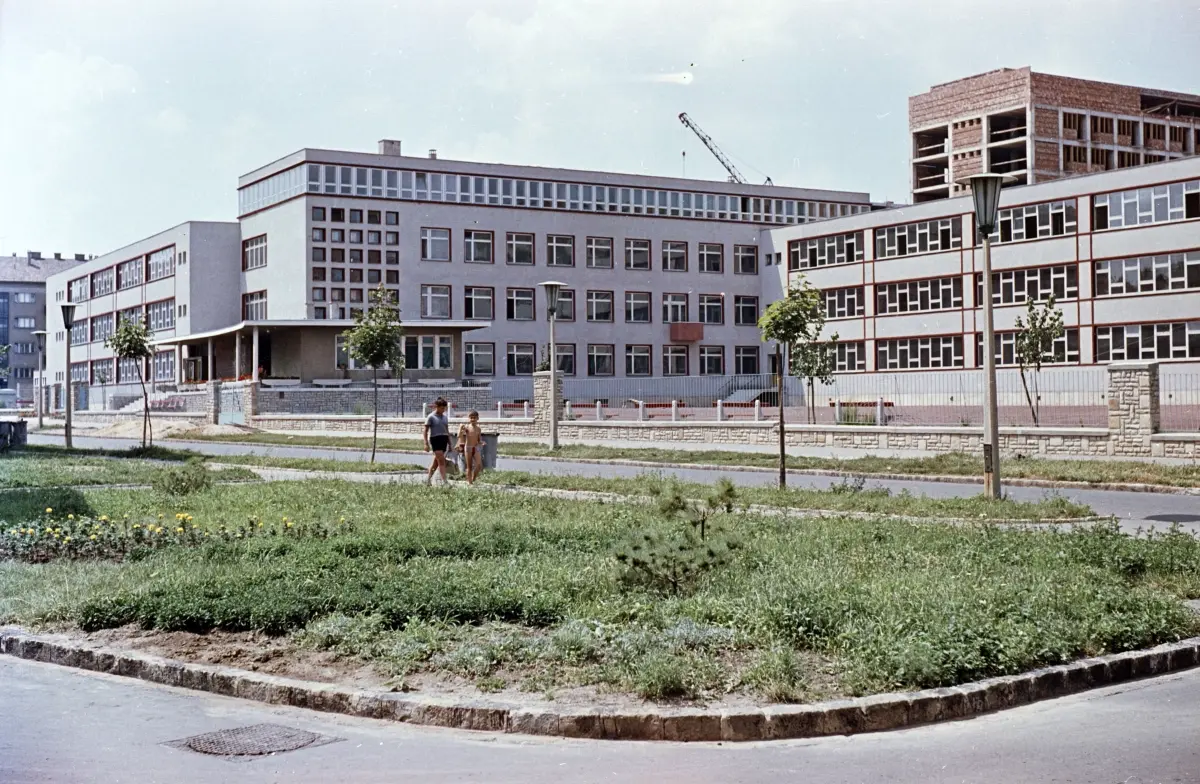
With the fall of Socialist Realism and the Rákosi era, “classical” modern architecture returned – a style that many mistakenly refer to as Socialist Realism. This era became virtually synonymous with the concept of housing estates – and not by accident, as tens of thousands of estate-style apartments and estate schools were built. In accordance with the principles of modern urban planning, these were divided into so-called neighbourhood units, centred around a school or kindergarten, always surrounded by a garden. These buildings, which seem somewhat cold and soulless from today’s perspective, function almost like machines – or “educational machines” – in accordance with modern architectural principles. Sun exposure, careful calculation of cubic meters of air per person, square meters of playground space per pupil... In fact, these principles defined Hungarian school architecture until the change of regime.
András Szende
Architecture is the art form that perhaps has the greatest influence on our thinking and well-being. The goal of Hely.hu is to stimulate architectural discourse through news, engaging articles, and videos. Because architecture is a shared concern and a shared responsibility.