Article of Hely.hu
What exactly will we be discussing?
- The history of the Márk Rosarium
- The story of extraordinary roses
- Botanical heritage and national treasure
- The garden of a thousand rose varieties
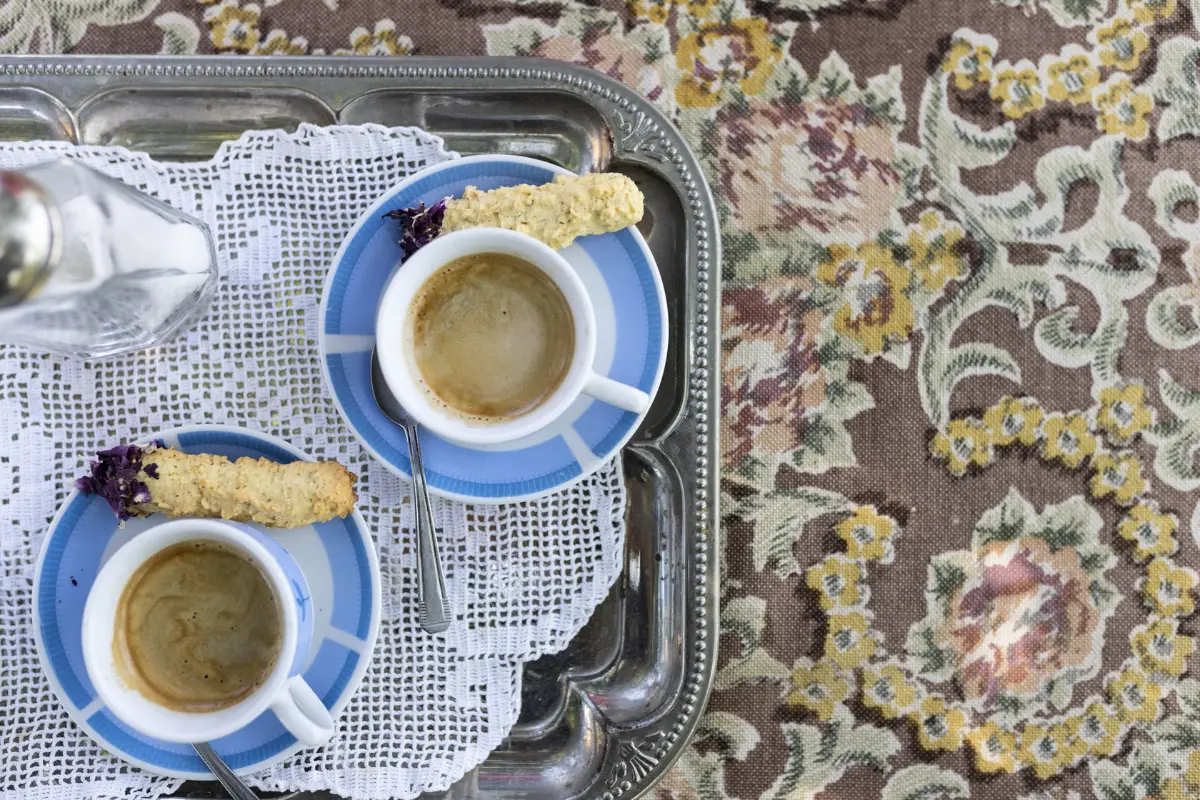
Tea cookies dipped in candied rose petals, elegant rose-pepper rose syrup, and a cup of steaming black tea: after such a welcome, we can’t imagine a more pleasant activity than taking a stroll through a magnificent rose garden – the Márk Rosarium in Acsád – so that our readers, too, can learn about this place’s unique history.
The Márk legacy consisting of 700 varieties of roses
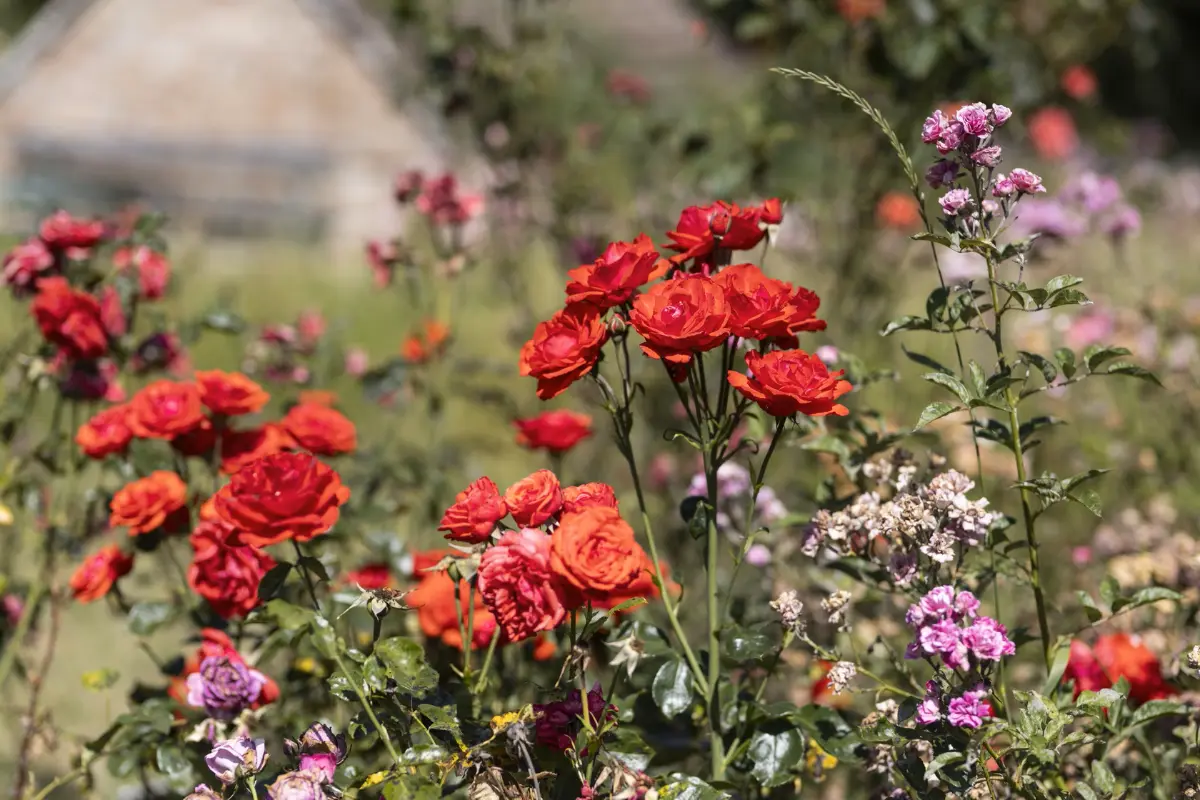
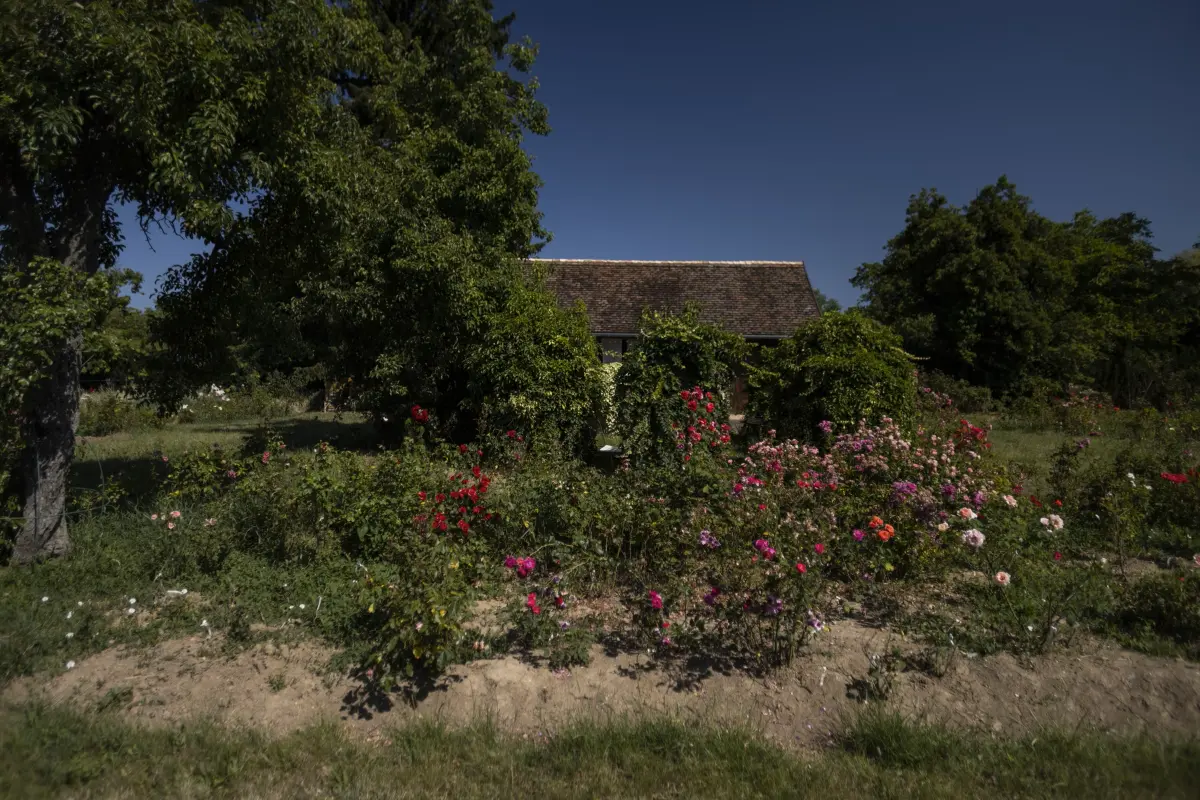
Just a few weeks ago, the roses – each more beautiful than the last – were still in full bloom, framing the small walkways in a thousand colours – like brushstrokes casually applied – and adorning the walls and columns of the imposing estate in Acsád. Now they are wilting; some are already suffering, and, as a reminder of their reality and transience, they are indeed withering away, yet one can still see the harmony they created with their flowers, large and small, in this rose garden collection.
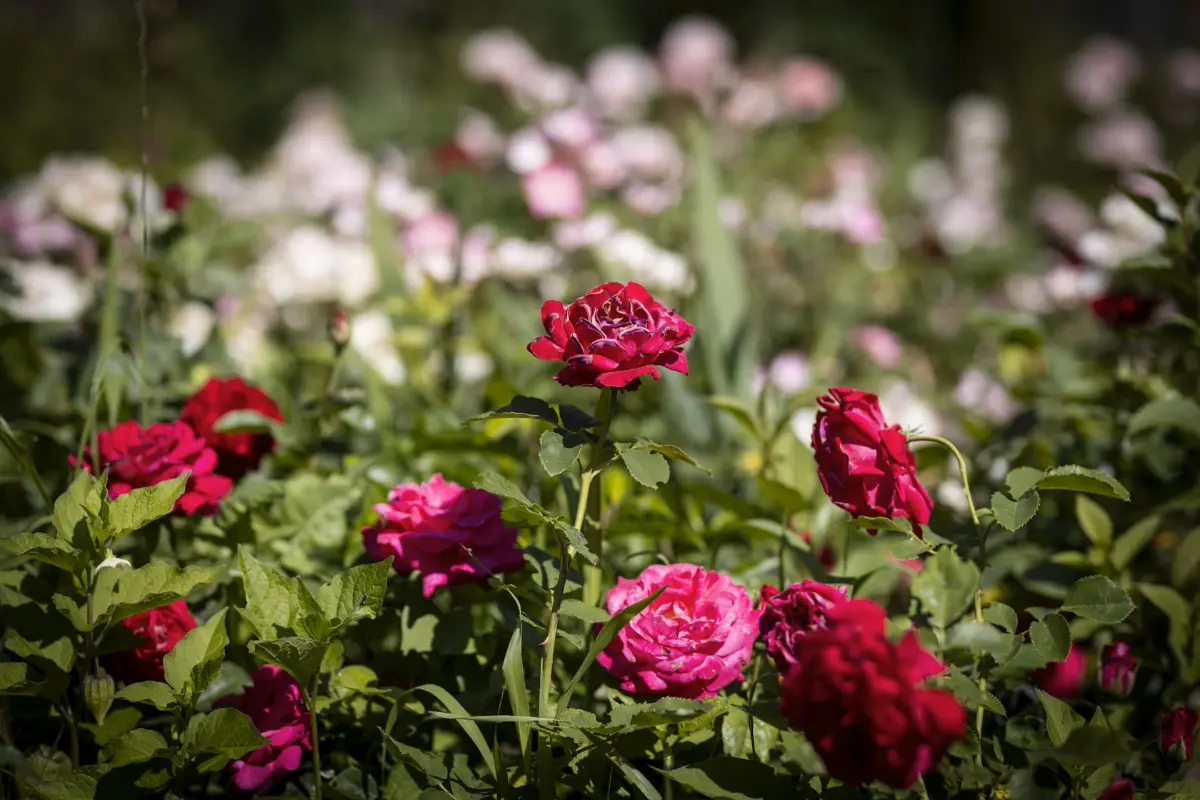
Photo: Ákos Kaiser
In Acsád, a small village in Vas County – —neighbouring Meszlen and Vasszilvágy – Margit Pócs is tending and developing an oasis of a kind that the very person it is named after could never have imagined. Previously little was known – and among laypeople, almost nothing – but since the garden was planted, people have been hearing and reading more and more, and in ever wider circles, about rose breeder Gergely Márk, who dedicated his life to this simple yet extraordinary flower and laid the foundation for it all.
He was originally a horticultural engineer, and his name is associated with the creation of more than 700 new rose varieties in total. His work was far from futile; he experimented with varieties that were hardy, repeat- and long-blooming, spectacular, or even modest in appearance.
Many of the roses he bred are known all over the world and are still cultivated today.
His task was not an easy one; he had to acclimate roses – which are often delicate, finicky, sensitive to cold, or heat-sensitive – to the climate of the Carpathian Basin, and we can only imagine what the late horticultural engineer would say about today’s climate. Perhaps that’s why his favourite flowers have such a hard time enduring the summer.
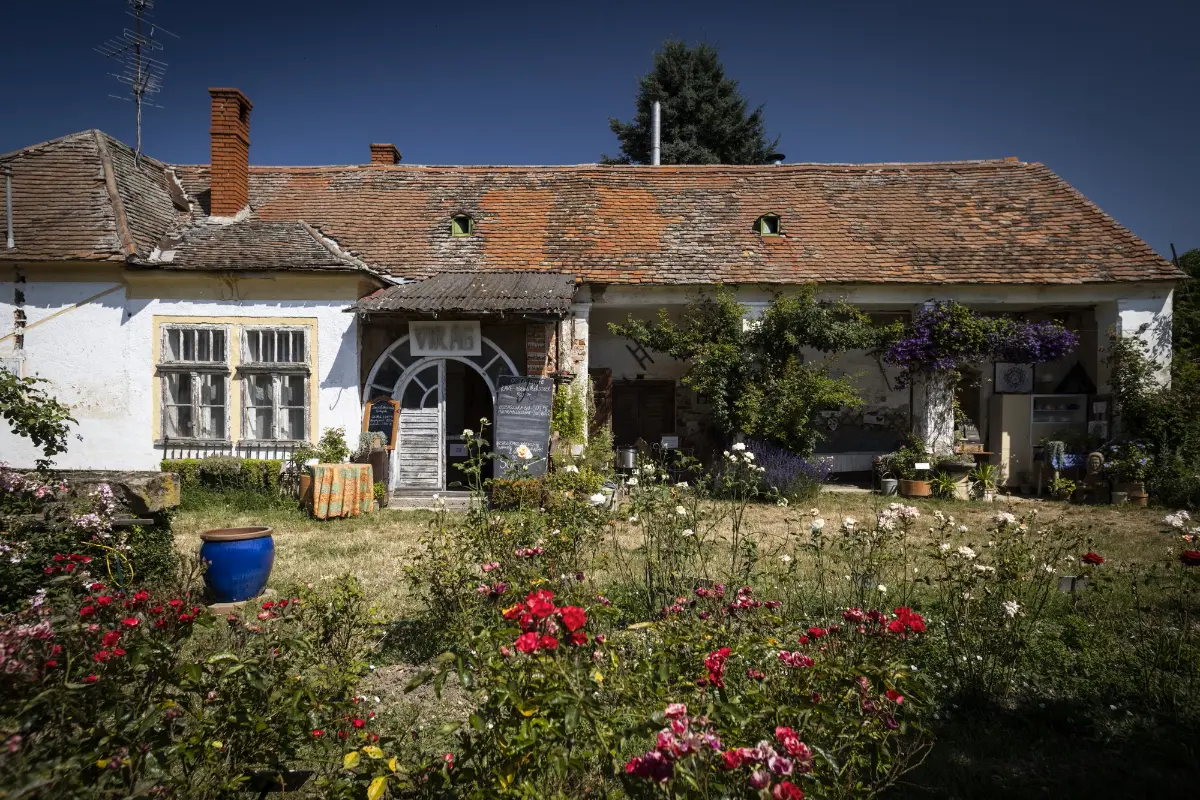
Photo: Ákos Kaiser
Seeds into seedlings, branches into a rose garden
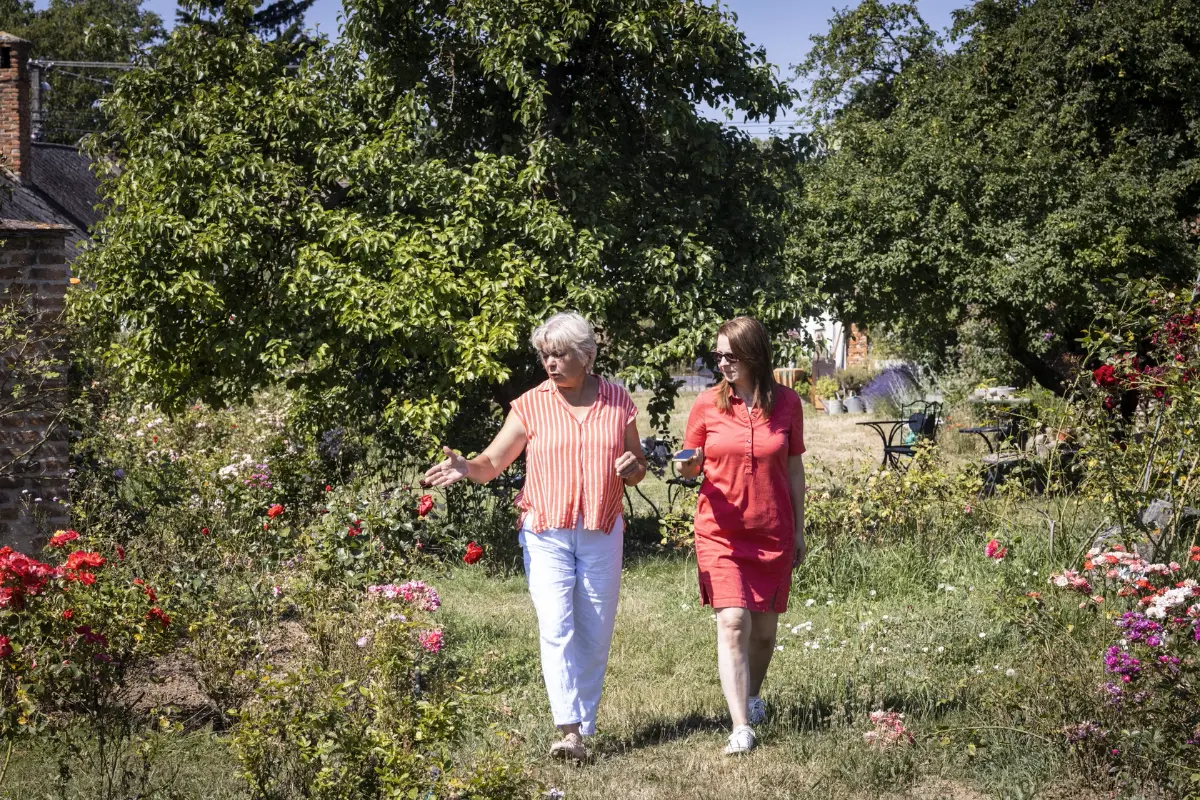
As we walk among the flower beds with our host, we learn that Gergely Márk’s rose collection was not originally here, but in Törökbálint. “After the horticultural engineer’s death in 2012, the site unfortunately became abandoned and neglected;
there was a fear that the rose varieties would be lost forever.
In 2014, with the help and support of Éva Kigyóssy-Schmidt, a rose enthusiast living in Germany, we began saving the plants – and, in effect, creating the new garden here in Acsád,” explains Margit Pócs, caretaker of the Márk Rosarium. “The propagation material – that is, the branches suitable for grafting – that we rescued from Törökbálint should be understood as follows: the seedlings, grown from wild rose seeds and planted in the spring, matchstick-thin seedlings – had grown by mid- to late July to the point where we could cut off their flowers and bring back a piece of each. The branches – prepared and cut by experts – arrived in several batches via various means – by mail, car, or train – and each came with precise documentation. “We took cuttings from six plants of each variety just to be safe, figuring that at least three would survive in this case,” our host recalls of those early days.
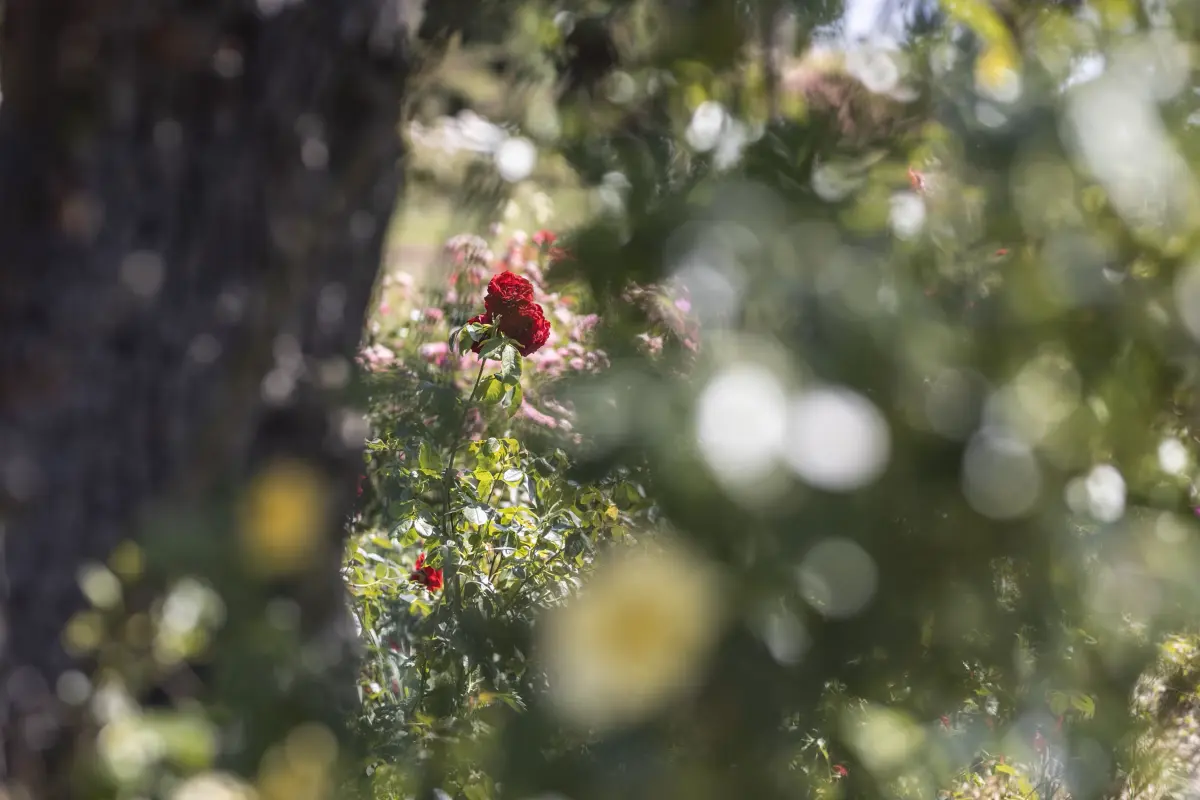
Photo: Ákos Kaiser
There were several types of roses in which Gergely Márk was particularly successful: these included tea hybrids, bed roses, ramblers, and mini roses. There was so much he had to pay attention to! It wasn’t just the scents or colours that mattered to him, but also resistance to disease and, say, winter hardiness. He had an amazing imagination when it came to naming his roses.
He believed that by naming his hybrid varieties, he had yet another opportunity to create and convey value,
which is why he often paid tribute in this way to the memory of celebrities, literary and historical figures, and individuals of religious or cultural significance.
Botanical creations for posterity
The rose variety named after Saint Elizabeth is the best known; it is pale pink in colour with full blooms, and Pope Francis was presented with one during his visit to Hungary.
“This is a botanical creation that can rightly serve as a country’s ambassador,”
says the gardener. The Rákóczi is a more distinctive, burgundy-coloured, fragrant rose variety.The Béla Bartók rose is more elegant, with a whitish-pink hue, while the Kossuth variety, by contrast, is a red, vigorous tea hybrid. Gergely Márk has given the roses names such as “Firebird” – a vibrant orange-red variety with lush blooms that truly looks fantastic – as well as “Margaret of the House of Árpád,” “Saint Stephen,” “Endre Ady,” “Attila József,” and the list goes on. His inspiration might have come from a particular occasion or a place that was important to him, such as the “Millennium” or “Budatétény” roses.
Public parks throughout the country and around the world are filled with his little creations.
And not by chance. He left behind a legacy that is a rare treasure; in our daily comings and goings, we would never even think to wonder whose work was necessary to ensure that the most beautiful and healthiest rose varieties adorn our surroundings.
Photo: Ákos Kaiser
A landscape architect or horticultural engineer takes functionality, aesthetics, and ecological balance just as much into account when designing a garden as they do irrigation, sunlight, or, say, soil requirements – but there was little opportunity for that here. “Necessity often dictated our actions.
We had to gradually transform a trash-strewn, weedy area into a garden,
and on top of that, the flowers in the propagation beds were practically languishing. Due to the limited space, the spacing between plants and rows was much smaller than would have been ideal. It was urgent to transplant them. By the fall of 2018, we had to hurry with the site preparation. The first reference point was a 97-meter-long stone wall designed by geobiologist Lajos Somlósi, running along the property line and divided into 16 different sections. “We tried to plant the roses in front of it so that the same variety would flank the patterns on both sides, and we also took their height into account. We placed the varieties that grow taller closer to the wall, and the shorter ones in front of them, next to the path,” explains Margit, who cares deeply about the roses and the garden. In her view, roses have a place in every garden, but numerous factors influence why they thrive better in one garden than another.
A thousand kinds of flowers demanded their place
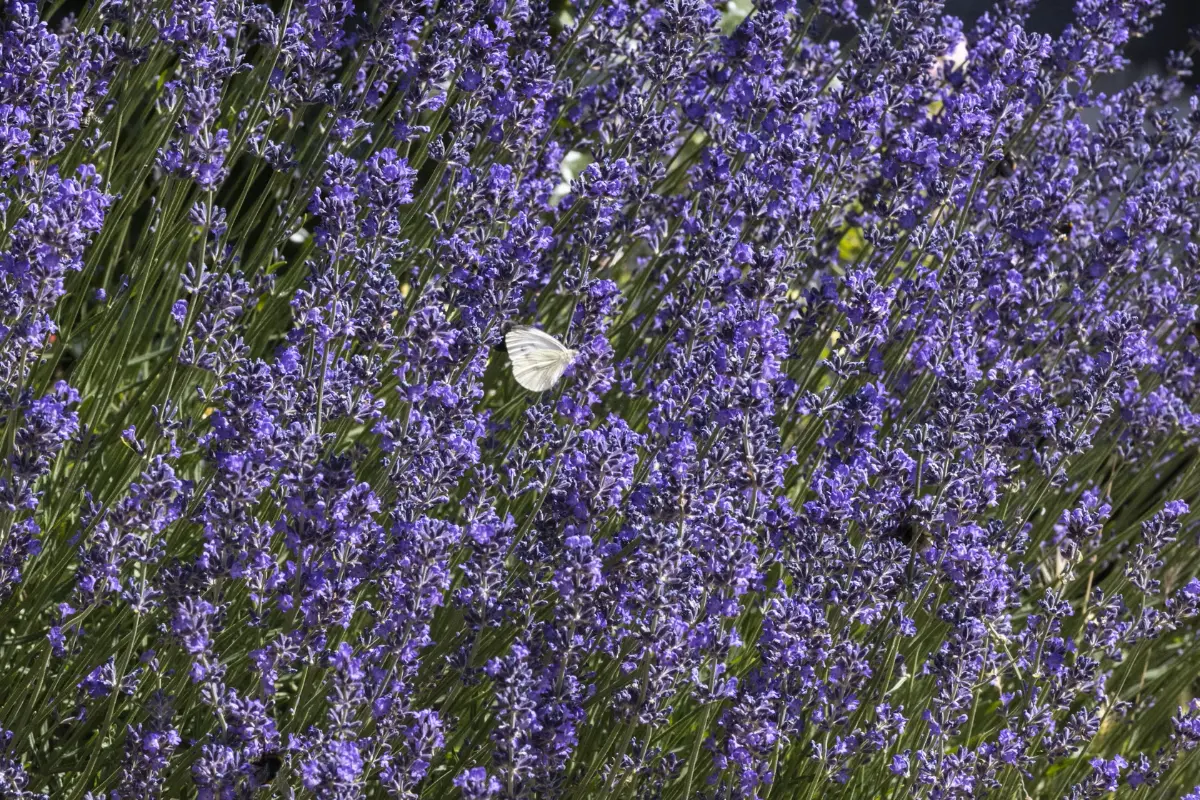
Over time, the collection garden continued to expand and was supplemented with a lavender garden, an amphitheater, and a gazebo with feather grass. Perhaps the Márk roses won’t take offense that the hosts have also planted varieties from other Carpathian Basin rose breeders with Hungarian connections in the collection garden. Most recently, during the past autumn, a large number of new flowers were added: some 250 plants representing 120 varieties found a home here. Thus, the Márk Rosarium – built upon more than 700 Márk varieties – has now become a garden of a thousand rose varieties. “We preserve not only the best varieties but also the weaker ones, as they may carry genetic traits that will be sought after in the future,” he notes.
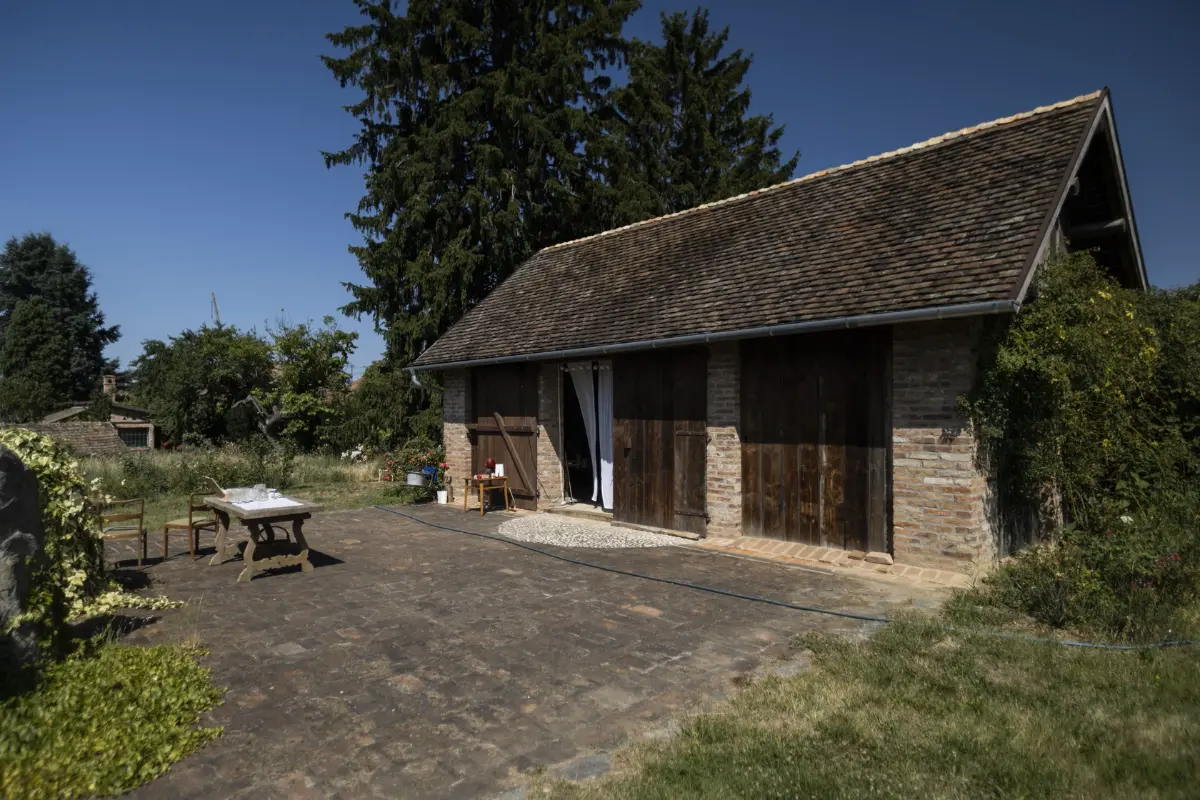
Photo: Ákos Kaiser
There were a few other elements present, but the rest of the landscape features and garden furniture were added to the composition later. “There used to be a long, porch-fronted country house here, and the street fence – which was built to match the porch posts – a large trellis shaped like a treble clef, and a pergola also supported by porch posts were constructed to complement it. A few old trees remain as well; among them, a mirabelle plum and a quince tree always provide pleasant shade in various parts of the garden. “The barn was built later, following our visit to the Vasi Skanzen, with the help of András Lakner – not incidentally, using materials from old, demolished bourgeois and large-scale farmhouses in the area: brick, planks, and roof tiles,” Margit Pócs explains.
Photo: Ákos Kaiser
It would likely be a mistake to think that Gergely Márk, who was truly passionate about roses, was driven solely by scientific curiosity.
Artistic sensibility and national consciousness were also intertwined in his work;
only in this way could what he left behind be so complex and timeless. The Márk Rosarium has been registered with the National Center for Biodiversity and Gene Conservation, included in the Vas County Heritage Register, and recognized for its uniqueness by the World Federation of Rose Societies (WFRS). Today, it provides a fantastic venue for events, and, as we’ve learned, it may even develop into a rose museum in the future.
Ágnes Haitzmann
Architecture is the art form that perhaps has the greatest influence on our thinking and well-being. The goal of Hely.hu is to stimulate architectural discourse through news, engaging articles, and videos. Because architecture is a shared concern and a shared responsibility.