Helyszín címkék:
The Round Church of Szilvásvárad stands as a memorial to a love story
Imagine
What will we be discussing?
- a Reformed church shrouded in legend
- other attractions in the Szalajka Valley
Most of the circular-plan churches in the Carpathian Basin were built during the Árpád era: examples include the 11th-century church in Öskü, the one in Pápoci – which is a full century younger – the 13th-century church in Kallósd, and the St. James Chapel in Ják, which dates back to the same period. This architectural style was revived on a much larger scale with the advent of the Reform Era: it was then that the St. Anne Parish Church in Esztergom (1828–1837), the Round Church in Balatonfüred (1841–1846), and – compared to them – the much later Ottokár Prohászka Memorial Church in Székesfehérvár (1929–1933) were built.
Looking at the list above, it becomes clear that all of these examples serve the Roman Catholic community; however, there is one similar building that was built specifically for Protestants and, in fact, has been used exclusively by them ever since – it serves the Reformed congregation of Szilvásvárad, a town often mentioned in connection with the Lipizzaner stud farm and the Szalajka Valley, home to one of the country’s most beautiful waterfalls, where they have been holding worship services for more than 185 years.
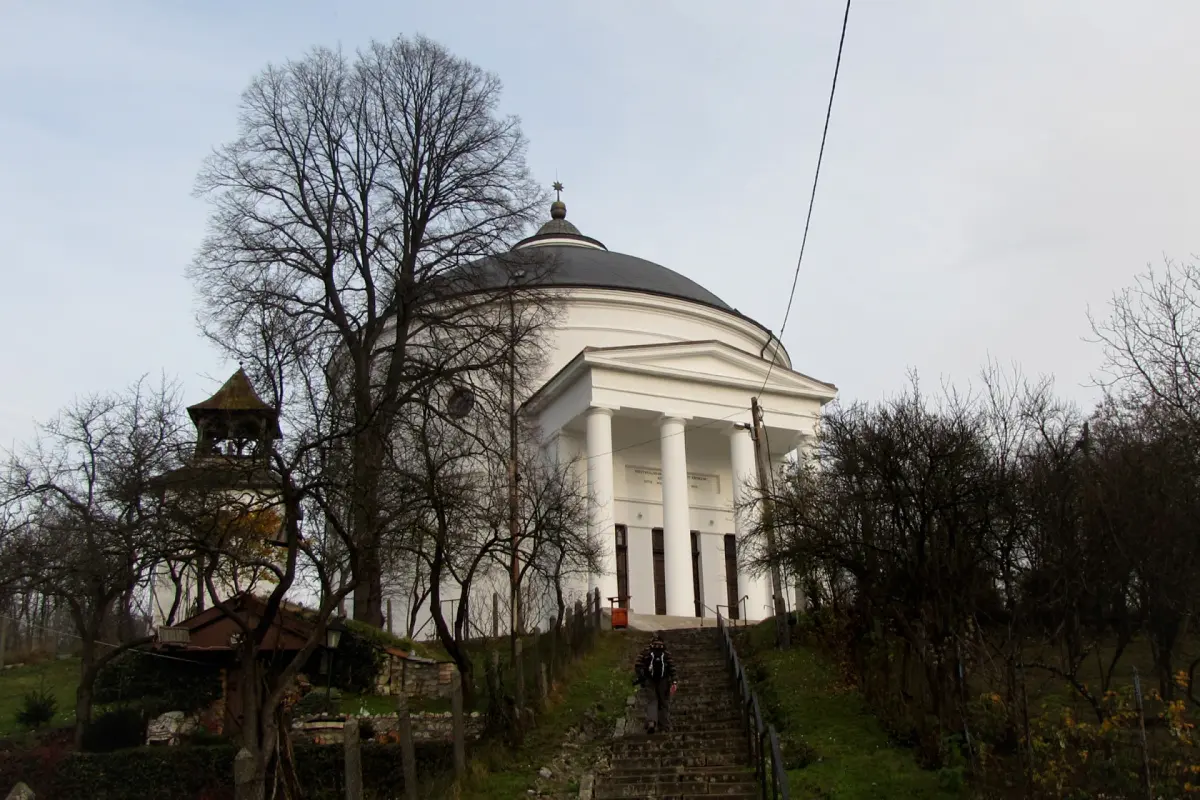
The church, located at 33 Aradi Vértanúk útja, was built by the village’s landowner, the otherwise Catholic Count Miklós Keglevich, who commissioned Ferenc Povolny – who also designed the cathedral in Eger – for the task. Built between 1837 and 1840, the building – constructed just a few meters from today’s family homes – features a tympanum-adorned entrance accentuated by four Doric columns; next to the main staircase stands a tiny bell tower in excellent condition – the last remnant of its predecessor, built in 1628.
The construction of the round church, which is just a quarter-hour walk from the town’s central parking lot, was by no means without precedent: a Calvinist congregation had been active in the town as early as 1576, but in 1832 their church had to be demolished due to safety concerns. The people waited years for the new church, but construction did not finally begin until 1837 (according to other sources, 1836).
The main part of the construction was already completed by the summer of 1840, but the congregation was not able to take their seats for the first time in the pews – carved by a local carpenter – until January 1842.
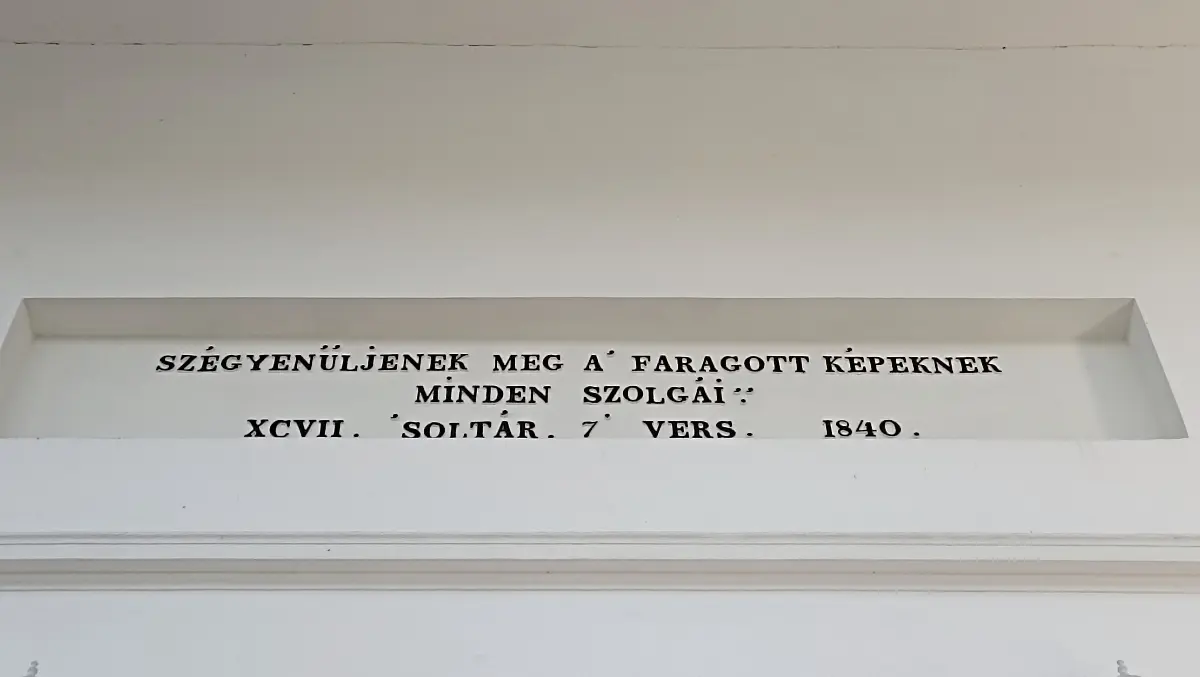
But why did a Catholic count build a Reformed church? Both an urban legend and common sense offer explanations for this question. Let’s start with the former: according to gossip, the church was originally intended for the Catholics, but halfway through construction, the countess fell in love with János László Pyrker, the archbishop of Eger. Keglevich’s revenge was swift: he gave the building to the Protestants and had the seventh verse of Psalm 97 – with an alliterative twist – inscribed above the gate using metal letters cast at the Szalajka Valley ironworks: “Let all the servants of graven images be put to shame.”
Vince / Wikimedia Commons, innen:
https://commons.wikimedia.org/wiki/File:Szilvasvarad_kortemplom_felirat.jpg
The real reason, of course, may have been simpler than that, since the Reformed community simply needed a new church, and the count, according to a letter dated 1832, was willing to help with this. Of course, this does not mean that the legend surrounding the archbishop had no basis in reality, since as archbishop, Pyrker served as the county’s chief magistrate, and his regular disagreements with the count caused a great stir throughout the country.
The building, which is of course a protected historic monument and rises nearly 35 meters above the congregation at its highest point, underwent a complete exterior renovation most recently in 2014, thus we can admire its snow-white walls and shingle-covered dome from every angle; however, it can also be visited from the inside during worship services or by prior arrangement.
If you’re in the area, it’s definitely worth trying to get inside, as the gallery – which also rests on Doric columns – the simplicity characteristic of Reformed churches, the Classicist wooden pews, the Neo-Renaissance organ loft, and the black silk altar cloth embroidered with silver thread are all truly beautiful.
In addition to the church, it’s certainly worth taking a walk through the Szalajka Valley to explore the Istállós-kői Cave, the Fátyol Waterfall, and the pleasant trails – or even to admire the surroundings from the carriages of the State Forest Railway. If you’re pleasantly tired, it’s worth taking a break for a good lunch or dinner: just a few minutes’ walk from both the round church and the main road, you’ll find the La Contessa Castle Hotel and Event Center (6 Park Street), where you can enjoy your meal like royalty in its elegant restaurant; for those craving traditional Hungarian we recommend the Csobogó Restaurant (2 Szalajka Road).
Do you love exciting stories, time-traveling adventures, and secret places? Then you should explore the country on guided city walks! For example, through Imagine’s programs – they’ve been organizing city walks, exclusive building tours, food tours, and team-building events across the country for more than 15 years.