Helyszín címkék:
The Second Life of Water Towers: From Industrial Giants to Tourist Attractions
Szabó Vivien
What exactly will we be talking about?
- The new life of the Nagyerdei Water Tower
- Science and history in the Szeged Water Tower
- Panoramic views and exhibitions at the Siófok Water Tower
Sometimes a building is simply too distinctive to disappear. Water towers are like this: due to their characteristic shape, proportions, and location, they remain part of the city even when their original function takes a back seat. In recent years, more and more places have decided not to demolish them, but to fill these spaces with new content.
This is how former industrial facilities have become places where the past and present coexist. We’ve compiled examples from Hungary where these buildings have been given new life – and where it’s worth stopping by during an outing or a city stroll, even if just for a brief view of the city.
LOOKOUT TOWER AND COMMUNITY SPACE IN NAGYERDŐ
Standing among the trees of Debrecen’s Nagyerdő (Large Forest) is the Nagyerdő Water Tower, which has been part of the city for over a century. Built in 1912 based on designs by Fried and Adorján, the tower still serves its original purpose today: it functions as a backup water supply for the clinics of the University of Debrecen, holding nearly 1,000 cubic meters of water in its reservoir. In the meantime, however, it has taken on a completely different role.
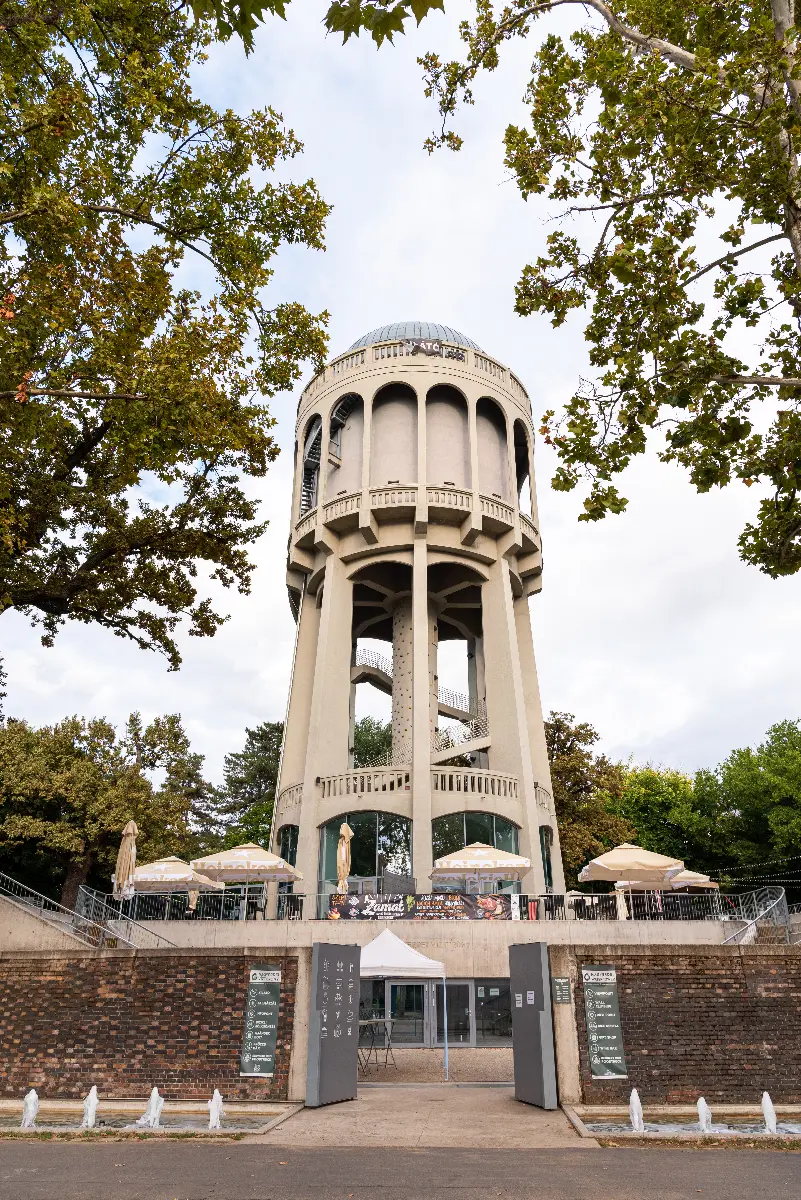
Following its 2010 renovation, the building opened to visitors and became accessible on multiple levels. From the observation deck, situated 34 meters above ground, one can look out over the canopy of the Nagyerdő Forest and the city, while inside the tower, the industrial past and its current use coexist side by side. The H2O Gallery hosts a rotating schedule of contemporary exhibitions and interactive presentations, while the spaces host concerts, talks, and university programs.
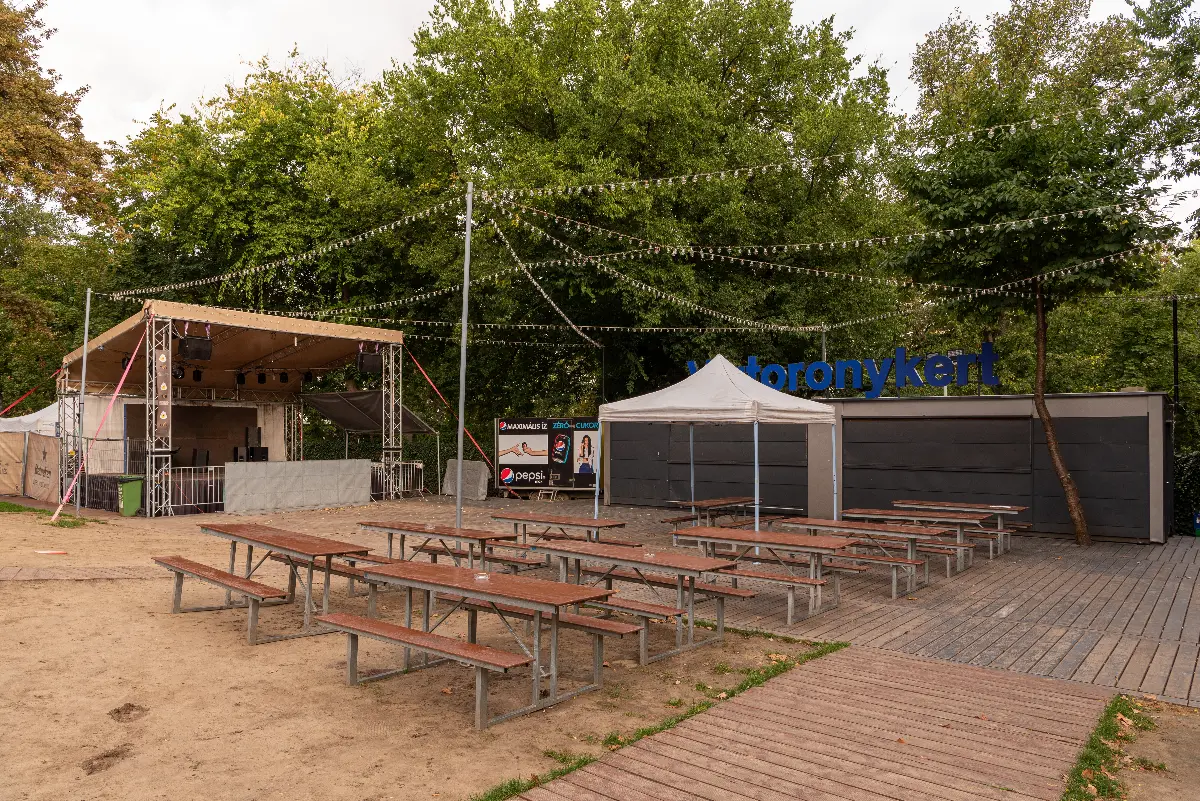
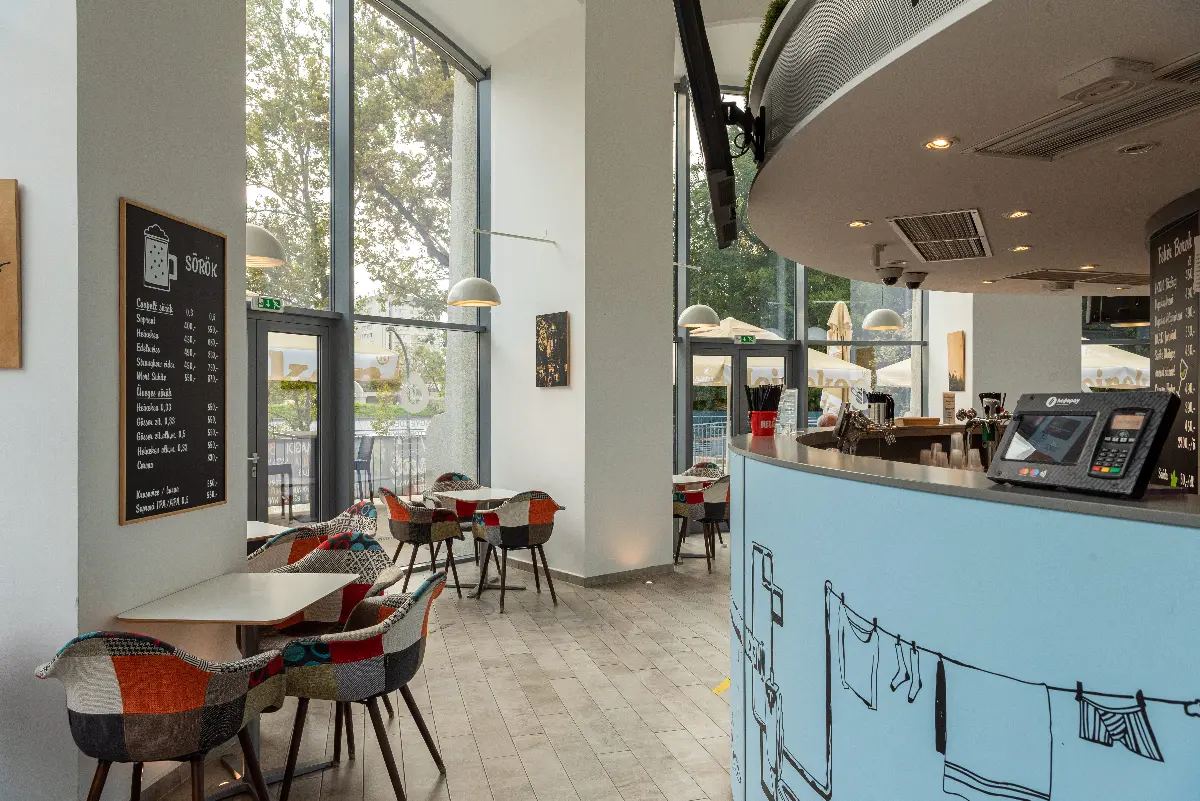
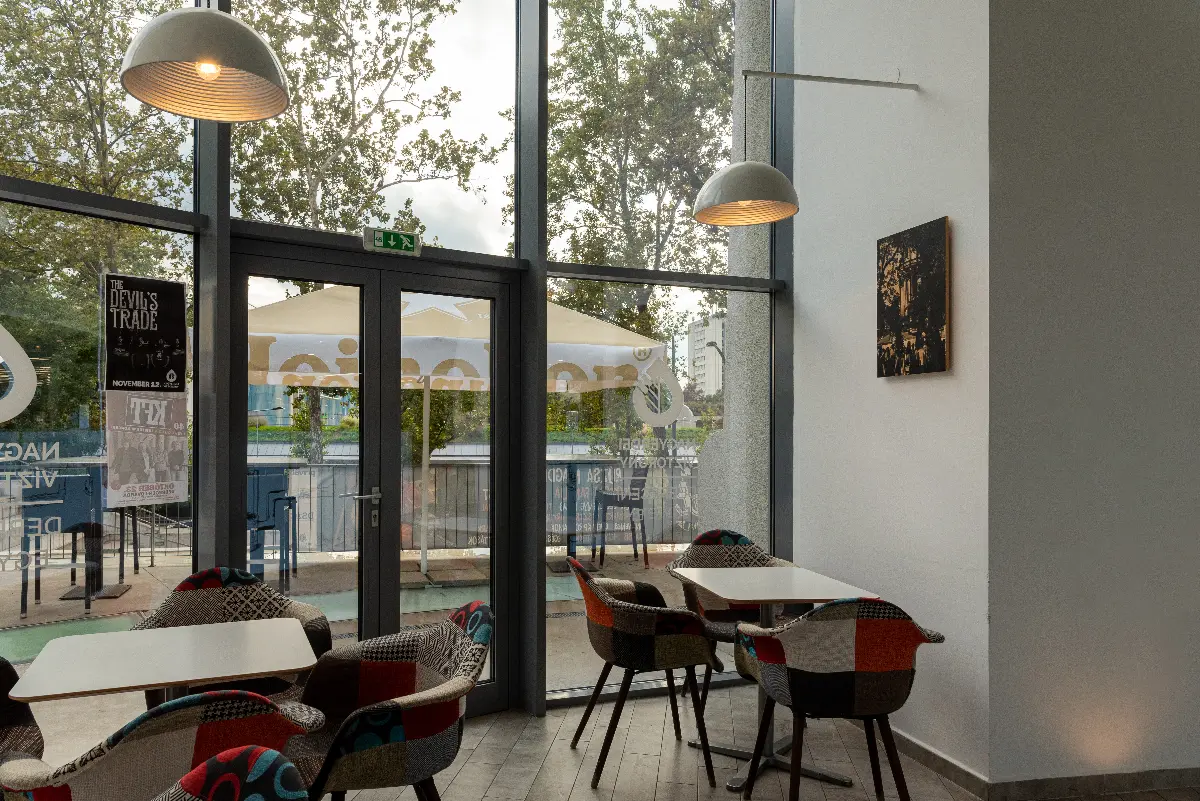
Life is now bustling both around and inside the tower. A climbing wall, themed walks, digital content, and family programs are all part of the experience, while the café and beer garden encourage visitors not just to go up and look around, but to stay a while. The space is particularly lively in the summer: the area around the tower often transforms into a concert venue or a meeting spot. This is how this former industrial building becomes at once an observation deck, an event venue, and an urban gathering place – a spot where it’s not just worth seeing something, but also worth spending time.
SCIENCE AND URBAN HISTORY IN A SINGLE TOWER
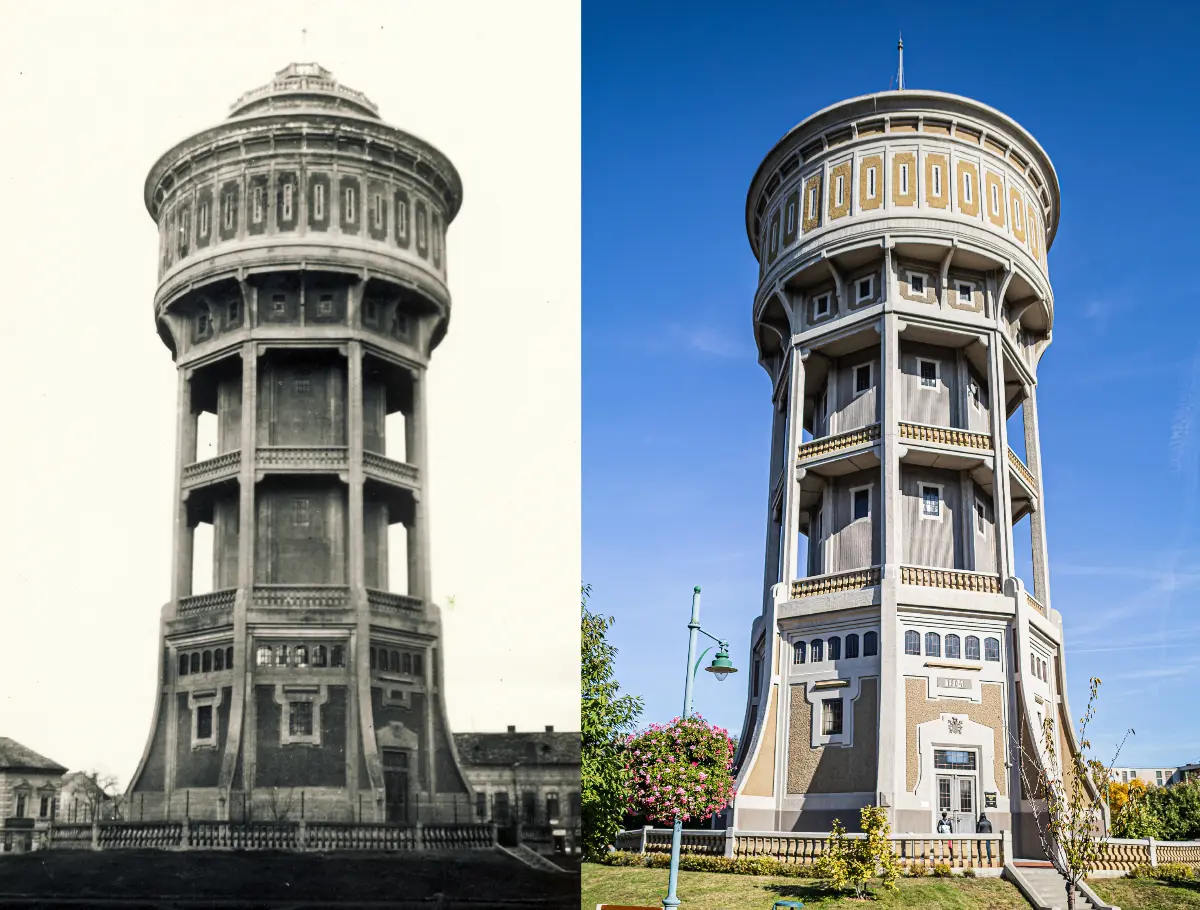
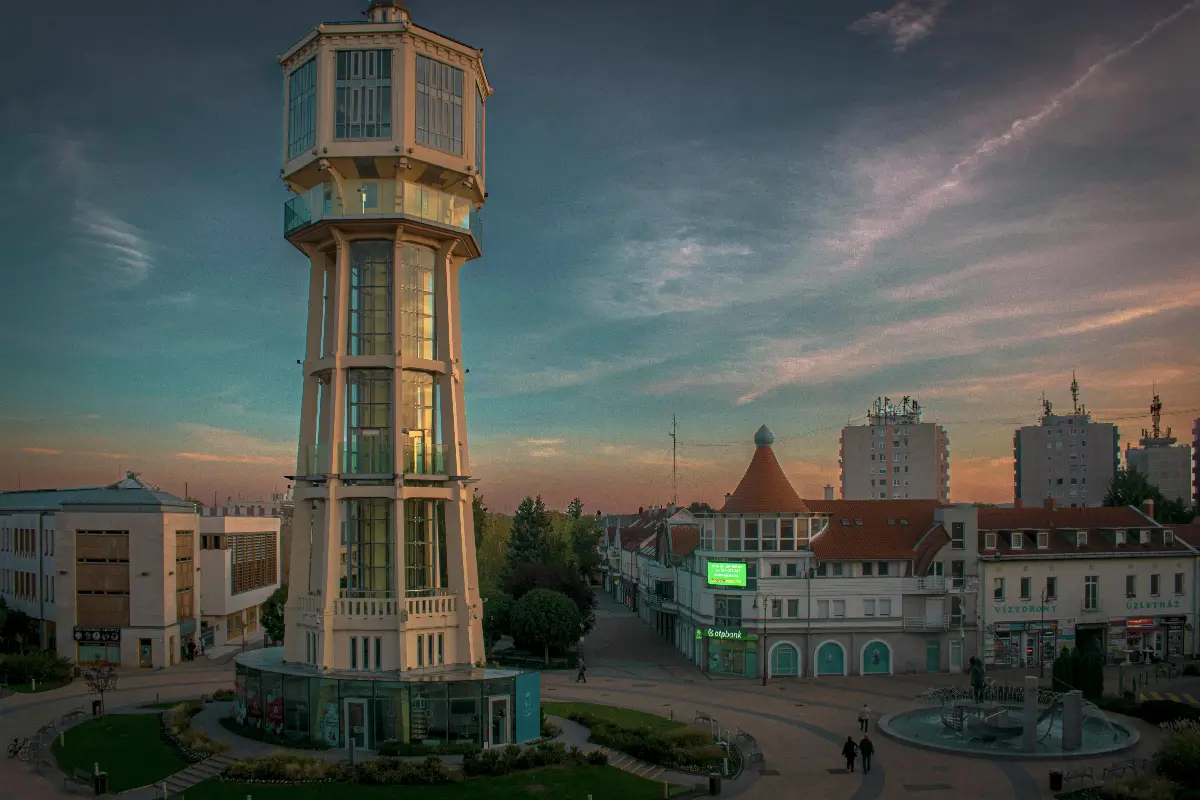
The Szeged Water Tower on St. Stephen’s Square catches the eye immediately: its proportions and shape have long defined the atmosphere of the square. Built in 1904, the tower is still in operation today, meaning it remains not only a monument but also an integral part of the city’s daily life.
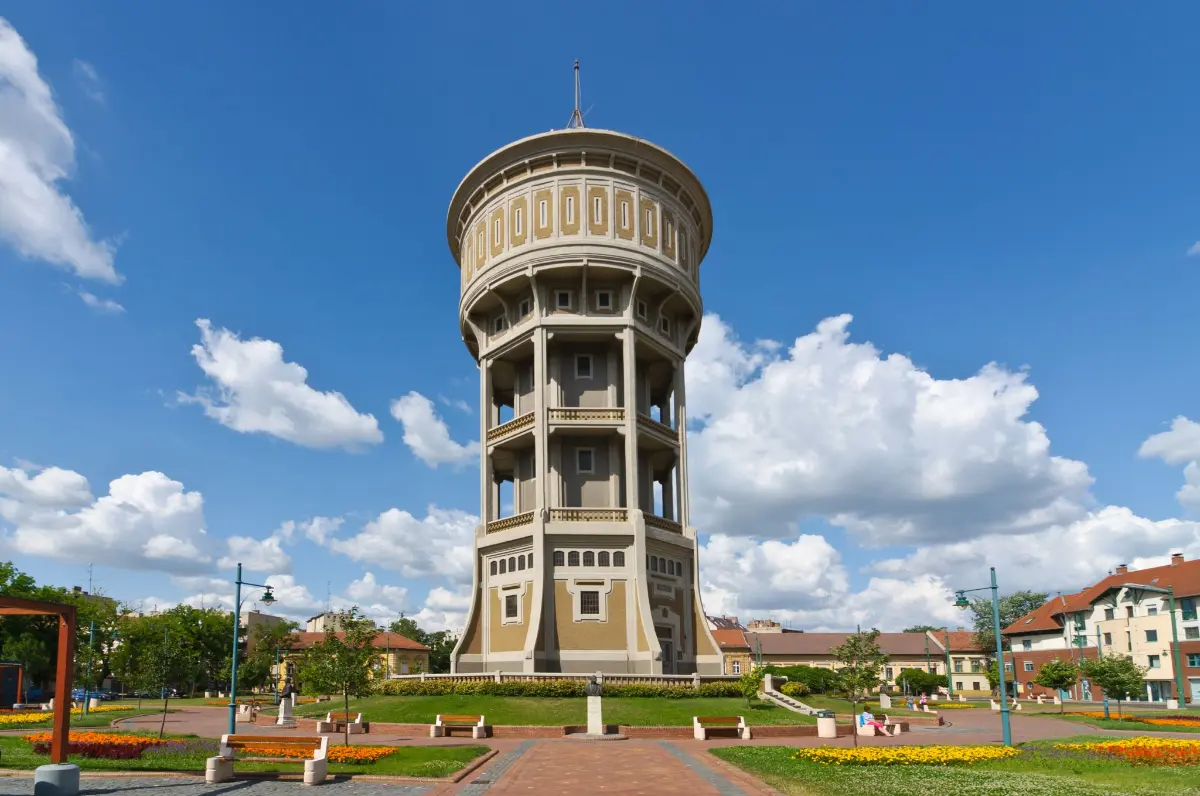
It is occasionally opened to visitors, allowing them to explore the interior. The interior houses a small exhibition featuring a Foucault pendulum – the device that makes the Earth’s rotation perceptible through its movement.
As you walk through the tower, you are not in a classic exhibition space. The stairs, the structure, and the proportions of the space constantly remind you that the building’s original purpose was quite different. This is precisely what makes it interesting: while it is now open to visitors, it retains the character that has made it a memorable part of the cityscape for over a century.
PANORAMA OF LAKE BALATON
The Siófok Water Tower, standing in the heart of downtown Siófok, is now more of a meeting place than the industrial facility it once was. Built in 1912 based on designs by Jenő Gergely and Árpád Gut, the tower served the city’s water supply for a long time, but today it fulfils a completely different role: it functions as an observation deck and exhibition space.
After entering, a panoramic elevator takes us up to the levels of the former water tank. On the lowest level of the three-part space, a fully accessible observation deck awaits, from which, on a clear day, the opposite shore of Lake Balaton, the Tihany Peninsula, and the surrounding hills come into view. From this vantage point, the city reveals a different side: the harbour, the shoreline, and the layout of the downtown streets all become visible at once.
Inside the tower, two exhibitions are currently on display. One showcases the life’s work of sculptor Imre Varga, while the other evokes Siófok’s past through local historical materials. Thus, a visit is not just about the view, but also a brief look back at how the city’s history unfolded.
The Water Tower is now a natural part of a day at Lake Balaton. It’s not a long program, but rather a stop along the way. It’s worth going up, looking around, and then returning to the rhythm of the city – with a slightly different perspective.
WHEN WE RISE ABOVE THE CITY
The new life of water towers clearly illustrates how cities’ relationship with their own past is transforming: a city doesn’t just move forward, but from time to time reaches back to what it has almost lost. These buildings operated in the background for a long time, but today they have become visible again – just in a different role.
When we climb a tower, it’s not just that we look around from a higher vantage point. The city suddenly rearranges itself: the familiar streets, squares, and buildings take on different proportions, and it becomes clearer how they relate to one another.
Perhaps that is why these places work so well. They preserve their past while making room for something new. And we go up, look around, and for a moment see the same city in a different light.