Helyszín címkék:
In the footsteps of fairy-tale bells, or impressive bell towers and their stories
Szabó Sára
What this article is about:
- The Öskü rotunda at the foot of the Bakony Mountains
- The wooden bell tower of the Reformed church in Nyírbátor
- The tall bell tower of the Serbian Orthodox Cathedral in Szentendre
- A "moving" bell at the foot of the mosque in Pécs
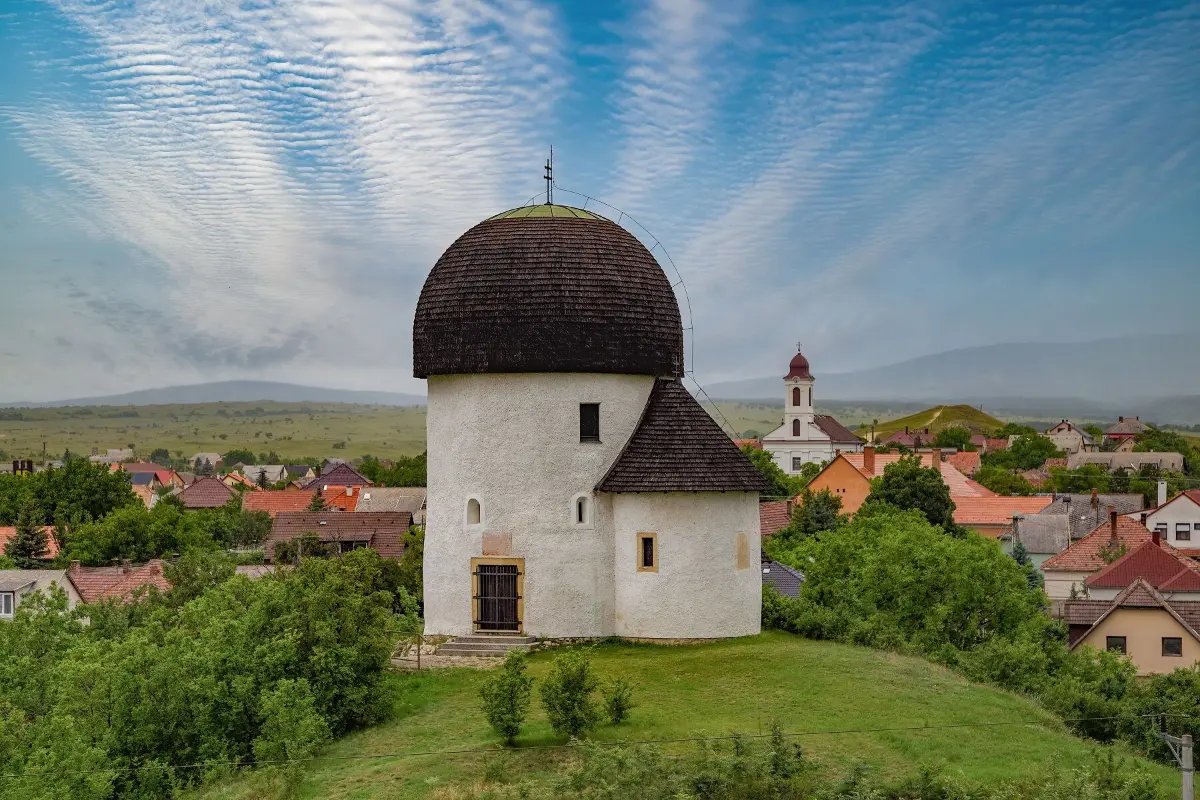
The nearly thousand-year-old rotunda at the foot of the Bakony Mountains
The round church in Öskü is one of the oldest types of churches in Hungary. Although it is not known exactly when it was built, art historians date its construction to the 11th century. The Romanesque rotunda with whitewashed walls has been towering over the hill of the village for nearly a thousand years. The wooden bell tower was added later, but the combination of the round church and the tower is like a medieval miniature come to life. In Romanesque churches, the tower often served a defensive purpose: it was a high point from which the surrounding area could be observed. The ringing of the bells not only called people to mass, but also signalled danger.
One of Hungary's most unique wooden bell towers is located in Nyírbátor
The wooden bell tower of the Reformed church in Nyírbátor is a completely different world.
This unique structure is the largest and oldest wooden bell tower in Hungary: it has a base area of 10x10 metres and a height of over 32 metres.
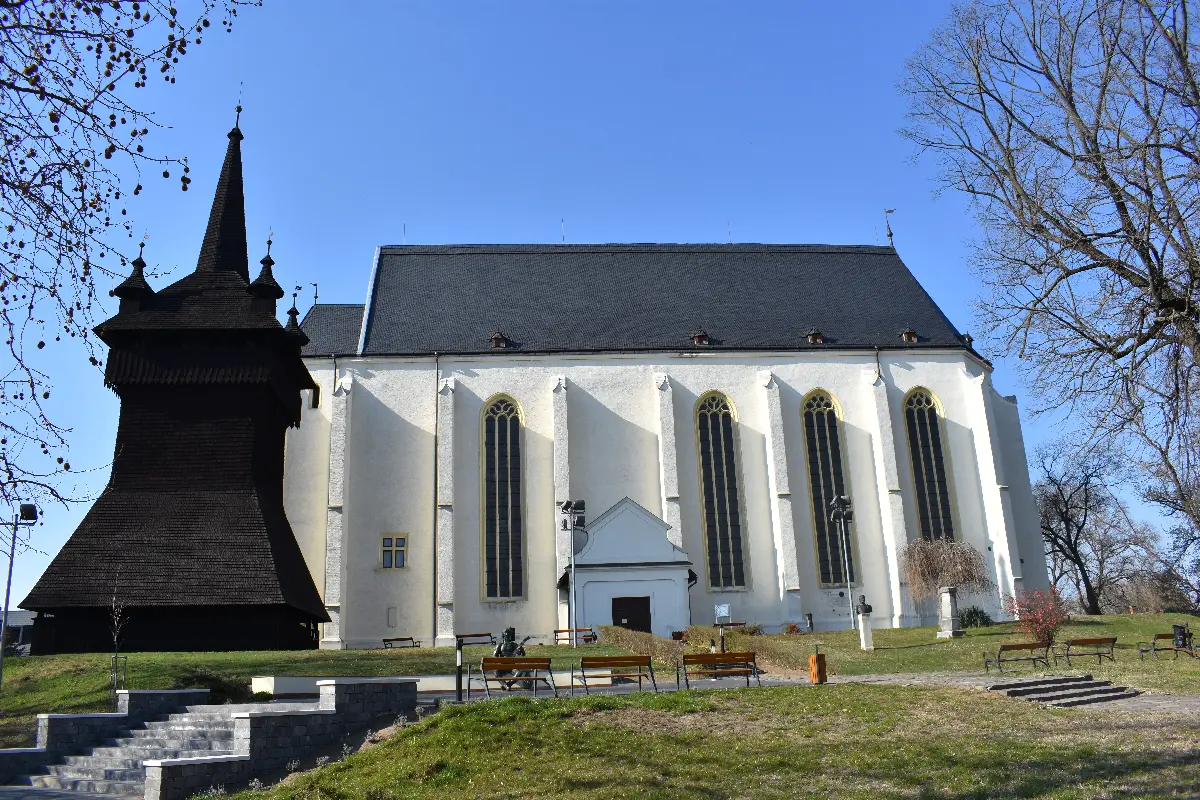
The square base is topped by a steep spire, on which the tower finial and the metal rod holding the crescent moon are located. Not only the structure itself, but also the weight of the bell in the tower is monumental: it weighs about 300 kilograms and is considered one of the ten strongest bells in Hungary. Built in the 17th century, this separate wooden tower is one of the masterpieces of Hungarian folk carpentry. Reformed communities often built separate bell towers, partly for fire safety reasons and partly because of the more modest possibilities for church construction.
One of the highest points in Szentendre is the unique bell tower
The tall bell tower of the Serbian Orthodox Cathedral in Szentendre is one of the most characteristic Baroque architectural elements in the town. The history of the tower dates back to the 18th century: the former wooden belfry next to the church was replaced by a stone tower, which was finally completed in 1777 as part of the western facade of the cathedral. The slender tower is not only an architectural highlight, but also a reminder of the period when, after the great Serbian emigration of 1690, Szentendre became one of the most important religious and cultural centres of the Serbian community in Hungary.
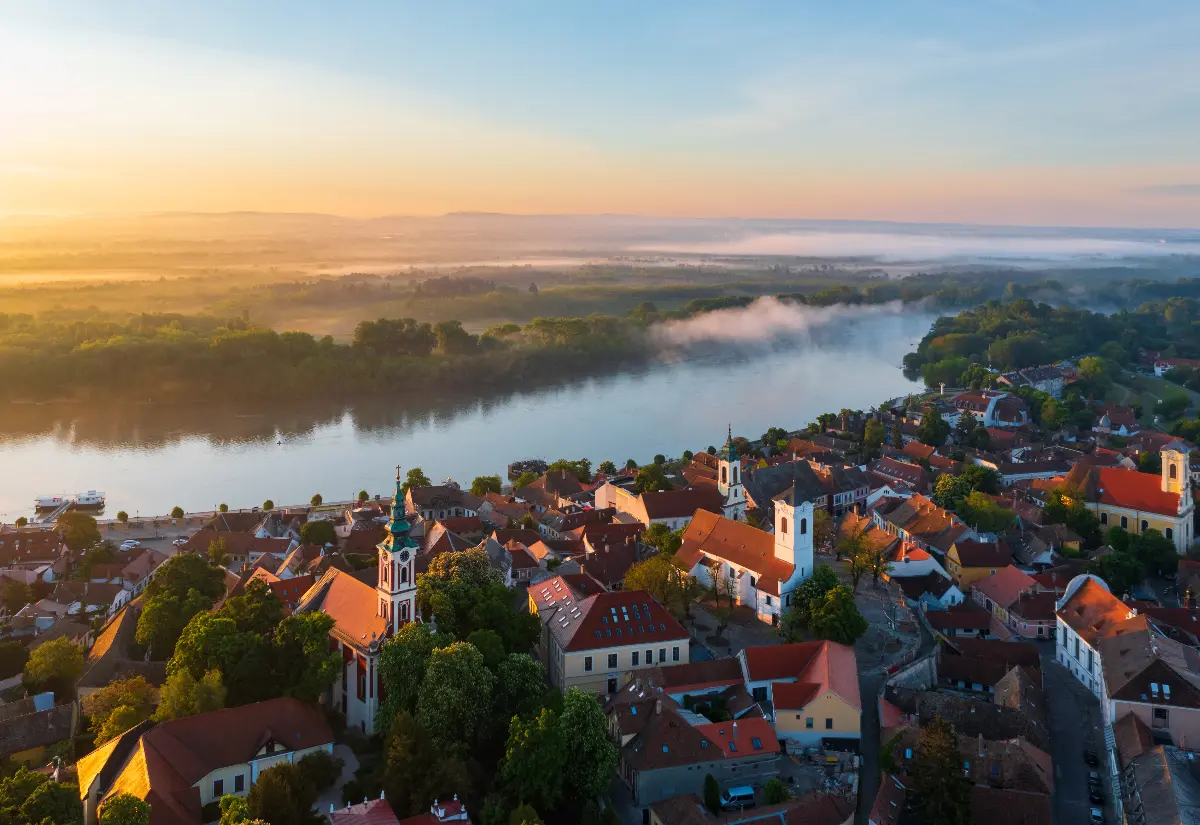
The bells of the tower once not only called people to mass, but also signalled danger along the Danube.
For centuries, the sound of the bells called the faithful to prayer and set the rhythm of everyday life in the town.
Time travel to the Turkish era: a "moving" bell at the foot of the mosque in Pécs
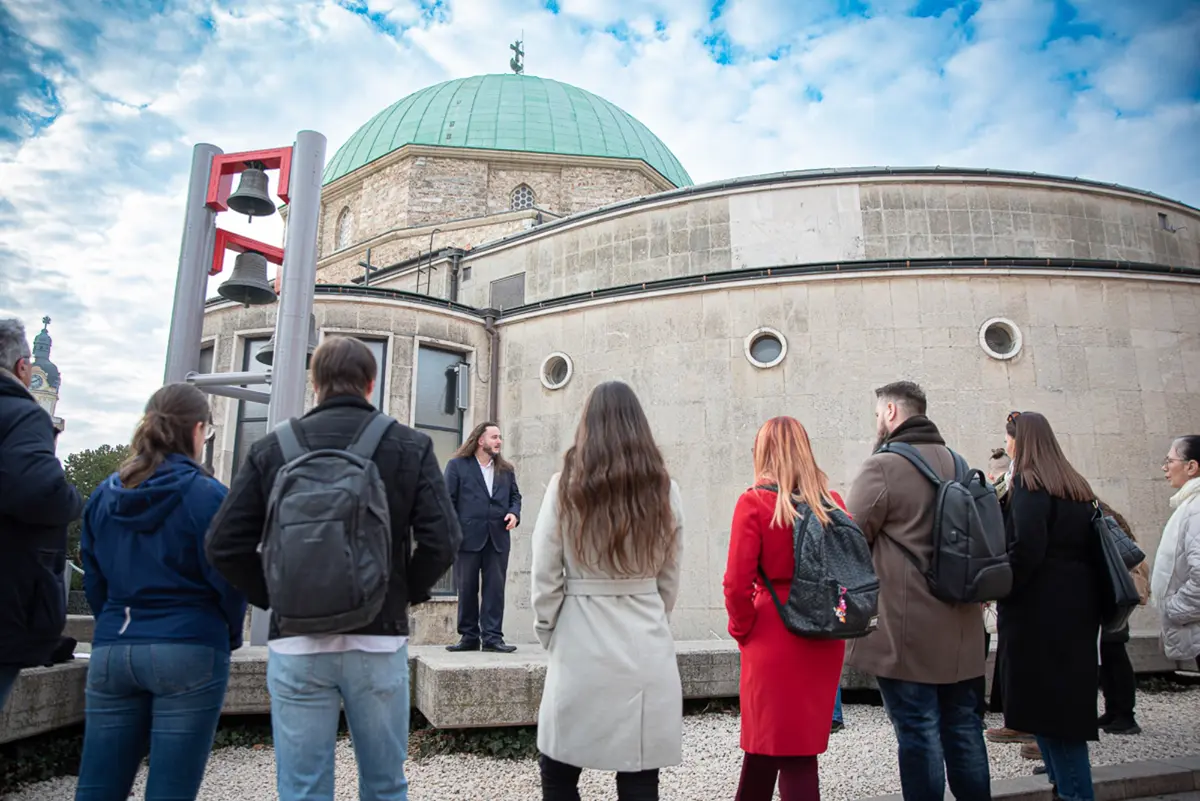
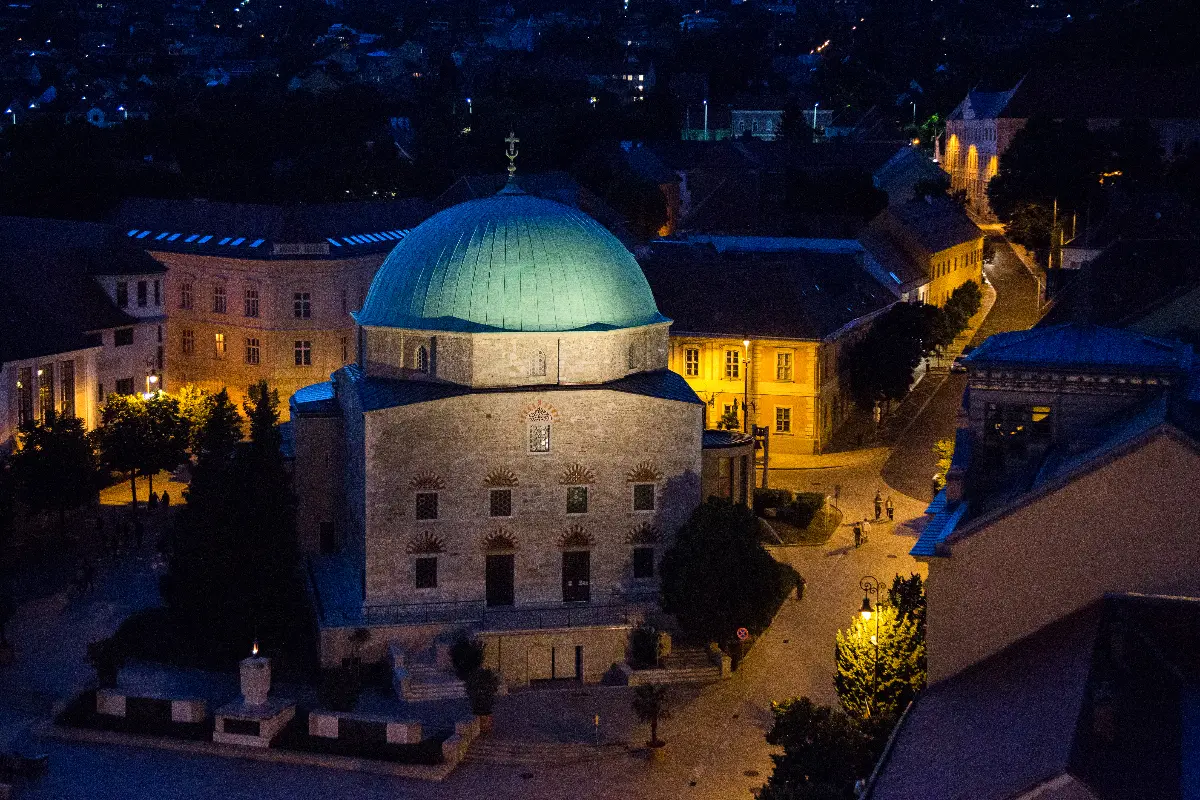
The Candlemas Church of the Blessed Virgin Mary, better known as the Gázi Kászim Pasha Mosque, stands in the main square of Pécs and was an Ottoman place of worship in the 16th century. During the Turkish occupation, of course, no bells rang in it – in Islamic tradition, the muezzin's voice called the faithful to prayer. However, at the end of the 17th century, the town returned to Christian Europe and the mosque was converted into a church. In addition to being an iconic symbol of Pécs, the mosque is also one of the most significant reminders of the Turkish era in the Carpathian Basin.
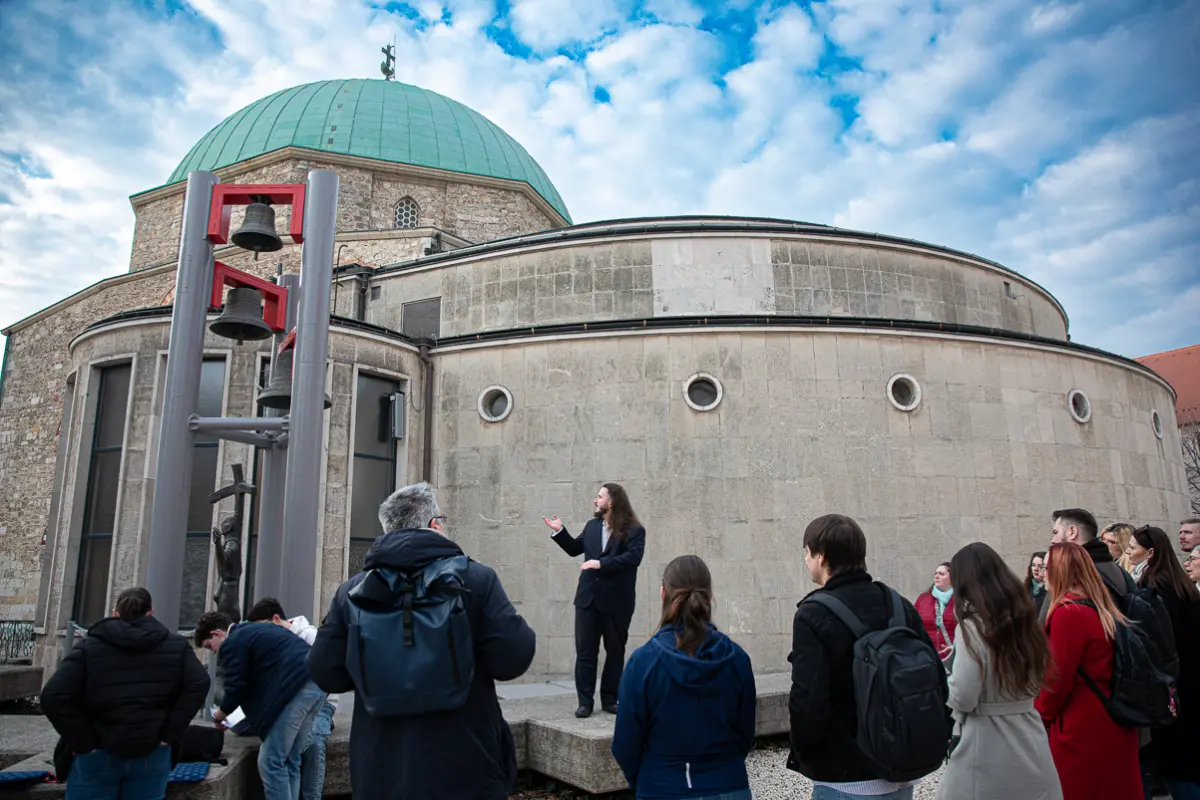
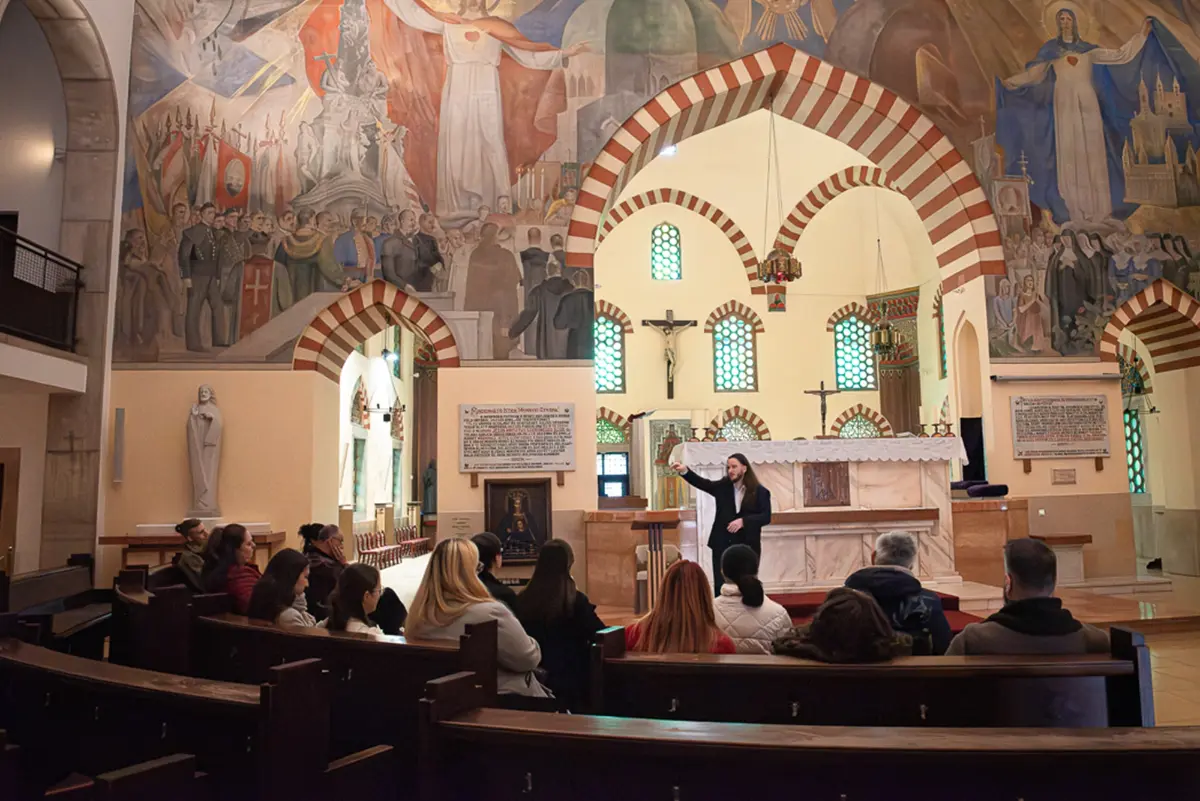
Its architectural grandeur is still impressive today: its interior is made special by the yellowish-green light filtering through the ogee arch windows, the calligraphic quotations from the Koran on the walls, and the mihrab, a prayer niche facing Mecca.
As part of the Pécs Diocese's programme entitled "From the Mosque to the Bell Tower," visitors can learn about the history of the mosque and the St. Bartholomew Bell Tower located at the foot of the building. The programme, which starts at noon, begins with a bell concert; the unique, moving tower "breaks into song" three times a day, while the bell tower rises to a height of eight metres.