Helyszín címkék:
From snowdrops to ice birds: time travel in the gardens of the Hungarian aristocracy, resplendent even in winter
Hajdú Gábor
- winter and spring walks in fabulous gardens
- Alcsút Arboretum
- Brunszvik Castle park, Martonvásár
- Esterházy Castle garden, Fertőd
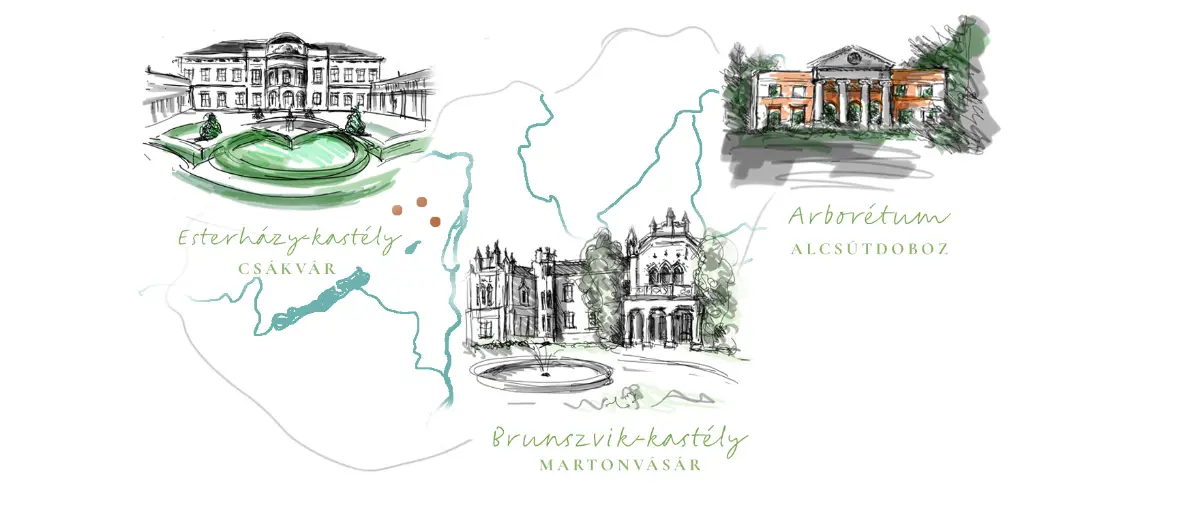
Alcsút: The archduke’s botanical paradise
The story of Alcsút begins with Palatine Joseph. The archduke was a passionate gardener and renowned botanical expert who invited head gardener Vilmos Jámbor to his estates in Alcsút and Margaret Island. Their collaboration proved to be extremely fruitful – this marked the beginning of the large-scale planting of evergreens and exotic plants.
Palatine Joseph was one of the greatest promoters of plane trees in Hungary, so it is no coincidence that these monumental trees still thrive in Alcsút today.
From the steps of the castle portico, visitors can still enjoy an unforgettable view: the lookout point (gloriette) built on the hilltop, the play pavilion, and then the gently sloping hillside that leads the eye to the sparkling surface of the lake. The swamp cypresses of Klotild Island and the flotilla harbor all add to the picturesque scenery. Jámbor had an artesian well drilled under the direction of Vilmos Zsigmond, solving the park’s water supply issues and enabling further large-scale developments.
The largest wave of construction took place in the 1880s: the lake was enlarged, and in 1871-72, the huge, 56-meter-long palm house was built according to the plans of Miklós Ybl. The ZOO complex and the bear house were also built with his collaboration. Alcsút enjoyed such popularity that Mór Jókai, János Vajda, and the contemporary Vasárnapi Újság newspaper enthusiastically reported on it as the most spectacular park in the country.
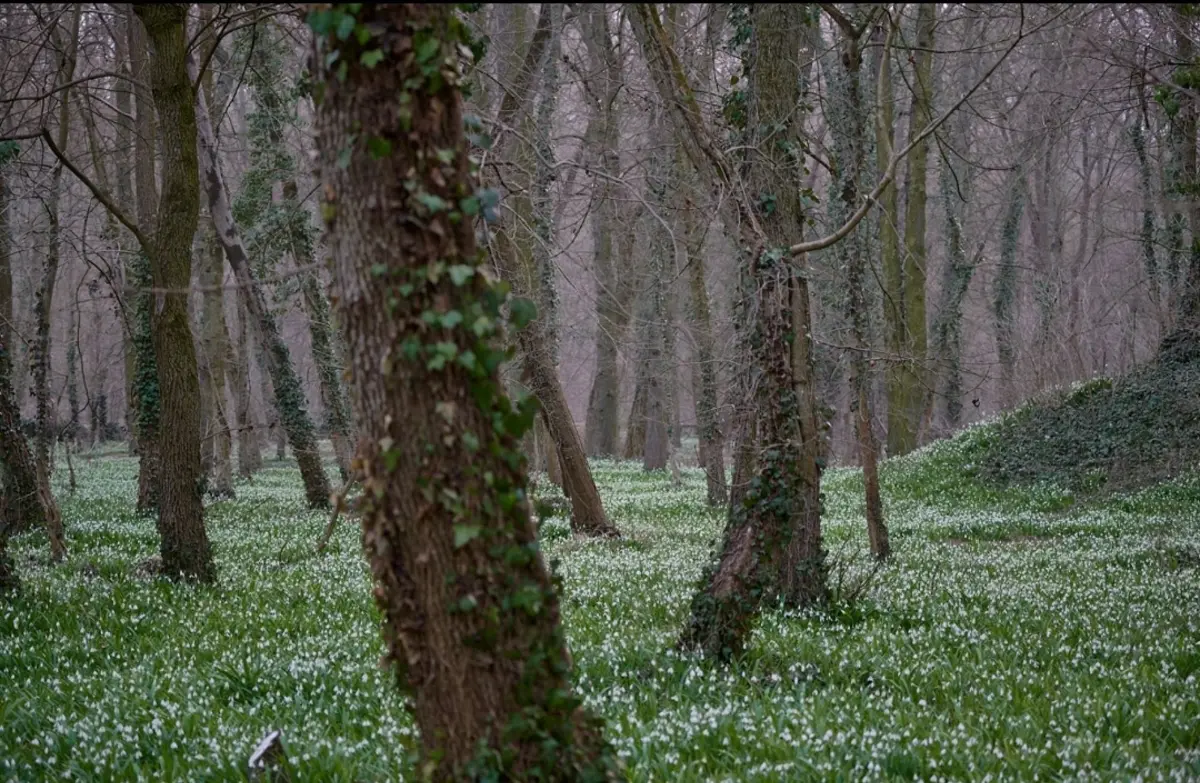
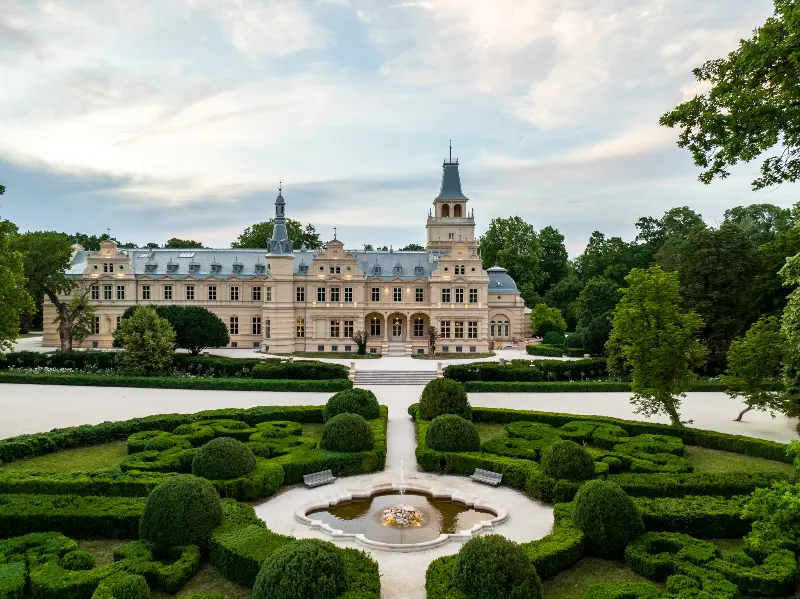
Today, only the façade of the castle remains, yet it still offers a captivating sight – especially when we consider that the entire park was designed around this central axis. However, the water house, the gardener’s houses, the riding hall (one of the earliest reinforced concrete structures in the country), the bridges, the lake, and the water system have remained. Today, thousands of plant species and varieties thrive in the 40-hectare garden: unique variegated plane trees, huge pines, giant thujas. We can see linden trees and plane trees, Japanese pagoda trees over 160 years old, Turkish hazelnuts, tulip trees, iron trees, and blood trees. The most beautiful double row of plane trees in the country awaits visitors on Máriavölgyi Road. In February, you can see the country’s largest contiguous carpet of snowdrops, covering more than 2.5 hectares. Among the snowdrops that bloom in early spring, 24 varieties of 7 species of snowdrops can be seen.
Martonvásár: The garden of Beethoven and the Brunszvik Family
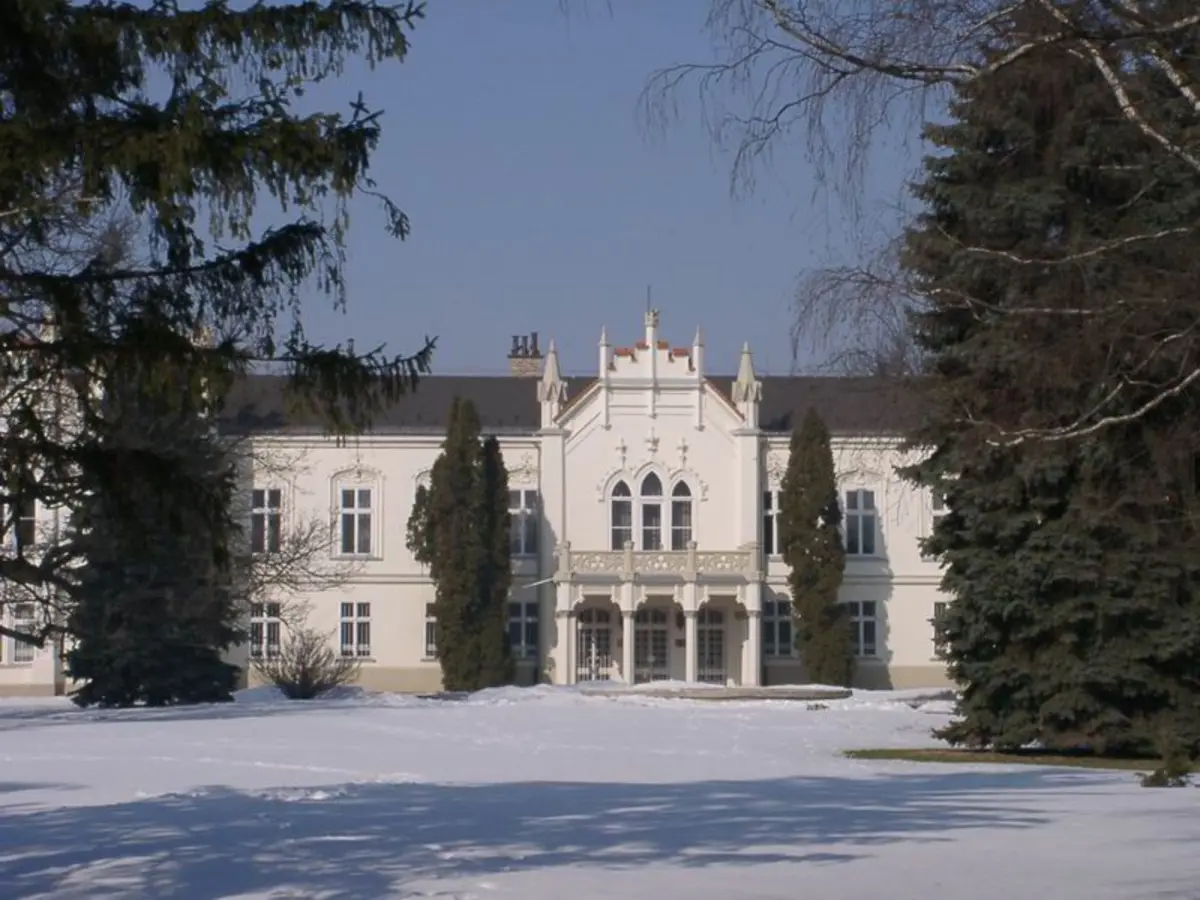
Just 20 kilometers from Alcsút, another equally fascinating world unfolds before us. The park of the Brunszvik Castle in Martonvásár is one of the most beautiful and well-maintained castle parks in Hungary, which has been transformed into a large-scale complex through several renovations.
The 7,500-acre estate in Martonvásár was donated to Antal Brunszvik by Maria Theresa for his role in the land reform. The family soon began developing the land: drainage, pond and marsh drainage, forest, vineyard and orchard planting, and the purchase of breeding animals were all part of the transformation.
A modest Baroque garden was first laid out in front of the southern façade, based on a concept similar to that of the Baroque castle garden in Nagycenk. However, this Baroque garden did not remain for long, because in the 1790s, work began on transforming the nearly 100-hectare park into a landscape garden. The designers made clever use of the existing natural features: the floodplain, marshy vegetation, and the lake fed by the St. Ladislaus stream.
In the 19th century, further plantings took place, first with plants typical of the “plane tree era”, and later mainly with deciduous exotics. Weeping willows and poplars were the typical plants used to create atmosphere in the garden. The park’s most spectacular plants date back to this period: the huge copper beech, black walnut, one of the country’s largest swamp cypresses and horse chestnuts growing on the island. Unfortunately, the huge Turkish hazelnut trees have now disappeared from the park, but the remaining vegetation is still impressive. The lake with its island, the bridge and stone viaduct, and the watermill were all symbols of sentimentality in the garden.
Beethoven was a guest at the castle several times between 1800 and 1812, and his memory has been kept alive ever since with high-quality summer concerts. In his honor, there is also a memorial museum operated in the castle. Today, the Agricultural Research Institute of the Hungarian Academy of Sciences operates in the area, and the park is open to the public.
Csákvár: The pioneer of landscape gardens in Hungary
Just a few kilometers from the gardens of Alcsút and Martonvásár lies the park of the Esterházy Castle in Csákvár, one of the earliest and best-preserved examples of landscape gardens in Hungary. The castle, which still stands today, was built in 1778 by János Esterházy, using the manor house built for Count Miklós Esterházy between 1760 and 1765. In 1779, work began on creating a garden worthy of the castle, consisting of several somewhat independent units: an enclosed English garden, a star-shaped walkway, a pheasant garden, a manorial kitchen garden, and the Alley forest. In 1781-82, a spectacular water system was created in the English garden, followed by the construction of garden buildings: the large pheasant house, the wooden “Dutch farmhouse” and an artificial cave. The layout of the star promenade followed the traditions of geometric Baroque gardens, but also featured landscape details.
In 1800, the founder was succeeded by his son, Count Miklós Esterházy, who considered the transformation of the park more important than the renovation of the building. The three axes radiating from the center of the castle have been preserved, but the entire park has been transformed into a landscape garden. The old, sentimental garden, rich in details, was replaced by a classic landscape park.
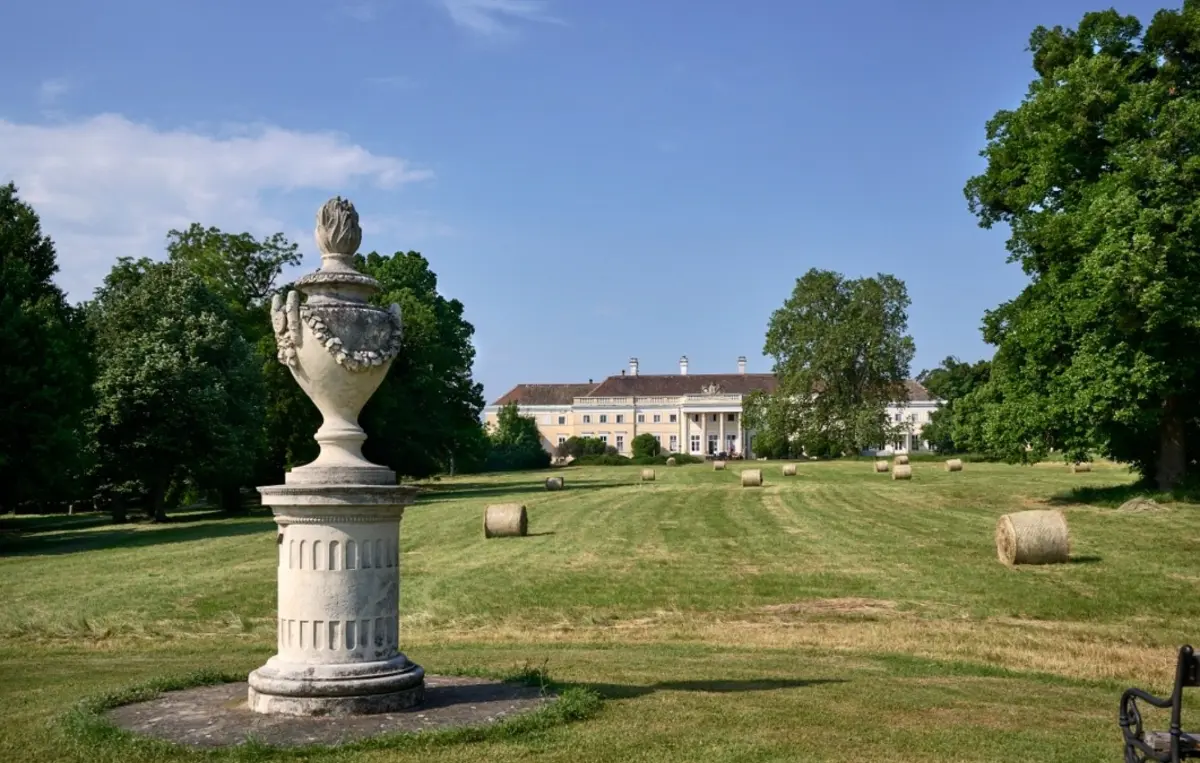
The park in Csákvár is one of the most significant and distinctive parks in the Vértes Mountains region, where engineering methods have been used to supply water to the very dry growing conditions. A lake was also created in the park, and a lookout tower was built from the soil removed from the riverbed. The plant life is extremely rich: visitors can admire giant sequoias, blood beeches, large iron trees, Turkish hazelnuts, and groups of silver linden trees. In addition to forest pines and black pines, there are also beautiful red pines, and the surrounding landscape is characterized by the presence of hornbeams, ash trees, elms, and various types of oak trees.
The park’s fortunes took a turn for the worse after World War II, but in recent years several buildings have been restored: the sundial, the Holy Trinity building, the hunting chapel; and the Geszner house has been rebuilt. The latter houses the visitor center of the Vértes Nature Park, where you can find an exhibition showcasing the wonderful world of Vértes. From early spring, just like in Alcsút, visitors are greeted by a carpet of snowdrops, and around the lake you can often see kingfishers, which spend the harsh winter months on the unfrozen rivers, one of the most colorful sights in Hungary.