Helyszín címkék:
Three hidden but beautiful synagogues in Hungary that are worth visiting
Imagine
What exactly will be discussed?
Synagogue construction during times of reform and peaceful prosperity
Budapest's hidden treasure: the synagogue on Cserkesz Street
Great survivors in the countryside: Pécs and Hódmezővásárhely
Baroque heritage in Tokaj-Hegyalja: the synagogue in Mád
During the reform era and the period of peaceful prosperity that lasted from the Austro-Hungarian Compromise of 1867 until the outbreak of World War I, the country was filled with beautiful synagogues, but some of them disappeared without a trace during the Holocaust and the decades following the communist takeover, or were transformed beyond recognition.
This does not mean, of course, that among the more than six hundred places of worship that existed at the end of the 1930s, there are no real survivors that continue to serve their original purpose or open their doors to visitors as cultural centers, schools, or places of worship for other religions. We have now collected a few of these. While exploring the country, it is definitely worth visiting these places.
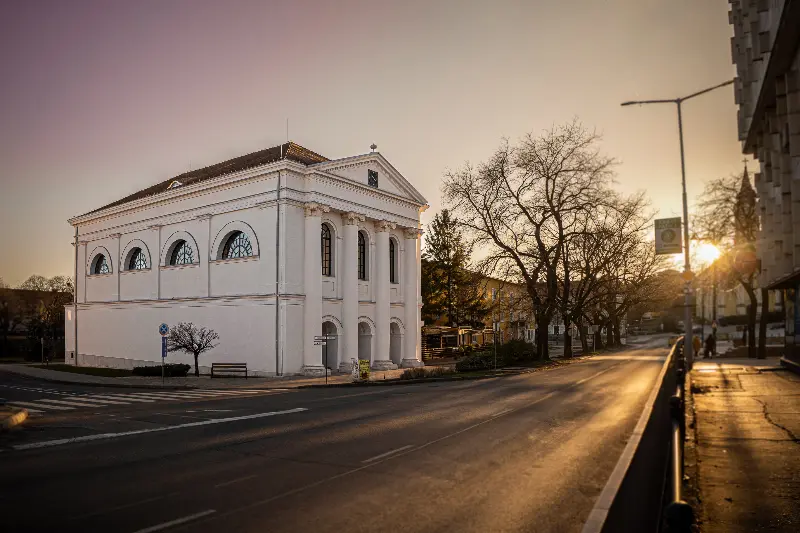
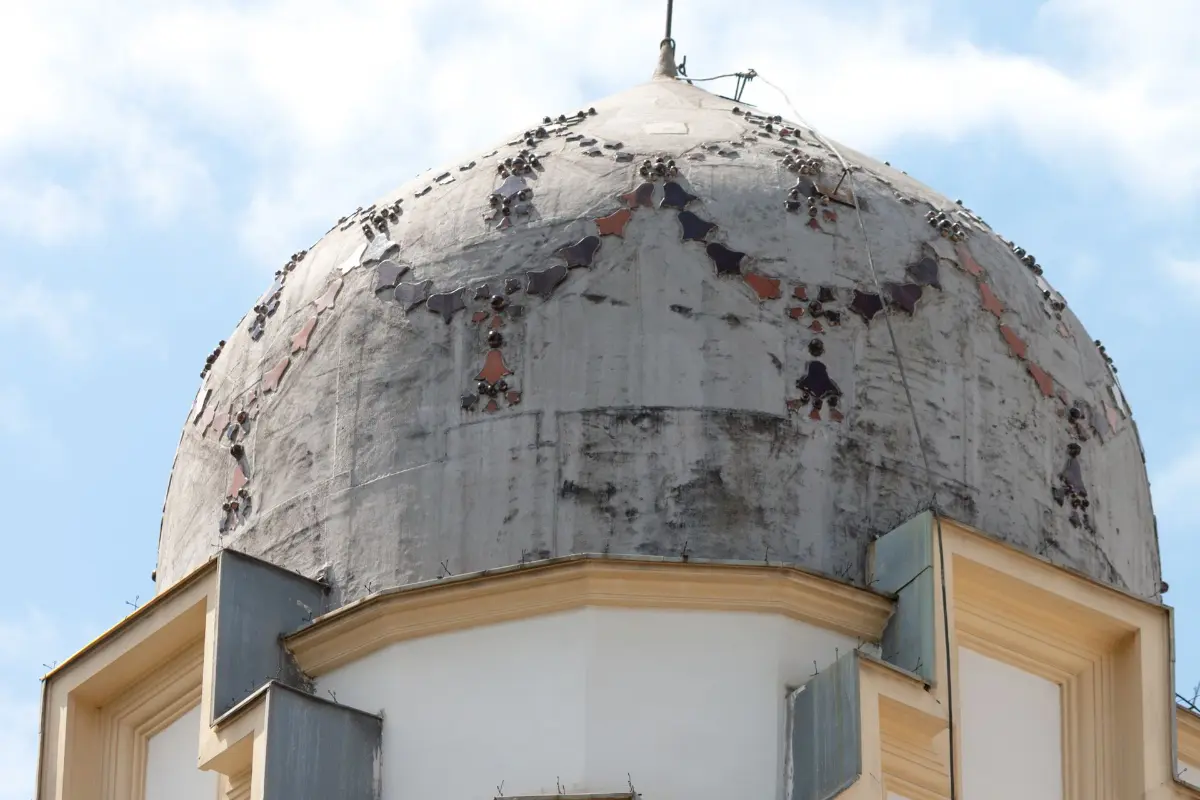
A real surprise in the capital is the Church of All Nations (Mindenki Temploma) on Cserkesz Street, completed in 1911 near the Dreher brewery, which is currently home to a neo-Protestant congregation and was designed by Richard Schöntheil (1874-1944), who shaped the Art Nouveau face of the district. On the dome of the building, which has a diameter of twenty-two meters, we can see architectural ceramics reminiscent of István Medgyaszay’s buildings. Although much of its interior decoration has unfortunately not survived, walking through the former synagogue hall or even just around the building, we can still easily appreciate its beauty today.
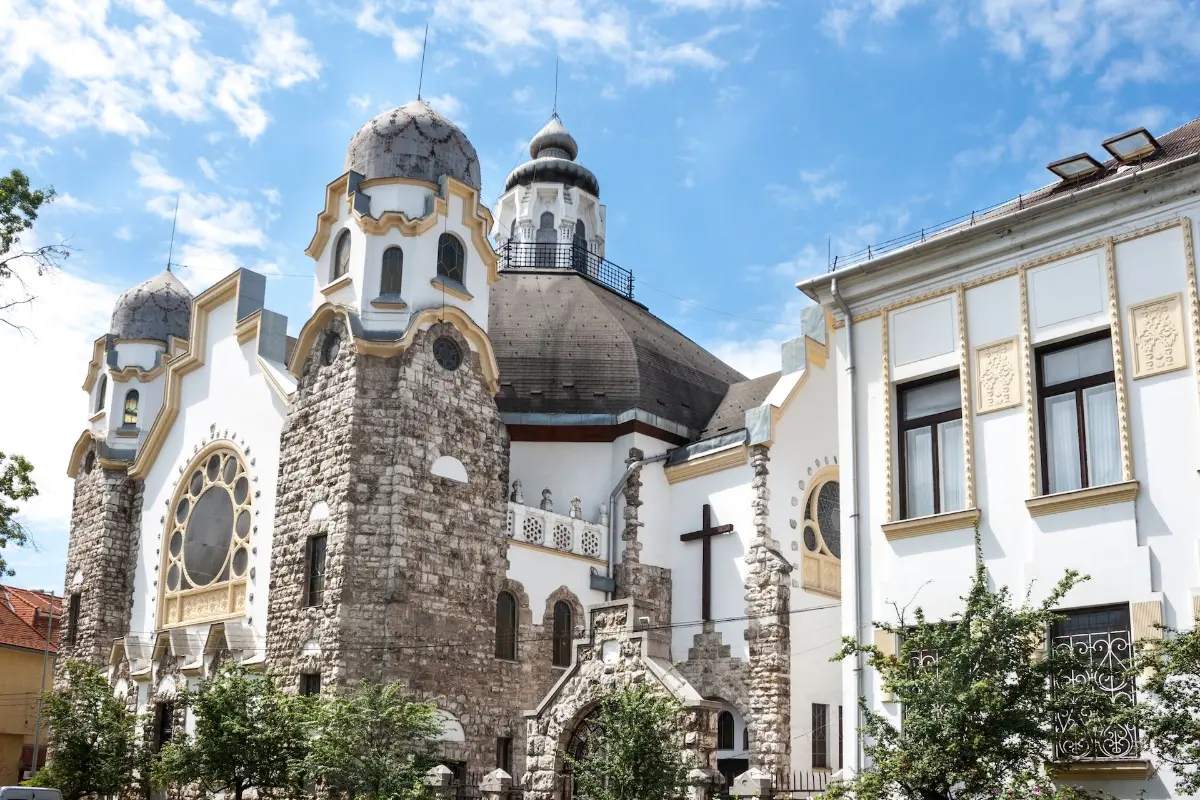
The prayer house, abandoned by the local Jewish community exactly sixty years ago in 1966, was first used by the Agricultural Museum, then by the Nikex Foreign Trade Company, and finally by Hungarian Television, before being left to its fate. The renovation was carried out between 1989 and 1991 by the Sion Congregation, the new owner that appeared at the time of the regime change. They still gather here today, and the wing that once housed a community kitchen and school has been taken over by a foundation.
Almost half a century earlier, in 1868-1869, the only synagogue of Pécs (1 Fürdő Street) was built, based on romantic designs created jointly by Frigyes Feszl, who also designed the Pesti Vigadó, and his two frequent collaborators, Lipót Kauser and Károly Gerster. The building, which is still in use on a few days of the year, is the largest of its kind in Transdanubia, thanks to Lipót Baumhorn, the most prolific architect of Hungarian synagogue architecture, who expanded it in 1905.
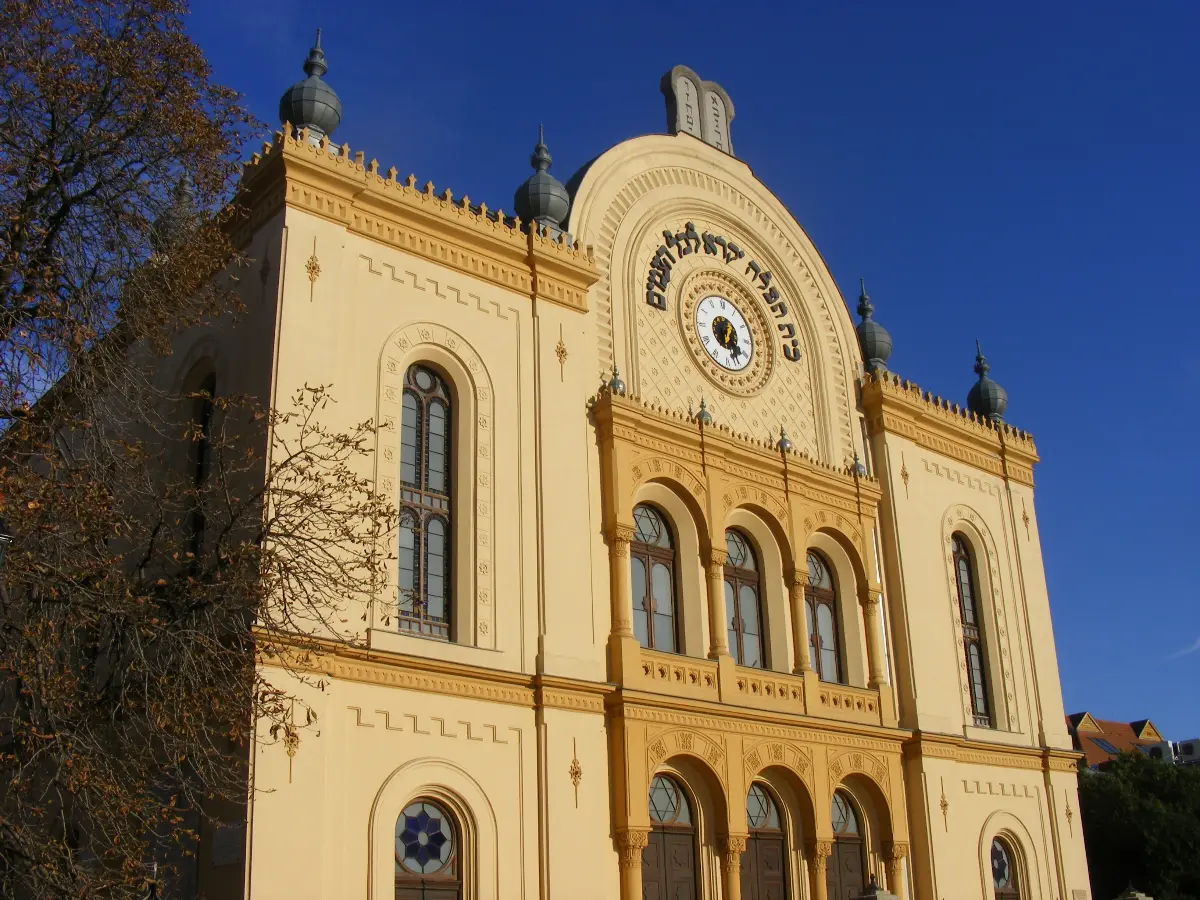
With its onion dome-shaped ornament, tympanum concealing a clock, and ornamental decorations inside, the building presents a unified image that can be viewed on screen, but the real experience comes from visiting in person. For more information, please contact the Jewish Community of Pécs.
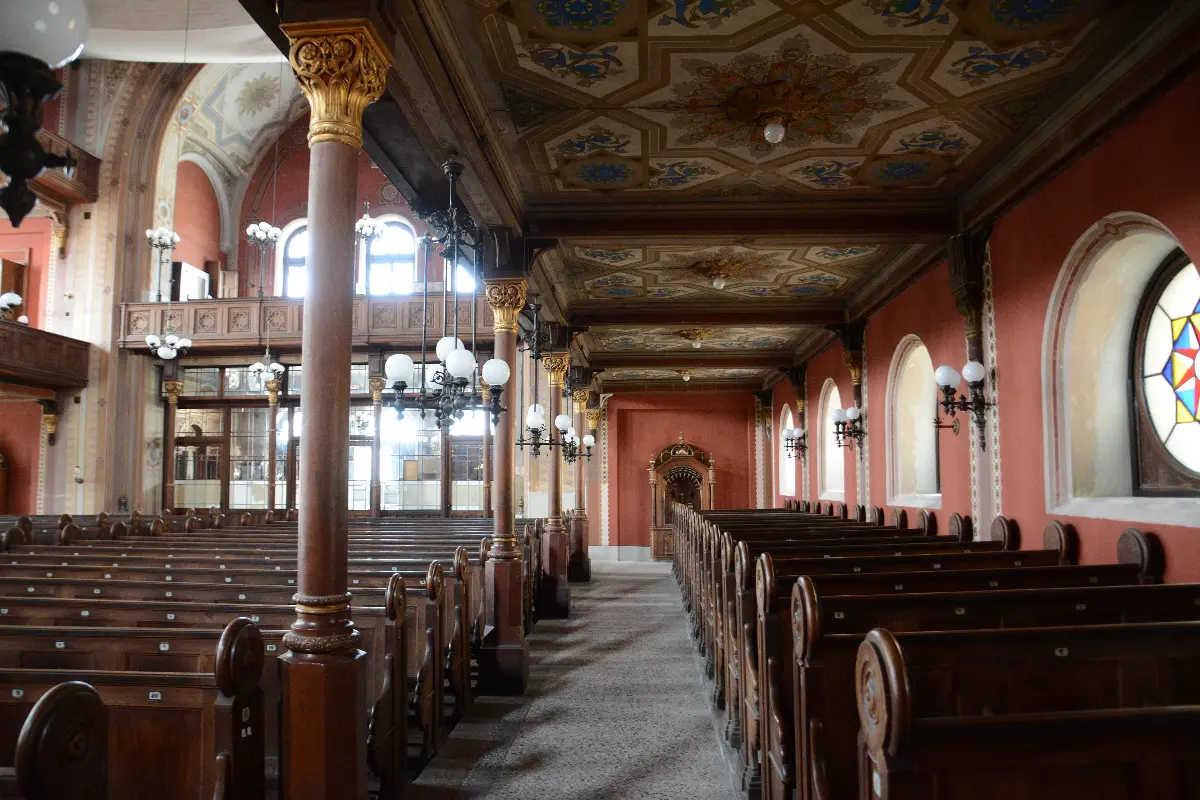
The former synagogue of the Jews of Hódmezővásárhely has a similar history. The synagogue (2 Szent István Square), completed in 1857, built according to the plans of Miklós Busch, a master builder from Szentes, underwent a complete renovation that changed its appearance, which was supervised by Miksa Müller, one of the leading figures of Art Nouveau in the Southern Great Plain, between 1905 and 1908, but the work had little effect on the interior. This is when the rose window, conceived from the encounter between Art Nouveau and Neo-Gothic styles, was installed, and it remains the most beautiful feature of the main façade to this day.
The building became the property of the city in 1984 and has since been renovated in several stages, but the original furnishings, such as the hand-carved benches, the sacristy, and the beautiful gallery, have been preserved. Next to the synagogue, which has been open to visitors again since April 1 this year, stands the former Jewish elementary school, which now houses an exhibition.
If you decide to take a walk around the city after that, it will be time to think about lunch or a nice dinner. For this, we recommend the Bagolyvár Club Restaurant (27 Kaszap Street), where those craving home-style flavours and specialties alike will find what they are looking for.
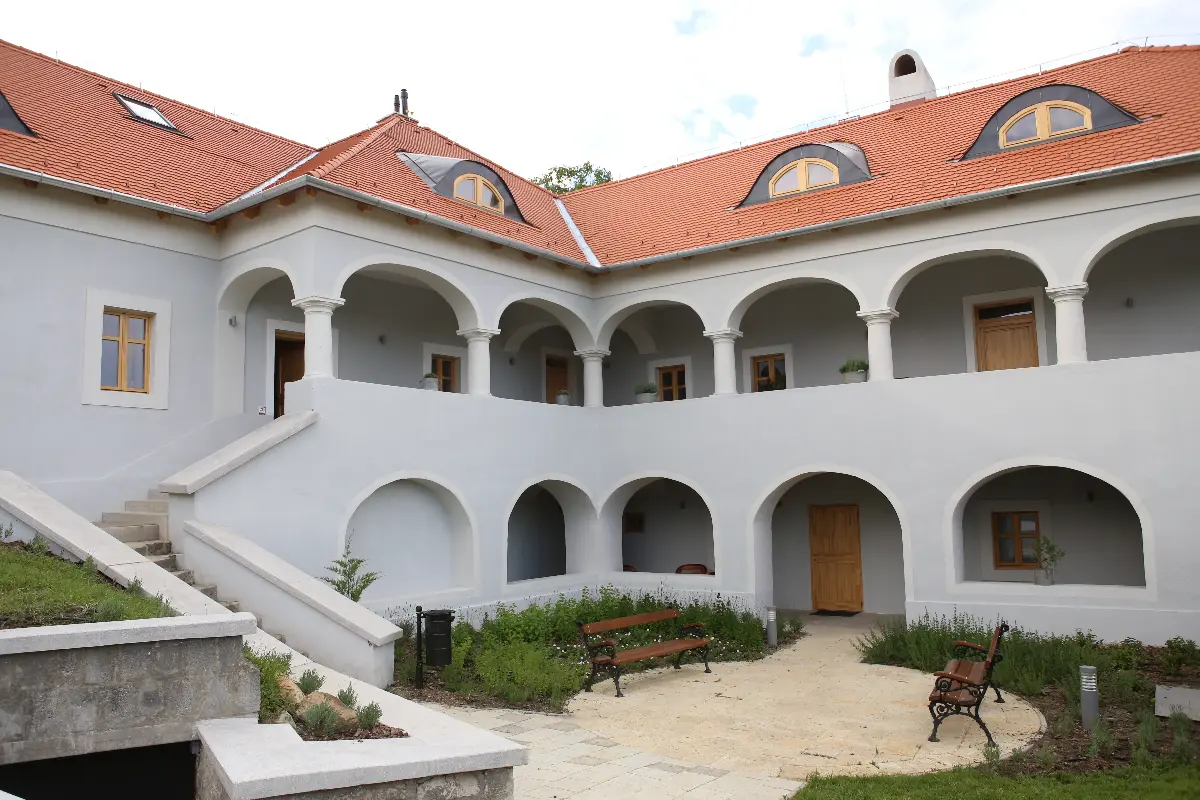
If you are traveling to the northeastern part of the country, Tokaj-Hegyalja, or Eger, it is worth making a detour to Mád, where wine merchants and wine-producing families joined forces to create one of the most beautiful Baroque Jewish building complexes in rural Hungary. The prayer house, completed in 1795, also included a Talmud school that was famous far and wide.
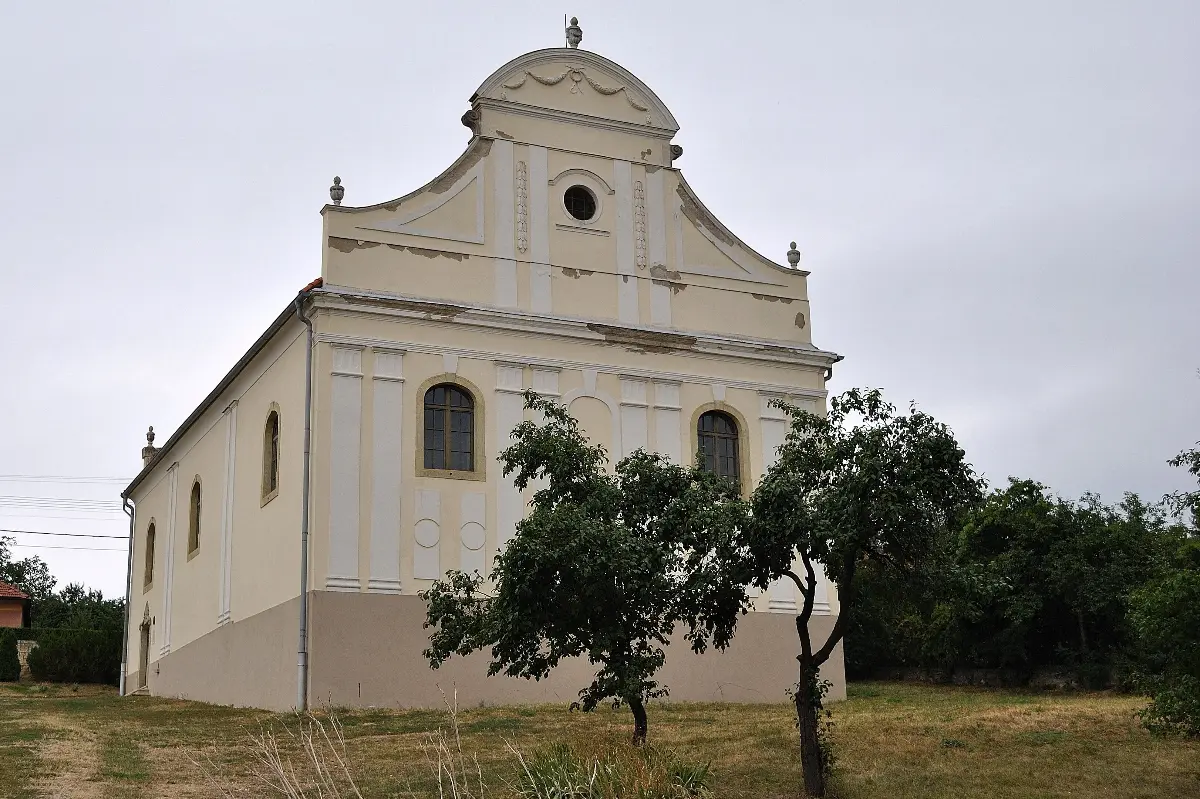
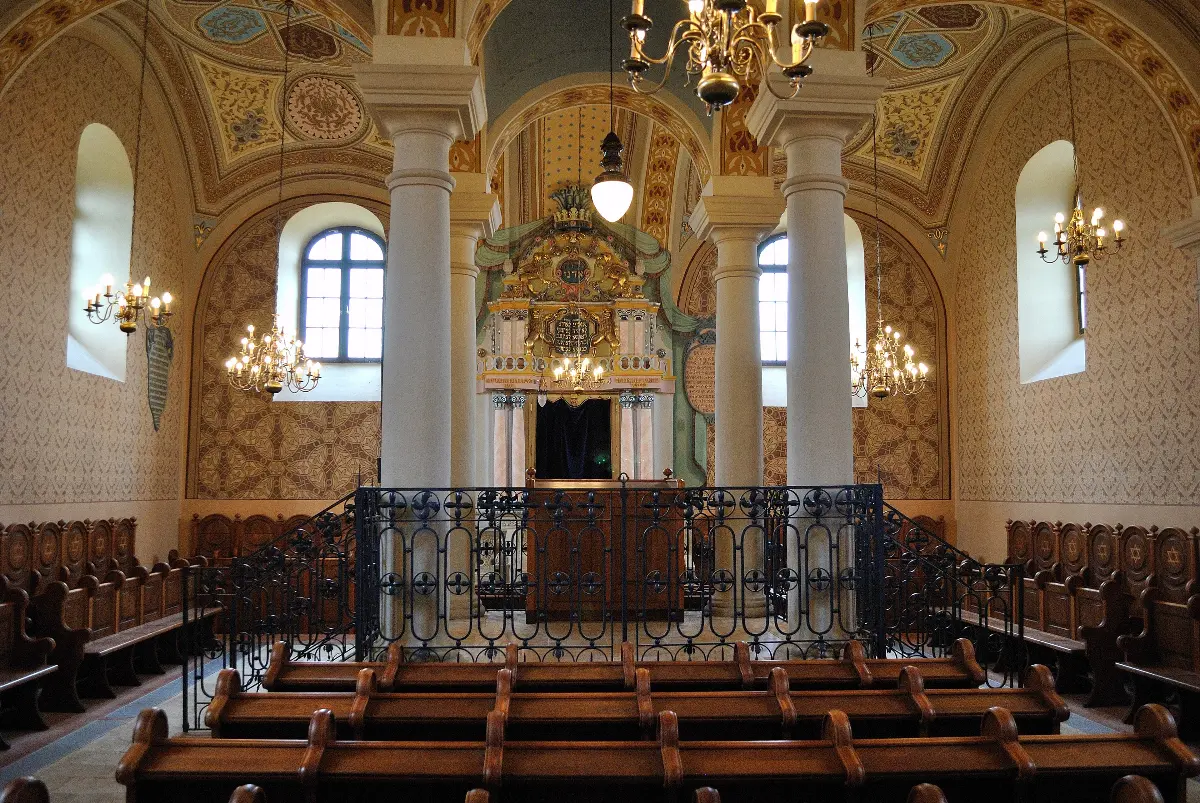
Anti-Semitism did not affect Mád until the outbreak of World War II, so Catholics, Protestants, and Jews lived together in complete peace. The situation was changed by deportations and the Holocaust. After the war, the building was left abandoned and over the decades it fell into a state of disrepair. Finally, between 2003 and 2005, it was saved, while the rabbinical house and school building were restored by 2016. The quality of the work has been recognized with numerous awards. Behind the façade with its Baroque features and Louis Seize style, there are beautiful interiors, an elaborate women’s gallery, and richly painted walls. These were successfully restored as a result of historical wall research, so today’s image is the same as what worshippers once saw here.
While exploring the area, it is worth tasting the best wines of the region or stopping for lunch at the Oroszlános Borvendéglő wine restaurant (Tállya, Rákóczi u. 23.). For those craving authentic Italian flavours, Anyukám Mondta (Encs, 57 Petőfi Sándor Road), considered one of the best in the country, is also an excellent choice.
Traveling through different parts of Hungary, we can still find many beautiful, well-maintained or abandoned prayer houses. These are also worth visiting, as they give us a more complete picture of the world that existed in the time of our parents, grandparents, or even great-grandparents.
Do you like exciting stories, time-travel discoveries, and secret places? Then you should explore the country on organized city walks! For example, Imagine has been organizing city walks, exclusive building tours, food tours, and team-building events throughout the country for more than 15 years.