Helyszín címkék:
A cave spring and a ‘concrete tulip’ deep in the forest: the story of the Vízfő Spring
Szabó Sára
What exactly will we be discussing?
- Through the alder forest to the Vízfő spring
- The unique Forrásház (Spring House) and the ‘concrete tulip’
- Mills, sourdough delicacies and local flavours
- Nature walks and experiences in Orfű
The heart chakra of Baranya
Orfű is undoubtedly one of the liveliest, most exciting and most versatile towns in the region. Year after year, it hosts the ‘Fishing on Orfű’ pop music festival; visitors can try their hand at numerous water sports on Orfű’s lakes, whilst adventurers will find caves, lookouts and hiking trails in the Mecsek Hills. To top it all off, Orfű also boasts a wealth of excellent dining options.
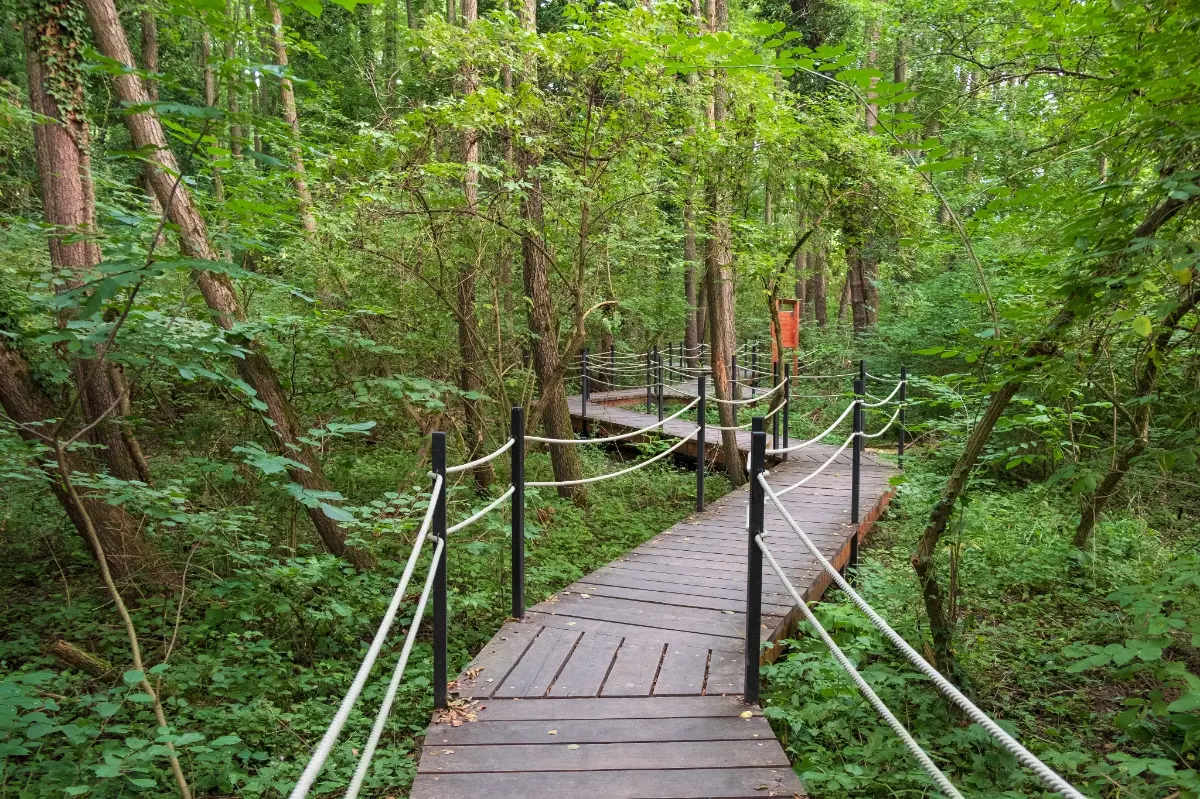
One of the most popular destinations is the Orfű Mills, from where it is just a onekilometer’s walk to the Vízfő spring. The Vízfő Nature Trail runs along a raised boardwalk through the protected alder forest – which in spring is carpeted with a continuous blanket of wild garlic – following the course of the stream. At the information points along the way, you can read interesting facts about the local wildlife and the unique natural features of the Mecsek. The nature trail, which takes about half an hour to walk, is open to the public all year round, and by the time the family has completed the walk, the children will likely be able to easily identify the alpine grasshopper and the large peacock butterfly. The walk ends at the Vízfő Spring, whose abundant karst water bursts to the surface from the Vízfő Cave. The spring also feeds the stream whose water has provided the energy to power the mills of Orfű for centuries.
Hello Hungary’s tip: You can complement your nature walk with some fun exploration: sign up for the guided tour called “What does the alder forest hide?” or the rucksack treasure hunt “The Great Adventure of the Bear Ant”. Advance booking is required for these programmes at the Mills.

The story of the ‘concrete tulip’
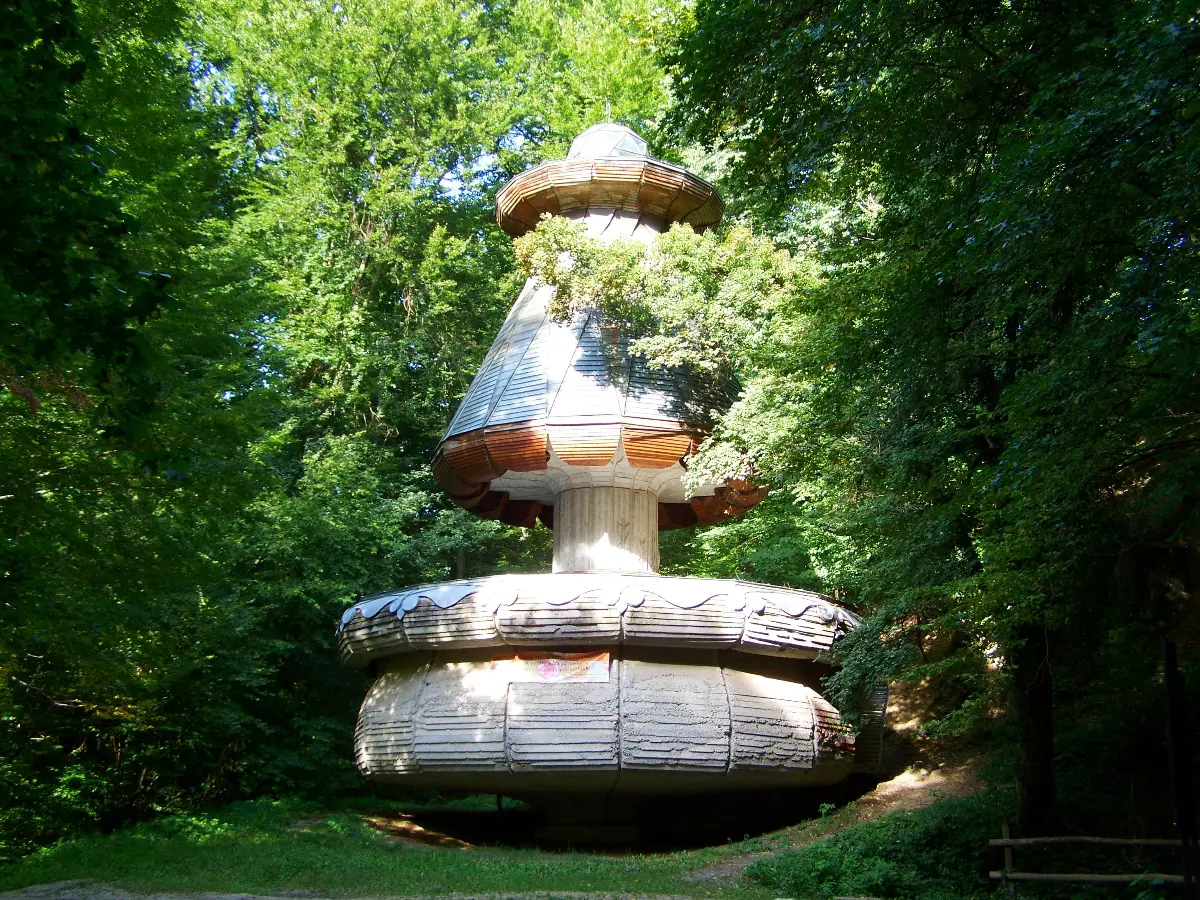
As soon as the row of benches comes to an end, your eye is immediately drawn to the building towering near the spring, which at first glance presents a surreal sight. Because of its colourful, reinforced concrete form – which rises from the natural surroundings and tapers towards the top – the Spring House is often referred to as the ‘concrete tulip’ or ‘mushroom’. However, this unusual building was not designed as a sculpture: it was originally an engineering structure intended to harness karst water and supply water to Komló.
The Forrásház (Spring House) was built between 1970 and 1974 to a design by György Csete, with structural engineering by Jenő Dulánszky. The underground and ground-floor sections housed the technical equipment for the water supply, whilst the upper level of the building served as a rest area for cavers. The unusual form is not an end in itself: Csete positioned the technical functions within the wooded surroundings in such a way that the building is both distinctive and in harmony with the landscape.
The Forrásház (Spring House) was designated a listed building in 2002 and is now regarded as one of the early, emblematic works of Hungarian organic architecture.
Mill tour and raspberry-pistachio snail

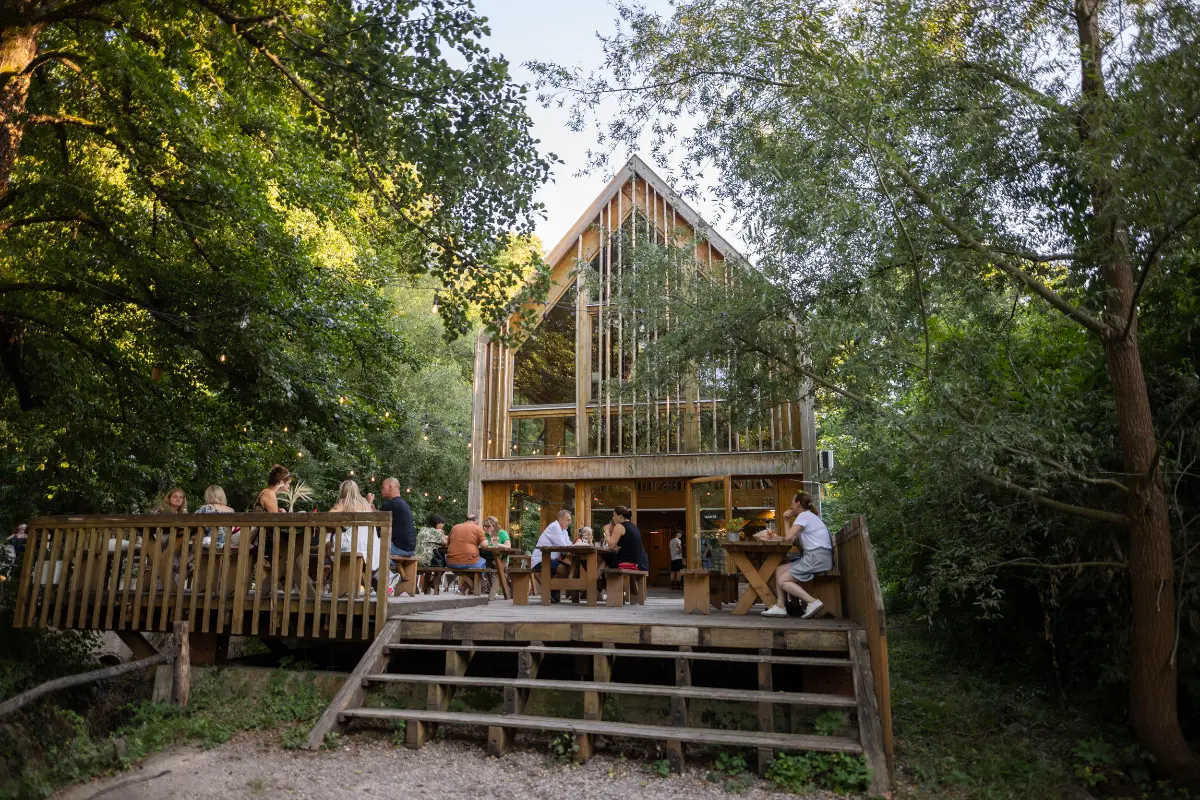
The complex of mills in Orfű is also closely linked to the history of the Vízfő spring. The paper mill, dry mill and watermill standing along the stream are not only monuments to industrial history but also remain exciting tourist attractions today. In the ‘Garat’, a space converted from the mills’ former living quarters, you’ll find biscuits, sourdough bread, macarons, pies and cakes on display. The range of drinks is also noteworthy: syrups from local producers, coffee and craft beers are all available. If you spot a raspberry and pistachio swirl on the counter, snap it up, as they sell out quickly!
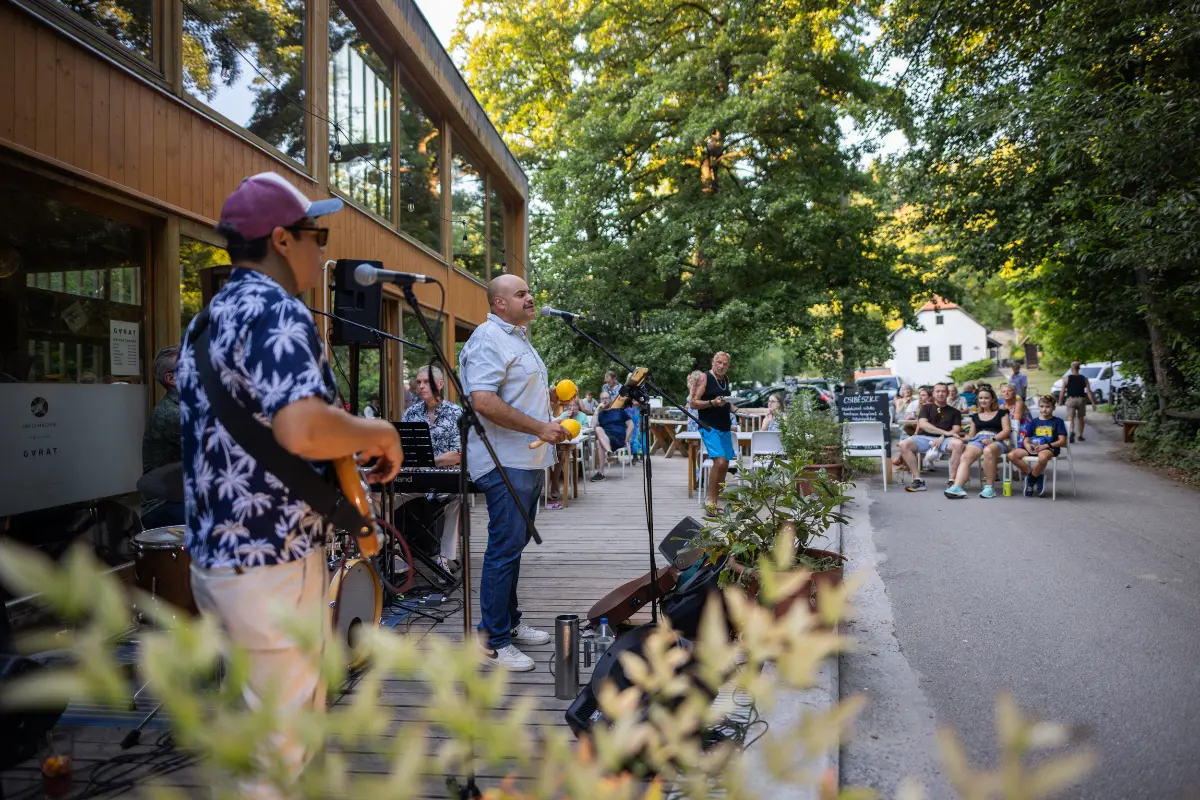
It’s also worth learning more about the history of the mills: during the guided tour, which lasts nearly an hour, visitors can explore the unique building and equipment of the paper mill, the two-century-old structures of the dry mill, and the industrially significant machinery of the watermill. It’s also worth keeping an eye on the programme of events, as themed mini-festivals, music events and markets are occasionally held at the Mills.