Helyszín címkék:
Look Up in Debrecen: A Romantic Cultural Walk in Search of Hidden Architectural Treasures
What exactly will we cover?
- From Art Deco to Art Nouveau in Debrecen
- Downtown stories – from the White Horse to the Lion
- Enjoy the buzz of spring among Japanese acacias!
- Palaces, poetry gardens, love
- "Enchanted Forest” from 34 meters up
From Art Deco to Art Nouveau in Debrecen
Debrecen’s cityscape is made exciting by the coexistence of historical and contemporary architectural elements: the characteristic Cívis houses, along with eclectic, Classicist, Art Nouveau, and Art Deco details, collectively tell the story of the city.
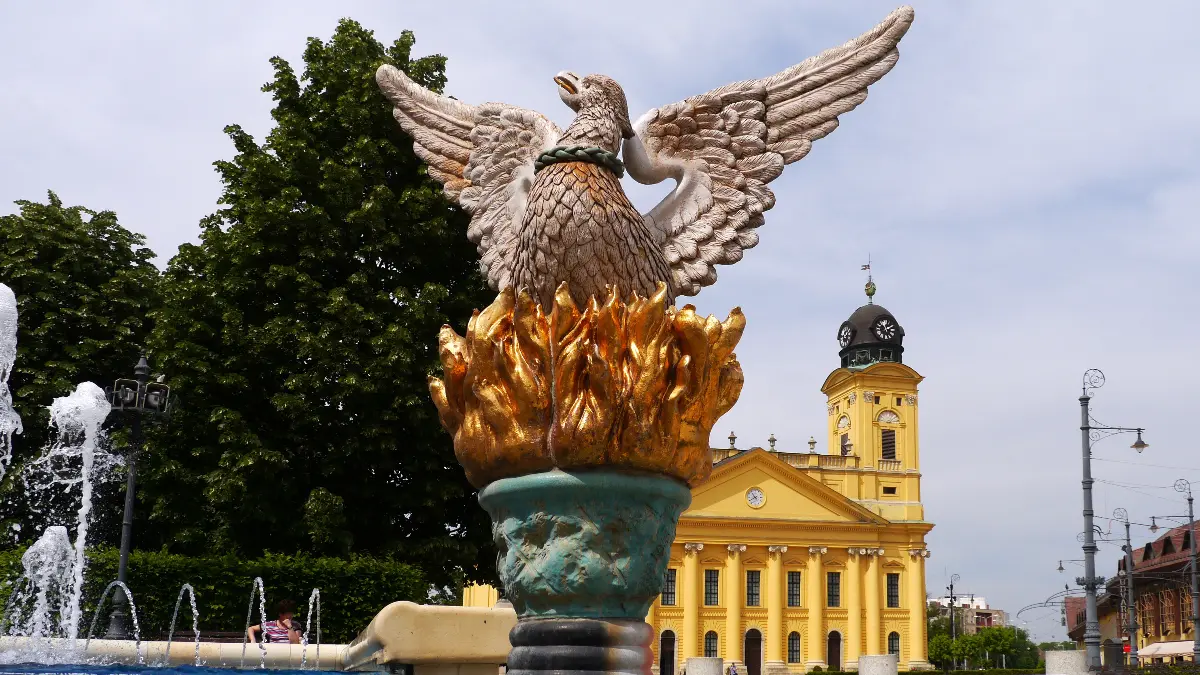
What does “Cívis” mean? A class of urban citizens who owned land and were farmers and merchants. Civic identity is a defining element of Debrecen’s identity: being a “cívis” is also a way of life, which manifested itself in both the civic houses and the city’s structure. Debrecen was famous for its large fairs, which made the city known throughout Europe as early as the 15th century.
Downtown Stories – From the White Horse to the Lion
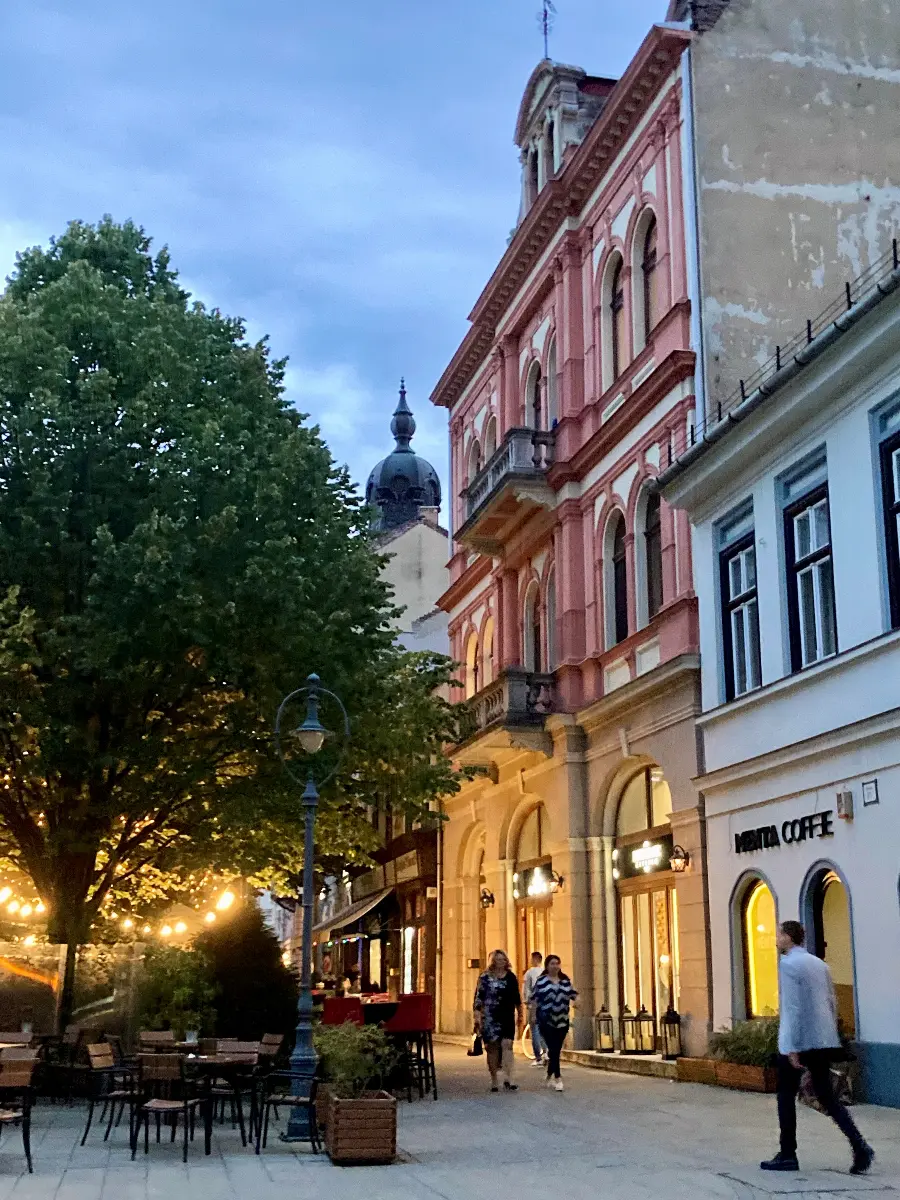
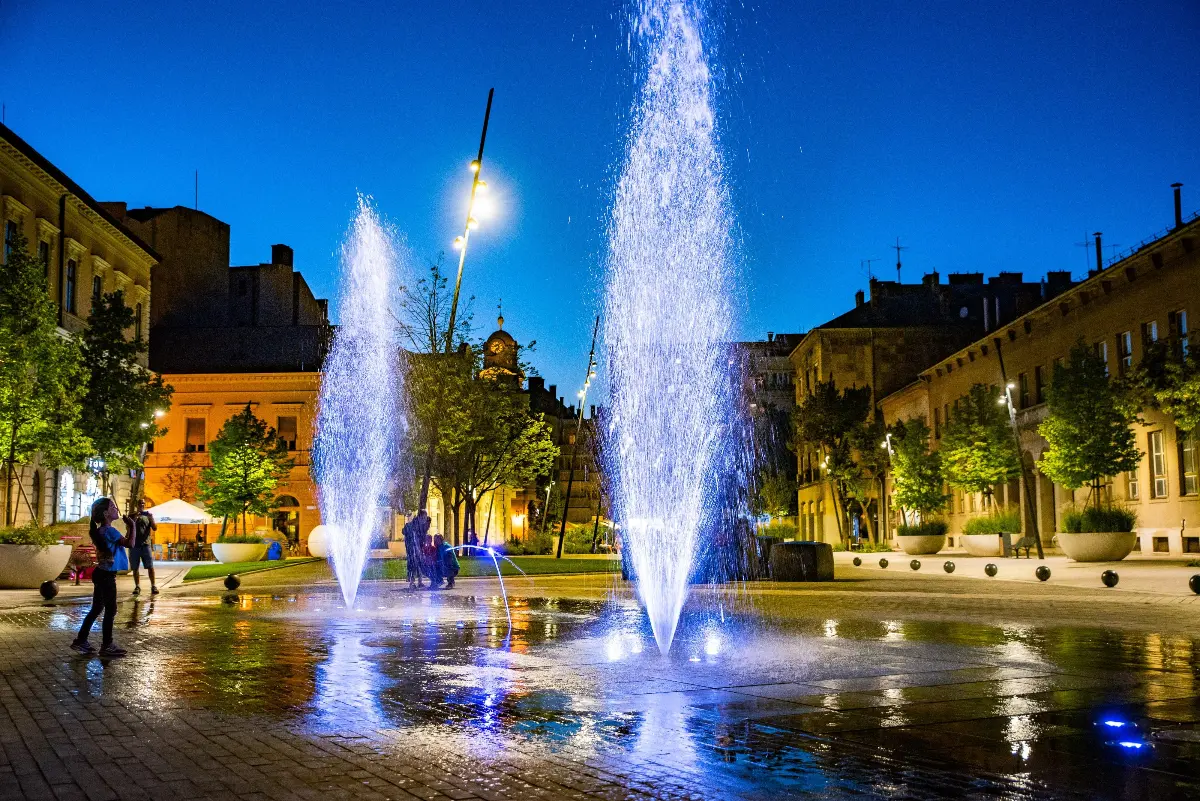
It’s worth exploring Debrecen by occasionally looking up to discover the unique details of the buildings. It’s best to start our cultural stroll in the historic downtown, where from spring to fall, the sight of charming fountains and narrative murals accompanies us along the way. The beautiful red palace towering at the corner of Szent Anna Street and Batthyány Street stands out among the surrounding buildings with its imposing size, wrought-iron balconies, and ornate façade.
Heading from Szent Anna Street toward Piac Street, one of the city’s most beautiful Art Nouveau buildings, the County Hall, towers above us on the main street. It once stood on the site of Debrecen’s first inn, the Fehérló (meaning: White Horse) Hotel, which hosted many famous guests. Its façade is adorned with ceramics from the Zsolnay factory in Pécs, as well as garlands of flowers. The County Hall’s most valuable decorations are the stained-glass windows, which depict the seven leaders of the Hungarian conquest.
During our walk, it’s worth stopping at the Csanak House (51 Piac Street). A lion watches over visitors from its magnificent yellow doorknob. It holds an open book in its paw. They say that anyone who touches the doorknob will have good luck.
Let’s enjoy the bustle of spring among the Japanese pagoda trees!
Among the buildings on Piac Street, the spectacular pink palace on the corner of Kossuth Street stands out by far. The stucco and sculptures on the facade of this beautiful Art Nouveau building depict scenes of industrial, commercial, and agricultural work. Just a few meters away stands the yellow building of the Csokonai National Theatre, featuring romantic, Neo-Renaissance elements. Spectacular sculptures – muses and female figures – decorate the building as allegories of theatre and art. In front of the entrance, towering weeping Japanese acacias, over a century old and protected as local heritage, stand tall.
Palaces, a poetry garden and love
The ornate corner towers of the twin apartment buildings on Simonffy Street and the Art Nouveau Bishop’s Palace on the corner of Hatvan Street – which blends elements of Hungarian Romanticism – hold further treasures for city explorers. The Aranybika (meaning: Golden Bull) Hotel is one of the city’s most distinctive buildings. A small inn with just four rooms opened its doors on the Bika family’s property in 1699. As the number of guests grew, a second story was added to the building at the end of the 18th century. In the early 1800s, an iron bull was mounted on the wall, which was later gilded, and it was then that the inn took on the name Aranybika.
Continuing our walk toward the iconic Reformed Great Church, we can see one of the most beautiful Art Deco works by Debrecen architect István Sajó at 6 Hatvan Street nearby. It is characterized by symmetrical patterns, prominent, framed windows, and geometric ornamentation. The façade, form, and even the smallest details of the building complex bear the hallmarks of this unique style.
Hatvan Street is also home to several distinctive townhouses. The townhouses of Debrecen are mostly single-story residential buildings built along the street, featuring massive gates and long, narrow lots that also served an economic function.
Let’s stop in front of number 23, where Mihály Csokonai Vitéz was born, and then linger a bit at the turquoise-blue townhouse at 30 Hatvan Street: the scene of a couple kissing among sunflowers above the windows enchants us.
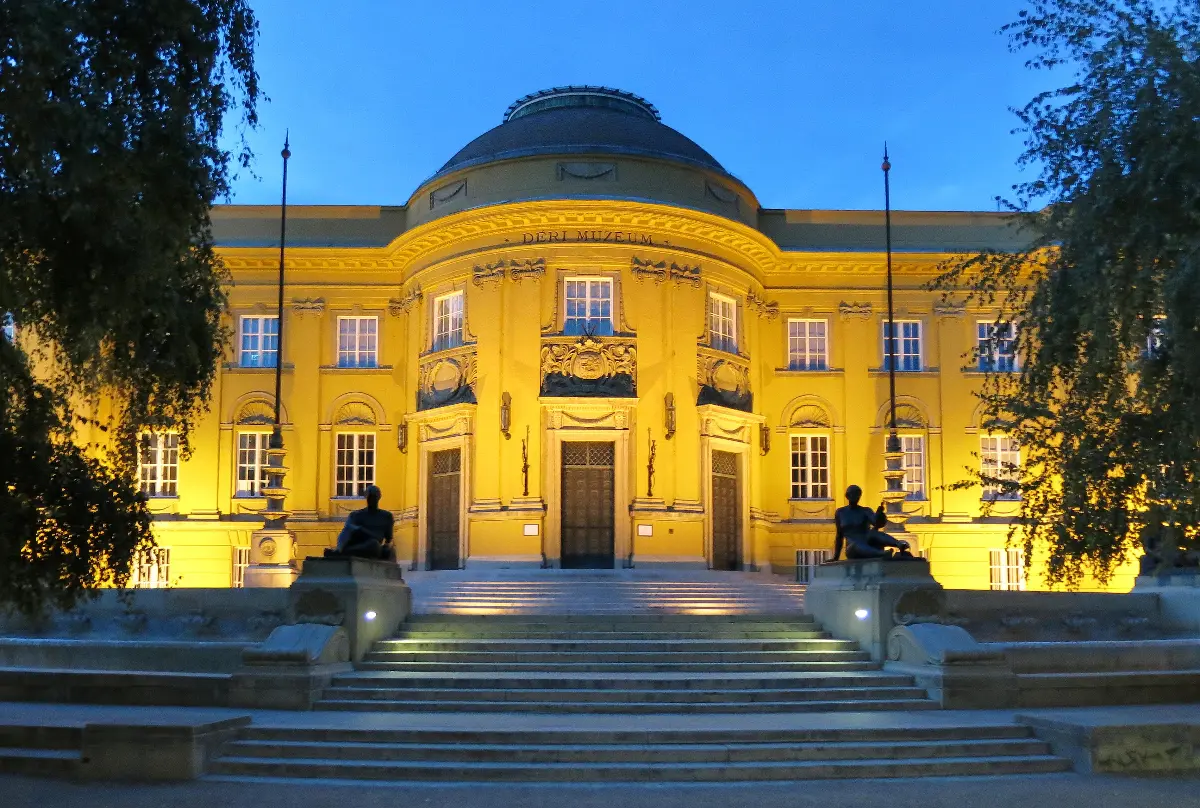
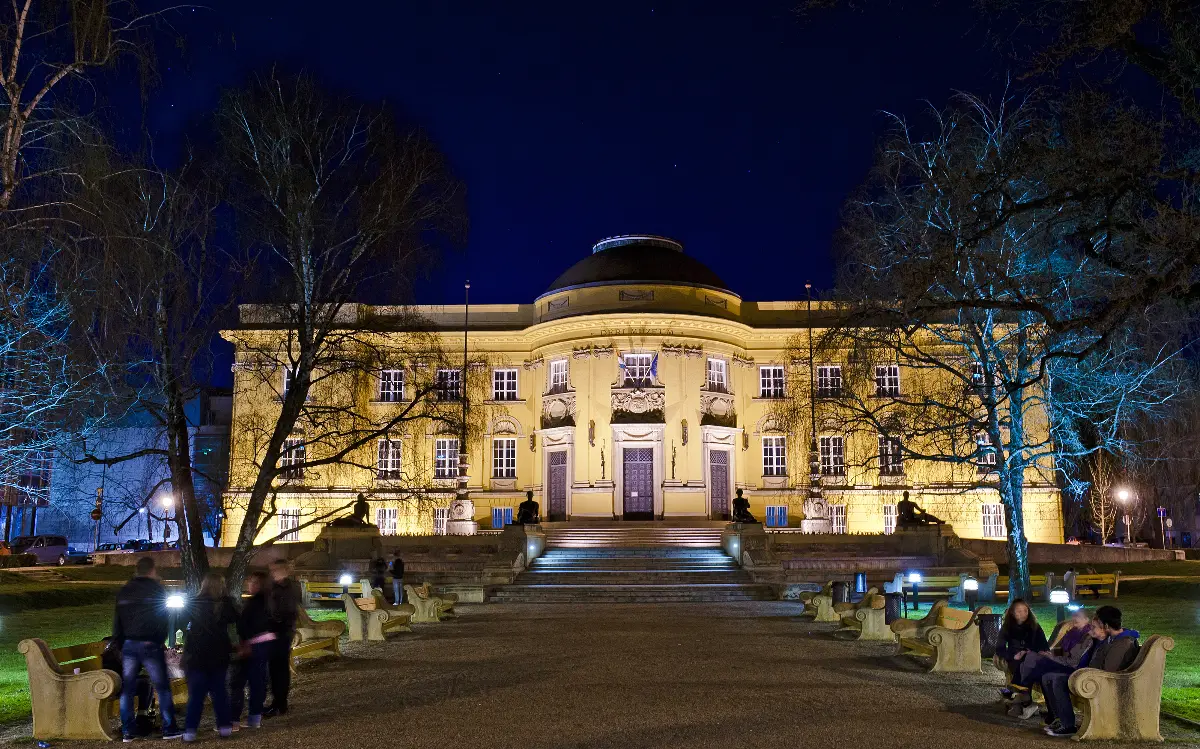
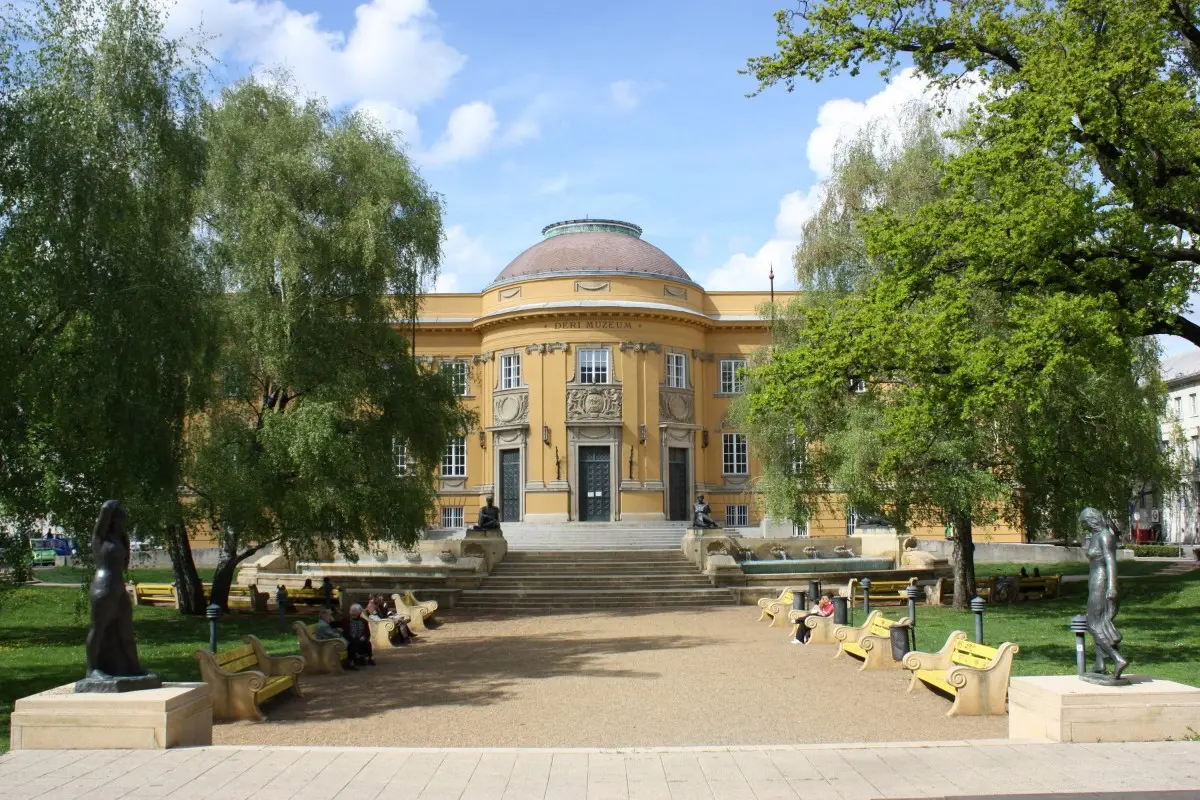
On the way back, heading toward downtown, turn toward the Déri Museum and check out the sunken park in front of the building! In the spring, the green space and the sight of the roughly 120-year-old English oak are particularly charming. “In the park in front of the museum, there is also a charming Poetry Garden where visitors can post their favourite verses,” says Enikő Tóth-Megyesi.
“Enchanted Forest” from 34 meters up
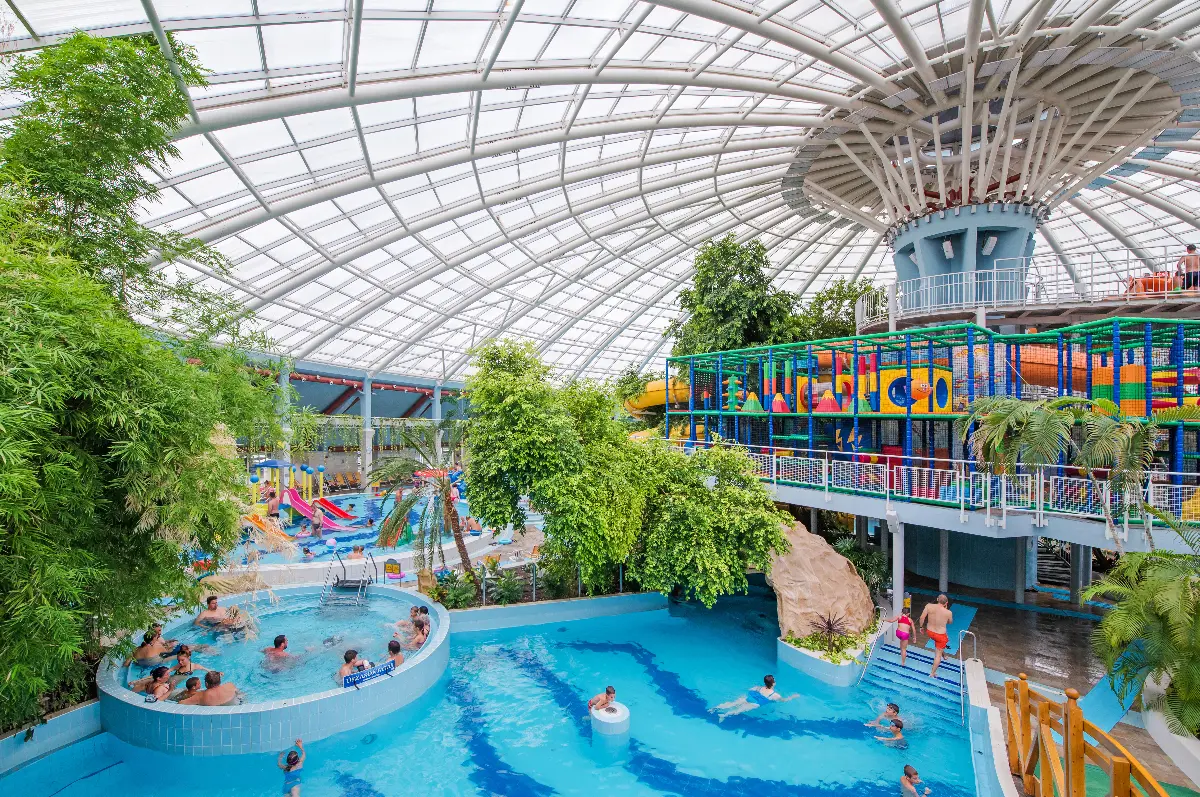
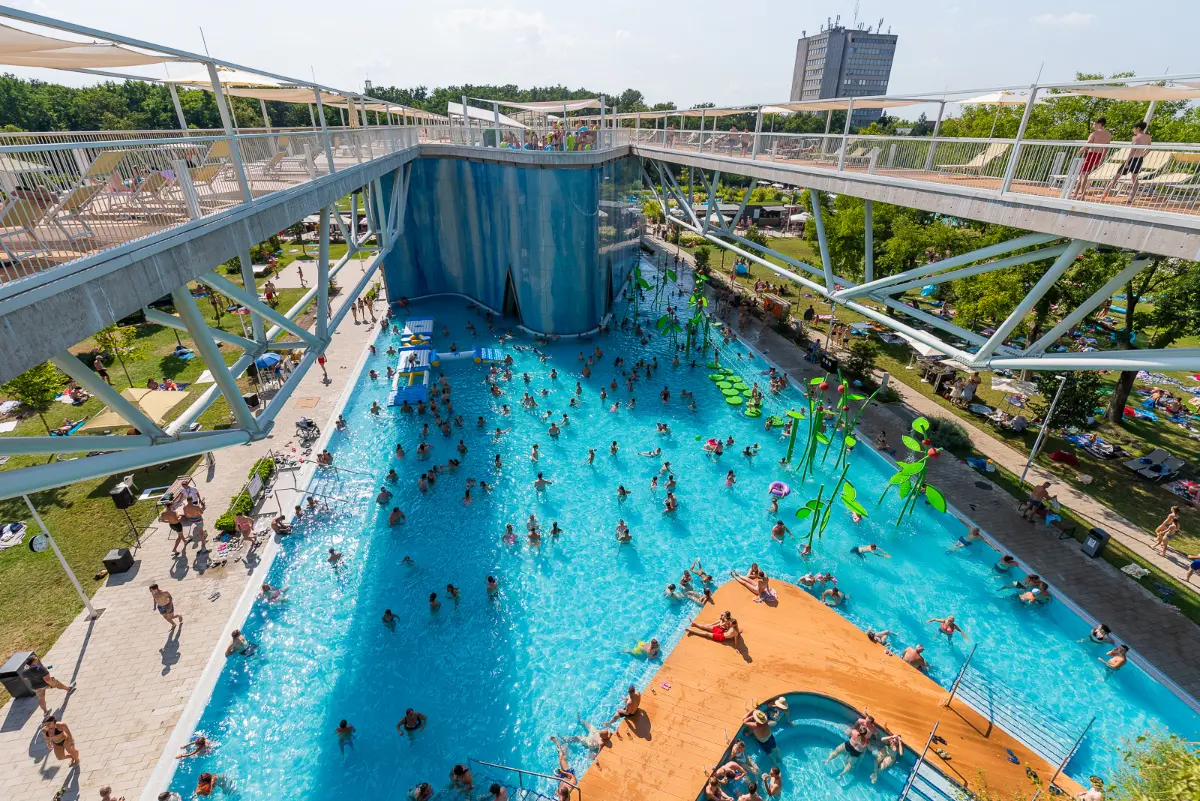
Let’s head toward Nagyerdő! From downtown, we can hop on tram No. 1 – or, as the locals say, “take the ‘tuja’” – to Nagyerdő. Among other things, the extensive green space is home to the award-winning Aquaticum Debrecen Beach, surrounded by green plant walls and water features. The Nagyerdei Stadium building blends beautifully with the forest: on the running track elevated to the canopy level, both young and old can enjoy being close to nature.
The most interesting feature of the neighbouring Nagyerdei Water Tower is its historic-industrial character, as well as the fact that, while retaining its original function, it has become a favourite spot for Debrecen residents and tourists alike, featuring a lookout, a climbing wall, outdoor concerts, spectacular light shows, and a water bar. If you get tired from walking, you can sit down for a coffee here or on the terrace of the nearby Csinibaba Kultkert.
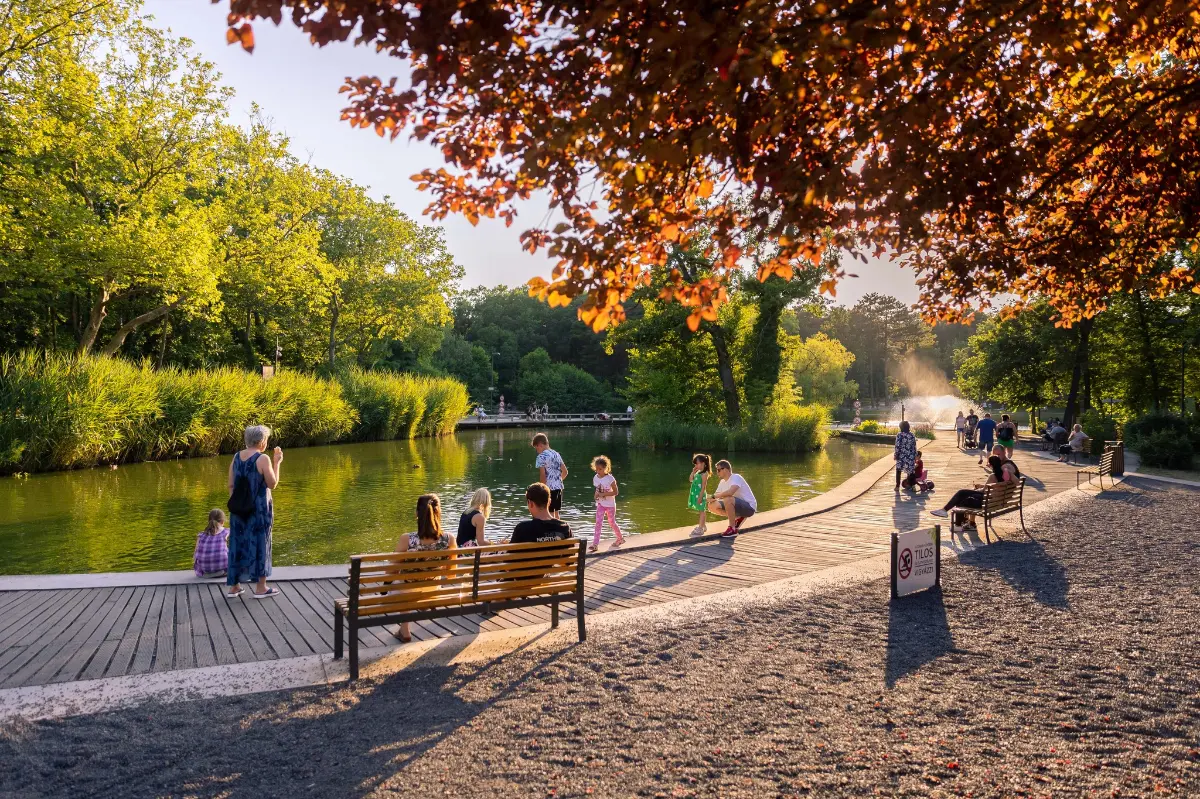
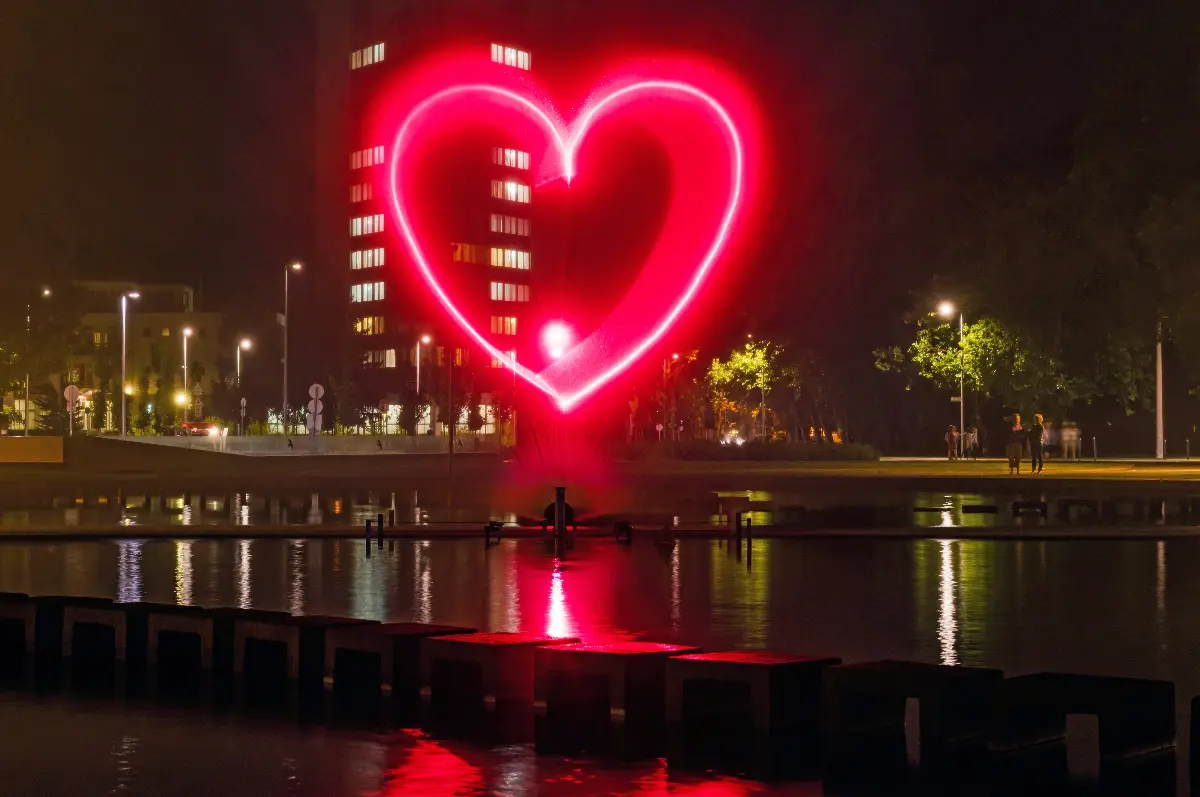
As the sun begins to set, it’s worth taking a break by the shore of Lake Békás or watching the Fog Theatre’s special evening performance.