Helyszín címkék:
A Brutalist Partisan Memorial or a Scientific Research Station?
Partner content
Article of Hely.hu
What exactly will we be discussing?
- The history and architectural uniqueness of the Gothard Astrophysical Observatory in Szombathely
- The work of Jenő Gothard and Elemér Zalotay
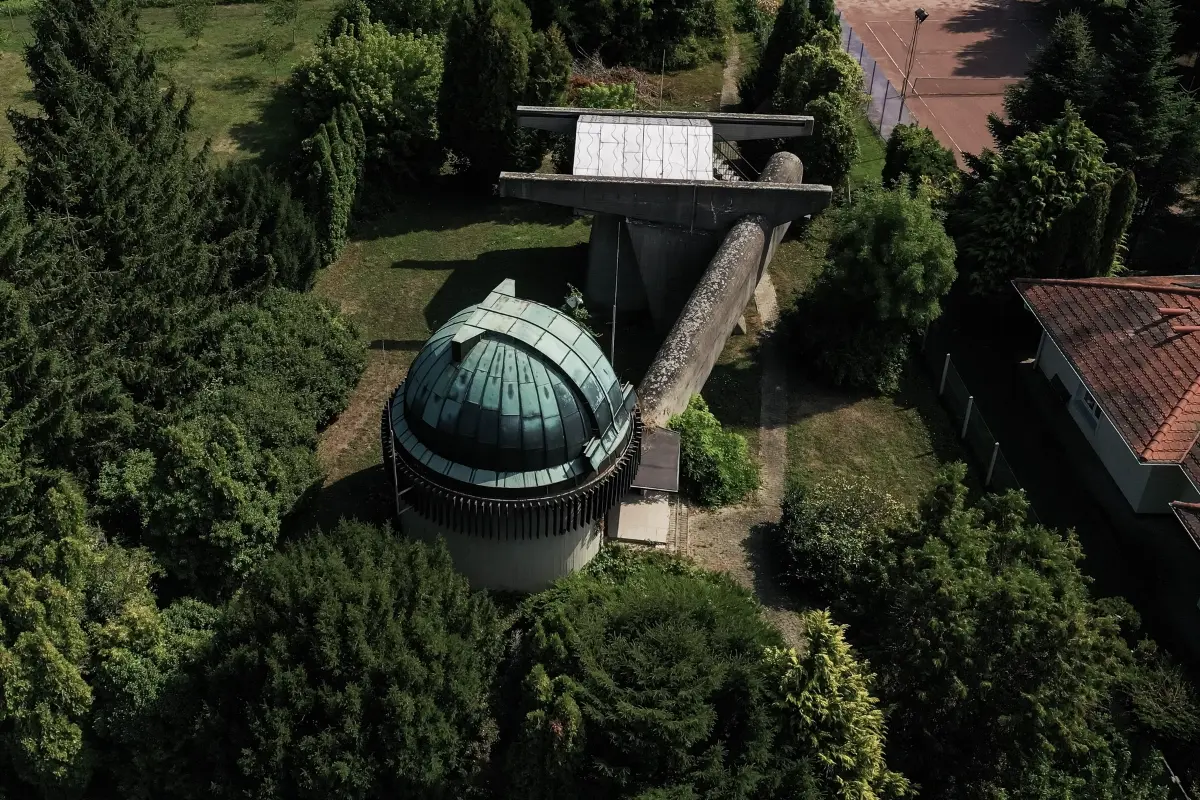
There are numerous observatories operated in Hungary, but the most exciting is undoubtedly the Gothard Astrophysical Observatory in Szombathely, originally known as the Sputnik Monitoring Station. Built in 1968 based on the designs of the revolutionary innovator Elemér Zalotay, the building would hold its own as a Brutalist monument.
The establishment of the Szombathely observatory is linked to its later namesake, Jenő Gothard. Gothard made his mark on history by designing Hungary’s first hydroelectric power plant, but his scientific interests extended far beyond engineering.
He had an observatory built on his own estate in the village of Herény, which is now part of Szombathely. There, he conducted astrophysical observations and achieved international success in the fields of astronomical photography and spectral analysis, while also pursuing work as a physics experimenter and instrument maker. Unfortunately, following his untimely death, the research he had begun came to a halt. Nevertheless, the astronomical work was not permanently interrupted. In 1968, a Sputnik monitoring station was built on the site of the former domed observatory, in a residential neighbourhood of Szombathely.
The design of the building was entrusted to Elemér Zalotay, who envisioned a unique, functionalist concrete structure. Zalotay’s architectural career was full of innovation and challenges.
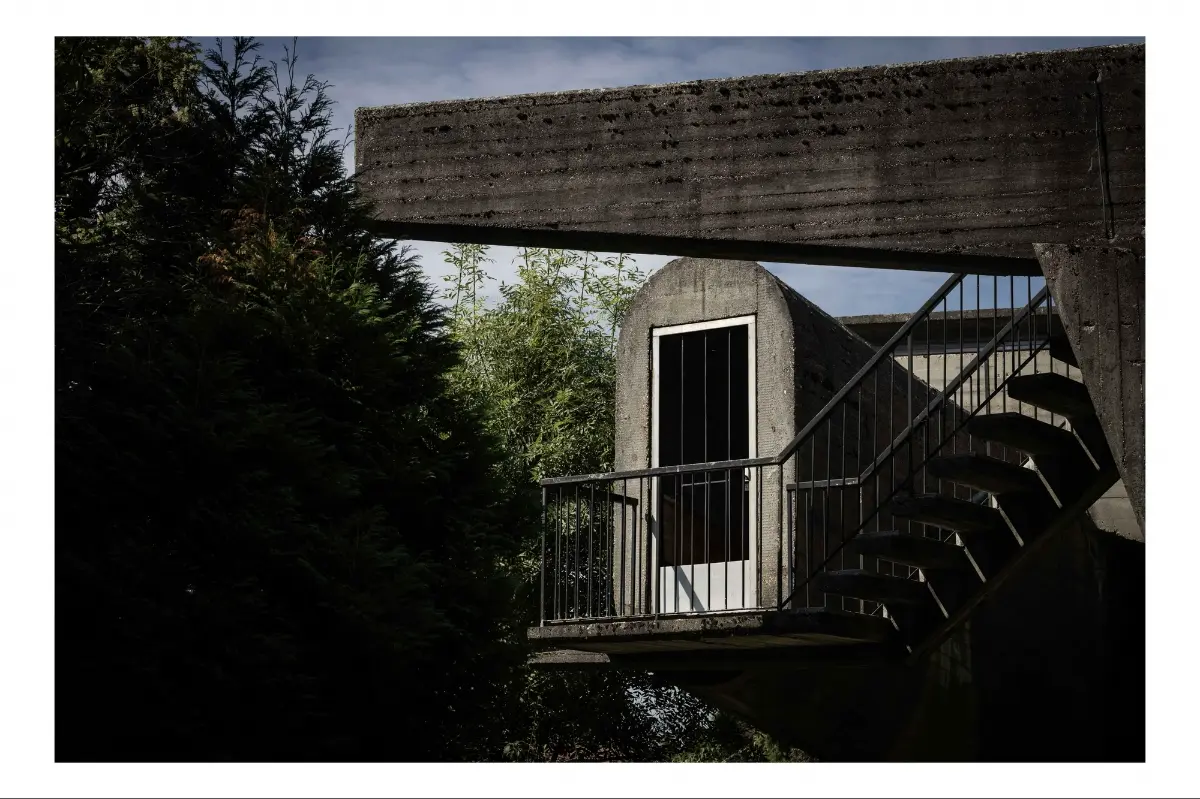
Photo: Ákos Kaiser
An architect who graduated from the Budapest University of Technology in 1957; he was deeply influenced by Frank Lloyd Wright, Le Corbusier, and the philosophy of the Japanese Metabolists.Although Socialist Realism was the dominant – and expected – style during his university years,
Zalotay worked according to his own vision. His radical designs often sparked controversy.
Photo: Ákos Kaiser
Perhaps his best-known project – though one that remained on paper – is the Szalagház, which was planned for Csillaghegy as a 30- to 50-story-tall, kilometer-long residential building capable of housing 70,000 people; however, a few of his legendary buildings can still be admired today. These include the leather goods factory in Sárvár and the cuttings storage facility in Bajt, which, like the observatory, were constructed by VASITERV.
Through the Szombathely Observatory, Elemér Zalotay truly demonstrated his unique architectural vision.
The Sputnik monitoring station was designed as a minimalist, highly functional concrete building, with every element serving the precision of astronomical observations. The end result, however, is a striking, sculptural building that brought the most modern ideas of the French architectural giant Le Corbusier to Hungary.
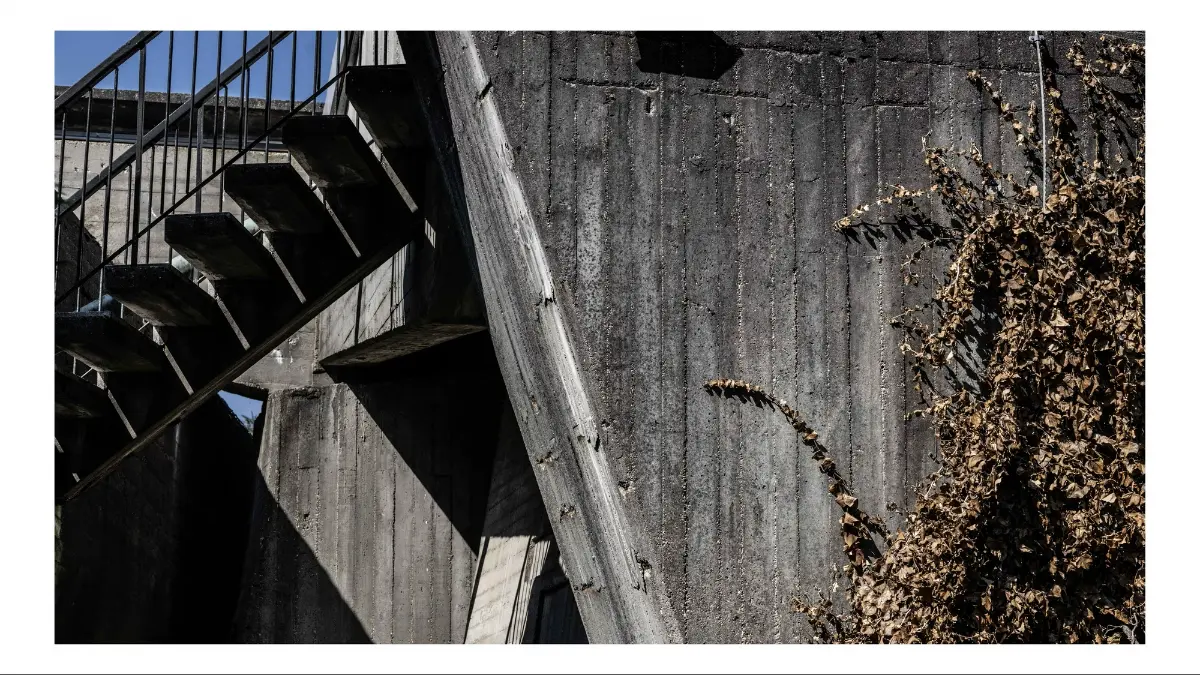
Although Brutalism has its own distinct aesthetic, the concrete here is not merely a stylistic choice; it plays a crucial role in the building’s functionality.
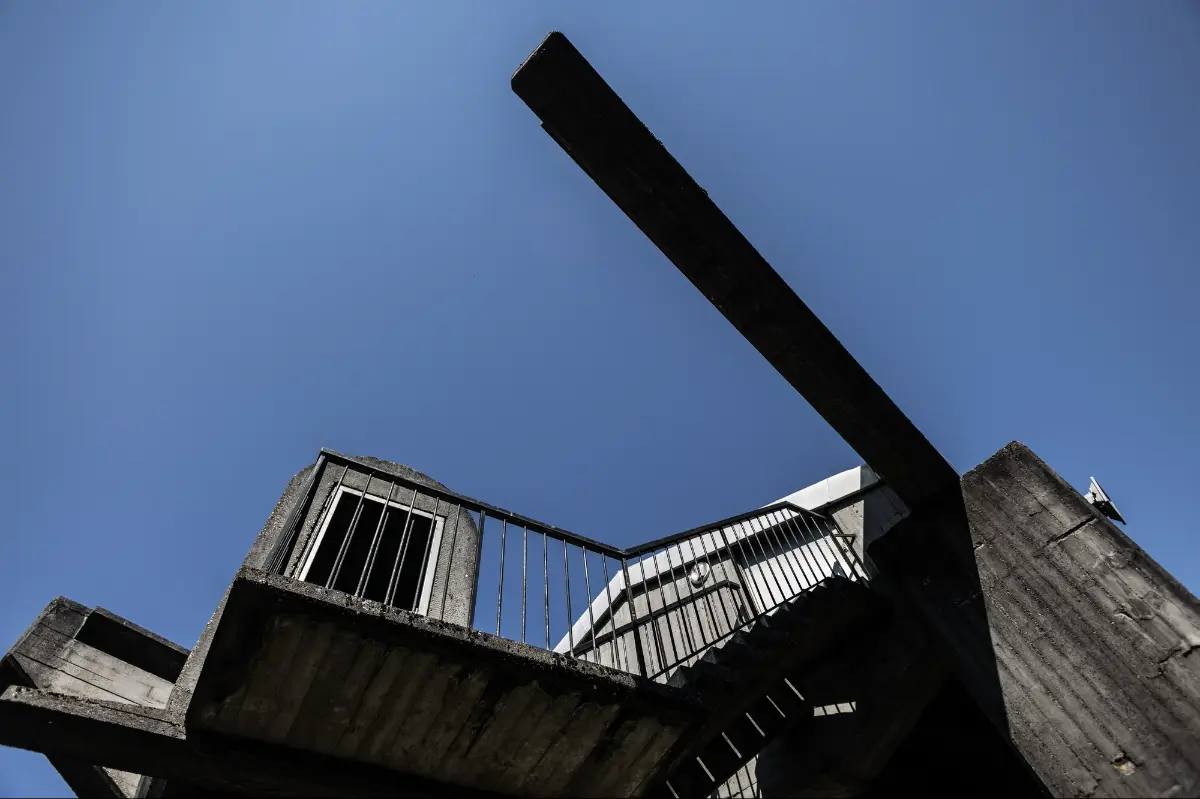
The massive, thick concrete structure ensures that the building remains free from even the slightest vibrations, which is key to accurate observations. The observatory also houses heat-sensitive instruments, and since concrete heats up and cools down slowly, its use helps prevent sudden temperature fluctuations. Perhaps the most interesting feature of the building – and a particularly beautiful one – is the T-shaped movable roof, which is located above the telescope and slides out to the sides on two arms, allowing for the observation of the stars. Attached to this is the staircase running through a concrete tube; its unusual placement outside the building was again justified by the need to avoid vibrations caused by footsteps.
The second phase of the observatory was built a few years later and includes a more traditional building with a dome and a slit, which provides additional observation opportunities. This expansion is less radical and sculptural, evoking the world of traditional observatories much more, but the late-modern complex continues to offer a futuristic, breathtaking sight.
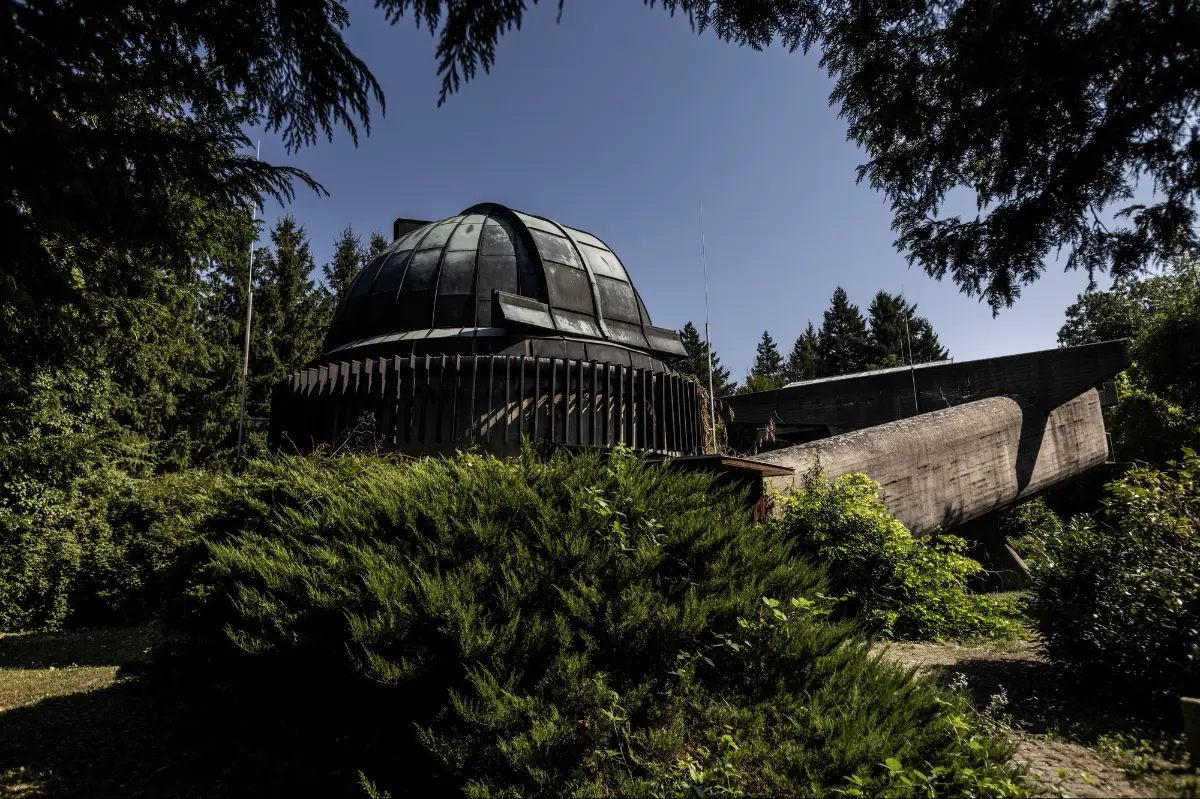
Photo: Ákos Kaiser
It is worth taking a closer look at the observatory’s exterior walls: the interplay of the surfaces finished with rough formwork boards plays a major role. Here, however, function no longer takes precedence; this design choice is purely the result of the Brutalist aesthetic, which favours rough, robust elements.
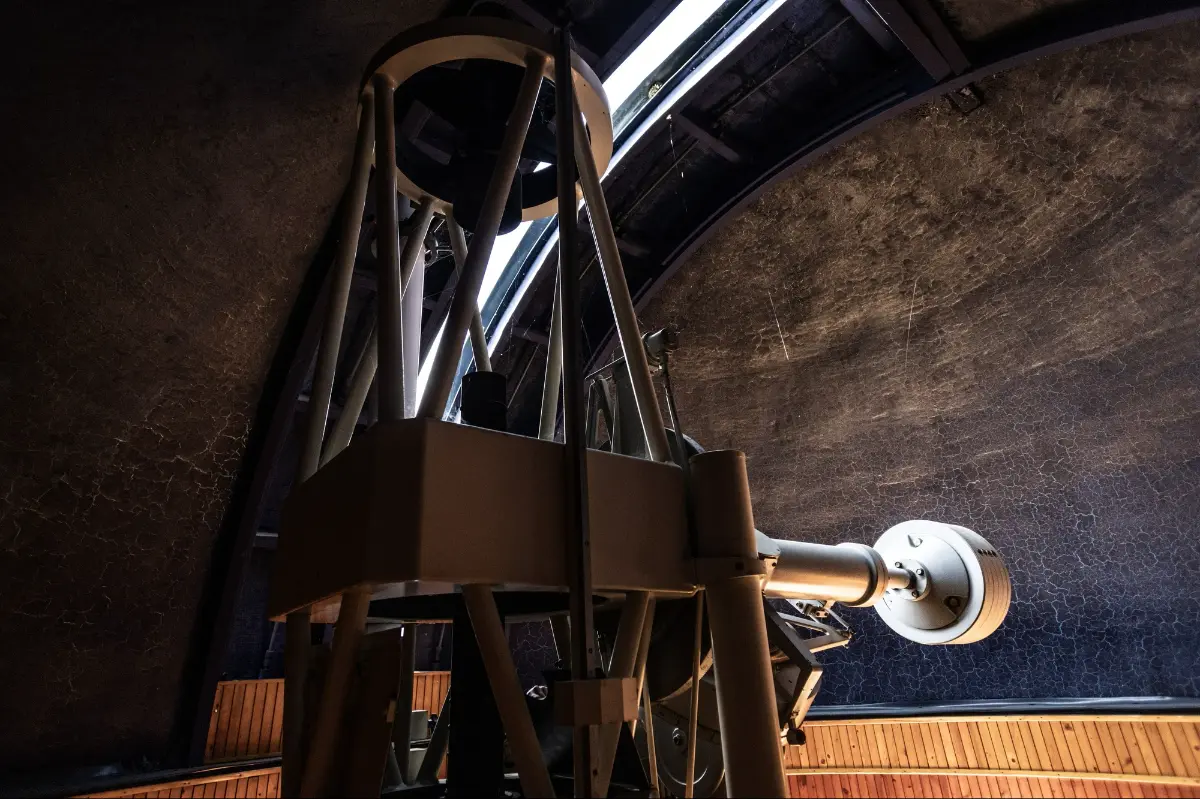
Photo: Ákos Kaiser
Scientific work is still actively carried out at the observatory today by researchers from ELTE (Eötvös Loránd University), while Jenő Gothard’s former home now houses an interactive science exhibition.
Jenő Gothard’s legacy thus lives on at the observatory.
The astronomical research he began continues with modern instruments and methods. And the legacy of Elemér Zalotay also lives on; although few of his visionary buildings were ever realized, his plans – which attempted the impossible – had a profound influence on the generations of architects who followed him.
Eszter Szilvia Paár
Architecture is the art form that perhaps has the greatest influence on our thinking and well-being. The goal of Hely.hu is to stimulate architectural discourse through news, engaging articles, and videos. Because architecture is a shared concern and a shared responsibility.