Helyszín címkék:
Article from Turista Magazine
- Instant endurance tour
- Foggy morning in Pilisszentlászló
- Fairy well and elf bath
- All along Spartacus trail
- Crossing the stream eleven times
If you like endurance hiking but dislike crowds, or if you always have something else to do when events are announced, then instant endurance hiking is the perfect genre for you.
But what exactly is an instant endurance tour?
Although the name might suggest that this is some kind of virtual hiking experience from the comfort of your armchair, that’s not the case at all. Very real experiences await you on one of these instant tours. As with traditional endurance hiking, here too, a given route must be completed within a specified time limit, passing through checkpoints.
However, these tours are not tied to specific dates and can be started at any time.
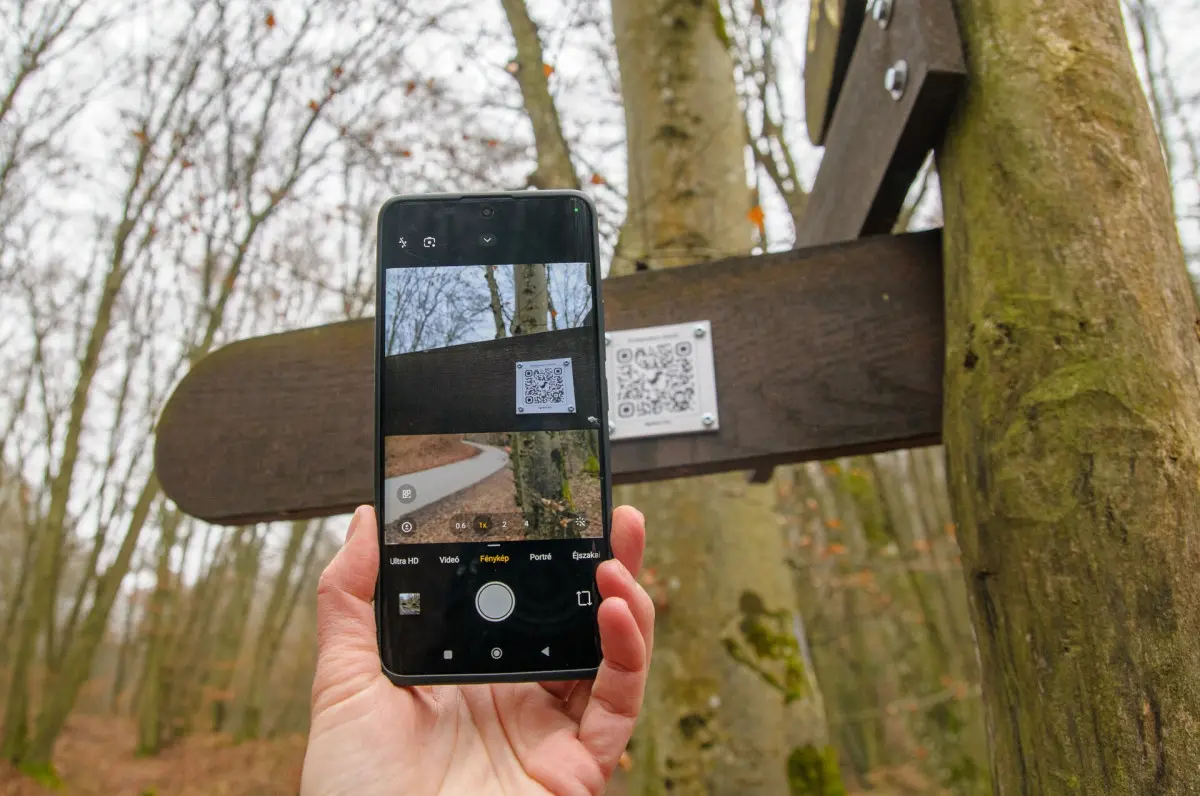
Prior registration is required; where applicable, the participation fee must be paid, and upon successful completion, a certificate, medal, or pin will be awarded. At checkpoints, you usually need to scan a QR code or the specific code for that tour, so you will need a smartphone during the tour.
The first instant tour in 2014 was Vérkör (‘Blood Circle’). The 77 km route in the Vértes Mountains was devised by Mátyás Lovas, and 107 people completed it already in the first year. The Medvés kör (‘Bear Circle’), promoting the Karancs-Medves region, was established in 2016, followed by the OneDoor Trail in the Mecsek in 2017. The big boom was between 2018 and 2020, when 40 instant tours were established, including popular tours such as the Szénás kör (‘Hay Circle’), the Rókás kör (‘Fox Circle’), and the Bükkös kör (‘Beech Circle’), which we have already completed. Today, thousands of people set off on domestic instant tours every year, either running or hiking. The Instantturak.hu [RF1] collection site currently lists 56 tours covering 173 distances, but you can also find numerous tours on Természetjáró.huwith detailed itineraries and maps.
The first instant tour in 2014 was Vérkör (‘Blood Circle’). The 77 km route in the Vértes Mountains was devised by Mátyás Lovas, and 107 people completed it already in the first year. The Medvés kör (‘Bear Circle’), promoting the Karancs-Medves region, was established in 2016, followed by the OneDoor Trail in the Mecsek in 2017. The big boom was between 2018 and 2020, when 40 instant tours were established, including popular tours such as the Szénás kör (‘Hay Circle’), the Rókás kör (‘Fox Circle’), and the Bükkös kör (‘Beech Circle’), which we have already completed. Today, thousands of people set off on domestic instant tours every year, either running or hiking. The Instantturak.hu collection site currently lists 56 tours covering 173 distances, but you can also find numerous tours on Természetjáró.hu with detailed itineraries and maps. A foggy morning in Pilisszentlászló
I have chosen a hike in one of the country’s most popular hiking destinations, the Visegrád Mountains: the Apátkúti Trail, which is one of the routes of the Rigó kör (‘Thrush Circle’) endurance hike. There are six tours in total, with six different routes to choose from. What they all have in common is that they start and end in Pilisszentlászló, at the parking lot next to the Kis Rigó (‘Little Thrush’) Restaurant.
The 16 km Apátkúti Trail runs from Pilisszentlászló along the Spartacus Trail to the Ördögmalom-vízesés (‘Devil’s Mill Waterfall) in Visegrád, then returns to Pilisszentlászló via the Apátkúti Valley. The level time is 6 hours hiking and 3 hours running.
Since it gets dark quite early in the afternoon, I planned an early start so that I wouldn’t get caught in the dark.
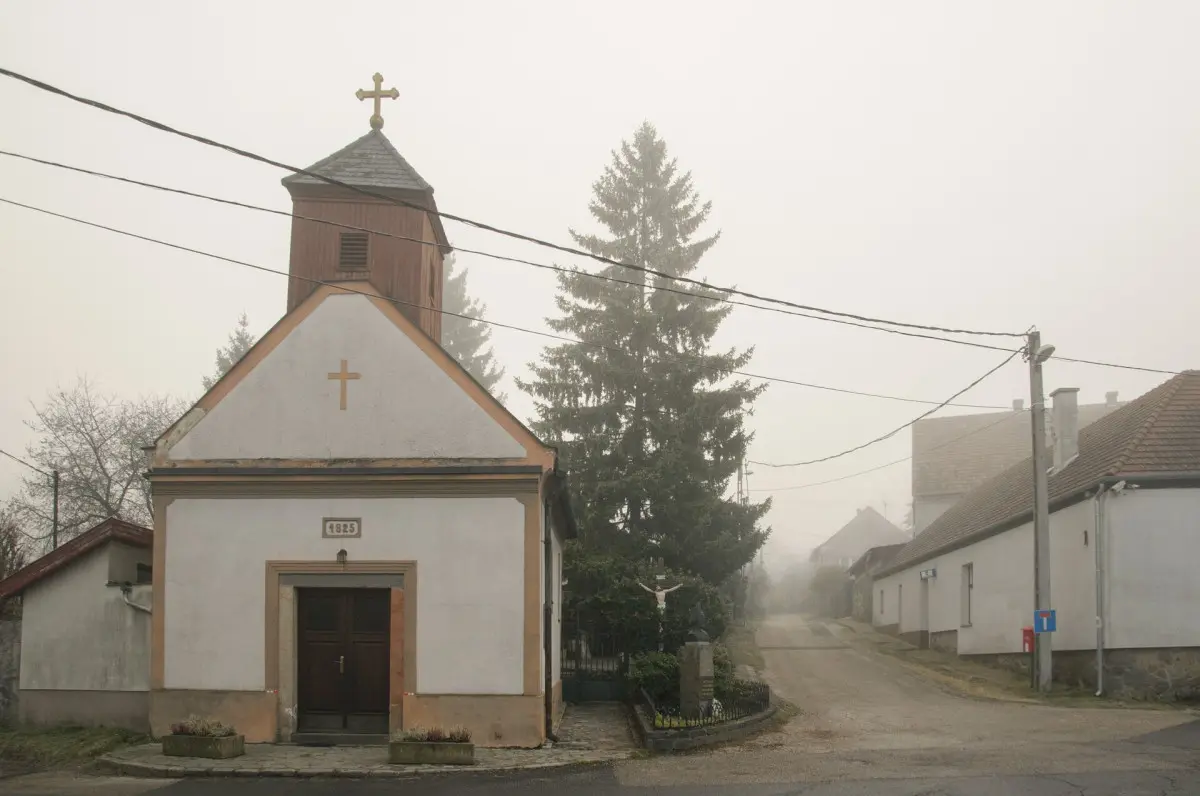
I left Budapest at dawn and traveled through Szentendre to Pilisszentlászló. While the children from Szentendre, who filled the bus almost to capacity, went to the Waldorf school in the center of the village, I followed the green signs toward the edge of the village. Meanwhile, I struck up a conversation with a smiling teacher who expressed concern that I was planning to hike alone that day. Unfortunately, hiking alone as a woman is still not considered normal, as the interviewees in one of our previous articles told us.
Fairy well and elf bath
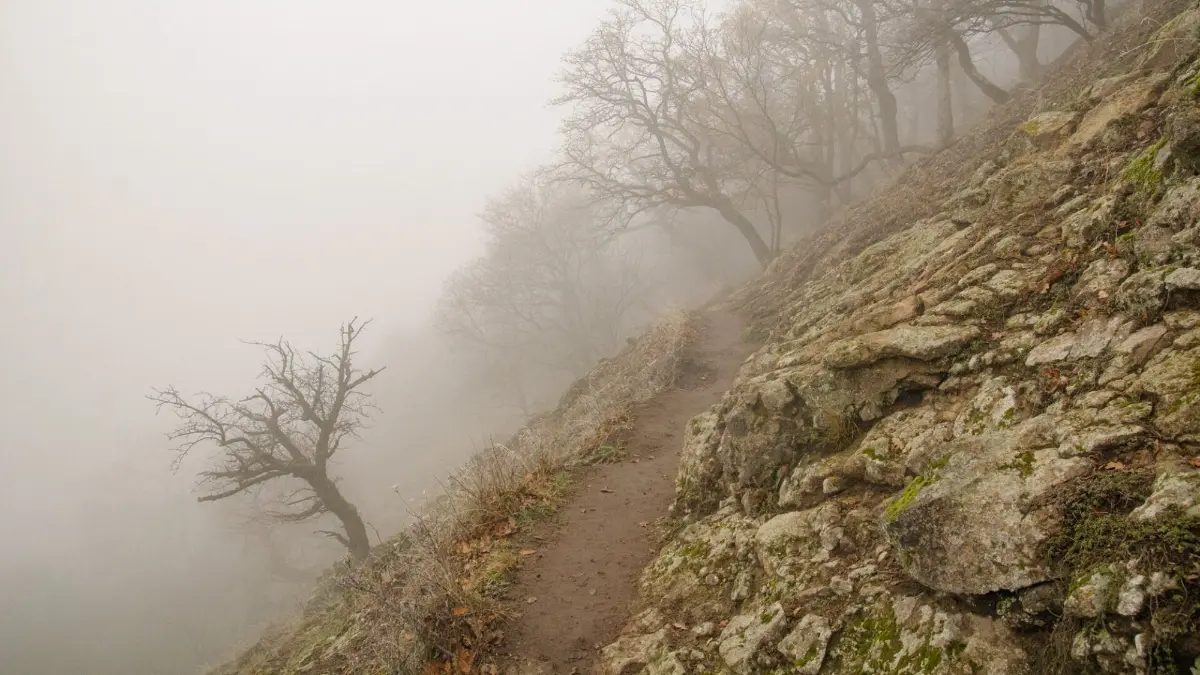
During the first half of the journey, fog dominated the landscape, and in the strict sense of the word, there was not much to see, but there was still plenty to see. The fog-shrouded, mystical forest is a magical sight in itself, but if you look around in its immediate vicinity, there are plenty of interesting things to see.
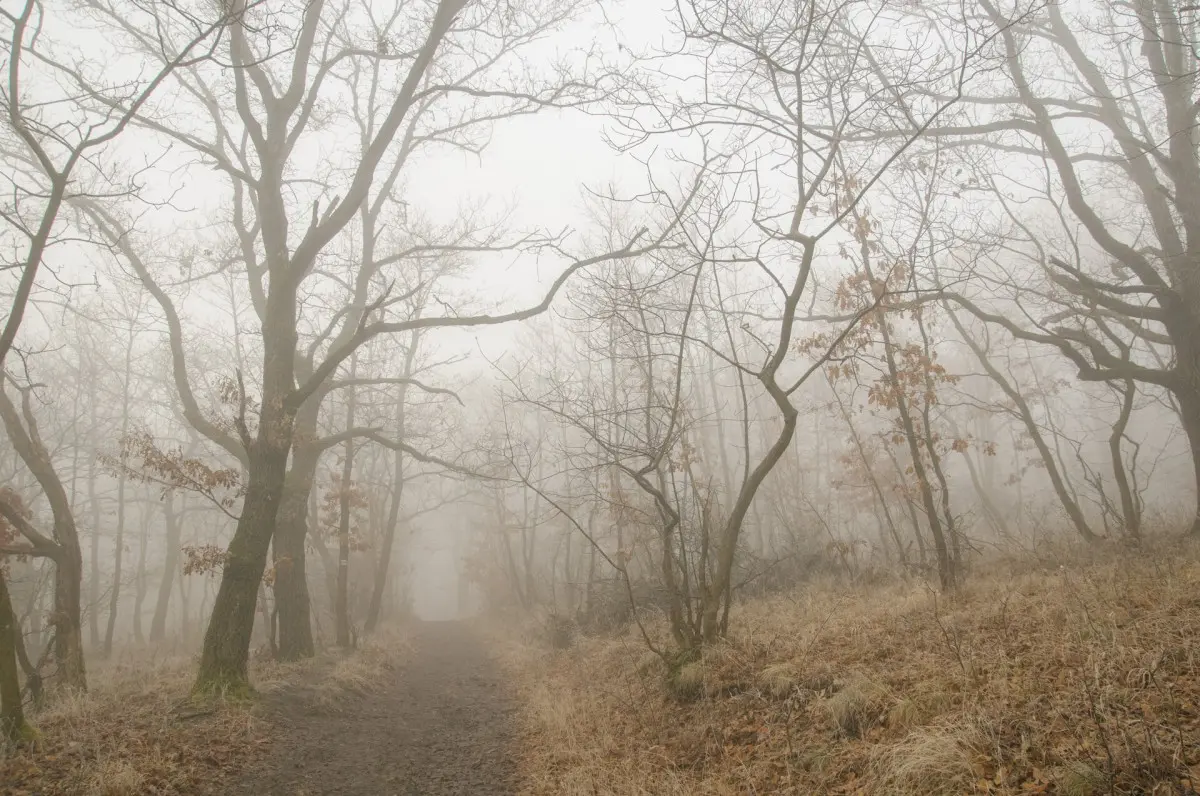
Most trees are now bare, and mosses, lichens, and fungi are primarily responsible for color during this period. Deadwood plays an important role in their settlement, which is essential in a healthy forest. A surprising number of species are associated with standing and fallen dead trees. The most spectacular of these species are woodpeckers, including the largest native species, the black woodpecker, whose call I heard many times during this tour.
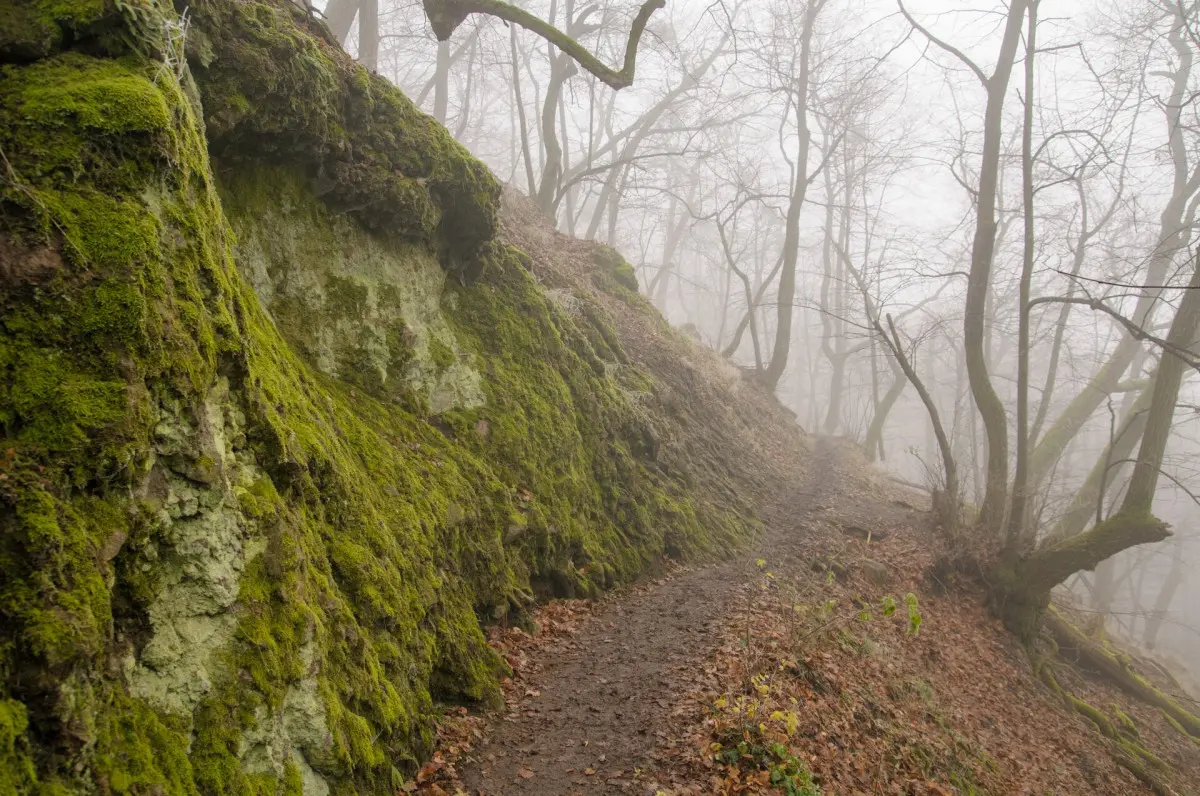
Along the path, I noticed several fairy wells at the foot of the trees. The fairy well or elf bath (technically known as ‘dendrotelma’) is a small depression that forms on rotten stumps, among exposed roots, and holds water for a long time.
For this reason, it plays an important role in the life of forest wildlife as a source of drinking water and a microhabitat.
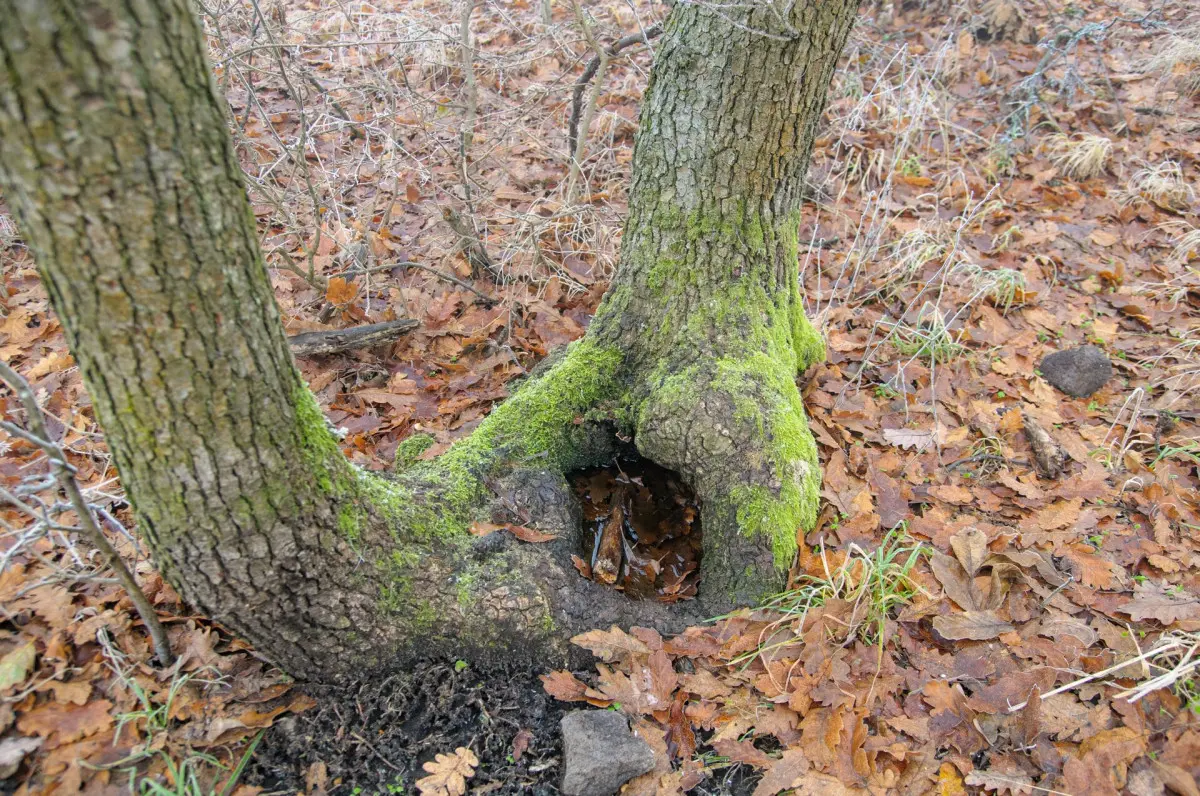
As Bence Kovács, a researcher at the Ecological Research Center, said in an interview, characteristic communities of living organisms develop in fairy wells, with many species found only here. Eighteen European invertebrate species are considered to be fairy well specialists.
All along the Spartacus Trail
On the Spartacus Trail, visibility was only a few meters this time, with the surrounding mountains hidden by a thick white blanket, only the silhouettes of the gnarled oak trees standing in the fog visible.
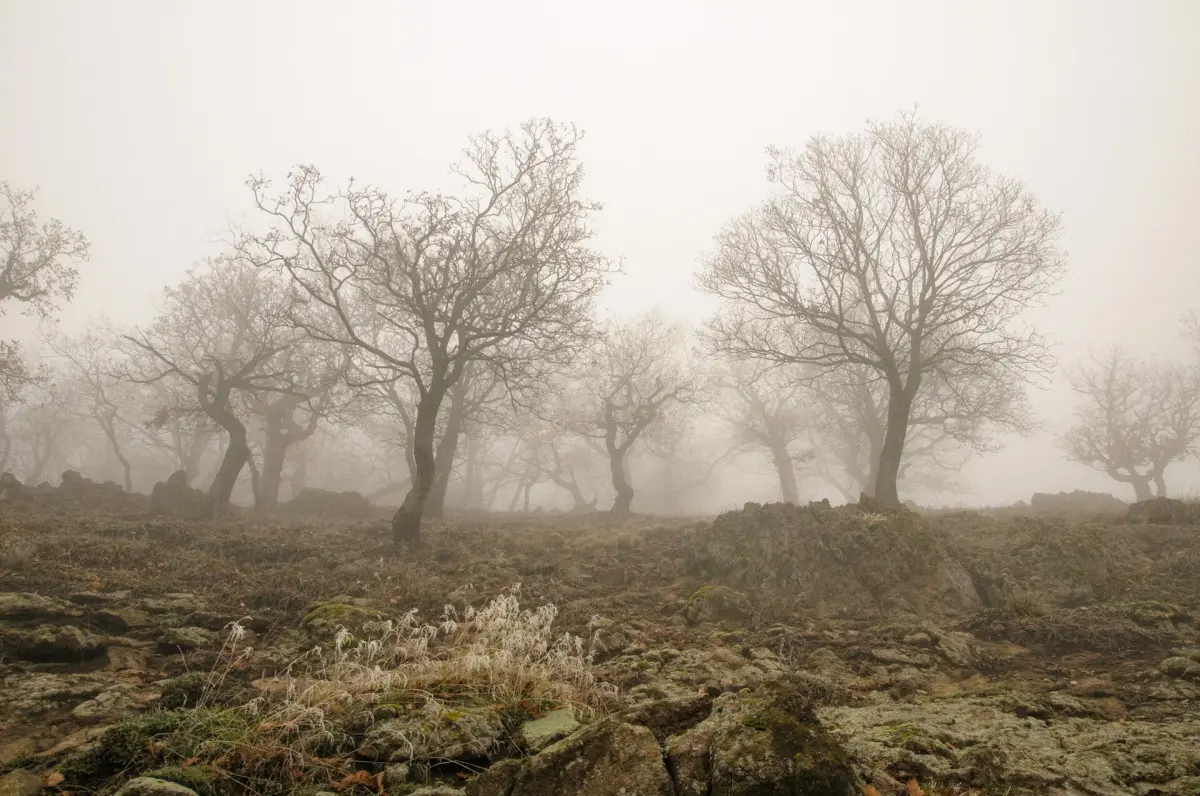
Occasionally, the employees of Pilisi Parkerdő (Pilis Park Forest) carry out maintenance work on the trail. When I was there, there were no visible signs of this, except for a new staircase at the end of the path towards Visegrád, built on a problematic, slippery section. They are also planning to install a railing on the most dangerous, and let’s add, the most spectacular rocky section, which can become slippery in freezing weather in winter.
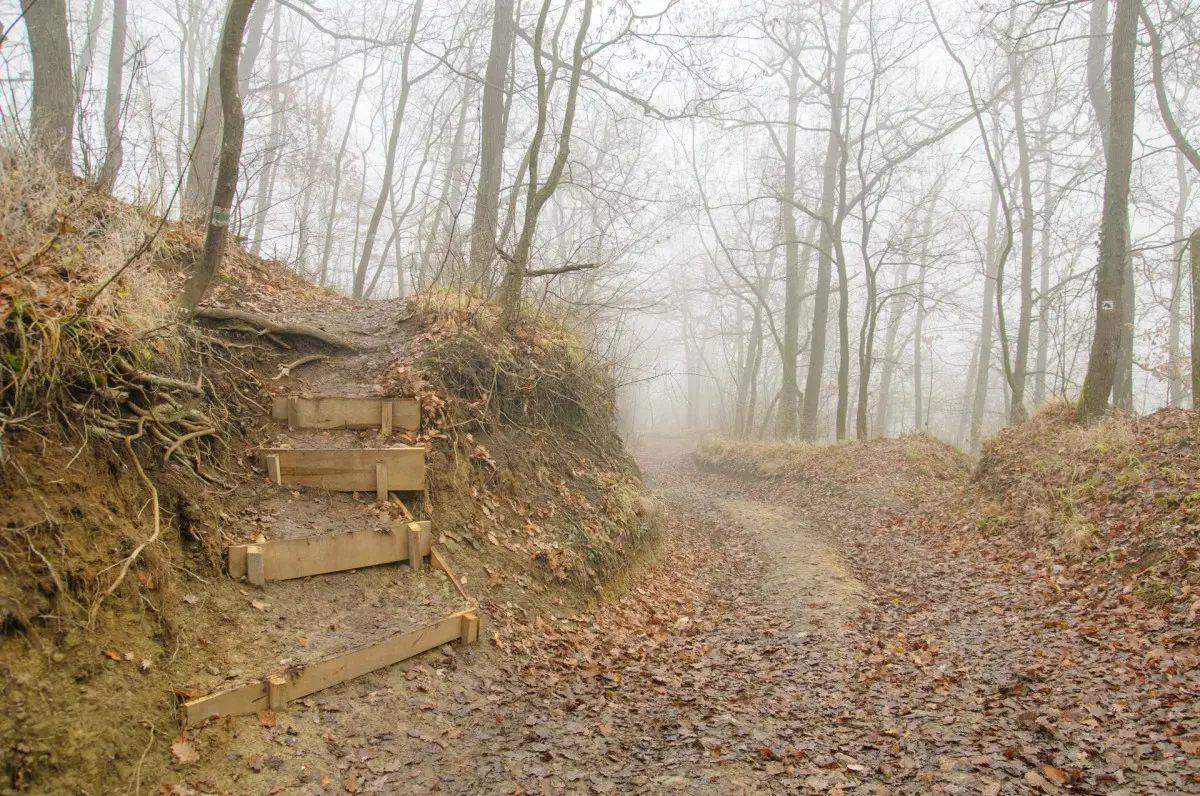
There was no such problem now, although the temperature was around freezing point and the path was muddy, but not even on this section, because the ground had become so compacted from all the trampling.
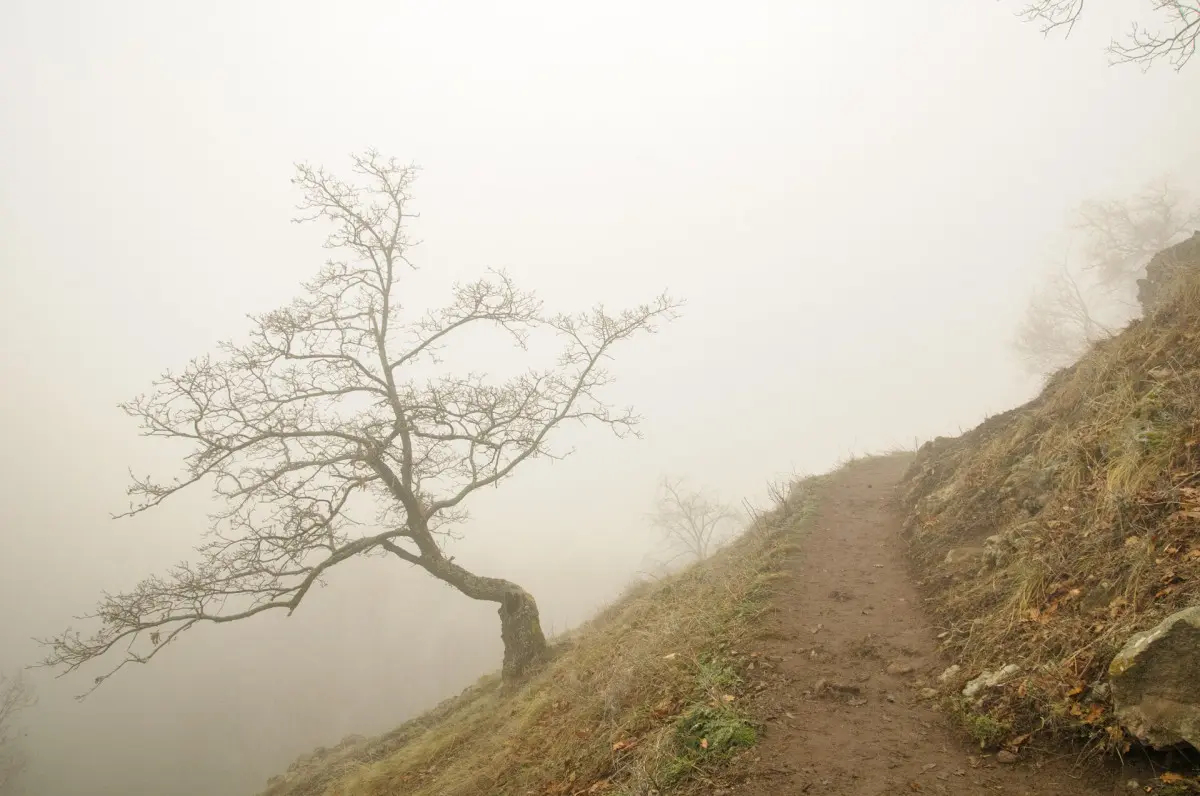
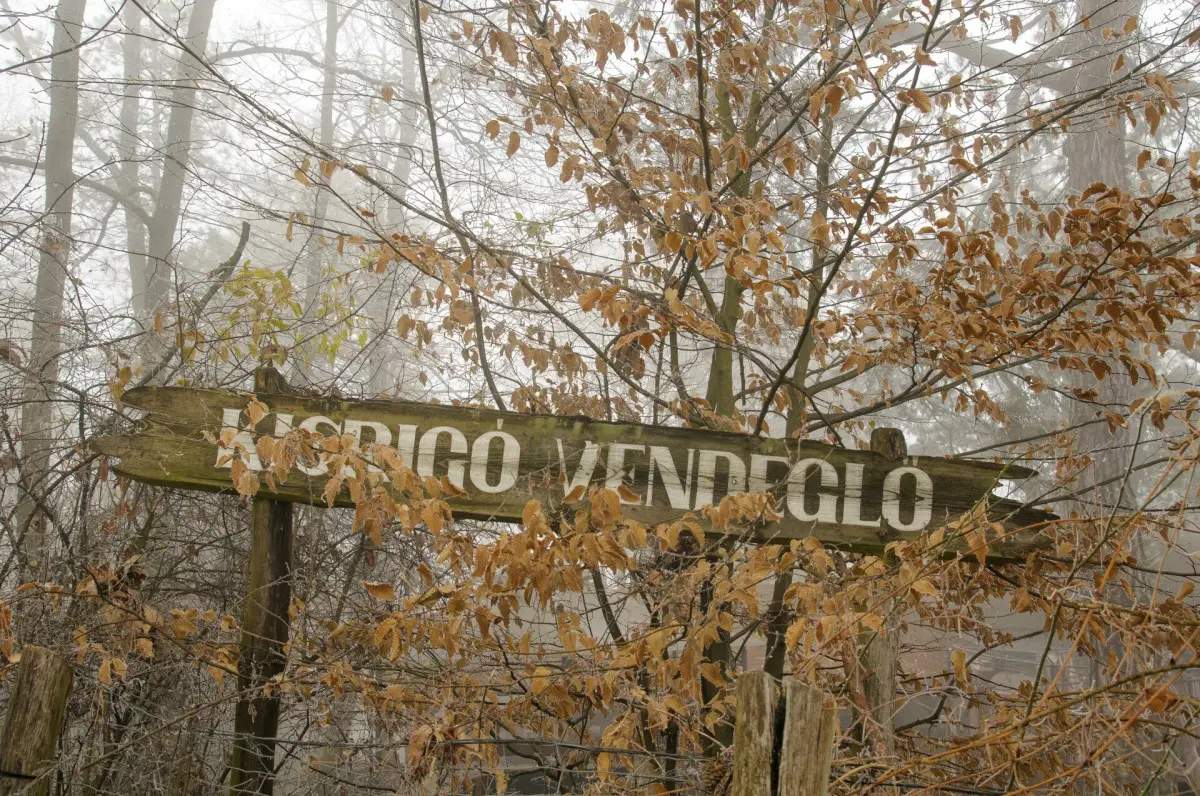
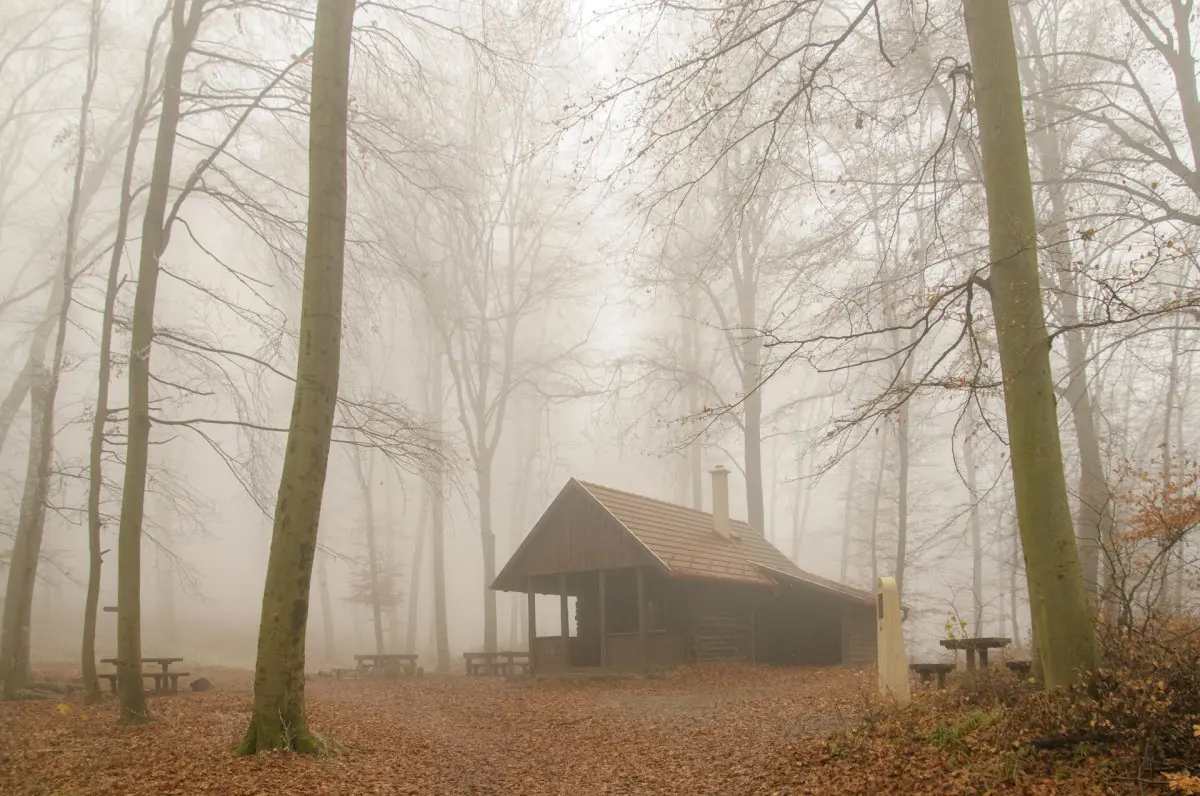
The second checkpoint of the tour is at Jenő-kunyhó (Jenő’s hut), which looked like a real fairy-tale cottage in the foggy forest, under the huge trees. The third checkpoint is located in the Apátkúti Valley, on one of the signs at the Ördögmalom Waterfall. Here, the route turns back towards Pilisszentlászló, where it rejoins the red trail running through the Apátkúti Valley.
Crossing the stream eleven times
The Apátkúti Valley is one of the most popular hiking destinations in the mountains, but this time it was quiet and almost deserted. I only encountered one jogger and an elderly gentleman who was filling a trunk full of mineral water at the Károly Kaán spring.
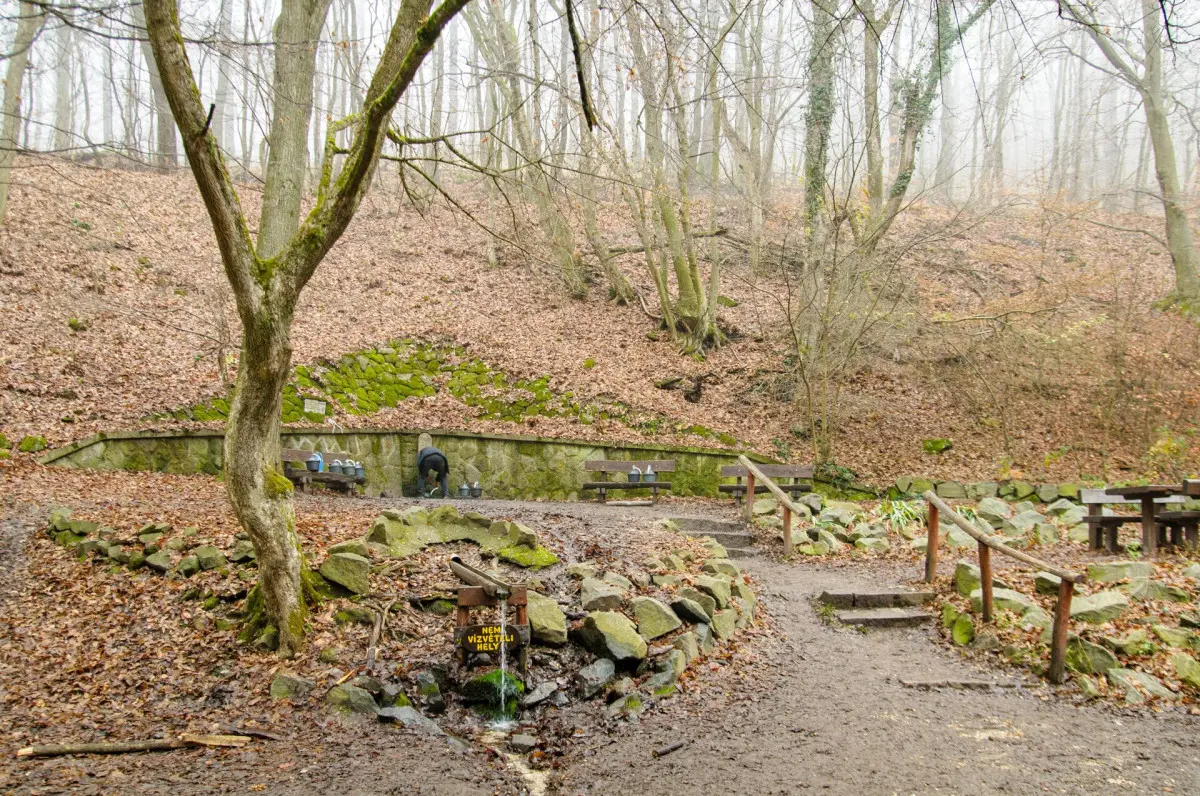
There was now a lot of water in the stream winding through the steep-sided gorge. From the road running parallel to it, I looked at the stream and the mountain slope rising high above. Surprisingly many trees lay on the ground on the steep slope, simply uprooted from the ground.
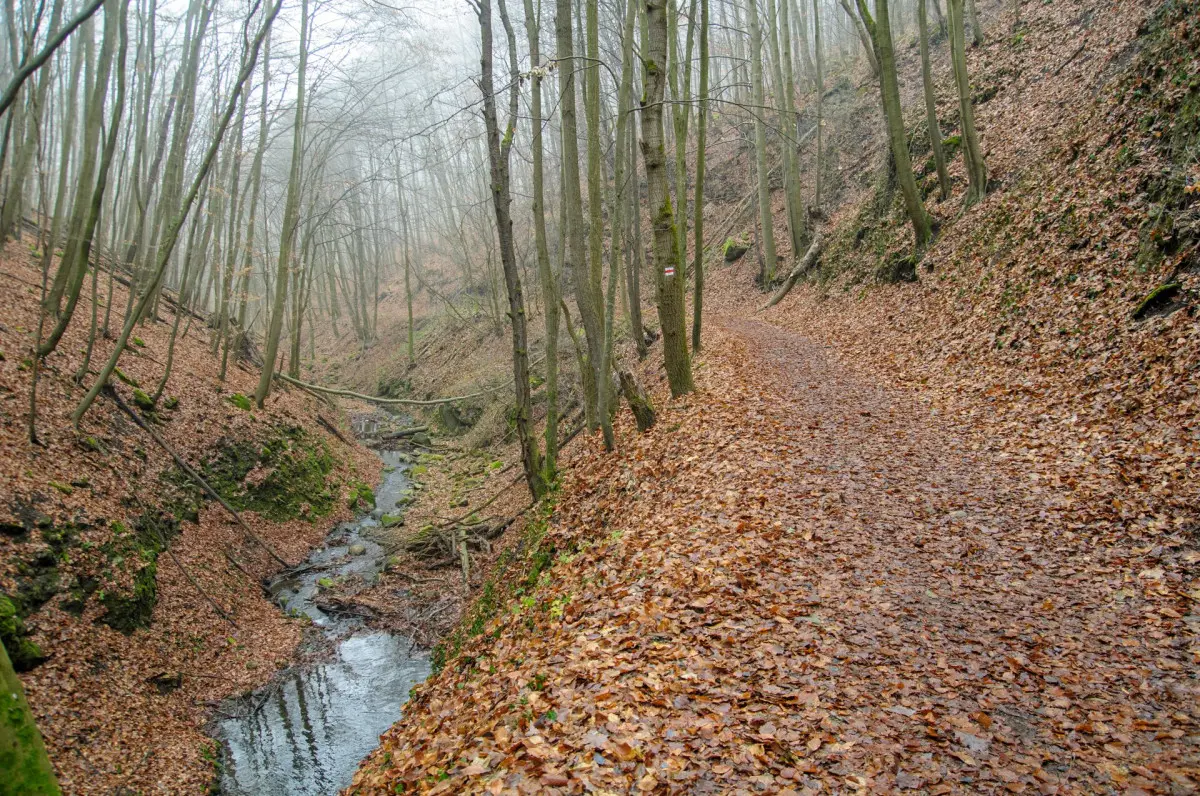
The steep-sided gorge on the Visegrád side has a unique, humid microclimate that is home to numerous species of ferns, which remain green even at this time of the year.
The stream originating south of Pilisszentlászló flows for 10 km and joins the Danube at Visegrád.
Heading towards Pilisszentlászló, after a while the steep valley sides become gentler, and the road runs right next to the stream, so much so that you have to cross from one bank to the other quite a few times, eleven times to be precise. None of the crossings are particularly difficult, but waterproof boots are recommended.
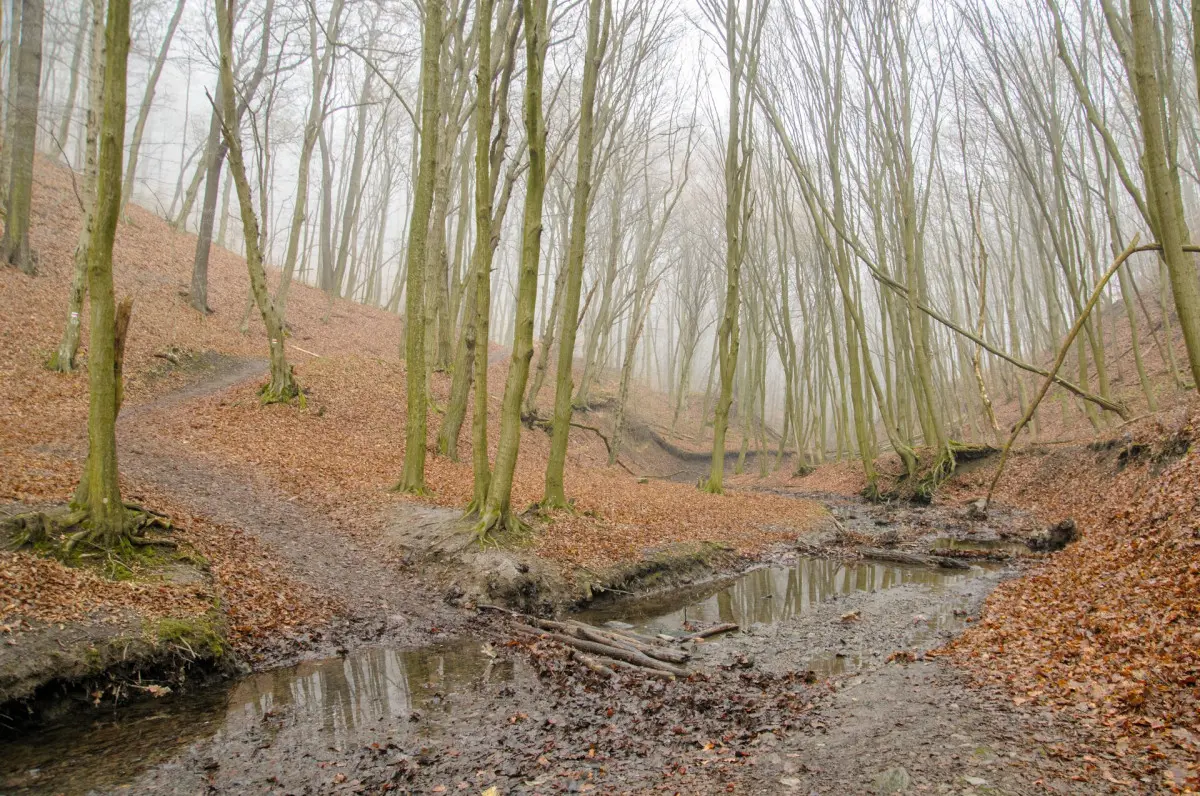
The red trail leads to Pilisszentlászló, where you need to switch to the blue trail in the center, which will take you to your destination, the parking lot of the Kis Rigó restaurant. The QR code for the destination can be found on the Pilis Bike sign here. I completed the distance in 4 hours and 45 minutes, including taking photos and sightseeing, which is well within the time limit, but far behind the fastest finisher.
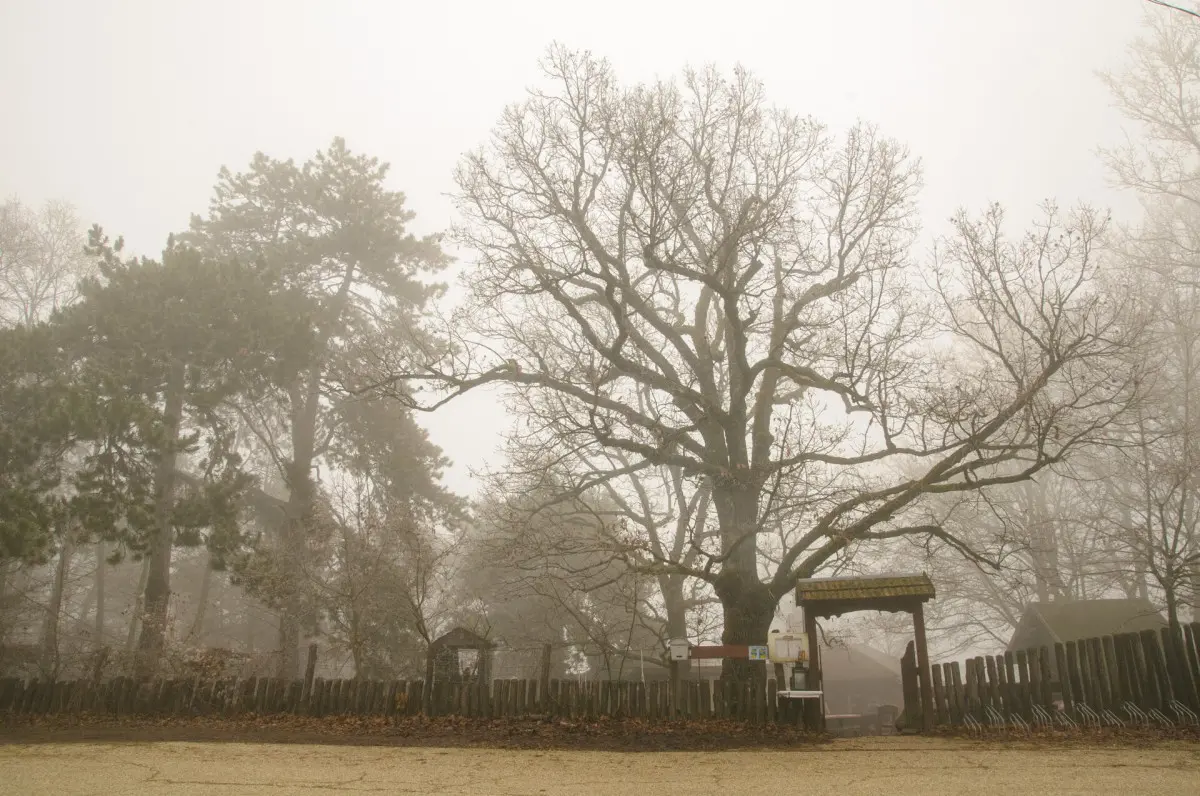
This route is a good choice in any season, but if you want to set yourself a little extra challenge, the 16 km Rigó Kör (Thrush Circle) hike is a good choice, and with an early start, this distance can be easily covered in daylight, even on a winter’s day.
Discover the country with the Hungarian Nature Conservation Association!
If you would like to learn more about Hungary's natural and cultural treasures, visit the Turista Magazin website published by the Hungarian Nature Conservation Association for tips and ideas, or download the Természetjáró app, which offers the best hiking, cycling, and water tours of the country.
Photos: Hungarian Nature Conservation Association (Természetjáró.hu) / Judit Tóth