Helyszín címkék:
In Search of Counts’ Parks and Hidden Legends – A Guide to Castle Gardens in the Somogy Region
Zsolt Kovács
What to expect?
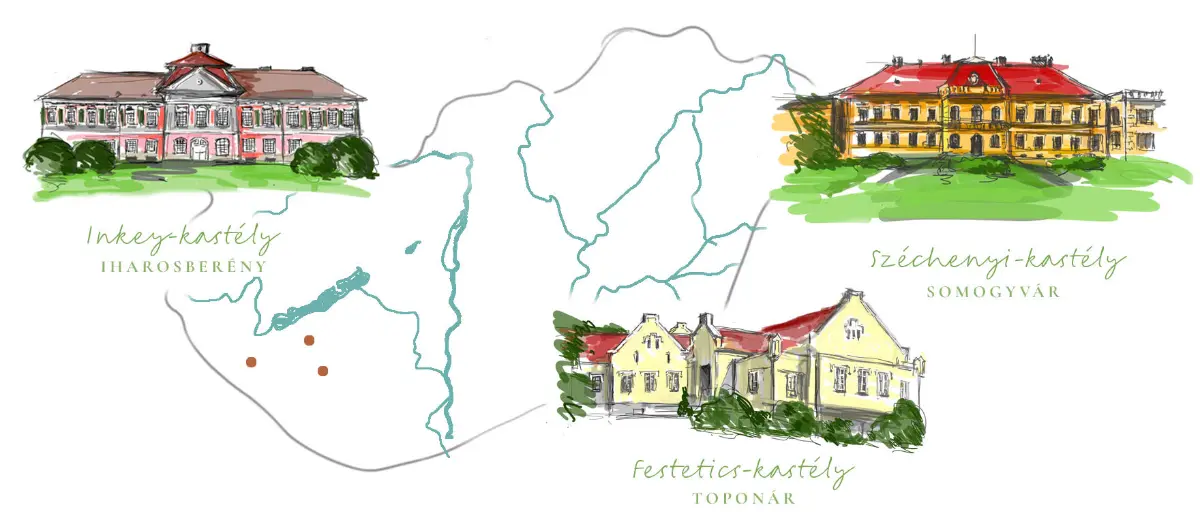
- A pleasant castle garden tour that takes us from west to east, passing through Kaposvár
- Hungary’s thickest-trunked cedar tree, the former gate of Szigetvár Castle, and a legend about Saint Ladislaus
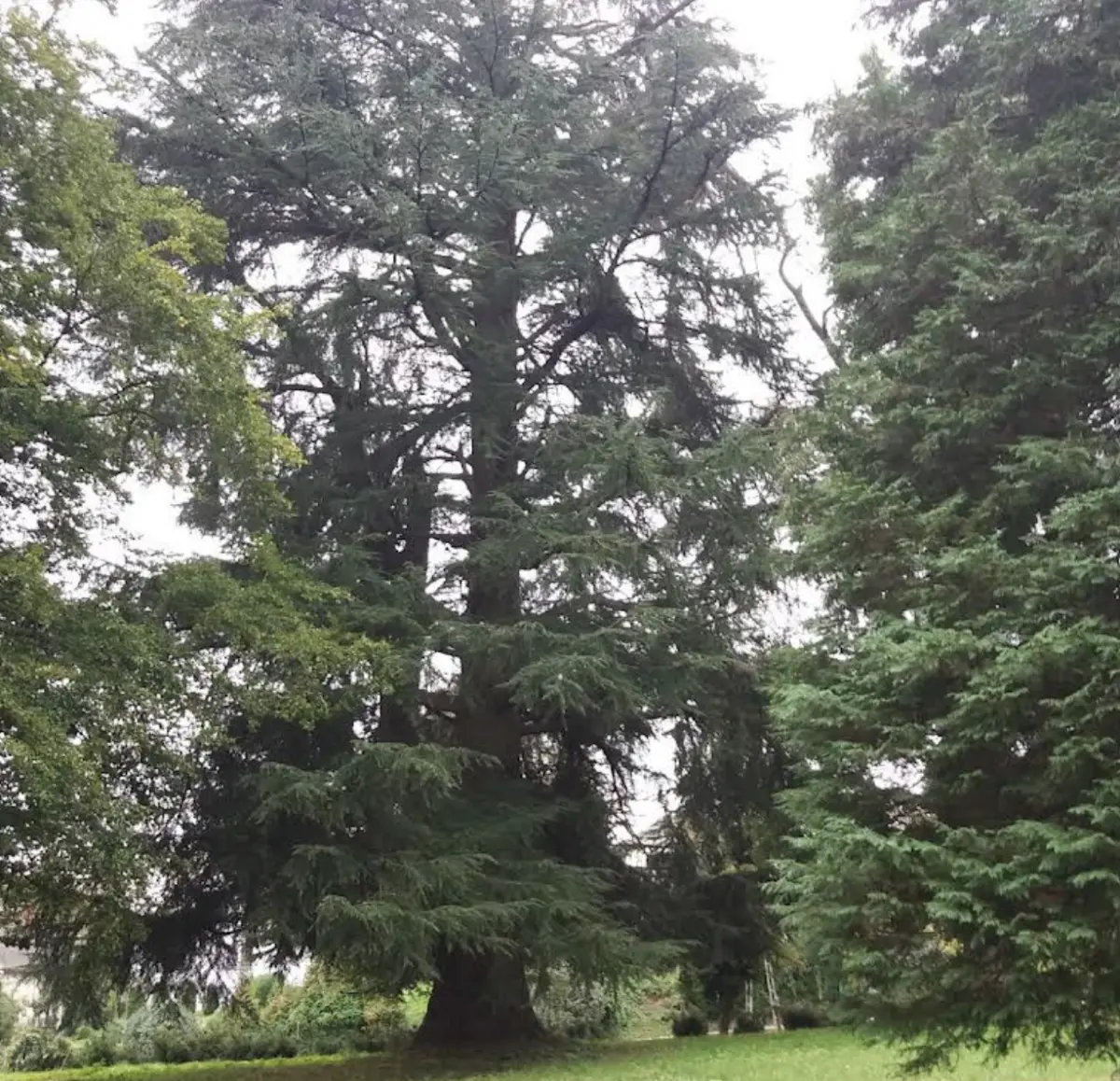
- Inkey Castle Park in Iharosberény – home to Hungary’s thickest cedar tree
We begin our journey in Iharosberény, located near Csurgó, where the Inkey family’s castle, built in 1750, is still surrounded by a large, well-maintained park. The Inkey family settled here in 1726, and Imperial General Gáspár Inkey had the castle built; the planting of the park began at the same time as the castle’s construction.
The park’s true gem lies not in the castle building itself, but among the trees. Here stands Hungary’s largest cedar by trunk circumference: a Himalayan variety with a circumference of 547 centimetres, which surpasses even the most massive specimens of the far more common Atlas cedars. The park was once home to the country’s largest sequoia, as well, but that tree died in 2015. Through the castle’s wrought-iron gate, one can see a stately area bordered by a double ring of plane trees – the site of the former riding school – and in the park, traces of a former winter garden resting on Doric columns can also be found—silent reminders of an era when the castle was still one of the prestigious homes of the Hungarian rural aristocracy.
Although the castle building now houses a school, the park is open to the public: it’s just a few minutes’ walk from the town’s roundabout and offers an excellent way to start the rest of your day.
Festetics castle park in Toponár – the former gate of Szigetvár castle in the heart of a quiet park
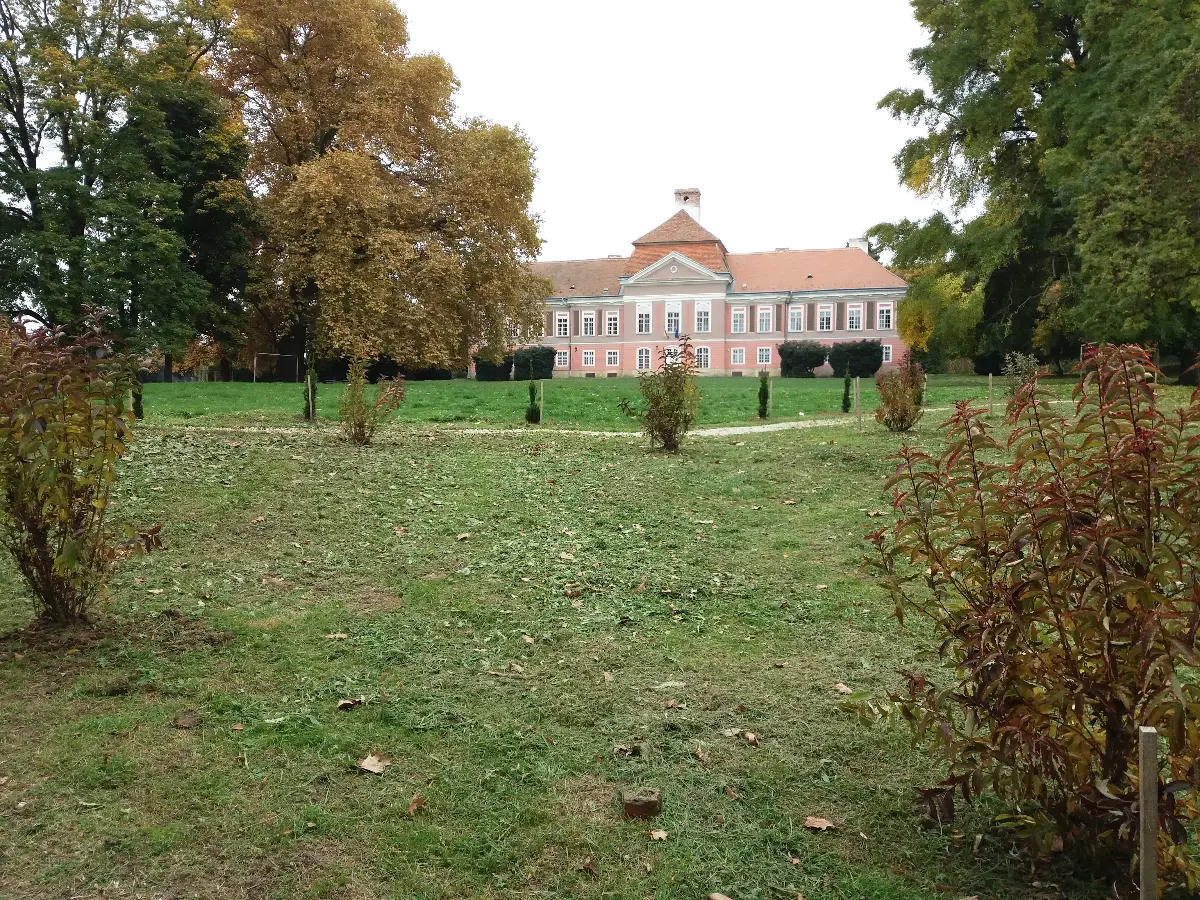
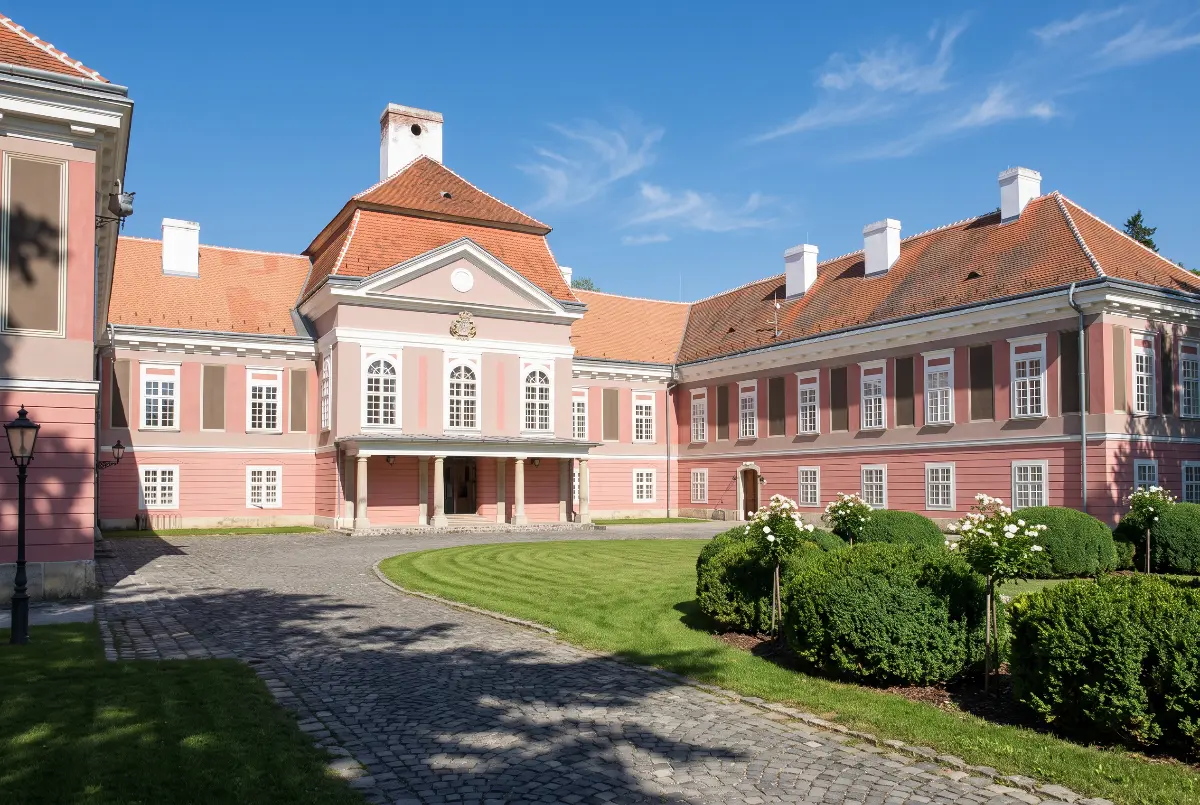
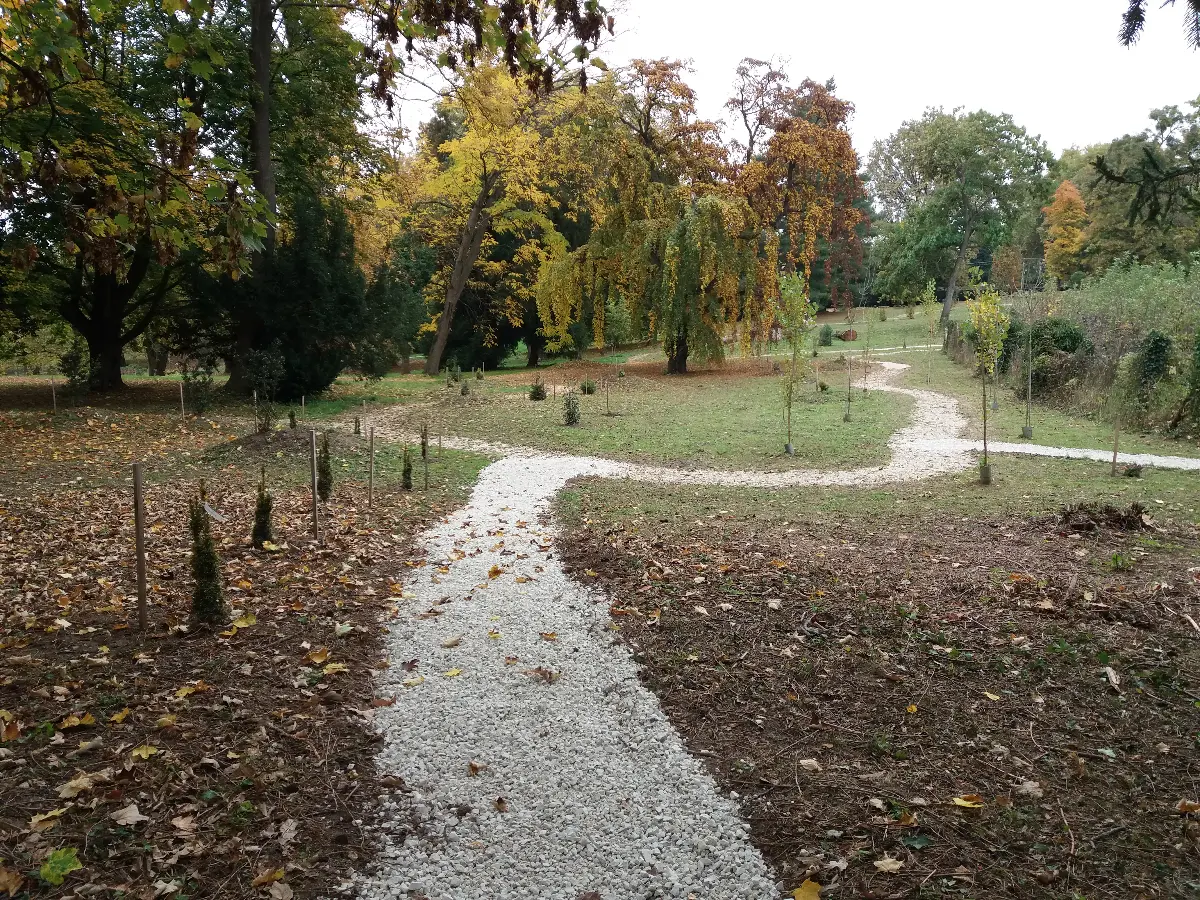
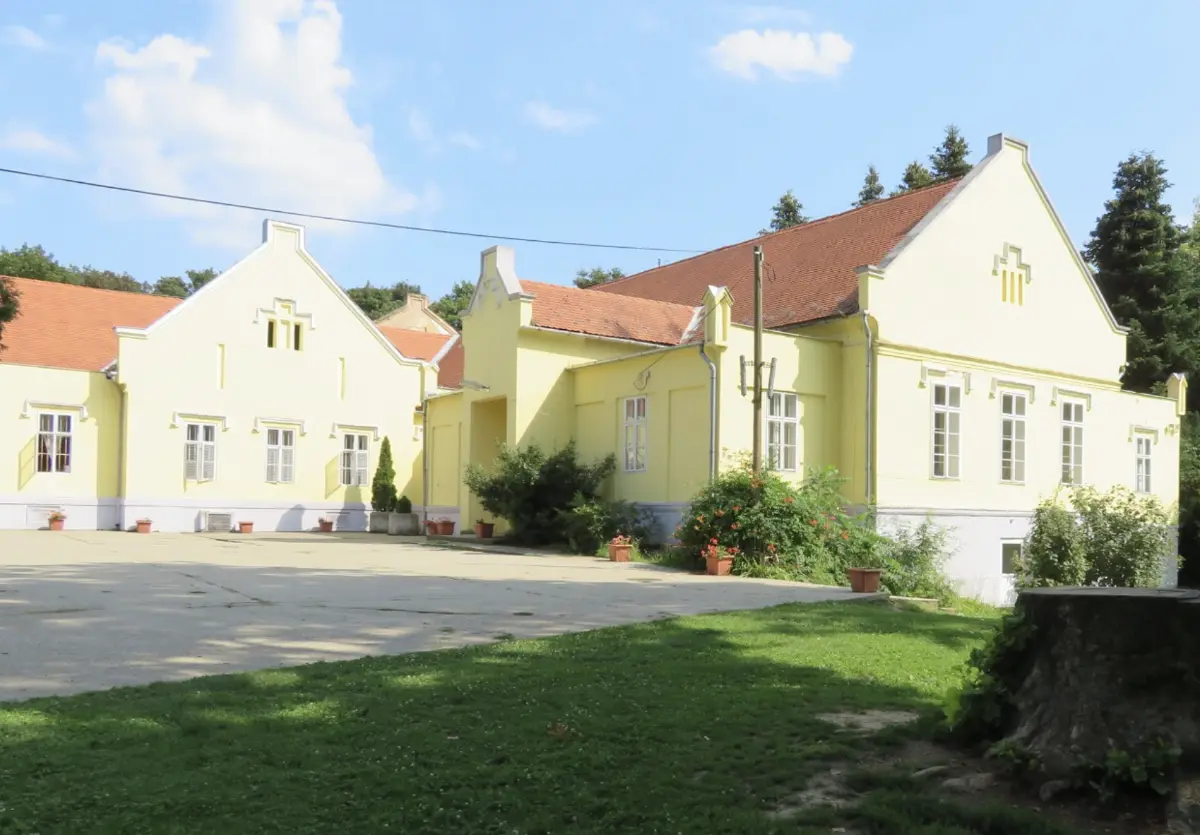
Heading toward Kaposvár, in the village of Toponár – one of the town’s outlying districts – stands the Baroque Festetics castle, built in the early 18th century, which is surrounded by a 5.6-hectare landscape-style park. At first glance, it appears to be a modest building, but those who look closely may discover a truly unique detail: the mansion’s main gate was once the entrance to Szigetvár Castle. Lajos Festetics purchased Szigetvár in 1769 and had the historically significant gate brought from there to adorn his residence in Toponár – thus today we can walk through the former entrance of the Ottoman-era frontier fortress almost without noticing it.
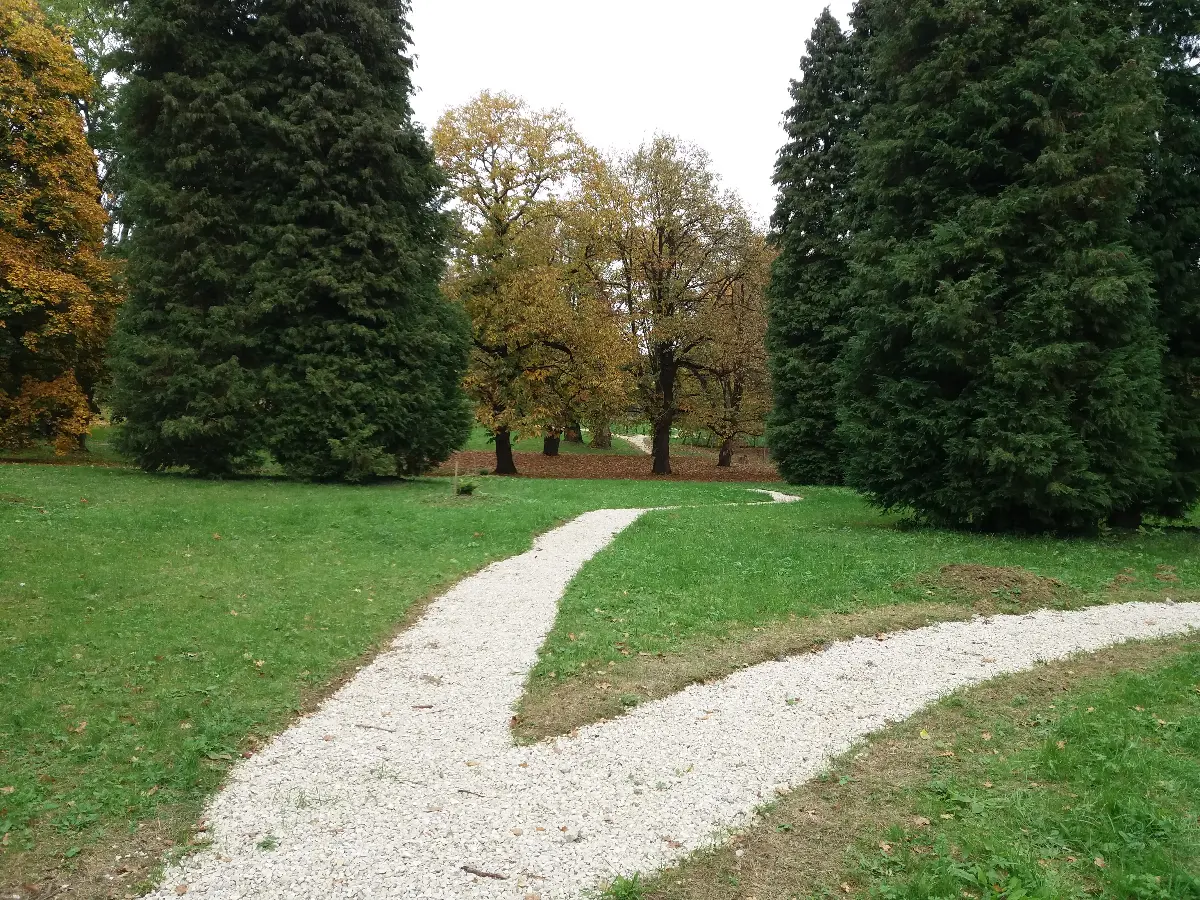
The park was once adorned with a Rococo-style Marian column, which was relocated during the 20th century to Kossuth Square in the city center, in front of the Church of the Assumption. Anyone who visits both sites can take a piece of Toponár’s garden history back with them to the city center. In the park’s inner, well-maintained section, massive plane trees and a yew tree planted in the 1930s dominate the view, while near the castle’s south wing, a 25-meter hedge of yew trees draws the visitor’s gaze. On a small hill lies a grove of sessile oaks and silver linden trees – as if the park were trying to remind us that it had once been part of a much larger, more romantic estate. The building now houses a school, therefore the interior of the castle is not open to the public; however, you are welcome to explore the park on a short, peaceful stroll.
Széchenyi castle park in Somogyvár – where an angel spoke to the king
Our final stop is Somogyvár, located about 26 kilometres south of Lake Balaton, along the road between Kaposvár and Fonyód. The town is the setting for one of the most beautiful legends in Hungarian history:
according to the legend, while out hunting, King Saint Ladislaus spotted a deer speaking in a human voice, in which an angel of God appeared before him and called upon him to build a church so that he might find rest there after his death.
The ruins of the Benedictine abbey founded in this way have served as a Historic Memorial Site since 1983, and it is precisely this memorial status that makes the neighbouring castle park so special, as well.
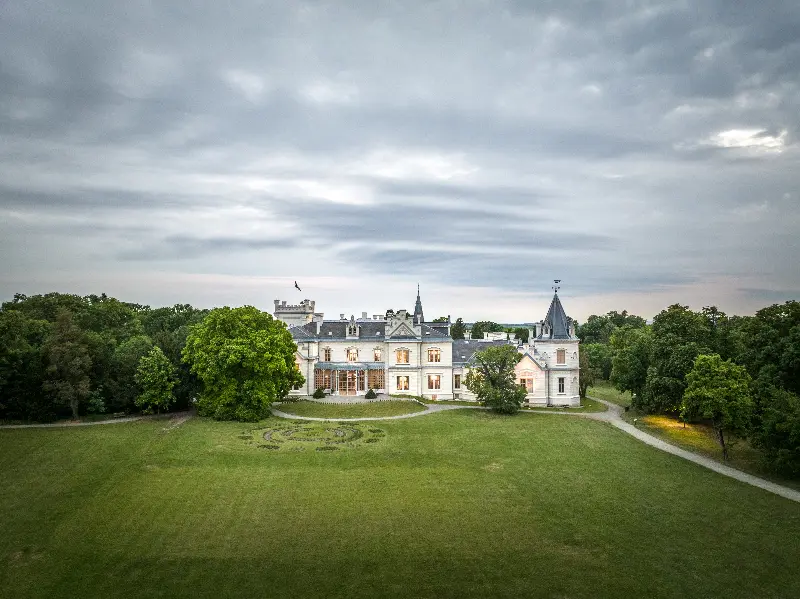
After the expulsion of the Turks, in 1677, György Széchényi, Archbishop of Kalocsa received the estate as a gift, and it remained in the possession of the Széchényi family until the 20th century – related to the Széchenyis of Nagycenk, whose castle park is now one of the country’s best-known national historic sites. A building already stood on the site of today’s castle at the end of the 18th century; it was remodelled in an eclectic style by Zsigmond Széchényi in 1855 and further expanded by Dénes Széchényi in 1870. The castle park is now under local nature conservation protection and was officially added to the list of Hungary’s arboretums in 2011.
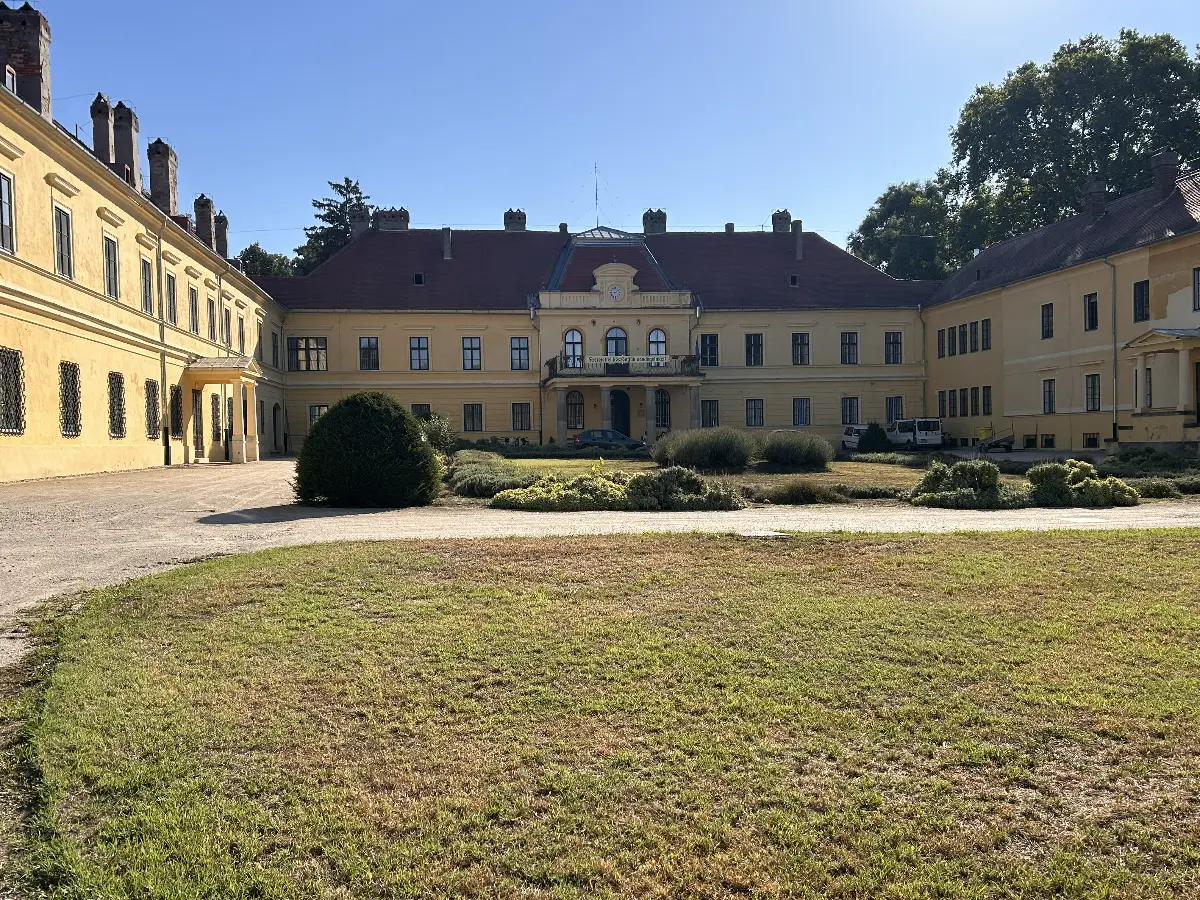
Today, the castle building serves as a special education institution and an elementary school, but the park is open to the public and features a fishing pond and a unique “Enchanted Garden,” the flower beds of which are tended by the students of the special school. There is also a therapeutic trail here that aids in the motor development of the residents of the institution. Furthermore, visitors can explore a lavender maze six meters in diameter, next to which dendrophones – percussion instruments made from strips of various types of wood – have been placed, each producing a different sound. The Somogyvár castle park, together with the abbey ruins and the St. Ladislaus National Memorial Site, offers a quiet, contemplative half-day walk.