Helyszín címkék:
In Search of Manor Gardens – Romance, Scenic Charm, and Forgotten Splendour in Fejér County
Hajdú Gábor
What will we be discussing?
- Romantic landscape gardens
- Gloriettes, grottos, and rose gardens
- We’ll also find out what a “formal garden” is.
The Garden of Romanticism – Nádasdladány
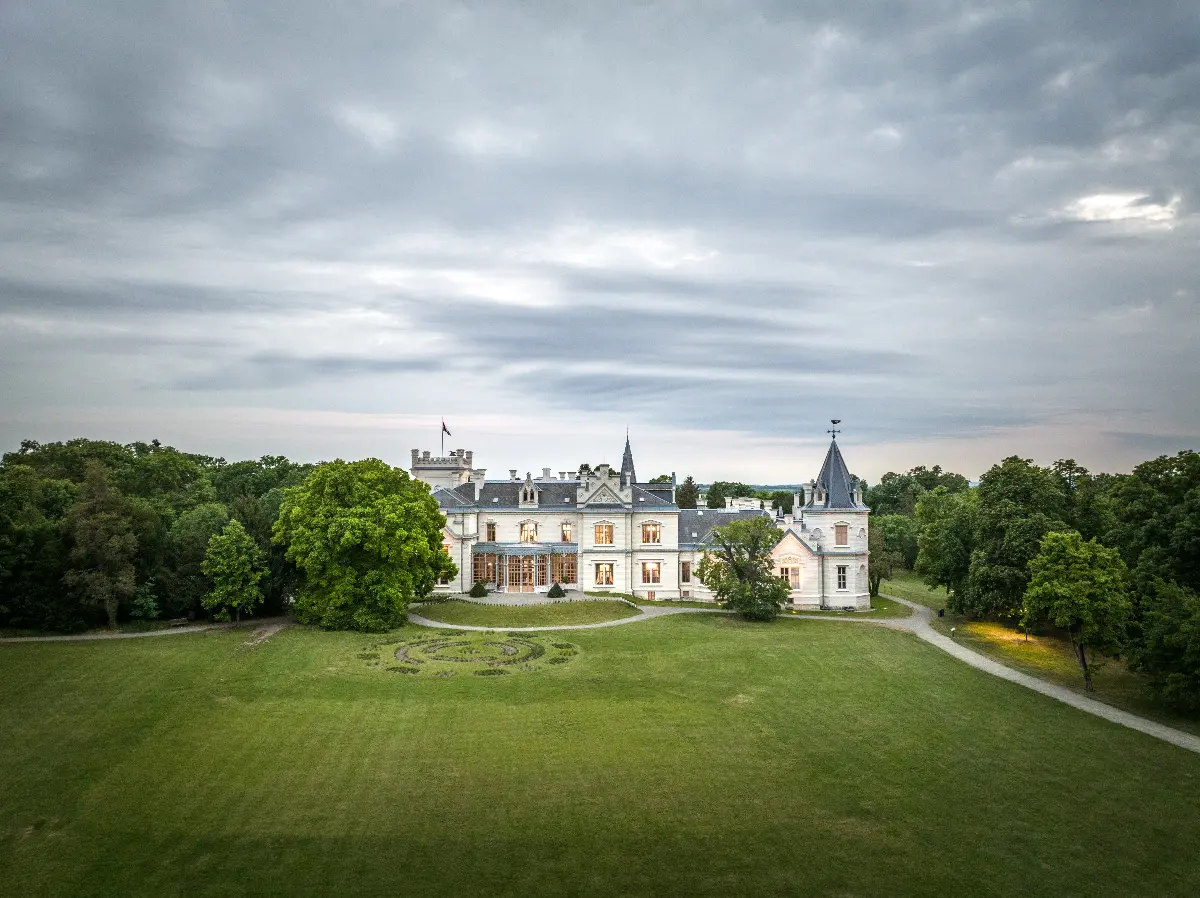
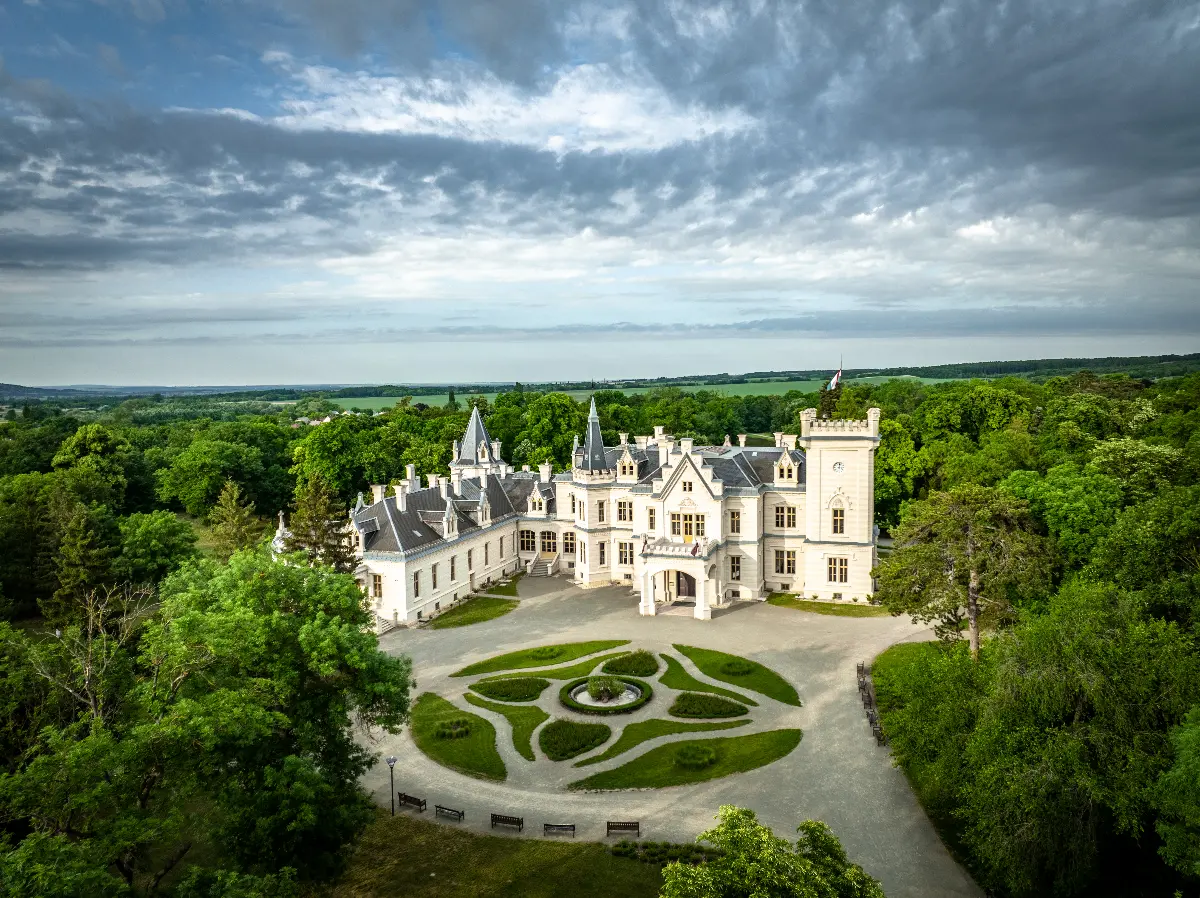
The Nádasdy Castle in Nádasdladány looks, even at first glance, as if it had stepped out of the pages of an English novel. Attached to the castle, which was rebuilt in the Tudor style, is a spectacular, approximately 50-hectare landscape garden dating from the 1870s, designed by head gardener János Kálmán.
The park once served as a true romantic setting: a lake with a curved shoreline, an artificial waterfall, a grotto (an artificial cave built from natural stones), an island, and a hill added variety to the landscape. A stone bridge arched over the lake, and the water tower still lends a unique character to the garden today. The castle’s surroundings were designed so that the nearby church would also be part of the view – the landscape and architecture formed an almost theatrical unity.
The garden’s uniqueness was further enhanced by its exotic plant life. In addition to native tree species, the park was adorned with beech trees, swamp cypresses, cedars, Japanese pagoda trees, and emperor trees. It once included a rosarium (a botanical or ornamental garden specifically created for the cultivation, display, and collection of roses), an alpine garden, and a winter garden; the fountain in the ornamental courtyard in front of the mansion still welcomes visitors today with water lily motifs evoking the family’s heraldic plants.
The park remains a delightful place for walks: it is both elegant and intimate, while the combination of the renovated castle and the park, along with the preserved gates, evokes the aristocratic lifestyle of yesteryear.
Fehérvárcsurgó – where the park blends into the forest
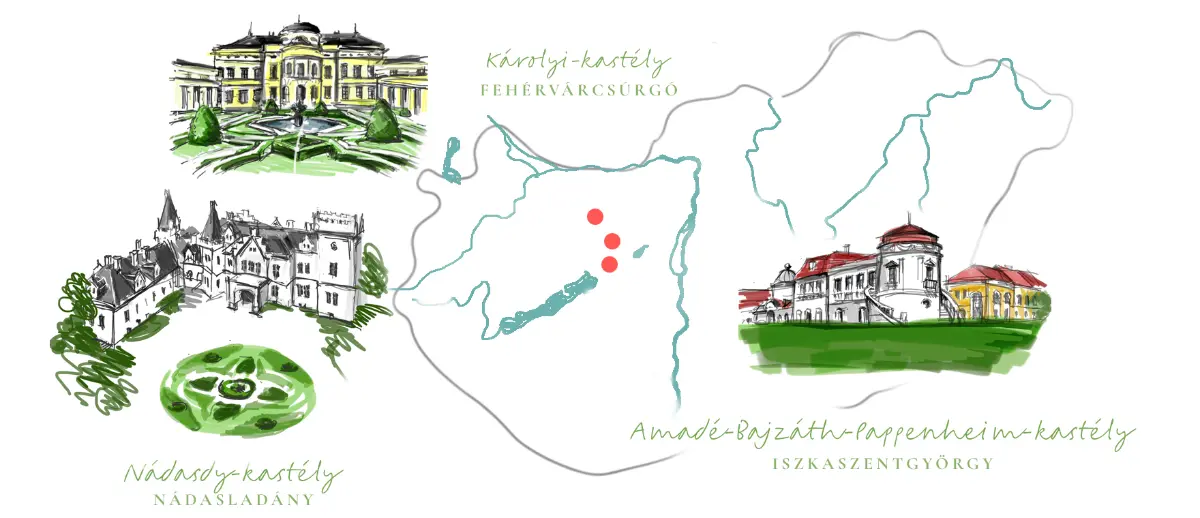
The park of the Károlyi Mansion in Fehérvárcsurgó has a completely different character: here, the natural landscape and the garden merge almost imperceptibly. The landscape park surrounding the mansion, covering approximately 50 hectares of forest once used as a game reserve, follows the slopes of the Gaja Creek valley and blends into the surrounding woods with picturesque ease.
The estate came into the possession of the Károlyi family in the mid-19th century, at which time the Classicist-style castle known today was also built. The pond, island, gazebo, and meandering stream created within the park lent a romantic atmosphere to the surroundings. A bathing pool and a turul bird perched on a Doric column were once also part of the garden’s composition.
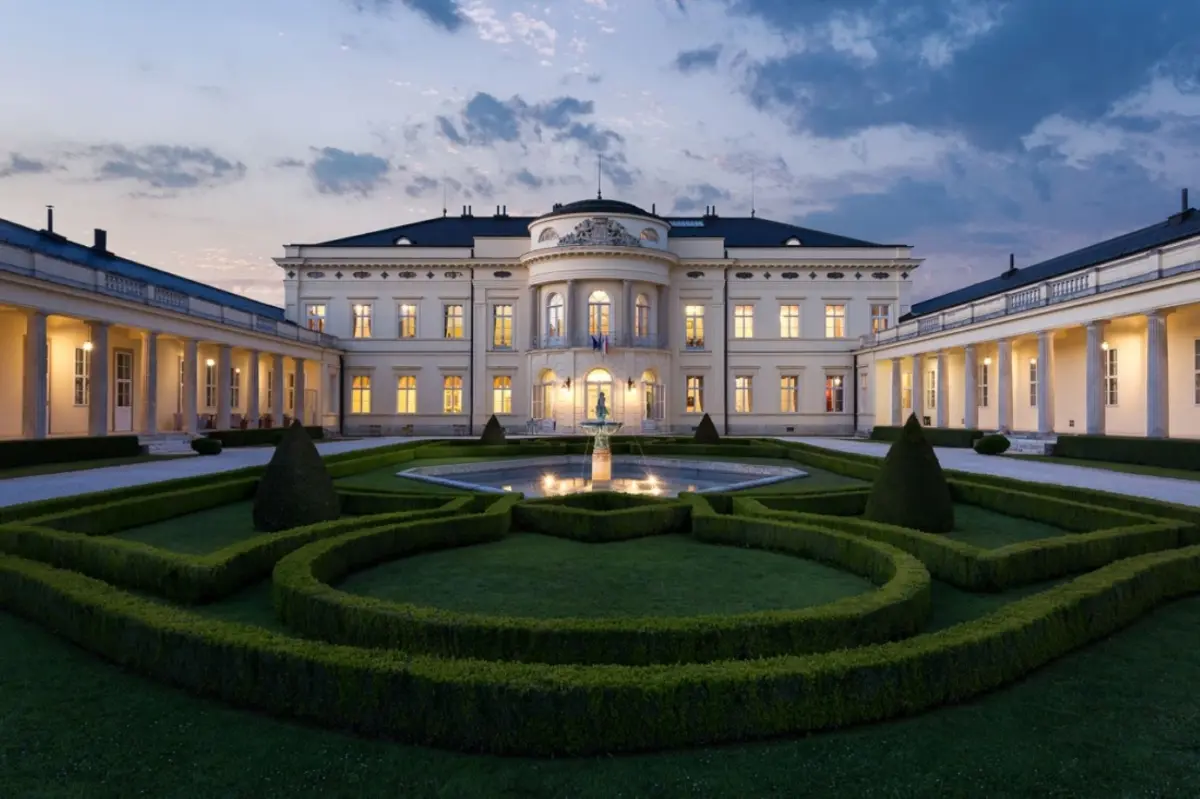
The most distinctive feature of the garden is the Lace Terrace, which adjoins the southern side of the mansion; with its delicately openwork metal structure, it is a sight virtually unique in Hungary. From here, one can look out across the valley in front of the mansion to the gazebo reflected in the lake’s waters, as well as to the distant Csókakő Castle. The putto-adorned pool (featuring an ornate water spout) standing in the center of the ornamental courtyard, which encompasses the renovated geometric garden, is also one of the castle complex’s highlights.
Among the park’s trees, one can still find giant linden trees, a group of black pines, maples, Turkish hazelnuts, and uniquely shaped trees, such as weeping yews or columnar strawberry trees. The garden is not ostentatious, but rather quietly elegant: an ideal place for a leisurely stroll, reading, or even an entire afternoon of relaxation.
Today, the castle also serves as a cultural center, regularly hosting concerts, exhibitions, and garden art events. The annual European Ornamental Plant and Garden Art Days are particularly popular among gardening enthusiasts.
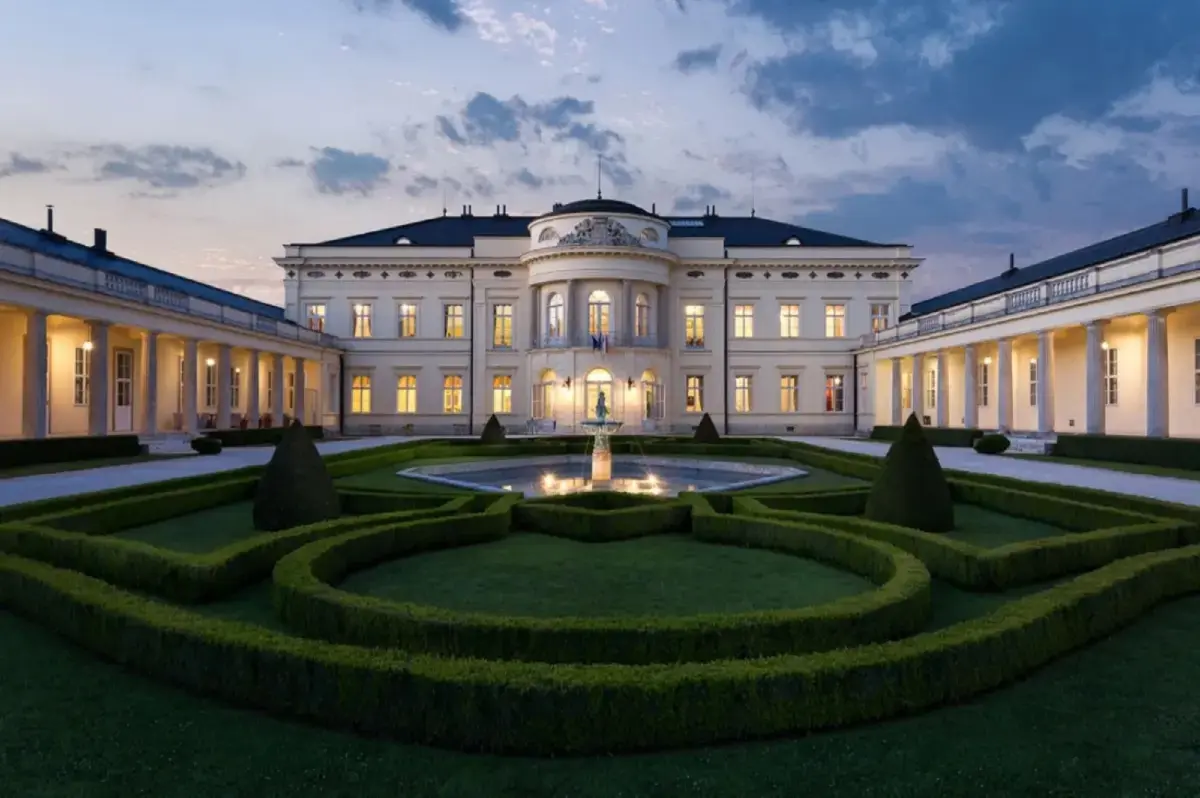
Iszkaszentgyörgy – a rare example of a “formal garden” in Hungary
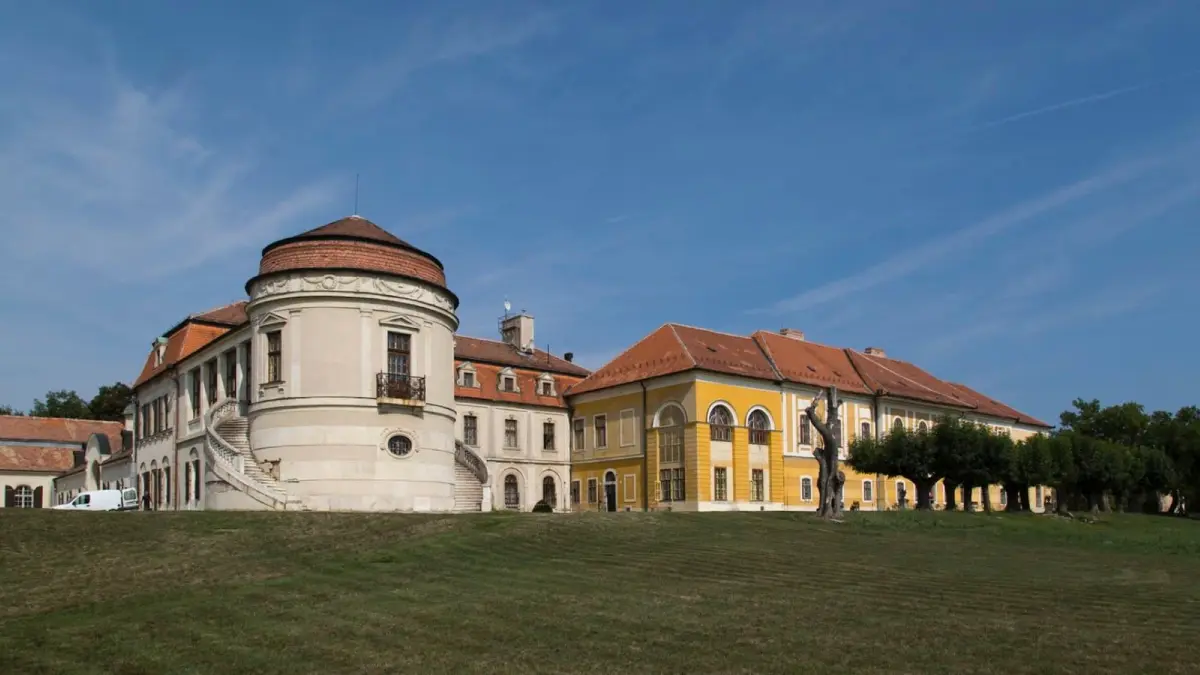
In the garden of the Amadé–Bajzáth–Pappenheim Castle in Iskaszentgyörgy, we once again find ourselves transported to another world. While Nádasdladány and Fehérvárcsurgó follow the tradition of romantic landscape gardens, here the spatial layout is defined by the geometric design of the terraced ornamental garden in front of the castle.
One of the greatest treasures of the approximately 16-hectare park is that it preserves, in a manner rare in Hungary, the legacy of the so-called “formal garden” style: with its symmetrical layout, trimmed hedges, axial design, and statues, the terraced garden – created in the early 20th century – —evokes French or Italian castle gardens.
The castle was built on the highest point of the village, from which there is still a breathtaking view of the surrounding landscape. It dominates the countryside even from a distance, which is no coincidence: the placement of the garden and the building was part of a deliberate landscape composition.
The park once featured retaining walls, pools, staircases, and a triumphal arch, while ornate gates connected the garden to the village. Although the garden has lost much of its former splendour, it still exudes a special atmosphere today. Walking through the landscape park, which blends into the forest, among the partially standing old linden, oak, and horse chestnut trees, it is easy to imagine what life must have been like here more than a century ago.
Thanks to a volunteer movement aimed at revitalizing Hungary’s garden heritage, the garden is slowly becoming a rediscovered treasure. This is precisely what gives it one of its greatest charms: it is both a romantically overgrown and historically fascinating site. During the spring and fall volunteer days, we can play a part in preserving our natural and cultural heritage.
The castle gardens of Northern Transdanubia are perfect examples of how garden tourism is not just about plants. These parks tell stories: of families, eras, fashions, and the human need to transform nature into art. And during a visit, we too can become part of this special heritage.