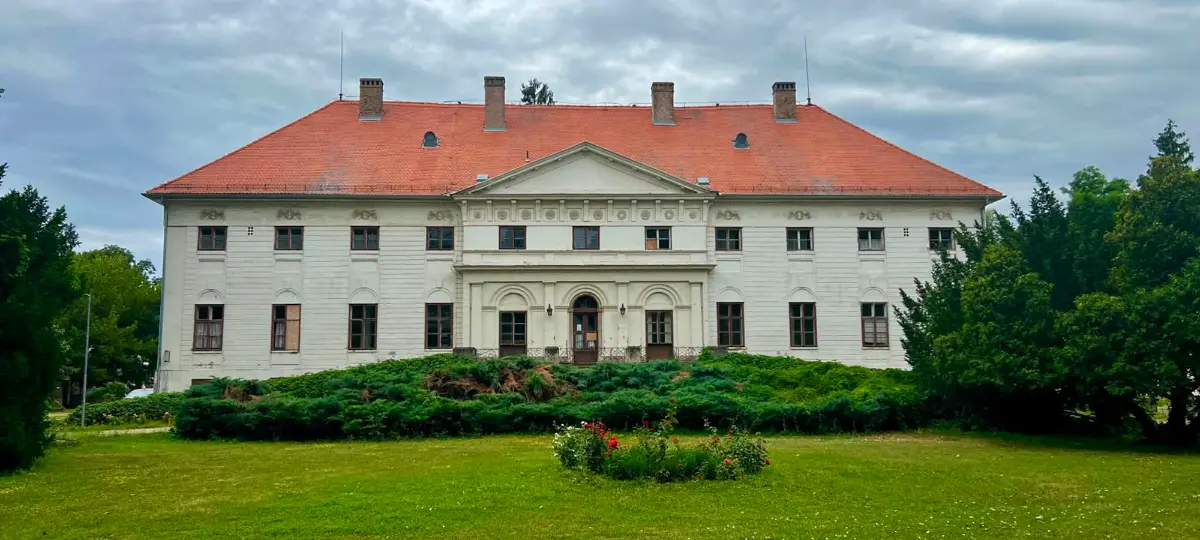
Helyszín címkék:
In Search of Manor Gardens in Baranya – Arboretums, Romantic Lakes, and Unique Tree Species
Hajdú Gábor
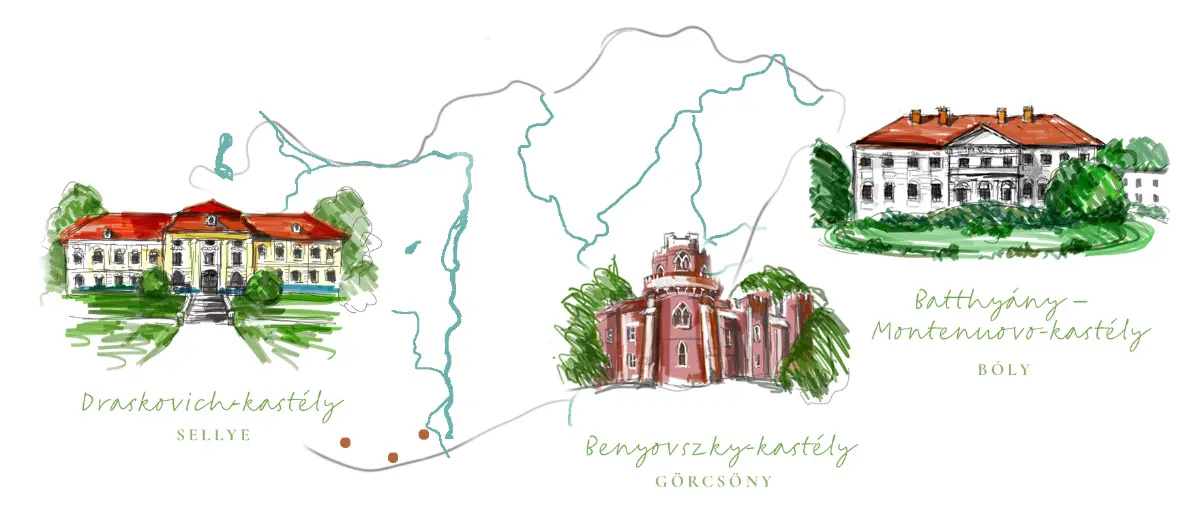
What will we cover?
- A fern pine that made a name for itself in the film industry in Sellye
- The Benyovszky family’s heritage in Görcsöny
- Centuries-old giant trees in Bóly
Sellye – where a fern pine landed a movie role
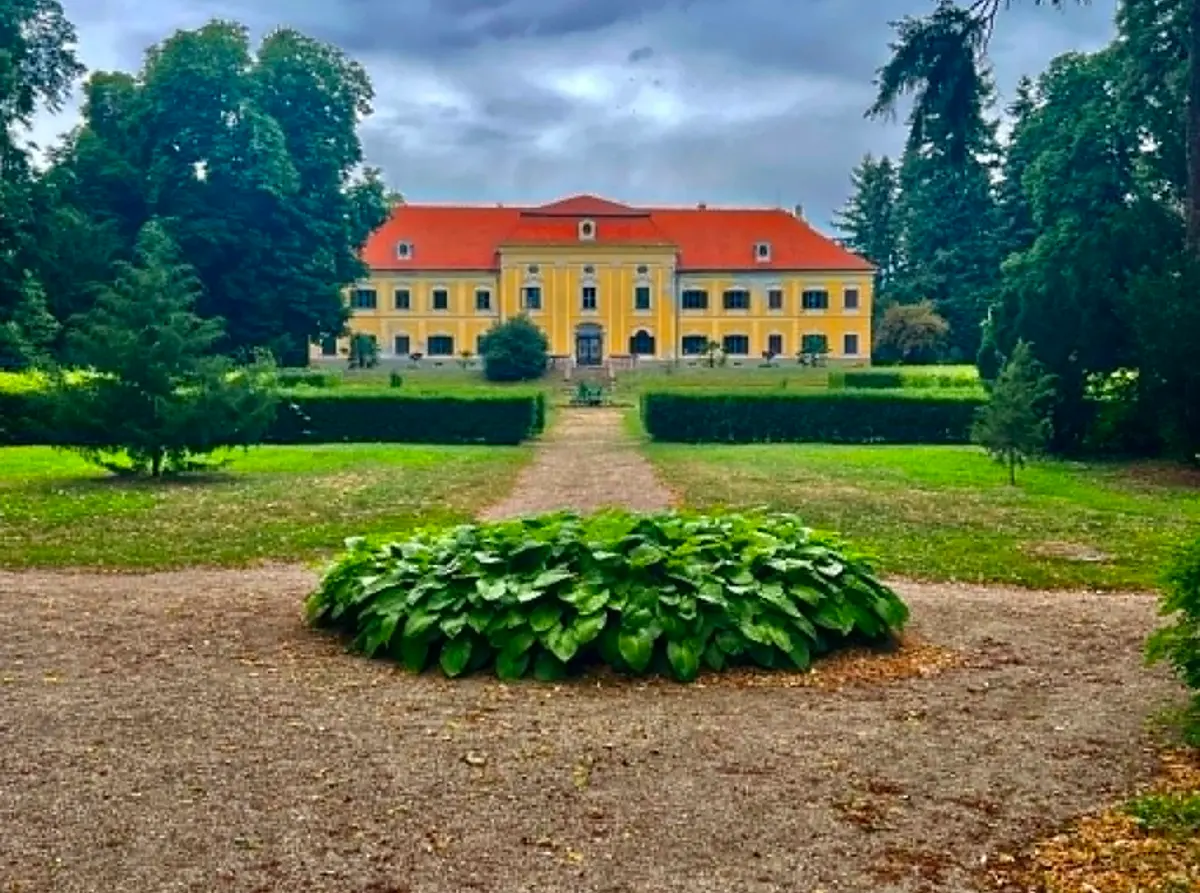
It’s no coincidence that Sellye’s castle park is considered one of Hungary’s most significant arboretums. The 7.6-hectare landscape park, laid out around the Baroque Draskovich Castle, is special not only for its historical value but also for its rich dendrological collection.
The castle was built upon the instruction of Count Lajos Batthyány in the mid-18th century, and the estate later passed to the Draskovich family. The park’s oldest, formal ornamental garden section was created at the same time as the castle, but in the mid-19th century – in keeping with the fashion for landscape gardens – it was significantly expanded. By relocating the paths, more space was created for the natural-looking garden composition, whose oldest trees still date from this period. Since 1965, the park has been a nature reserve due to its botanical value, thus offering both a historical garden experience and a stroll through an arboretum.
The arboretum is home to rare plant species from many parts of the world. Giant sequoias, Swiss stone pines, European beech trees, yew trees, unique Japanese pagoda trees, and numerous exotic tree species add to the park’s diversity. Particularly famous are the ginkgo biloba trees, also known as maidenhair trees, of which there are several specimens. It is no coincidence that the park has also inspired filmmakers. Several scenes from Ildikó Enyedi’s film A Quiet Friend were shot here, and one of the story’s key “characters” is actually an old ginkgo tree in the castle park. This unique tree is not only a botanical rarity but also became a defining element of the film’s memorable visual world.
Görcsöny – the Benyovszky Family Park with Rare Trees and an Artificial Lake
The park of the Benyovszky Castle in Görcsöny dates back more than three centuries. The story began in 1702, when the Jesuit Order built a monastery in the village, which was surrounded by a garden of about 30 hold, created using the surrounding natural vegetation. After the dissolution of the order, József Mihalovits of Orehovica had the monastery converted into a castle, and in 1860, the estate passed into the ownership of the Benyovszky family.
The castle enjoyed its heyday during the time of Erzsébet Benyovszkyné Ocskay, who furnished the building in the style of the Burg in Vienna. The castle’s prestige is well illustrated by the fact that both Franz Joseph and Franz Ferdinand stayed within its walls in 1901. After the death of Lajos Benyovszky, however, the estate began to decline, and the two world wars further worsened its condition, resulting in the destruction of a significant portion of the former park.
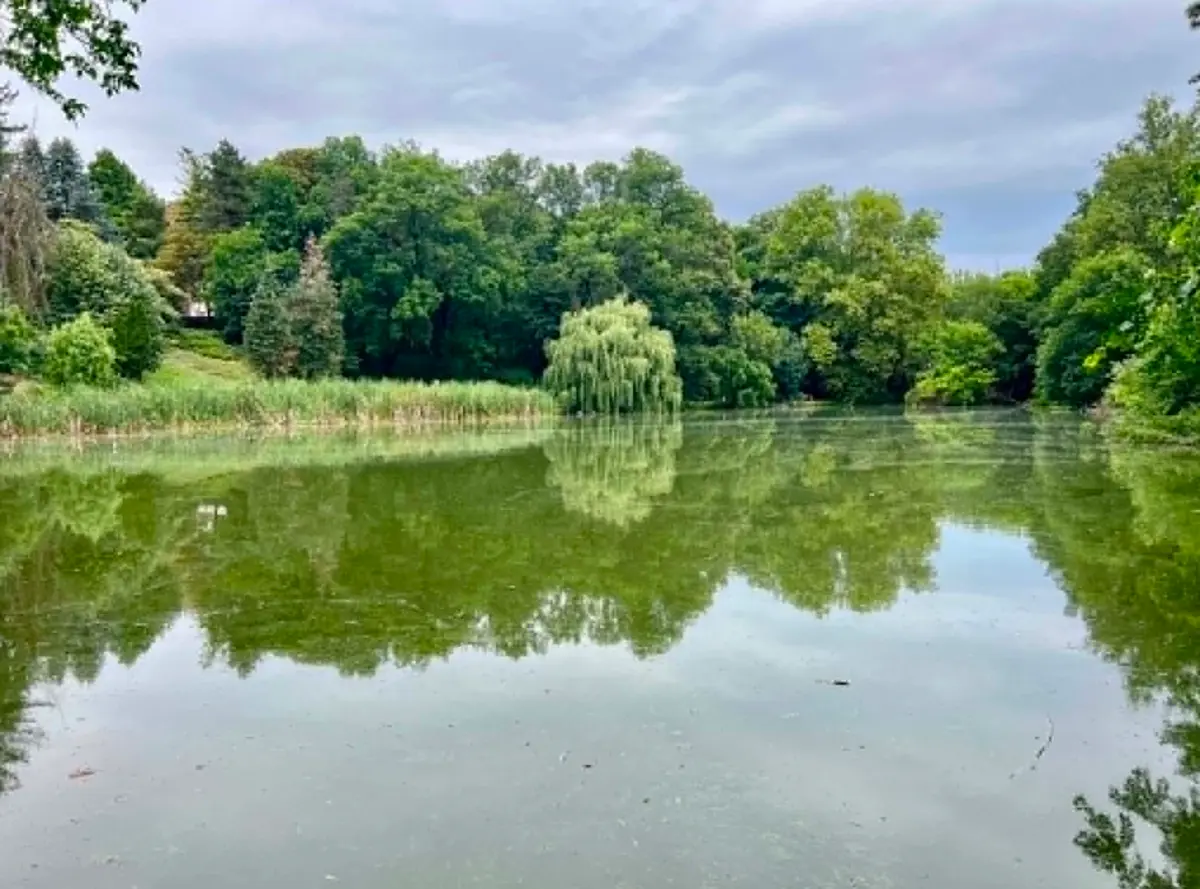
During the restoration work that began in 1964, it was no longer possible to restore the historic garden to its original form, but the park was given a new look. By damming the stream that runs through the area, a picturesque artificial lake was created, which remains one of the garden’s most beautiful features to this day.
The park’s plant life remains remarkable today: 92 species of trees and shrubs can be found here. In addition to Japanese pagoda trees, spruce trees, various junipers, and larch trees, a true dendrological rarity is the “Balatonfüred linden,” which can be seen in only a few places in the country. The castle currently serves as a nursing home, and the park is open to visitors by appointment, so those who enjoy peaceful walks can still explore one of Baranya County’s lesser-known historic gardens.
Bóly – an English-style park with centuries-old giant trees
The castle park in Bóly is a beautiful example of Hungarian English-style gardens. The Batthyány family’s Baroque castle was redesigned in the Classicist style in the early 19th century, and the adjacent 27-hectare English-style park was also established in 1809. Although the park’s area was significantly reduced after World War II, the garden – which now functions as a public park and is under nature conservation protection – still retains its former elegance. Walking among the monumental trees, it is easy to imagine what the park must have been like in its heyday. The main attractions are the centuries-old giant trees. Massive silver linden trees, English oaks, white poplars, sweet chestnuts, and sprawling plane trees form the backbone of the park. Pleasant walking paths wind beneath their shade, revealing a different facet of the garden in every season.
Today, the castle operates as a social institution and is not open to the public; however, the park itself is freely accessible. As a public park, it remains an important green space for the town, where the heritage of the historic garden and nature-oriented recreation come together in harmony. Although the interior of the castle is not open to the public, the Batthyány-Montenuovo mausoleum, located on the right side of the highway leading from Bóly to Mohács, can be visited by appointment.
These three castle parks vividly illustrate how the aristocratic families of the 18th and 19th centuries reshaped the landscapes of Baranya: from Baroque ornamental gardens to romantic, landscape-style English parks. If you would like to visit all three in a single day, it’s best to start in Sellye and then continue through Mozsgó and Bóly – the distance is short, but because of the rare plant species and historic architectural features, it’s worth setting aside plenty of time for each location.