Helyszín címkék:
Summer is here – where should we go for wine? Let’s head to a wine bar!
Mészáros Gabriella
Why a wine bar?
If we truly want to taste wines rather than just drink them, the best method is to nibble on and taste many small sips – ideally, to cherish their notes. Opportunities for this began to open up in Hungary around the mid-2000s – until then, quality wines could only be tasted in a few wine shops or restaurants (mostly by bottle). The wine bar is a serious institution: it is most useful for those who seek to satisfy their curiosity about wine by combining it with variety. Many open bottles and countless opportunities for discovery.
It’s worth noting that a wine bar is not a pub.
Pubs are mostly frequented by those seeking the effects of alcohol. Wine bars, on the other hand, attract those seeking a higher level of wine appreciation. Occasionally, an “elite pub” atmosphere can be found here as well, but ideally, it always remains within the expanded boundaries of sobriety.
What should we look for?
What makes a good wine bar? In my opinion, it should be spacious yet cozy. Its soft lighting inspires quiet conversation rather than loudness. If necessary, of course, we can also examine a glass of wine according to strict professional criteria, guided by an expert and wine-loving “wine connoisseur.” It is essential that every member of the staff loves wine at least as passionately as the owner. After all, wine knowledge grows largely through experience. This can mean one’s own opinions as well as those of others – mostly trustworthy people with expertise in tasting. Wine tasting is clearly one of the most uplifting forms of social interaction; drinking alone is a different matter.
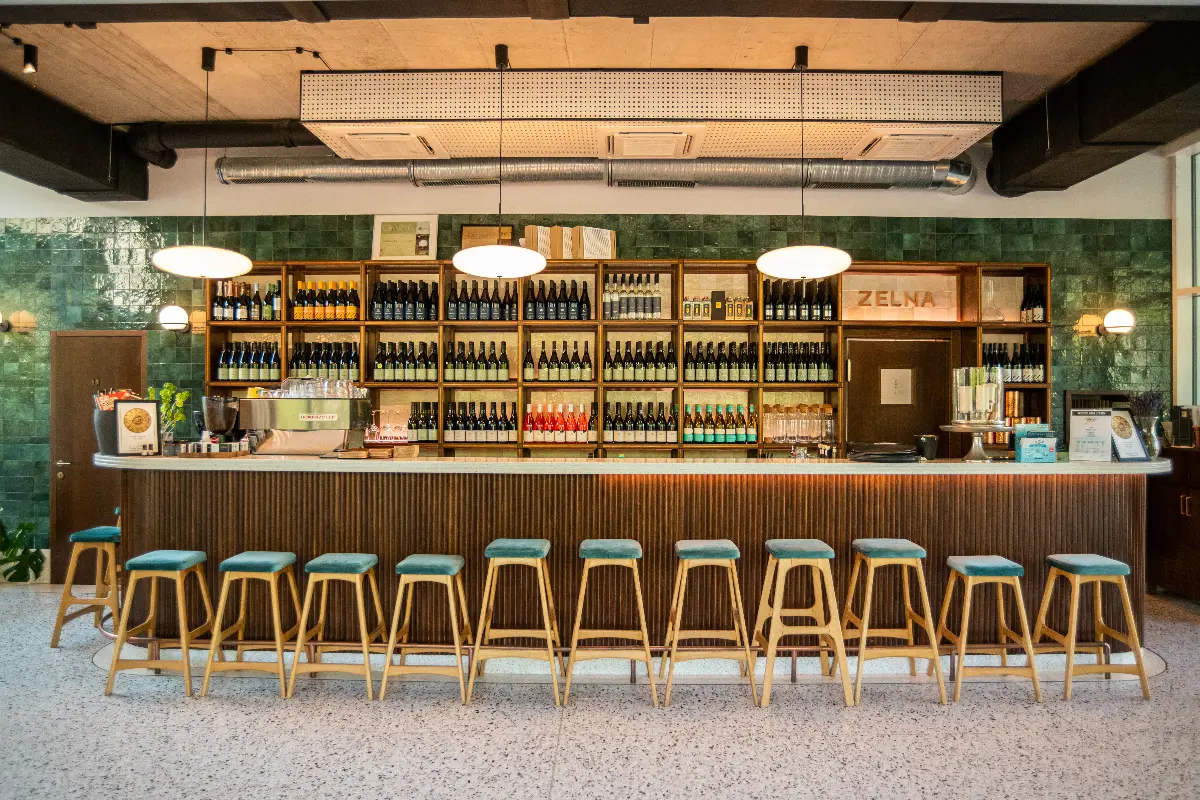
Photo about Zelna Wine Bar and Wine Shop
What constitutes a good selection is harder to define. It seems quite certain that the owner’s personal taste will show up somewhere in the selection. If, for instance, the owner happens to love champagne, we can be sure to sample sparkling delights from a variety of wine regions.
How far one can go in imposing one’s own taste – or lack thereof – on guests largely depends on one’s budget. A carefully curated selection of producers and wines is essential, no matter where we are. There’s no need to stock too many producers, as the discerning guest who returns regularly is the best kind. It is therefore good to build on a reliable, consistent selection, which is regularly enhanced with the occasional rare item unavailable elsewhere. A good guest should be pampered, and this should include true specialties.
When it comes to the specific selection, I personally consider how the wines are handled to be more important. Where they are stored, and whether they are cared for properly or not. Wine is, after all, a matter of trust – on both sides. Both the guest and the producer have every right to expect that the wine is stored and served under the best possible conditions. It’s all for nothing if the winemaker has nurtured his finest vintages for years only to have them slip from his sight and be entrusted to a stranger. If that person does not handle the bottles with due care, they have betrayed the producer’s trust. For they are serving something different from what the producer entrusted to them. And this can raise serious problems. Lack of space cannot be an obstacle or an excuse. Unfortunately, the consequences of poor storage are most often borne by the producer. When tasting older vintages, those involved are therefore often told, “this was a good bottle…”
In the summer, there is a wider selection of light, lively wines with moderate alcohol content, mostly white and rosé, both sparkling and still. Of course, the increasingly diverse and exciting cocktails – even wine-based ones – are also worth considering.
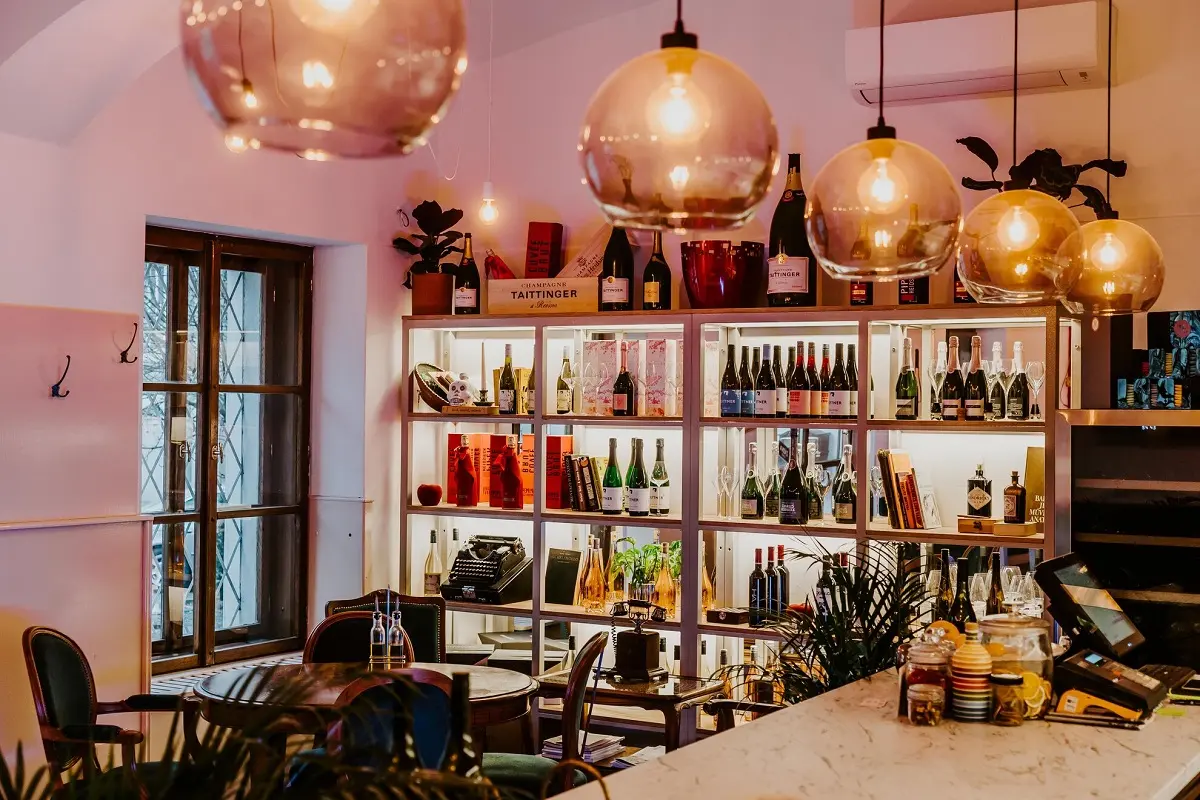
Photo about Büttner Wine Estate
What we cannot compromise on: quality
Of course, every vintage is a little different; we won’t be tasting exactly the same wine in December as we did in April. But within realistic and reasonable limits, we must be able to manage these variations. However, if something goes wrong, a good host must certainly take action. The foundation of this is regular tasting. Anyone who stocks and serves wine cannot stop tasting. Wine can change even within a few weeks, as it is a living substance.
Would you like some snacks as well?
When we drink wine, sooner or later we get hungry. It’s a good idea to have a very simple snack before the tasting begins – preferably something that won’t interfere with the taste or character of the wines. Of course, there’s no need to take this too seriously, since enjoying wine is only truly possible with a positive attitude. Almost every wine bar offers snacks (such as fresh bread, mild olives, olive oil, or even high-quality butter), as well as cold dishes.
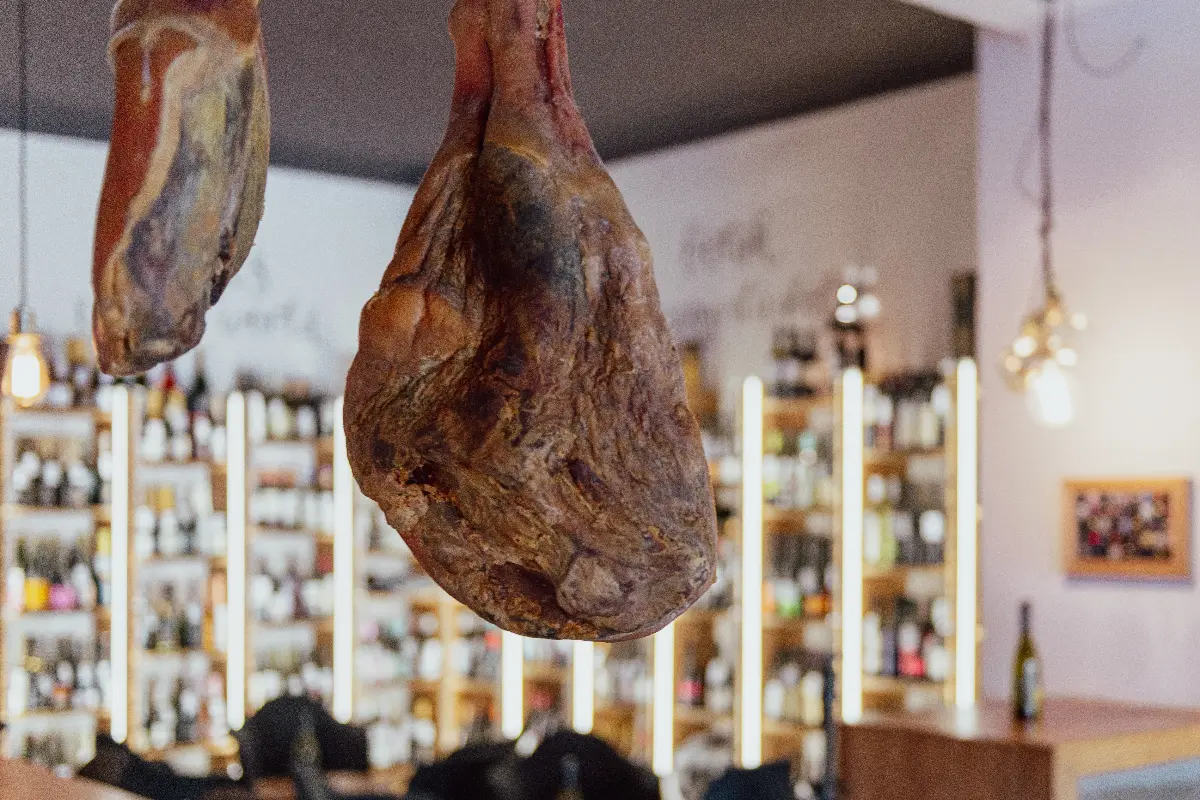
Photo about Eleven
It’s worth considering, however, that if we truly want to get to know wines, it’s better to hold back on food and save dinner or lunch for after the tasting. We can eat just about anything at this point, except raw onions and very spicy flavours. If we do happen to find a wine bar where they can offer a wine that pairs well even with bread and lard topped with red onion, well, we should really appreciate that place! Because, in my opinion, such a place doesn’t exist. Salads, ham, mild cheeses, vegetable spreads, pâtés – these are all welcome in any quantity.
For my part, after a lengthy red wine tasting, I would definitely offer ice cream, as well.
At times like that, this kind of cool treat is a person’s best friend. Don’t think you can’t drink red wine in the summer! Especially if there’s delicious ice cream to follow. I think it’s a great tip – you have to try it!
Where to find it?
There are plenty of excellent places to taste wine both in the capital and in major cities outside the capital. But today – thanks to discerning wine lovers – there are plenty of great spots outside Budapest, as well, waiting for visitors to drop by. The area around Lake Balaton clearly stands out, as summer vacations there remain a sure bet for many of our compatriots and foreign guests alike. In addition to Badacsony, Balatonfüred, and Csopak, the excellent Káli Basin and the Balaton Uplands offer equally inviting and reliable destinations, just like the Southern Shore.
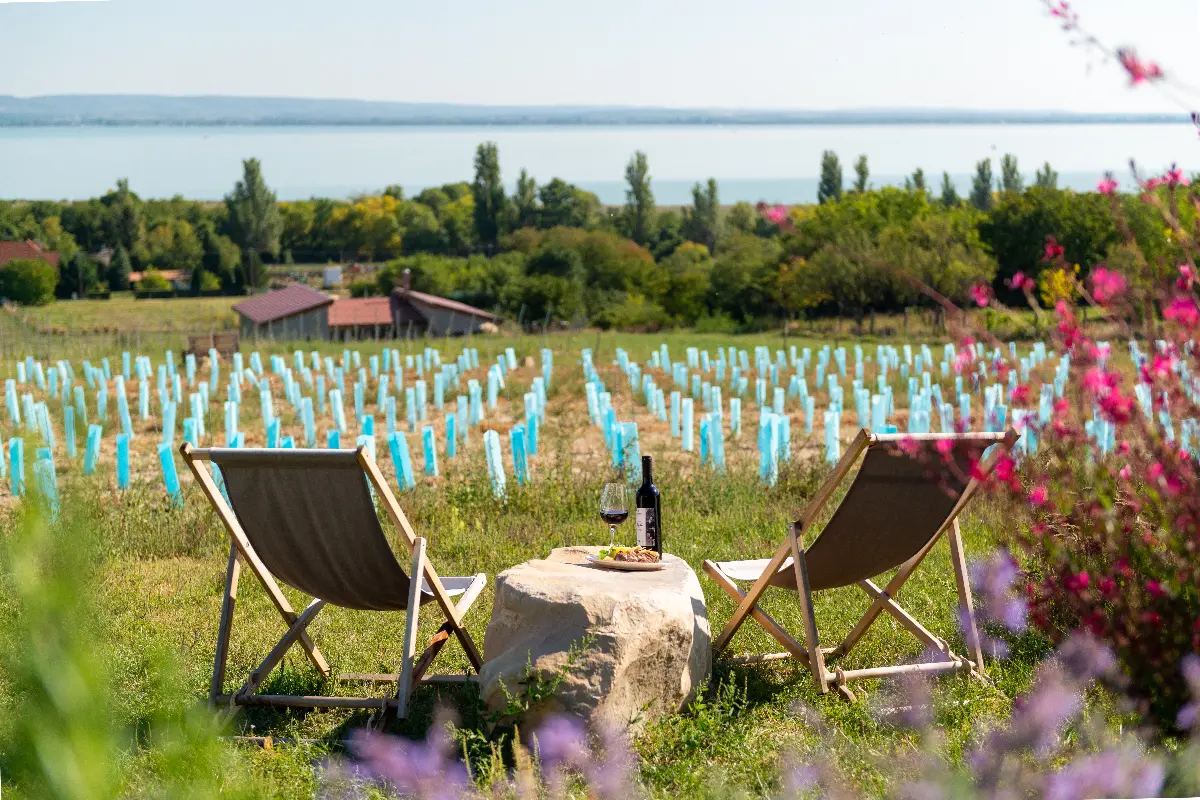
Photo about Primero Breakfast & Wine Garden
Beyond Lake Balaton
In Etyek, Pannonhalma, Sopron, Szekszárd, Villány, and, of course, in the wine regions of the country’s eastern part, we can find excellent wine bars, just as we can in Tokaj and Eger. Visiting a winery in a wine region can also be part of your vacation. On Hello Hungary’s map, you can find over a hundred wineries, wine cellars, and wine bars open to visitors – choose whichever you like!
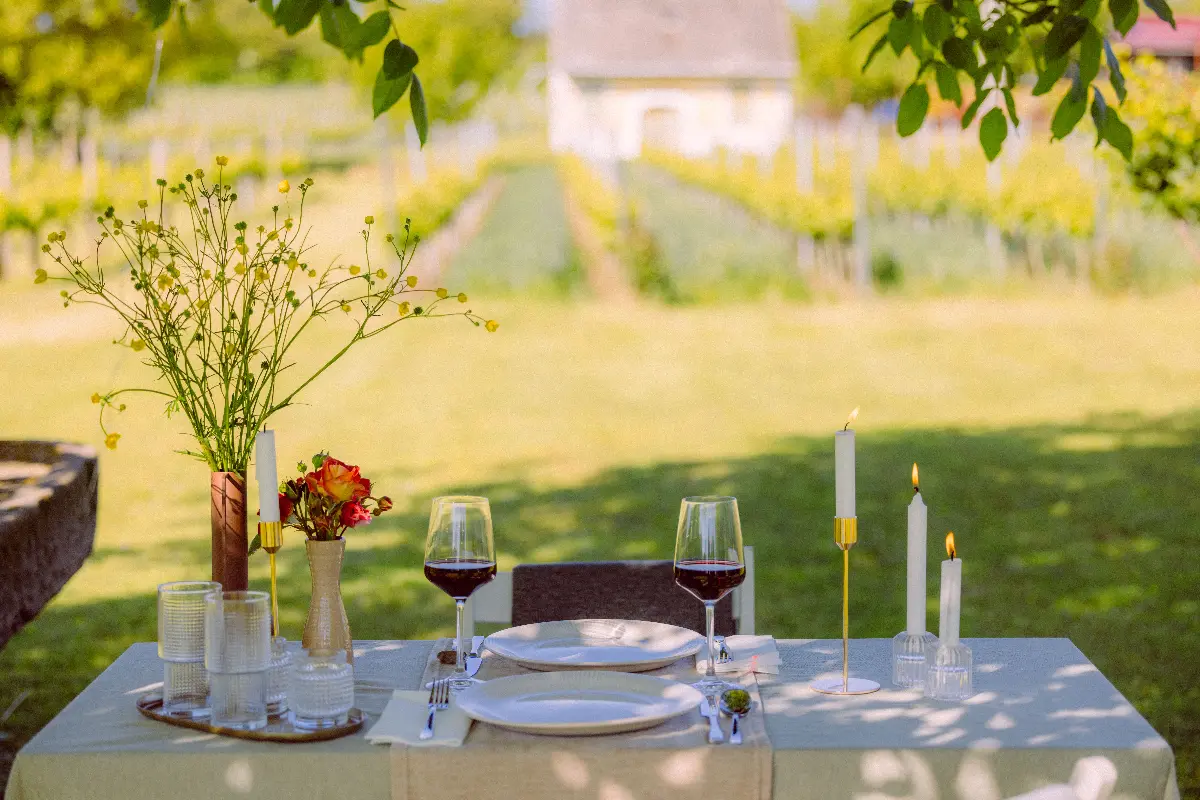
Photo about Etyeki Kúria Winery