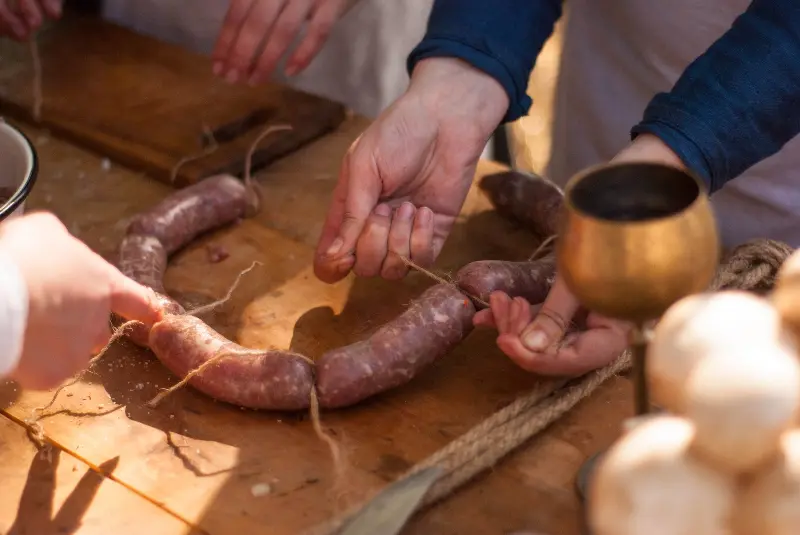
Helyszín címkék:
Delicious bites, bold pork dishes
Szabó Sára
What will it be about?
- Pig slaughter in Hungary, pork processing
- Blood: the first bite at the beginning of the day
- Ears, tongue, and snout: the unjustly forgotten treasures
- Internal organs: lungs, stomach, and liver
- Rediscover the pig, or take part in pig slaughtering here
Life beyond bacon
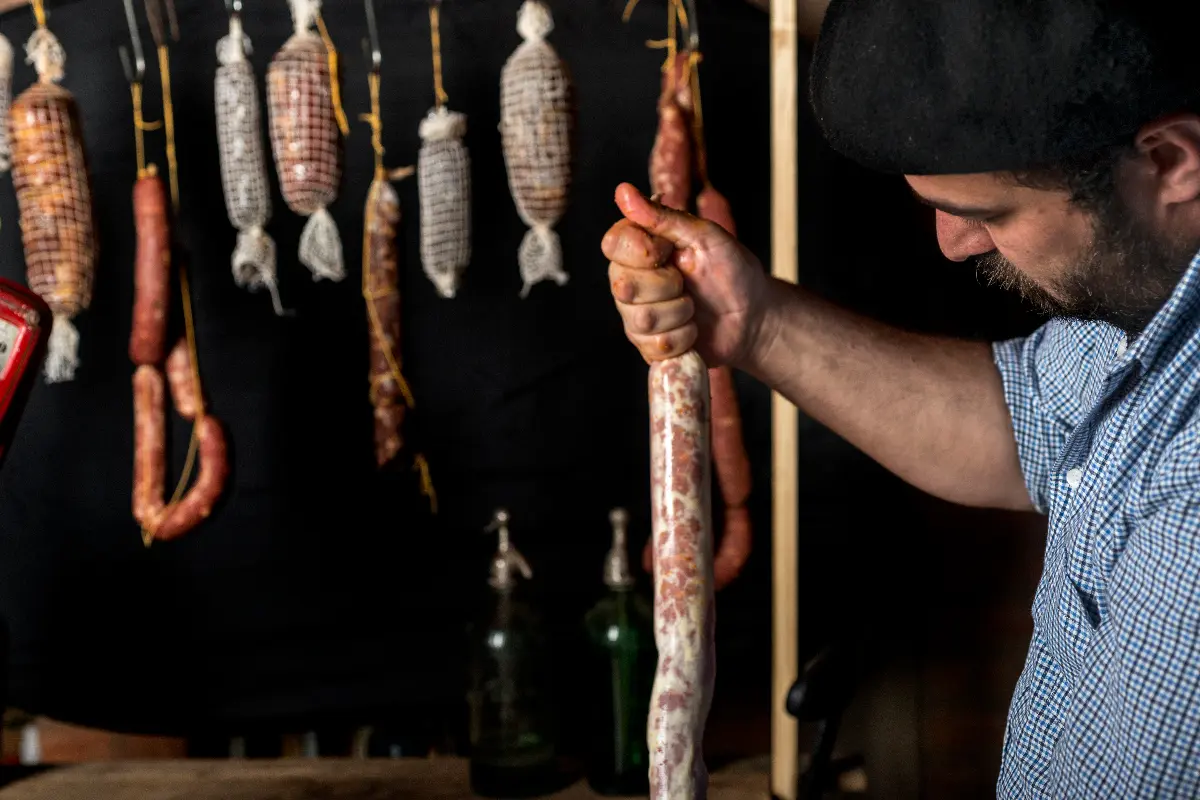
There are some people who insist that pig slaughtering is not just a domestic custom; it has been practiced in many other European countries for more than a thousand years. Although this is undoubtedly true, we prefer to continue viewing it as a Hungarian tradition. Our ancestors who settled in Hungary also slaughtered pigs, and thanks to the often several days of hard physical work involved, meat products were available throughout the year.
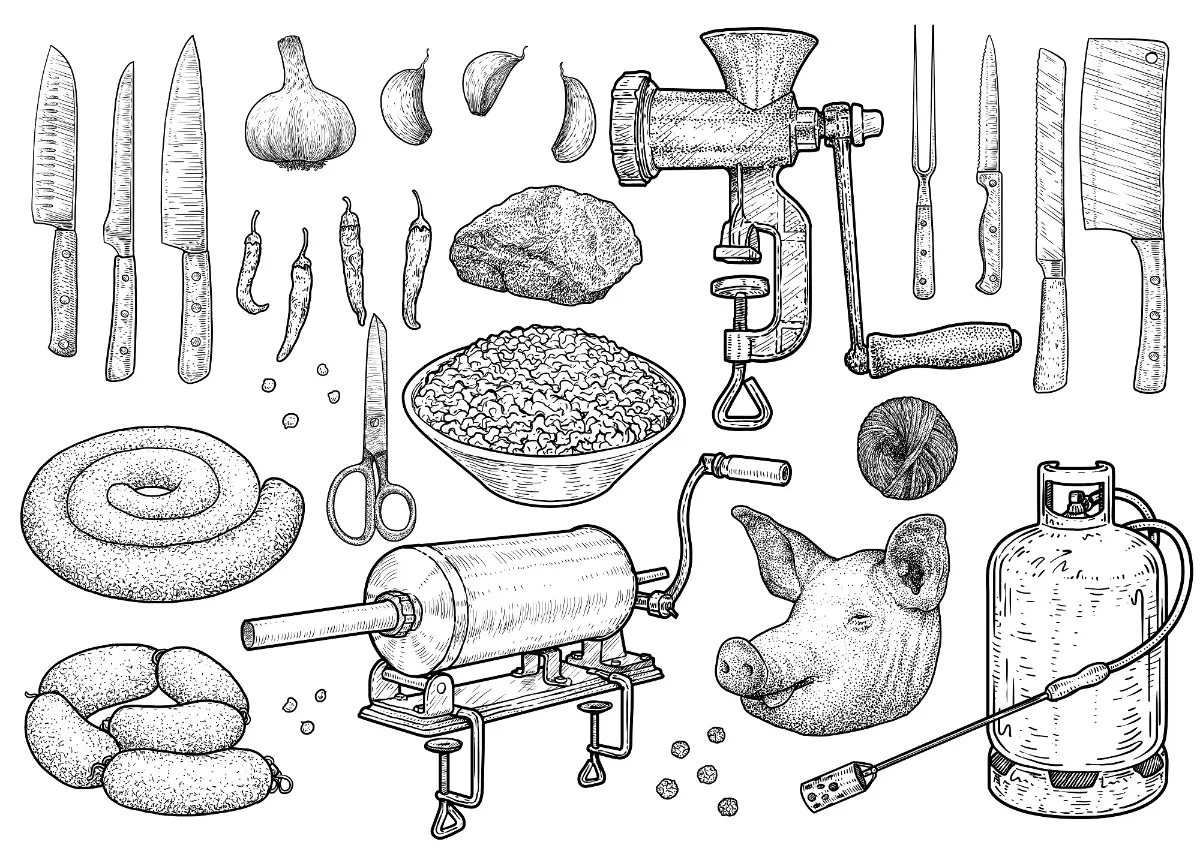
During pig slaughtering, it was evident that every part of the animal was processed. It was not just a community event – although that was also important – but also a very conscious approach to food management. An approach that focused not on the most popular cuts of meat, but on the idea of how to turn every edible part into a valuable dish.
Thanks to this “zero waste” philosophy, every part of the pig was used, from its ears to its tail, from its head to its hooves.
Blood: the first bite at the beginning of the day
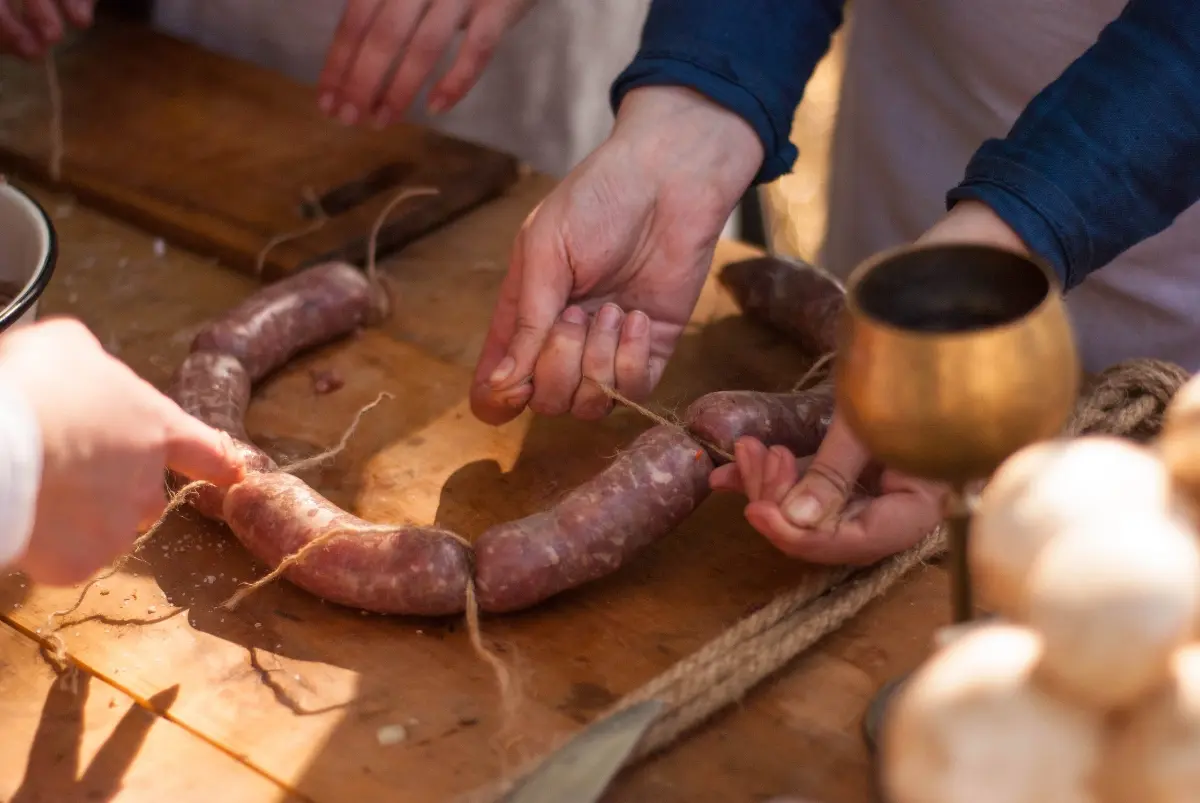
One of the first parts of the pig to be processed was the blood, and not by chance. This is an extremely perishable raw material, so it had to be used almost immediately after cutting. Onion blood and bloody sausage were typically part of the pig slaughter’s breakfast and early morning meals: they were quick to prepare, filling foods that provided energy for the rest of the day.
The taste of blood is subtle on its own, but with seasoning it can be used to create a distinctive yet balanced dish. Today, this ingredient has been pushed into the background, partly due to changes in processing habits and partly due to more cautious urban tastes. Nevertheless, it has reappeared in some rural kitchens and more experimental restaurants as an exciting representative of traditional flavors.
Ears, tongue, and snout: the unjustly forgotten treasures
At first glance, pig ears and tongues may not seem like particularly appealing ingredients, but their gastronomic value lies primarily in their texture. However, according to chef Zoltán Teleky, owner of Room Bistro in Pécs, these collagen-rich ingredients are enjoying a renaissance: when jellied, confit or marinated, they give food a natural gelatinous yet crunchy texture.
“Traditionally, meat aspic can be prepared to highlight its tart flavor, but it can also be used to make an excellent dish when combined with stock and vegetables,” says the chef.
The pig’s snout is one of the most versatile parts of the pig. It’s an excellent raw material and has a strong, intense flavor, with excellent texture. It is excellent in stews, but snoutmeat is also sensational when confit, roasted, baked, or even as rillettes. In rural areas, these parts were particularly prestigious: well-prepared pig’s cheese or boiled head required not only skill but also experience.
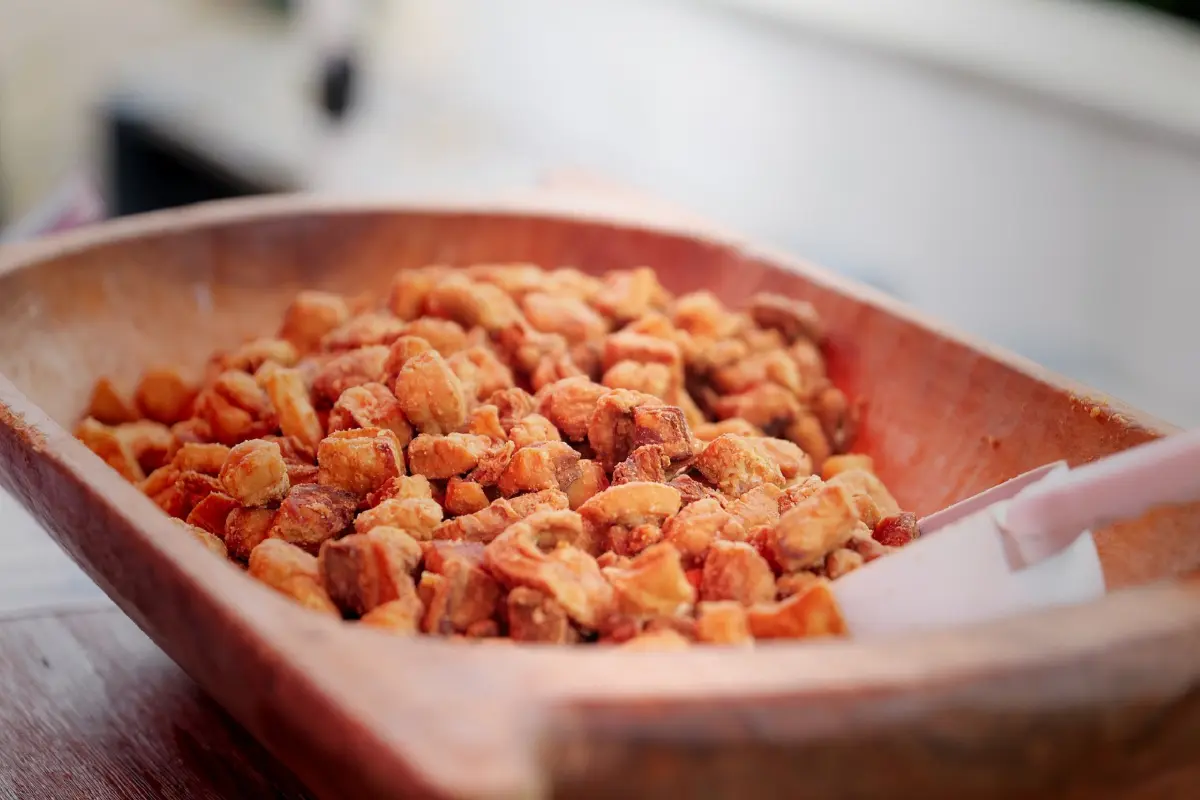
One of the stars of the menu at Kistücsök Food & Room in Balatonszemes, for example, is the pork snout aspic terrine, but it is also worth making a pilgrimage to Sauska 48 in Villány for the red wine mangalica snout, or to Pörc Bisztró és Delikát in Balatonkenese for the confit mangalica tongue.
Offal that’s worth jumping in the car for even if it’s a long drive
The lungs, stomach, and liver are among the ingredients that required precise timing and routine to prepare, but in return, they resulted in distinctive, nutritious dishes. The emphasis here was also on freshness and knowledge, not complex technology.
According to Zoltán Teleky, tripe is also enjoying a renaissance: there are several restaurants in the country that guests visit specifically for the tripe. Mediterranean-style Tuscan tripe, for example, is an incredibly tasty dish. At the Anyukám Mondta restaurant in Encs, it is served with blood sausage bread, but Tuscan tripe is also a very popular item at the Pavilon restaurant in Balatonboglár.

Let’s rediscover the valuable parts of the pig!
During our travels around the country, we are encountering these dishes in more and more places, and they are now a permanent fixture on many menus. Indeed, it is worth traveling to the other side of the country for the world-famous Parma tripe or mangalica pork – but if you want more than that, you can also find places where you can experience this exciting process up close as part of a team-building pig slaughter.
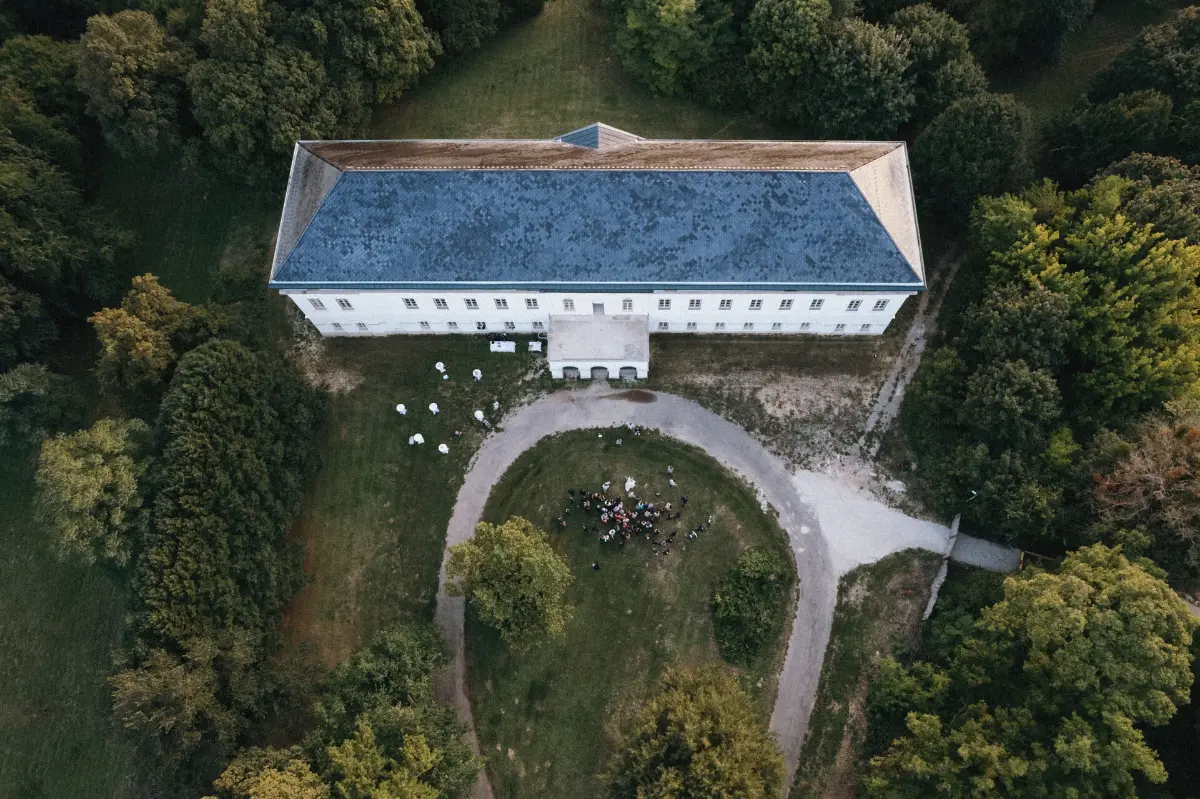
In Sümegcsehi, the Kondás Porta regularly holds pig slaughtering events, which we can also participate in after registering in advance. In a wonderful setting, at the foot of the Festetics Castle in Alsóbogát, a pig slaughtering program is also organized during the winter season at Villa BogART. The traditional village pig slaughter in Zalaszentlászló is also available at the Zsankó Smallholder Farm, where the program is complemented by breakfast, lunch, and dinner prepared according to recipes passed down through generations in Zala County.