Helyszín címkék:
A Sopron Tale About a Copper-Plated Candy Coating Machine and a Chocolate Empire Built on a Hilltop
Partner content
Article of Hely.hu
What's the article about?
- The Harrer family’s four-generation tradition of confectionery and the history of the Sopron workshop
- Beatrix Harrer-Abosi’s journey from a childhood dream to running her own chocolate workshop and pastry shop
- The evolution of the family business: from its beginnings in Austria to the opening of the Sopron shop
- The building of the modern chocolate workshop, its unique spaces, and the thoughtful architectural concept
- Local ingredients, an artisanal approach, and a passion for quality
It’s hard to imagine a more romantic story than that of Beatrix Harrer-Abosi, the owner of the Harrer Chocolate Workshop and Pastry Shop, located near the Austrian border, and how her life and career have unfolded. Even as a teenager in Sopron, she chose her school with the goal of bringing her closer to realizing her dream: opening her own cozy little café that she could both manage and work in – which is why she went on to study at a hospitality technical school.
One could say the plan was a success, as our host now runs a workshop – enclosed by huge glass walls and housing a stunning pastry counter and a bright, sunlit dining area – and employs 40 people – a workshop that has redefined our image of classic Sopron pastry shops. The owners’ personal story is captivating, but we know nothing about it yet as we park next to the elegant, modern building.
Confectioners’ love
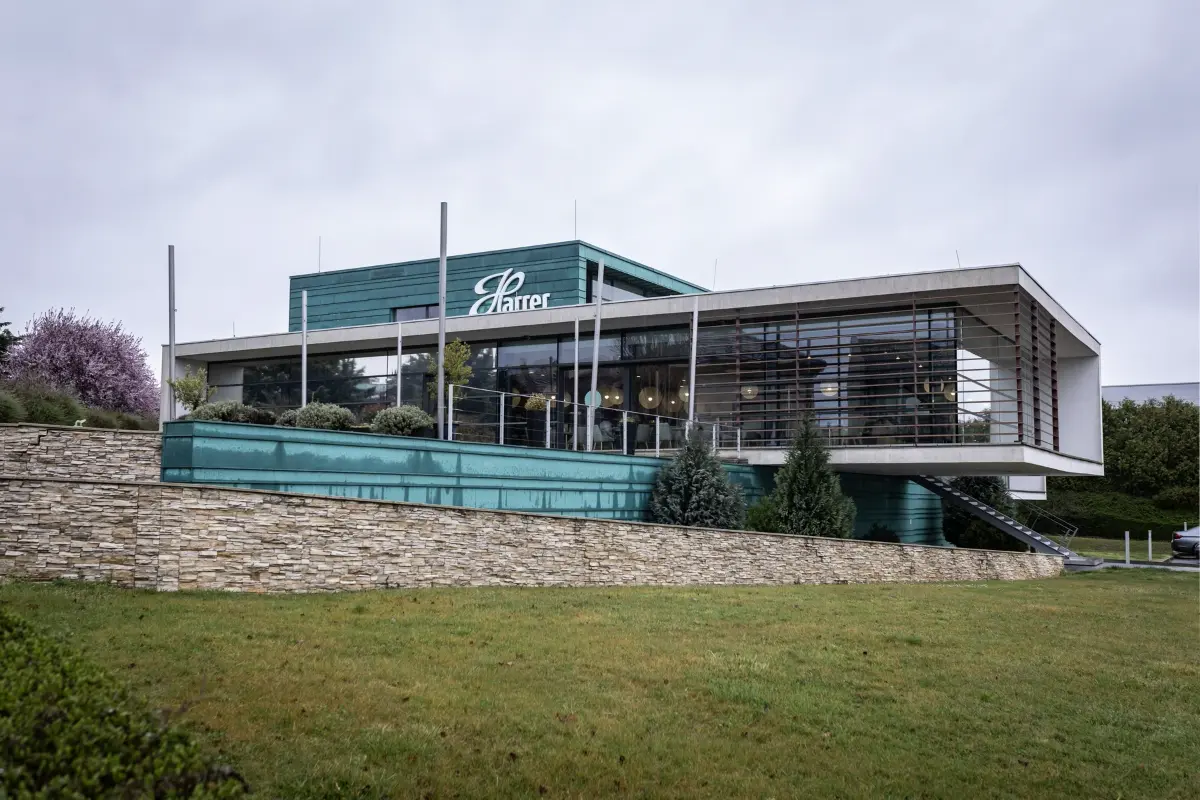
Standing at the bottom of the sun-drenched southern slope, the building – which boldly plays with varying levels – doesn’t seem disproportionately large, even though a myriad of steps lead up to the shop. This is the only way to skip right past the storage room on the lowest level, which is less in the spotlight but all the more important.
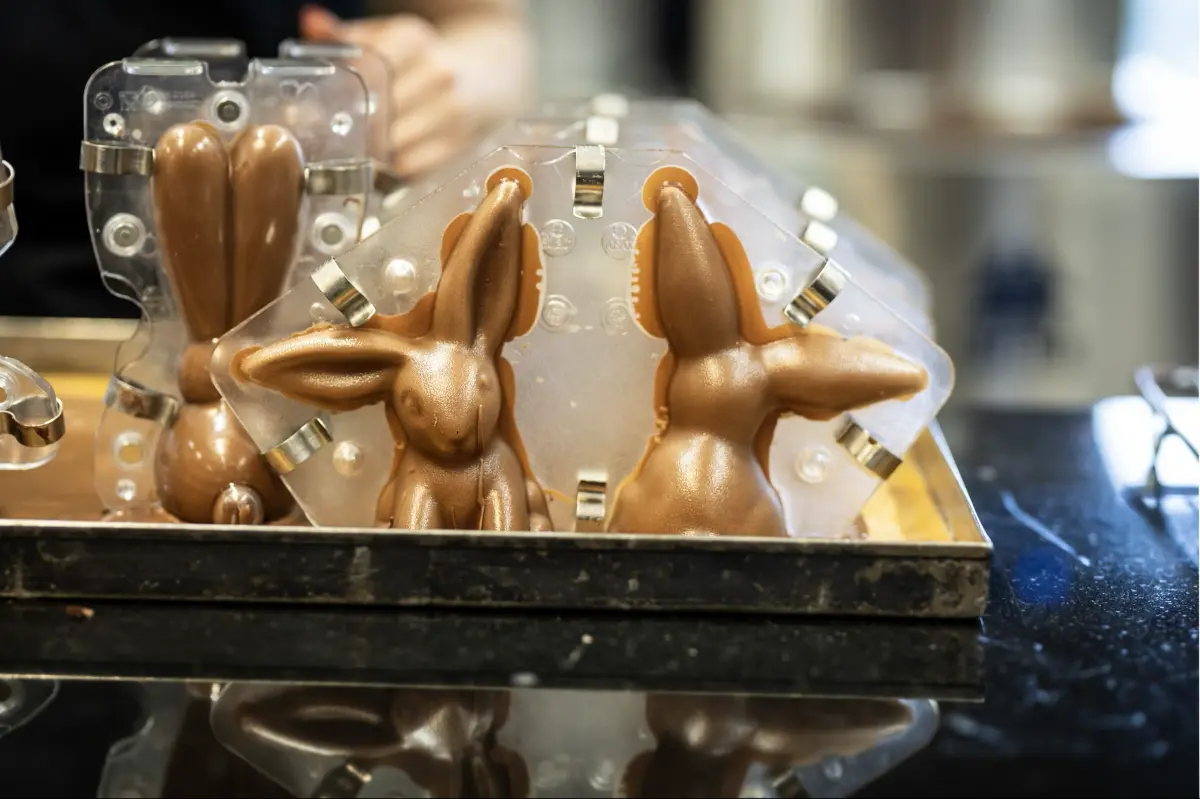
Photo: Ákos Kaiser
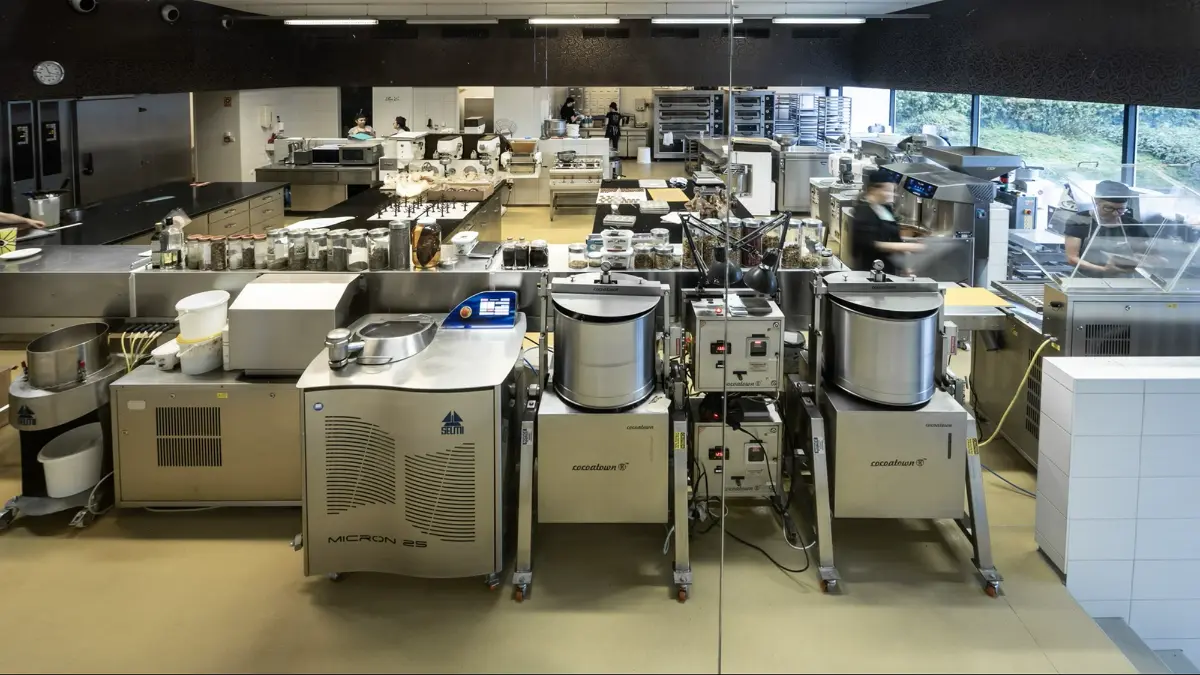
A quick glance to the right, into the heart of the chocolate workshop – the production floor where Easter treats are currently being made – another glance to the left, where the sweet-tongued residents of Sopron come and go in the Saturday afternoon bustle, and suddenly we find ourselves in the guest area – which seems enormous yet remains friendly and cozy. Just imagine what this spacious, window-filled room must be like in sparkling sunlight – if even on a gloomy spring day the rays pour right in? I’ll find out over a glass of lemonade.
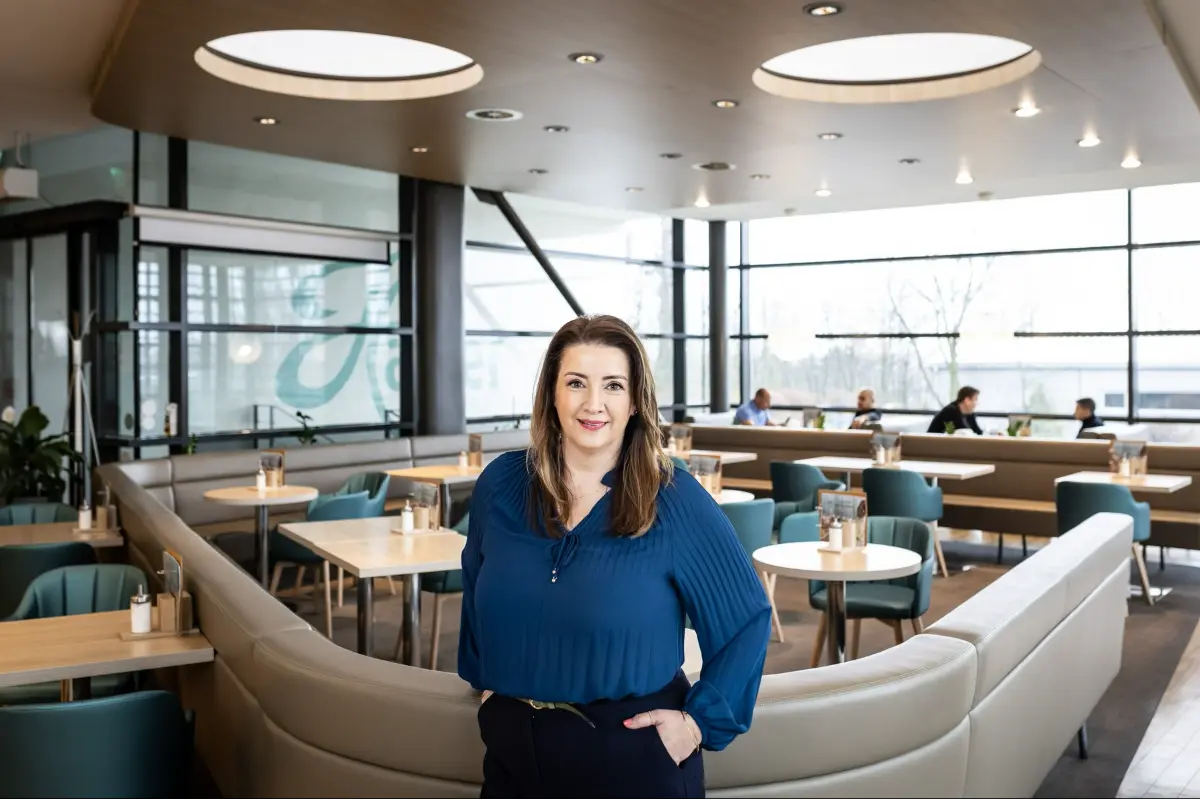
Photo: Ákos Kaiser
“I met my husband, Karli, in 1992 at the pastry shop his parents had opened back in 1968. At first, I worked as a server at the Mattersburg location, then I moved to the pastry kitchen, and we fell in love within a short time,” Beatrix recounts the family story, which dates back even further than that. The family business, which has been in operation for four generations, initially catered only to discerning dessert lovers in Austria, but in 1995 they opened a shop in Sopron, as well.
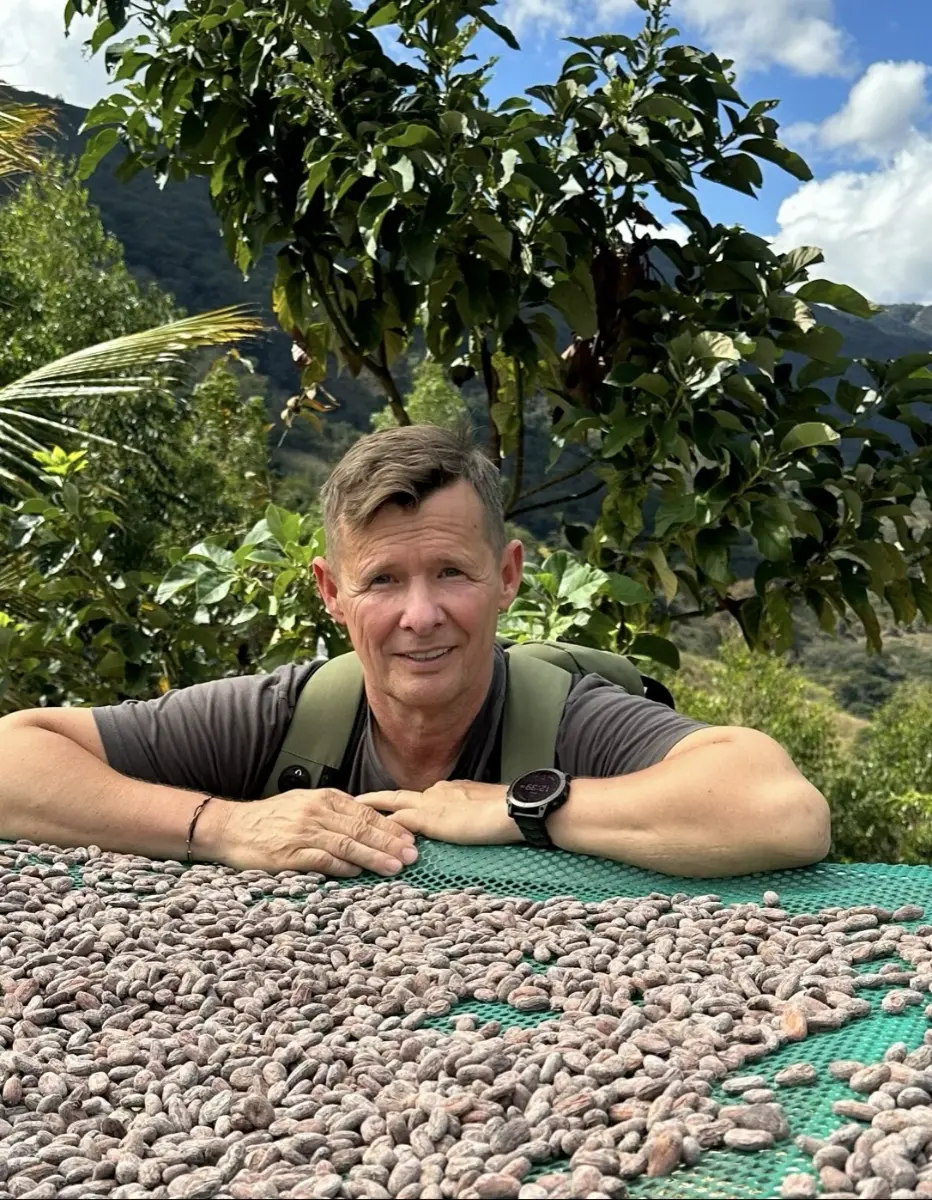
Photo: Harrer Chocolate Workshop
A small, downtown gem – a pastry shop that captured the authentic, unadulterated atmosphere of this bourgeois border town – exactly the kind that Austrian tourists and the affluent residents of Sopron had come to expect. This was now Beatrix’s realm all to herself – Karl continued to run the Austrian pastry shop. They even rented a separate space just for the workshop. However, life later brought them back to a shared workplace in the mornings – and they’ve been going there ever since – because they outgrew the two separate locations, and in 2009 they opened their new facility, the chocolate workshop and pastry shop, here on the outskirts of town.
House on the hill
The carefully designed building complex seems to be gently set upon the hilltop – securely anchored yet standing out just enough from its surroundings. Visitors get the impression that this building dominates the area, yet it doesn’t feel imposing. The location is ideal: a suburban area that was originally intended to be industrial but has since evolved into a residential neighbourhood through development.
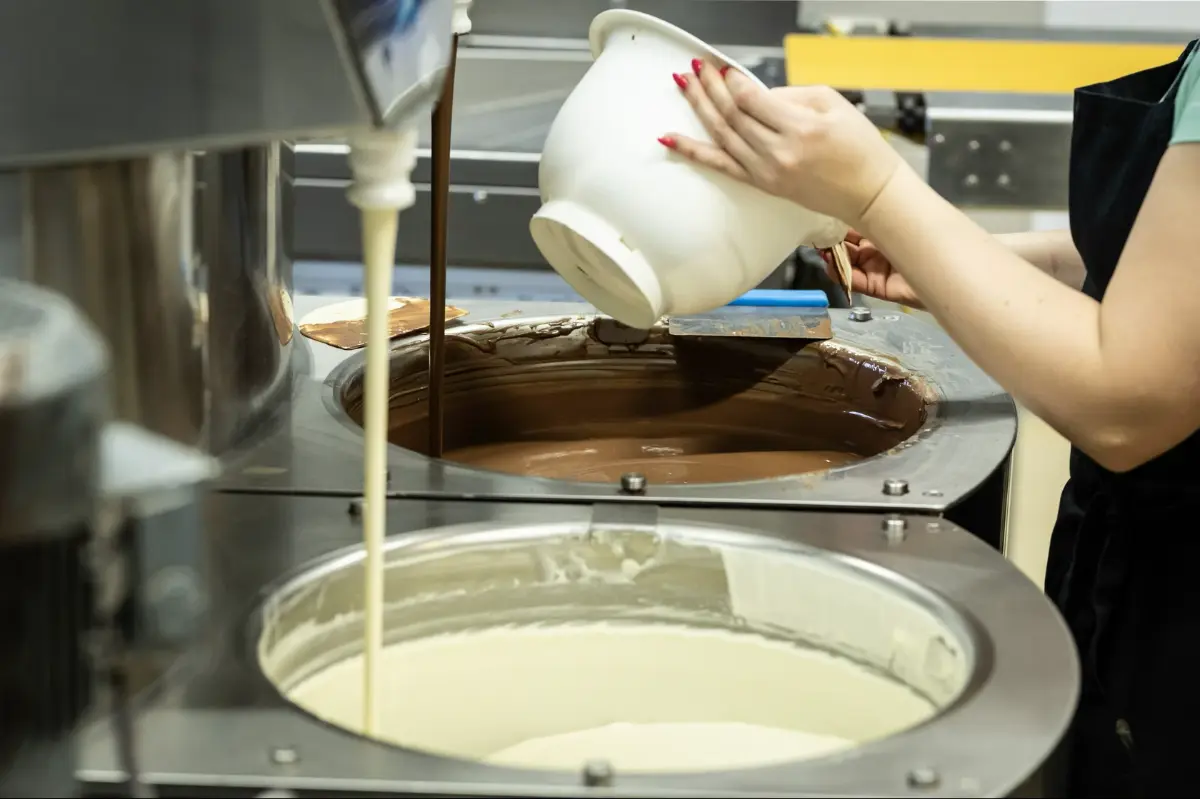
Photo: Ákos Kaiser
The level above the warehouse is the production area, where chocolate melts, pistachios are roasted, and sponge cake bakes; and even higher up, the important matters are handled, where the offices are located. Slightly offset, the guest area and terrace connect to the building from the front between the two levels, and thus the whole structure ultimately appears just as intricate, complex, yet unified as the work carried out within it. The base features an attractive copper cladding; higher up, glass – and the pattern of metal slats in front of it – dominates,
yet it is as if each distinct function forms its own little world, with each cube given its own frame.
On the flat roof, another copper-clad building section extends. The goal of Austrian architect Christoph Huber and his clients must have been something like this: to make it clear that all positive energy – sunlight and vitality – flows through this workshop, while order and transparency characterize the spaces. Positive and negative, enclosing and open, heavy and light – this rhythm runs throughout the complex.
Cocoa and passion
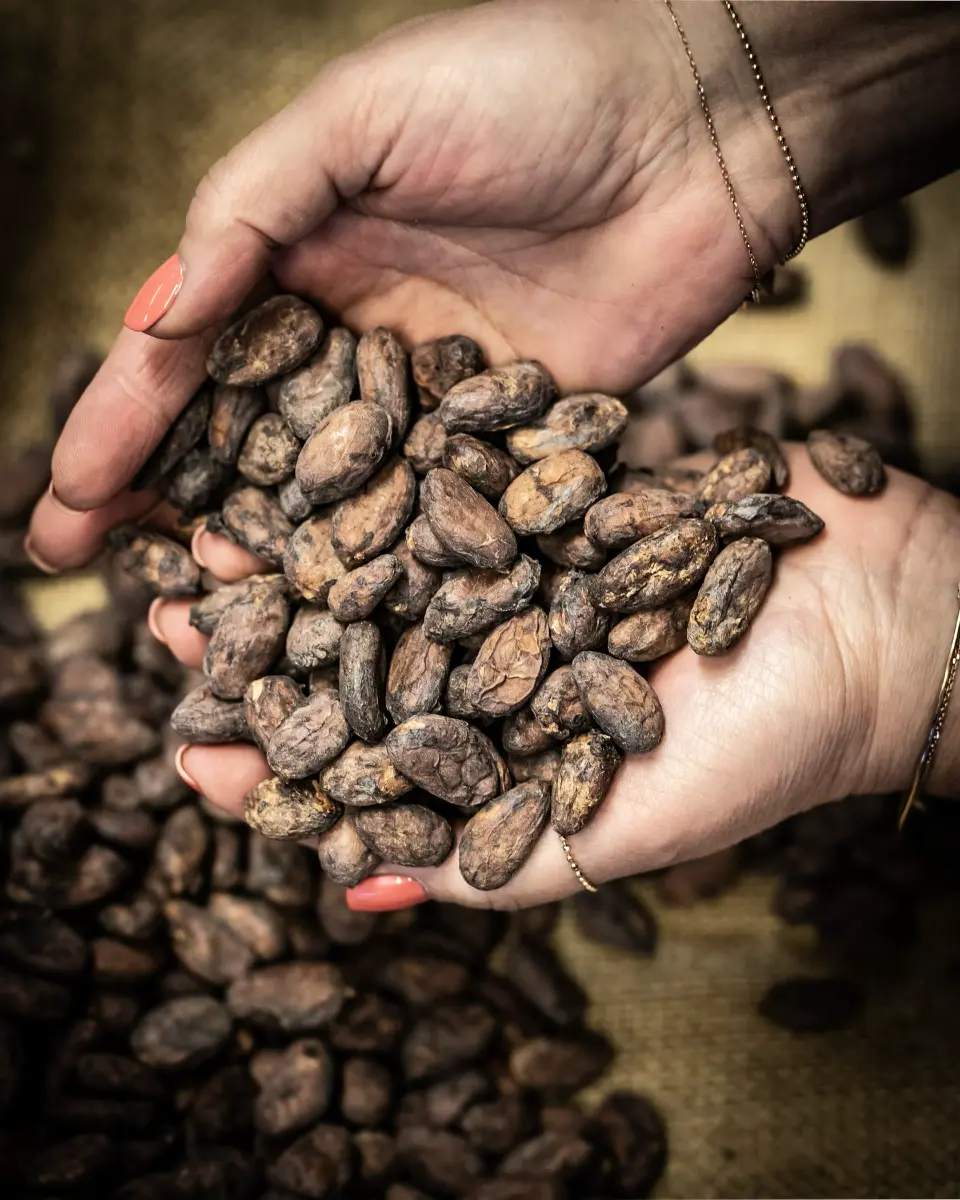
It’s nice to sit here – and not just because of the view. While around the 2000s, chocolate produced under factory conditions was still the main ingredient for the finest bonbons, bars, and pastries, over the past 10–15 years – just as similar changes have taken place in many other areas of the food industry – the global “bean-to-bar” trend has been gaining ground.“We Hungarians and Austrians are good at this; there are a few families involved in chocolate production, and there are some good examples across Europe, though not many. The key is quality. The cacao beans come from far away – Nicaragua, Madagascar, Peru – just like most of the exotic spices.
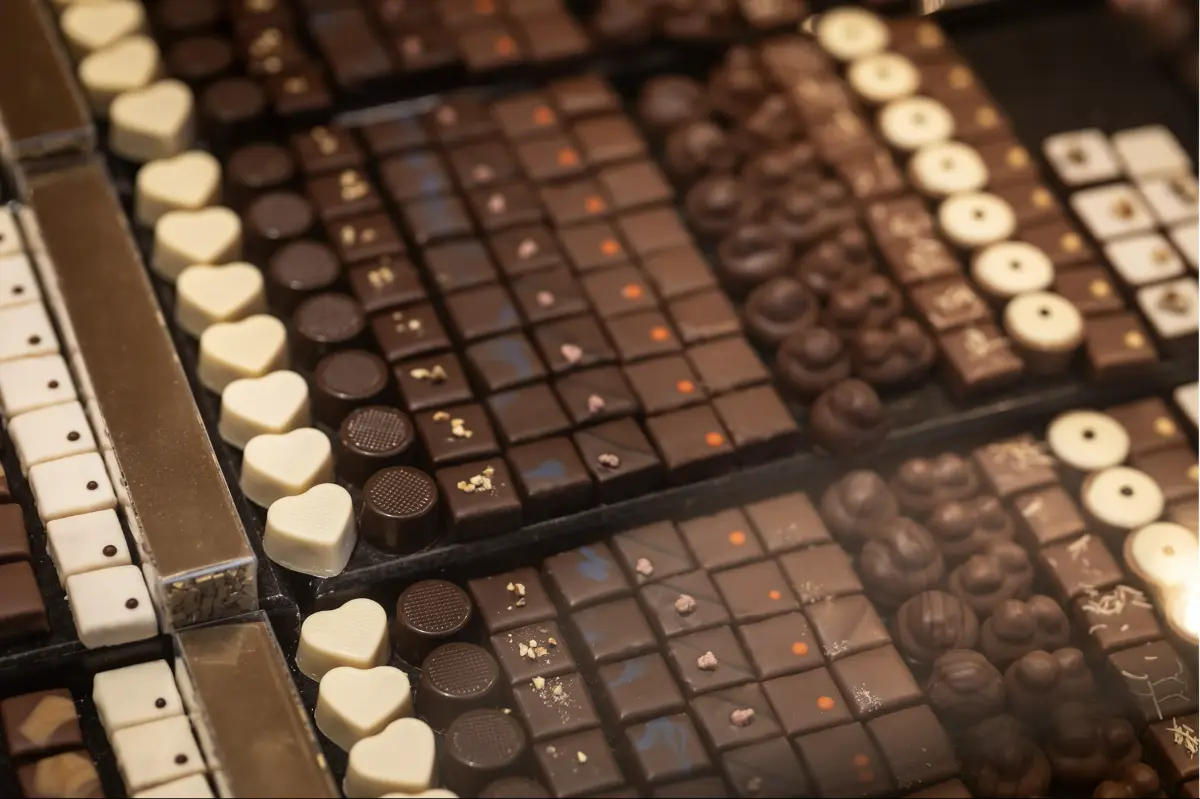
Photo: Ákos Kaiser
Our other guiding principle, aside from cocoa beans, is to use local ingredients for everything else. By this, we don’t necessarily mean Hungarian, but rather local – from the surrounding area. It’s fine if it’s on the other side of the border, 10–20 kilometres from here, because it’s still local. This applies to sugar, fruits, and dairy products,” Beatrix explains their philosophy and how they put it into practice. This isn’t just empty talk; it’s the essence of their authenticity. She speaks at length and with passion about the diversity of the cacao fruit, the factors that determine its flavours, the soil, the harvest, fermentation, drying, and the care and attention that go into every step of the process.
Meanwhile, guests come and go at the tables, and their comings and goings draw our attention to different corners of the space. These details, too, speak to the expertise of the Austrian design firm (Vienna-based AW Architekten) – the commission covered not only the building’s design but also the interior design work – and to Beatrix’s good taste.
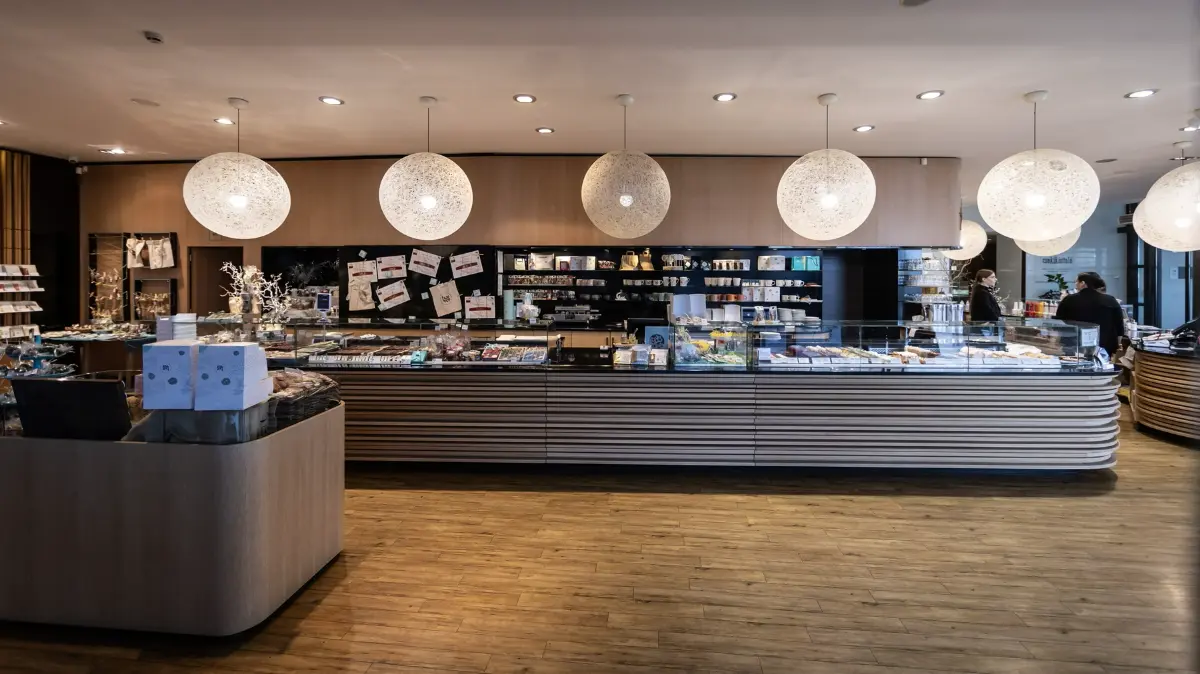
Photo: Ákos Kaiser
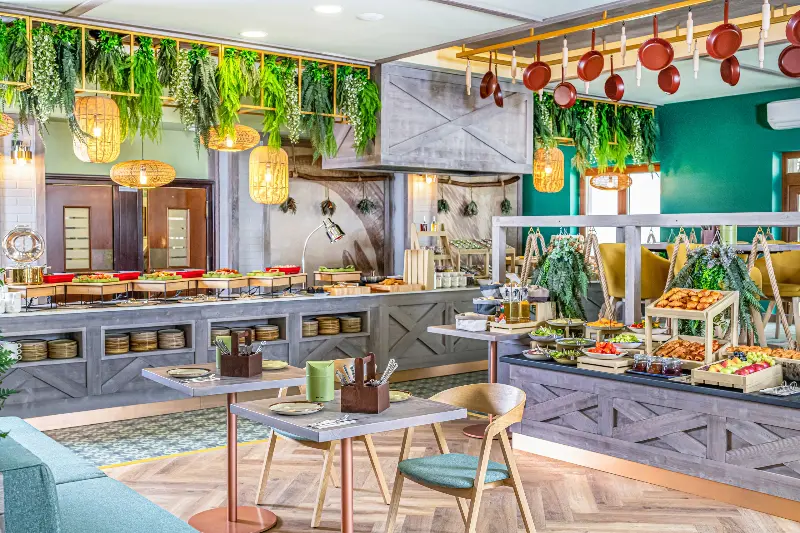
“We strove for simplicity and a timeless style, since for us, the chocolate and pastries are the main focus; we didn’t want to distract attention from them. And the view is a bonus,” our host continues, and now that we’ve feasted our eyes on the view of Sopron, the interior also deserves a mention. High-quality wood panelling covers the walls, and the floor is covered with striking parquet.
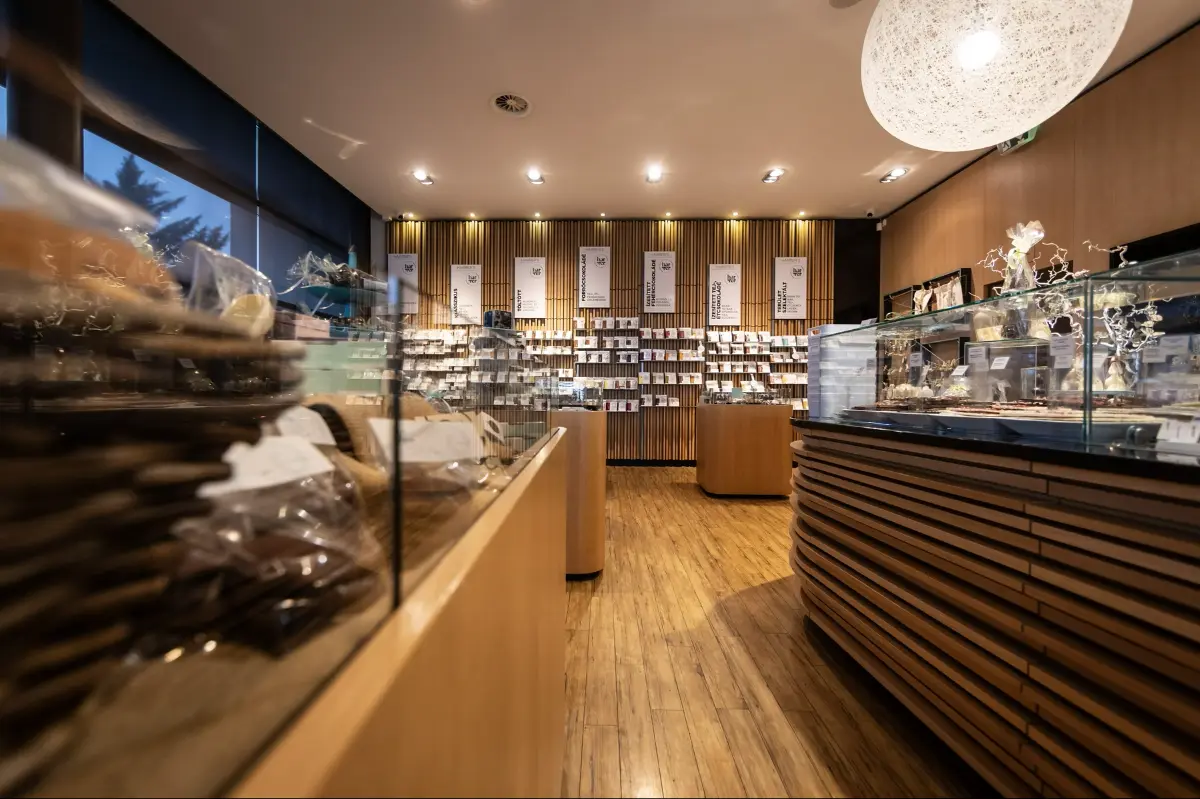
Photo: Ákos Kaiser
Opposite the glass wall, the service counter dominates the view, but on the back wall – serving as a sort of display area – the section featuring boxed chocolates also catches the eye. The chairs, benches, and tables are understated, featuring a subtle colour palette that creates a harmonious atmosphere. Insiders can also take a tour of the chocolate workshop, though anyone can do so by signing up for a tasting.
The legendary Lido slice
The jewel of the pastry shop is an antique copper-plated candy coating machine (a dragée maker), which serves as both a piece of pastry-making equipment and a museum-worthy attraction. Its history dates back to the beginnings of the family’s traditions. “It works much like a concrete mixer. You can imagine 10 kilograms of hazelnuts being poured in, the machine spinning, and my husband pouring in the warm, melted chocolate. As the chocolate cools and the hazelnuts roll back and forth, countless layers form on them. That’s how it’s always been made, and that’s how these mouthwatering chocolate-hazelnut dragées are made today,” our host reveals the secret.
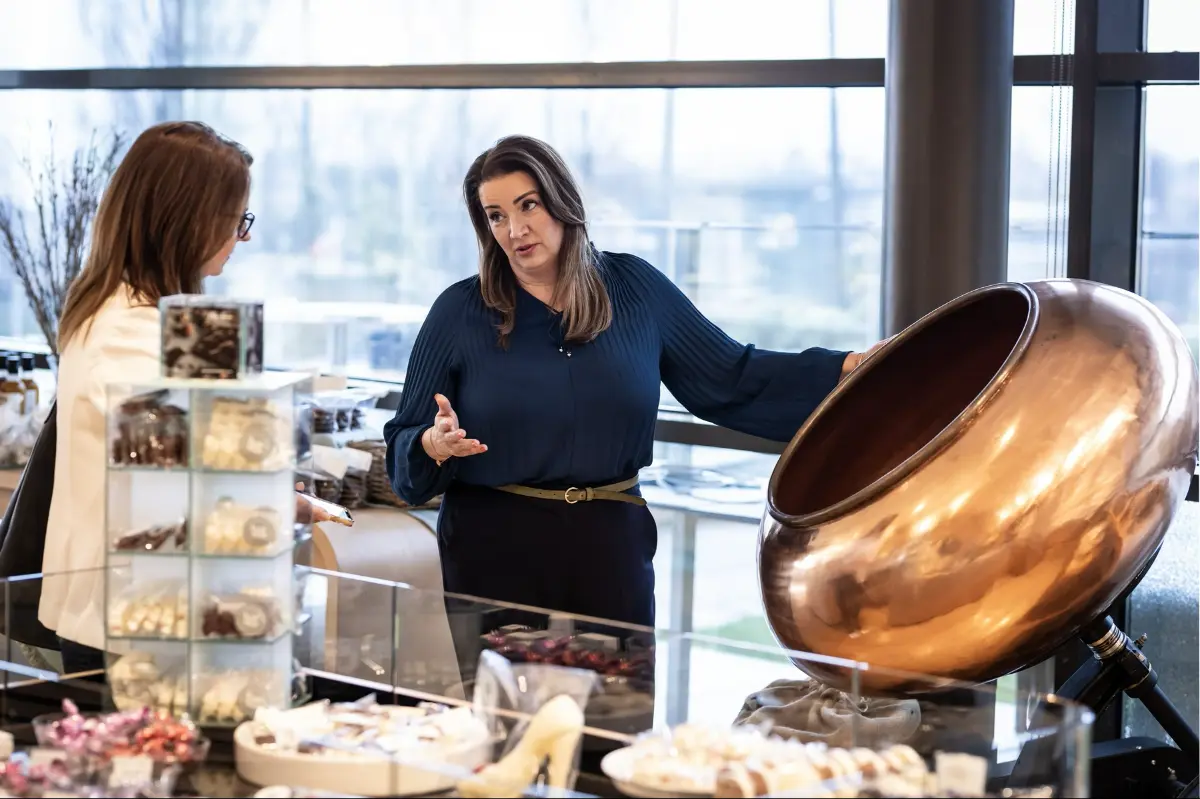
Photo: Ákos Kaiser
Different types of cocoa beans, by the way, offer distinct flavour profiles; at the factory, they decide on further flavourings and fillings based on this – experimenting with fruits and spices. And what makes Harrer chocolate even more distinctly Sopron? The region’s signature wine, Sopron Kékfrankos, which is featured in the filling of one of their products. We also learn that they make sweets for the Pannonhalma Archabbey: for them, they create truffle balls using the abbey’s own wine.
Beatrix and Karl are most proud of the fact that, although their business is contemporary and modern in the truest sense of the word, respect for tradition defines their essence just as much.
They have several pastries that have been made using the same recipe since 1968. Their signature treat is the Lido slice, a pastry filled with hazelnut cream, chocolate, and whipped cream – a birthday cake variation of which has been a staple for generations. Undoubtedly, the crowning achievement of their career would be if this impressive building complex were to continue serving generations for decades to come here on the border of Sopron and Hungary. Well, they have every chance of making that happen.
Ágnes Haitzmann
Architecture is the art form that perhaps has the greatest influence on our thinking and well-being. The goal of Hely.hu is to stimulate architectural discourse through news, engaging articles, and videos. Because architecture is a shared concern and a shared responsibility.