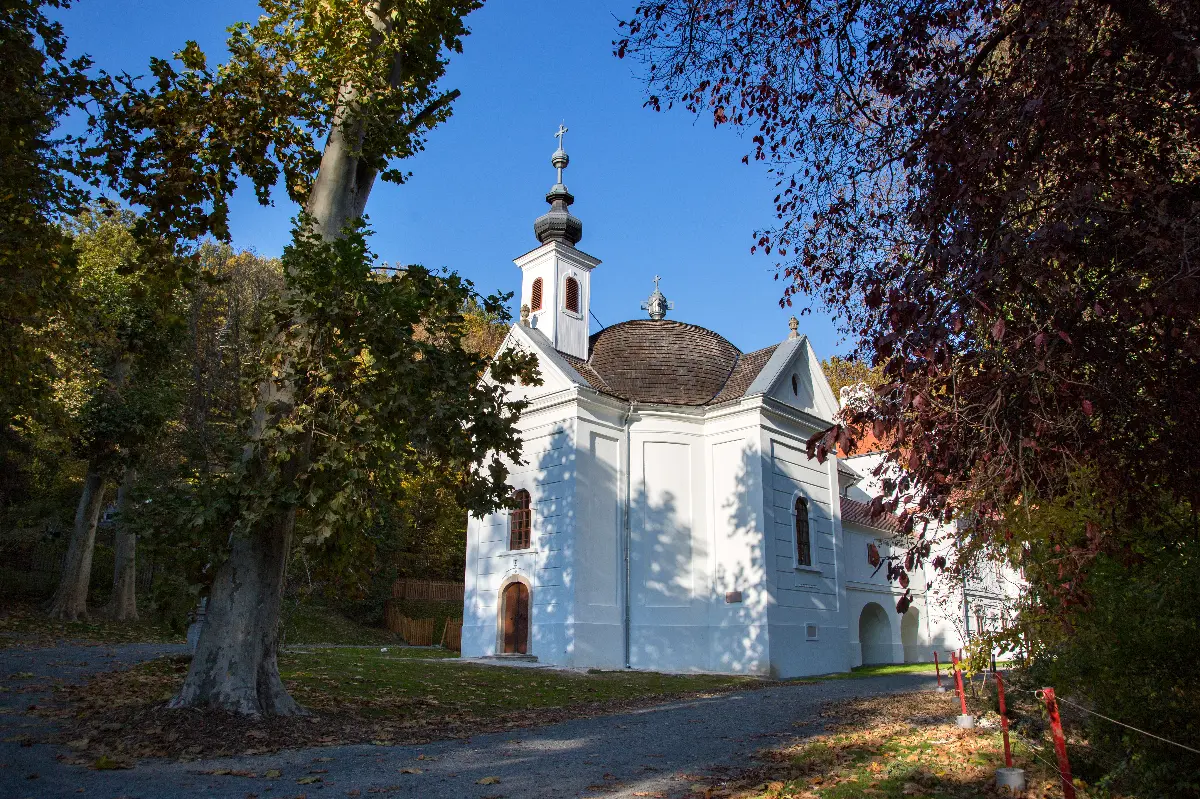
Helyszín címkék:
Modern Hungarian churches that are worth traveling across the country to see
Imagine
What will the article be about?
Origami-like church with underfloor heating, in Hollóháza
Tower or not tower, or the dilemma of Nyírderzs
How are sgraffitos made?
Most people know Hollóháza, located near the Slovakian border, for its porcelain factory. Since its opening in 1977, objects of various sizes have been manufactured here almost non-stop. Today, the factory also collaborates with contemporary artists, including Sam Havadtoy, who is of Hungarian descent and also worked here for a short time. The church next to the factory was built as part of the company’s expansion: the Baroque church was in the way of the construction work, so it was demolished and replaced with a new building designed by the state-owned design company IPARTERV.
The design was entrusted to László Csaba (1925-1995) within the office, who had already received his first Ybl Prize (and then his second nearly thirty years later) and had already completed another important reference point in the architecture of the era, the Cserépváralja church (1961) project.
His plans became reality in 1966-67, in just a few months, on the other side of the village. When the church was consecrated, József Somogyi’s crucified Jesus figure and Margit Kovács’s Stations of the Cross – the last pieces of their oeuvre – were already in place, but it was not until 1983 that Endre Szász’s mural portrait of Saint Ladislaus appeared in the gallery, marking the beginning of his collaboration with the porcelain factory.
At first glance, the church resembles a strange origami creation, but the three separate triangles are a much smarter solution than we might think: they separate the church interior, the altar and its surroundings, and the sacristy with rare clarity, and where the former meet, the skylights are positioned at just the right angle to beautifully illuminate the figure of Christ.
The building, which was declared a historic monument in 2012, is now in excellent condition thanks to a complete renovation carried out between 2023 and 2024, during which it was even fitted with underfloor heating. If you travel here, it is worth visiting the nearby porcelain factory’s brand store, where you can buy not only souvenirs but also ideal birthday gifts for your loved ones and friends.
Tricky tower
The peaceful, quiet villages of the Nyírség region also hold surprises, with two of them boasting churches designed by László Csaba. The one in Hodász was built earlier (1977), but it is still worth visiting its counterpart in nearby Nyírderzs, as this place of worship, which has been in use since 1984, embodies all the positive aspects of the church in Hodász, but even surpasses it. We enter the church at the lowest point of the building, so that we can marvel at how light fills the interior through the highest window.
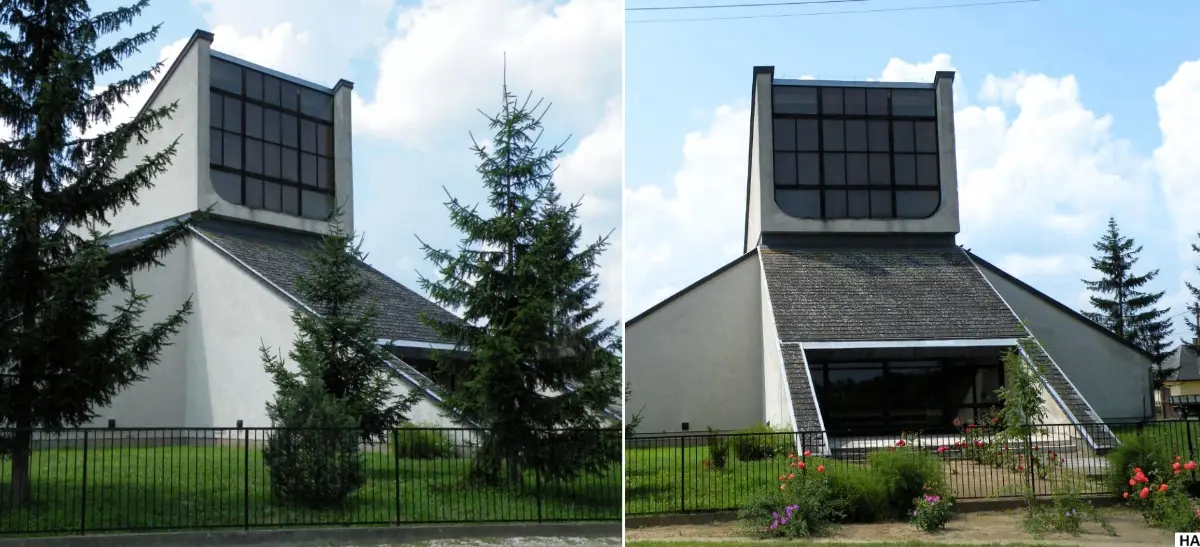
Photo: Miserend.hu
Both the size and placement of the window demonstrate careful design consideration. On the one hand, light streams through the window above the altar onto all the faithful, just as the light of the Holy Spirit streams down – so it already has a message. On the other hand, the window appears almost like a tower, and with this solution, the designer circumvented the rule that was in force during the decades of socialism, according to which no towers could be built on churches.
Mining and sgraffitos
From the eastern part of the country, we now jump to the northeast. Hidden between Mátra and the Bükk region, Szúcs, with a population of barely 350, has only one notable landmark: the Church of St. Joseph the Worker, which owes its existence to the Ózd Coal Mining Trust. At first glance, this may sound like good news, but it is not quite so. The village’s Baroque church was so weakened by underground mining that it was closed permanently in 1958. The ghost building, which served as a reminder of the mining company’s misstep for nearly a decade, was finally demolished in 1967, and construction of the new church began immediately, which was completed in November 1968.
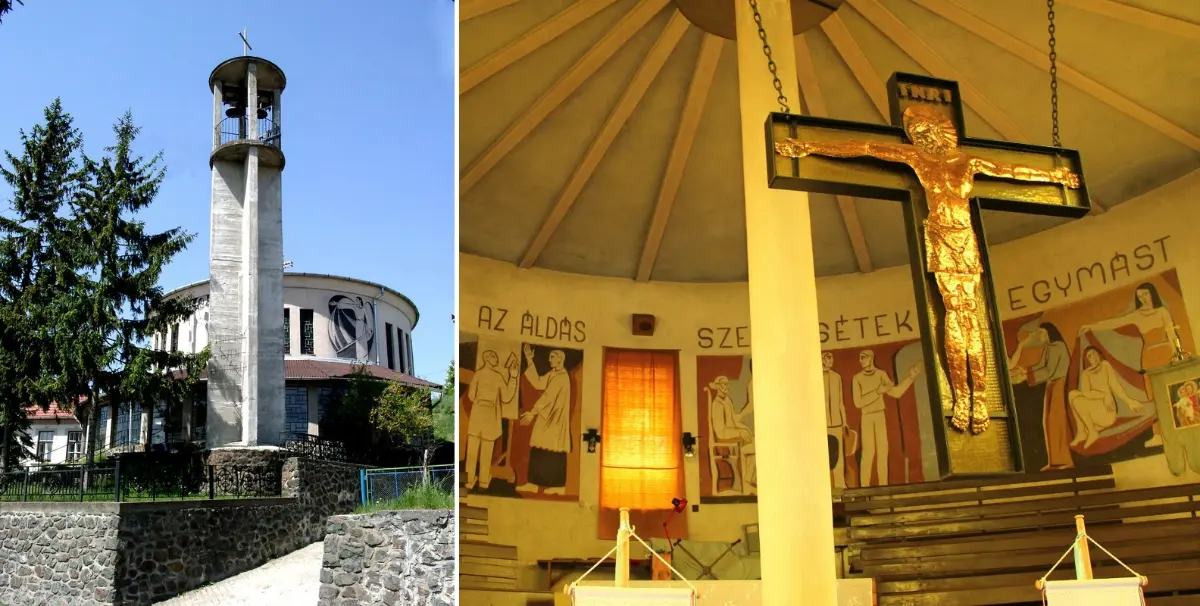
Photo: Miserend and Szórád Péter / Public map
The building, which praises Zoltán Vass’s designs, is located in the valley and attracts the attention of those approaching by car, bus, or even on foot from a distance. This is partly due to its cylindrical shape, which is surprising in this neighborhood, and its circular tower, and partly due to the sgraffito decorations on its façade, created by partially scraping away layers of plaster. These are the works of István Huszár.
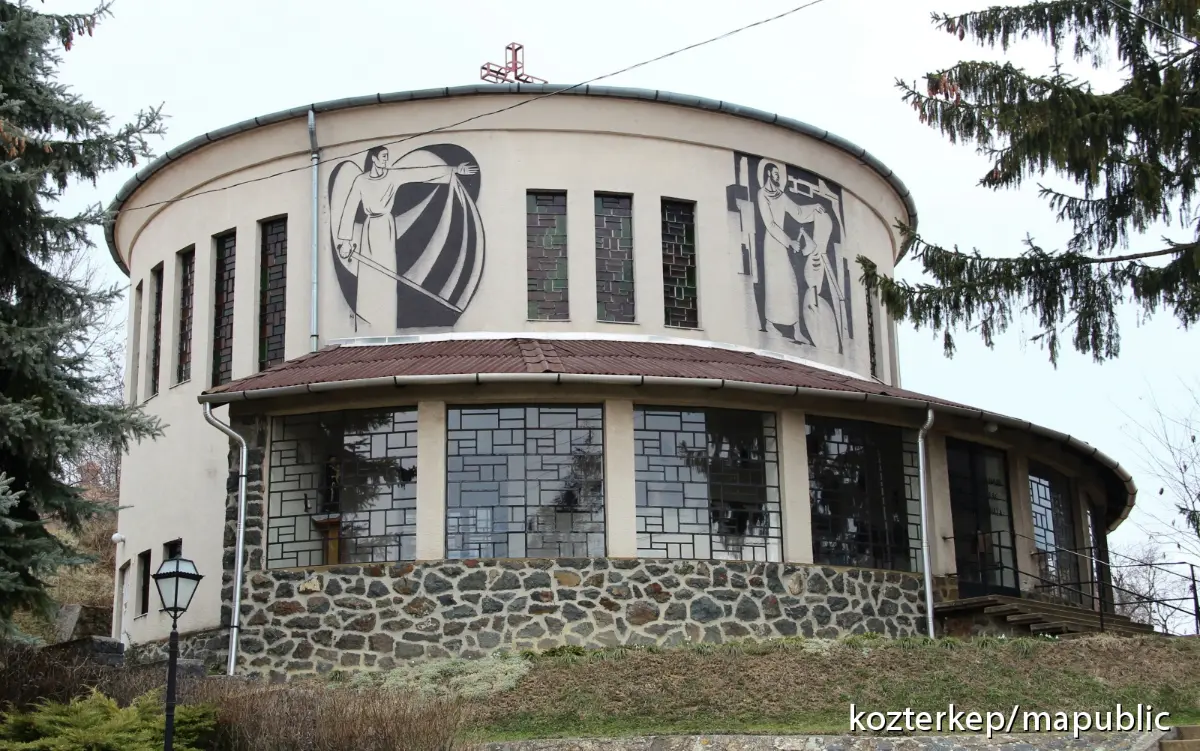
Photo: Szórád Péter / Public map
The surprises continue inside, where biblical scenes and inscriptions are complemented by beautiful images depicting mining and farming, created using the same technique.
If you travel here, it is worth taking a trip to Szilvásvárad, less than half an hour away by car, where you can visit the Istállós-kői cave, once home to prehistoric man, the Forest Railway, and the natural wonders of the Szalajka Valley. Afterwards, you can venture into Hungarian gastronomy at the restaurants located at the entrance to the valley.
Do you like similarly exciting stories, time-traveling discoveries, and secret places? Then it’s worth discovering the country on organized city walks! For example, on Imagine's programs – they have been organizing city walks, exclusive building tours, gastro tours, and team-building events throughout the country for more than 15 years.