Helyszín címkék:
Autumn colour cavalcade in Tihany: Smokebush sites of wonder on the Tihany Peninsula
Kilár Boróka
The article reveals:
- How to explore the lesser-known parts of the Tihany Peninsula in the fall
- What colorful fall plants and geological formations—such as sumac and spring cones—await us
- Where to find the Tihany ground squirrel reserve
- How the trails lead to lookout points, caves, and scenic spots
- What recreational and activity options are available for families, hikers, and nature lovers
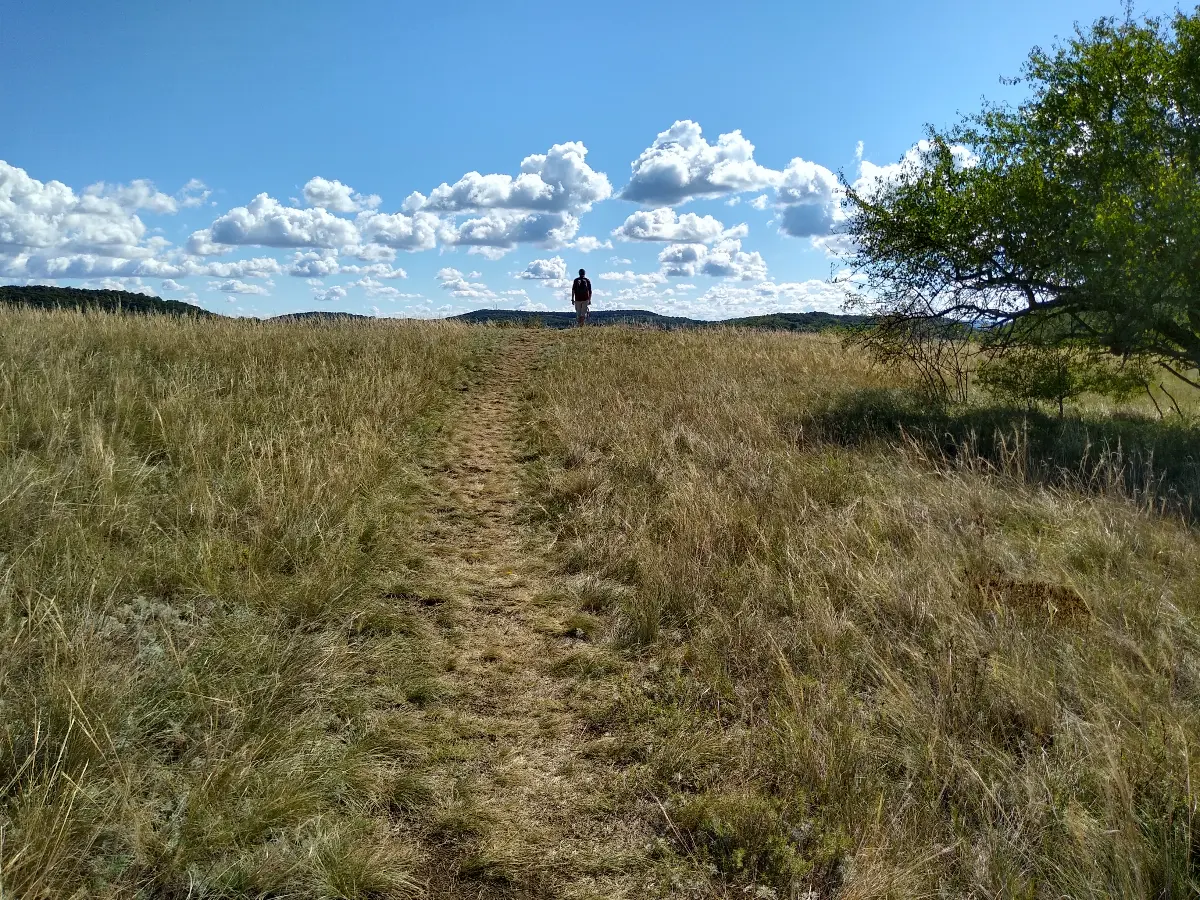
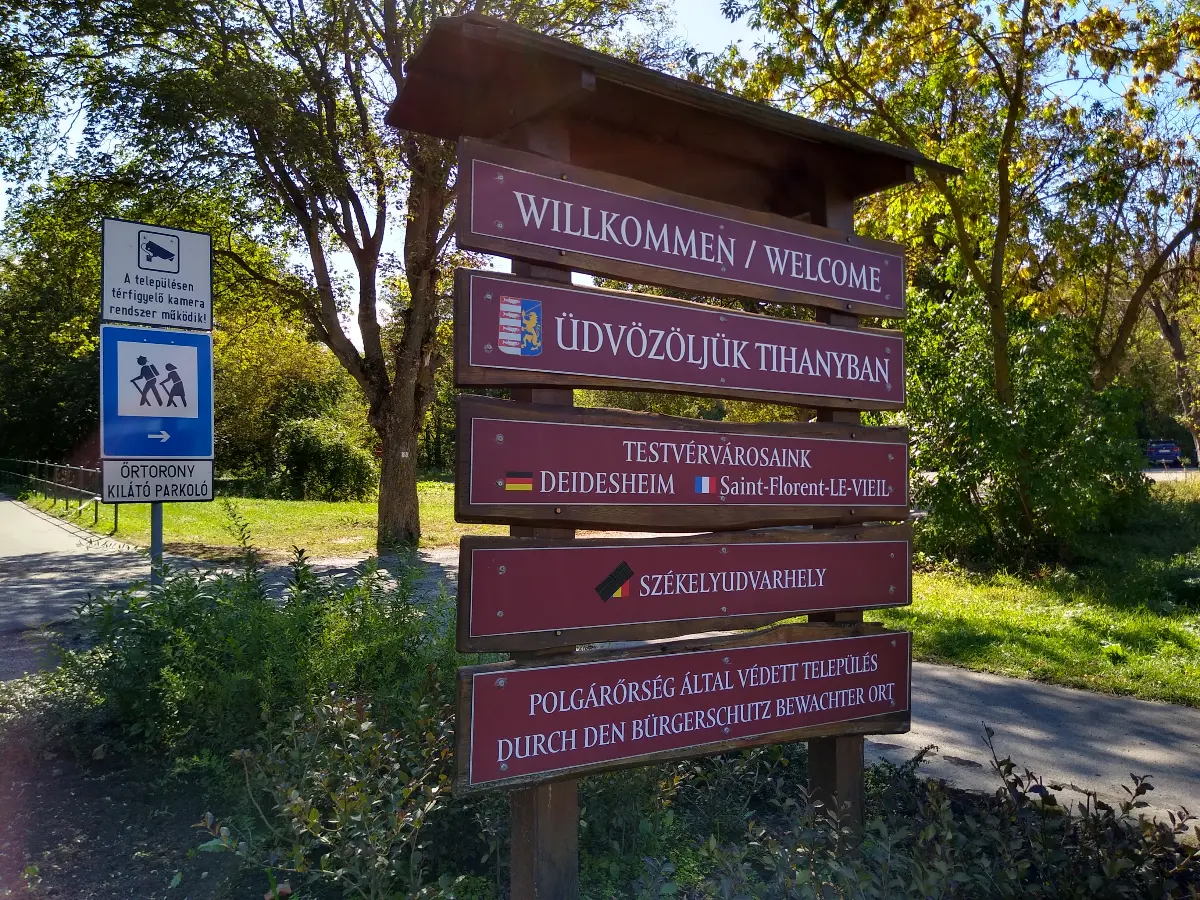
There can still be good weather on an autumn day, so it is worth getting out your hiking boots and hiking the Tihany peninsula! Our hiking guide takes you to the popular but less known part of the peninsula, Nyereg-hegy (‘Saddle Hill’) beyond the Őrtorony-kilátó (‘Watchtower Lookout’), and across to the highest point of the peninsula, Csúcs-hegy (‘Peak Hill’). From there, after a slight descent along the forest road along the shore of Sajkodi-öböl (Sajkodi Bay), you can return to the starting point, the parking lot of Őrtorony-kilátó. The hike is about 6 kilometres long, so if you want to walk it comfortably, plan for about 2 – 2.5 hours.
The first stop: Őrtorony-kilátó and panorama of Lake Balaton
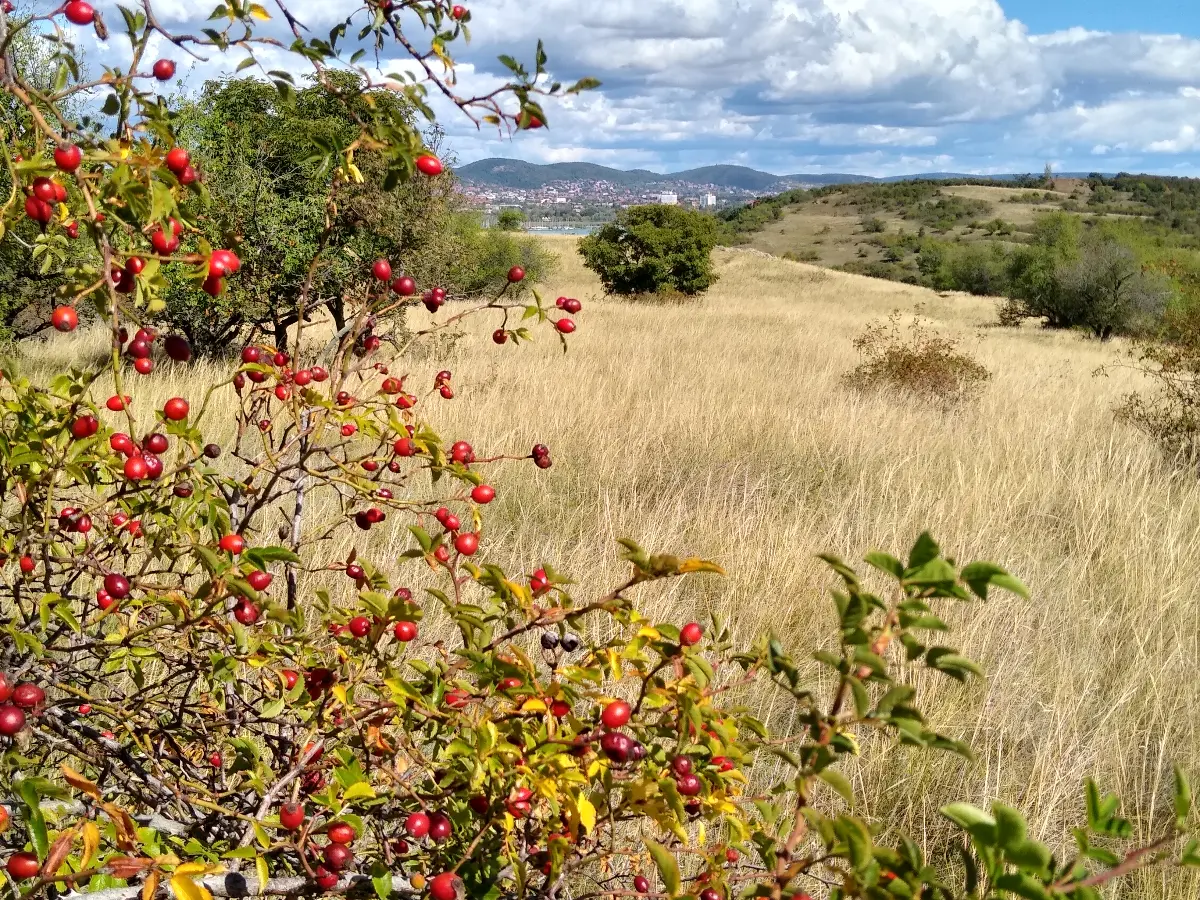
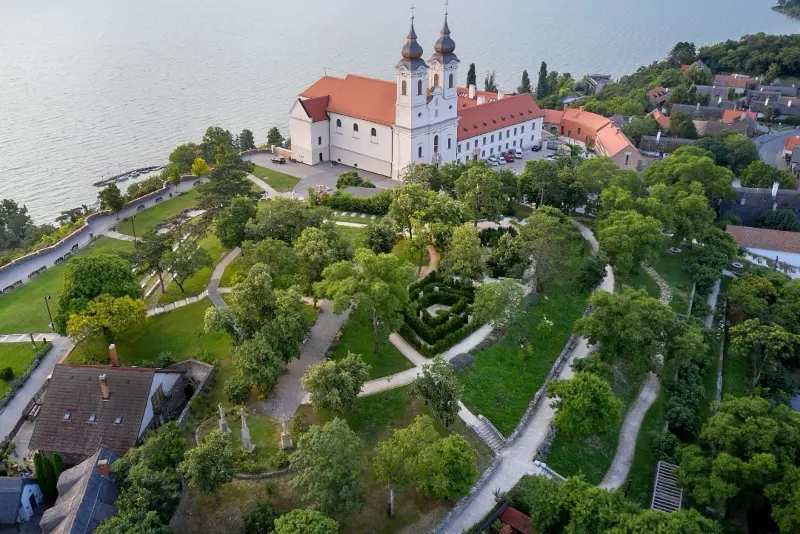
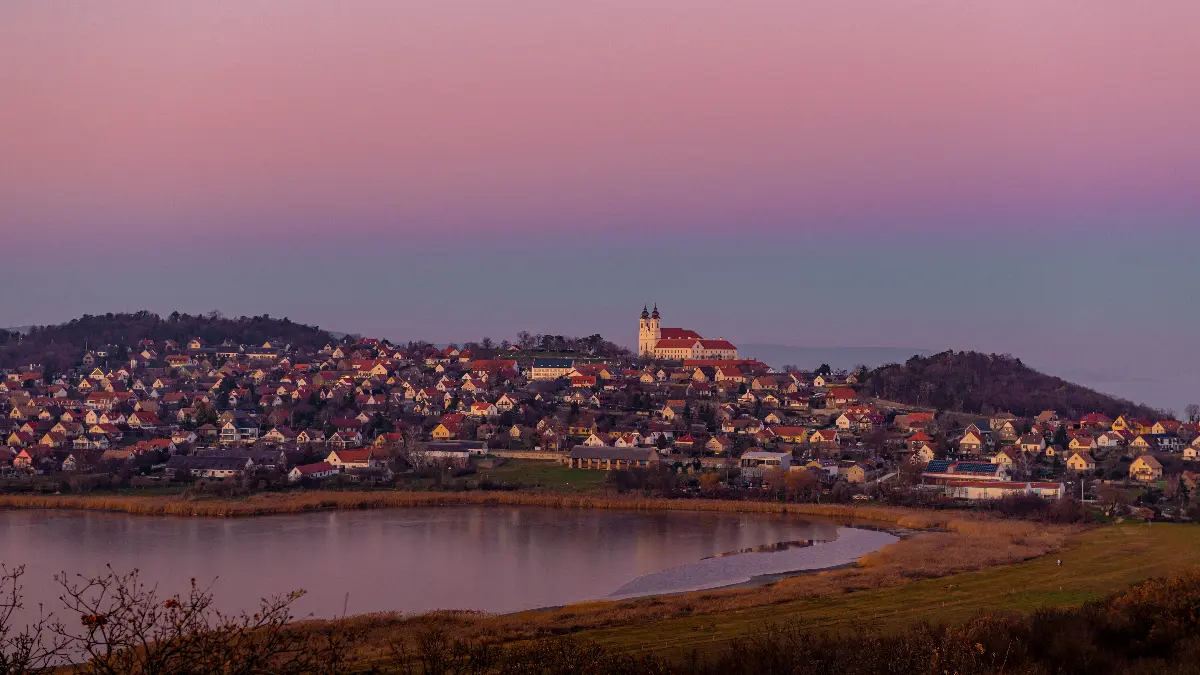
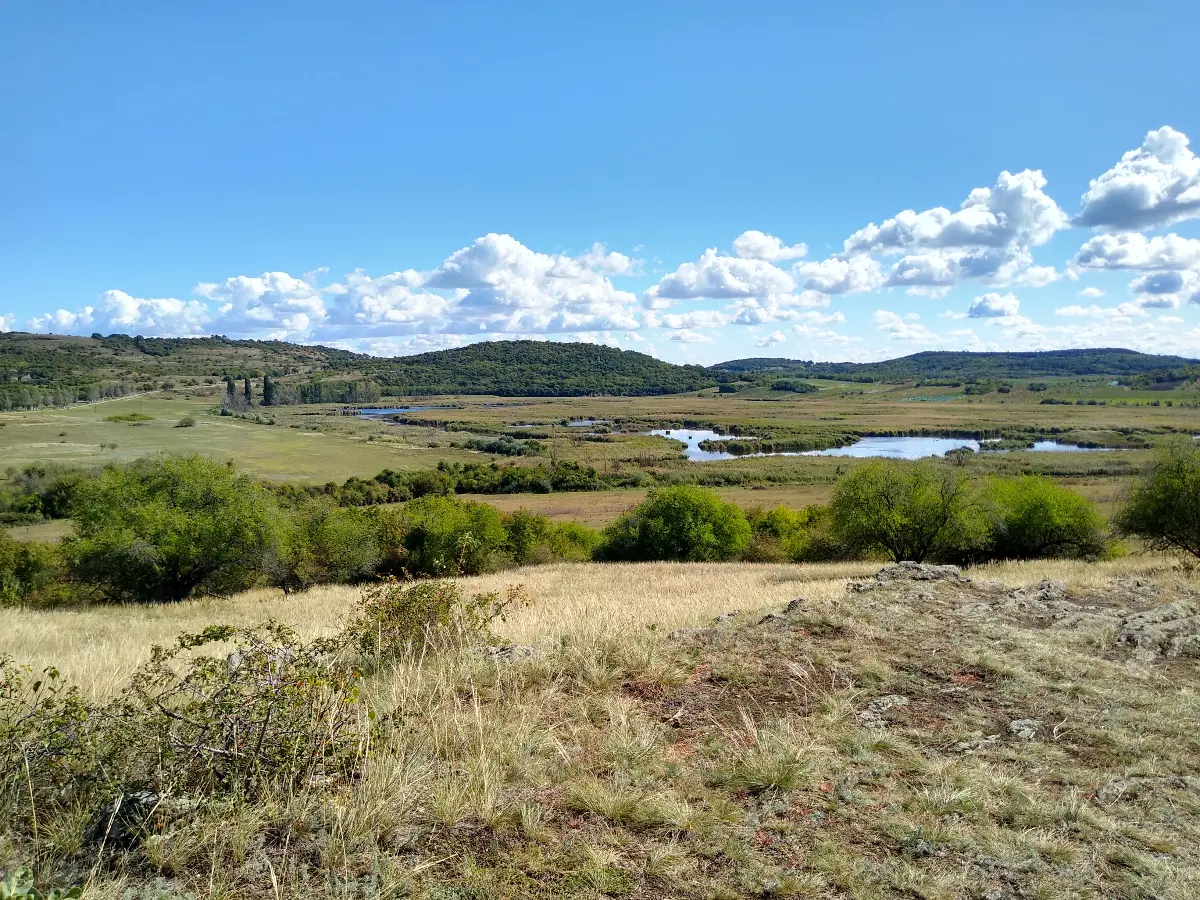
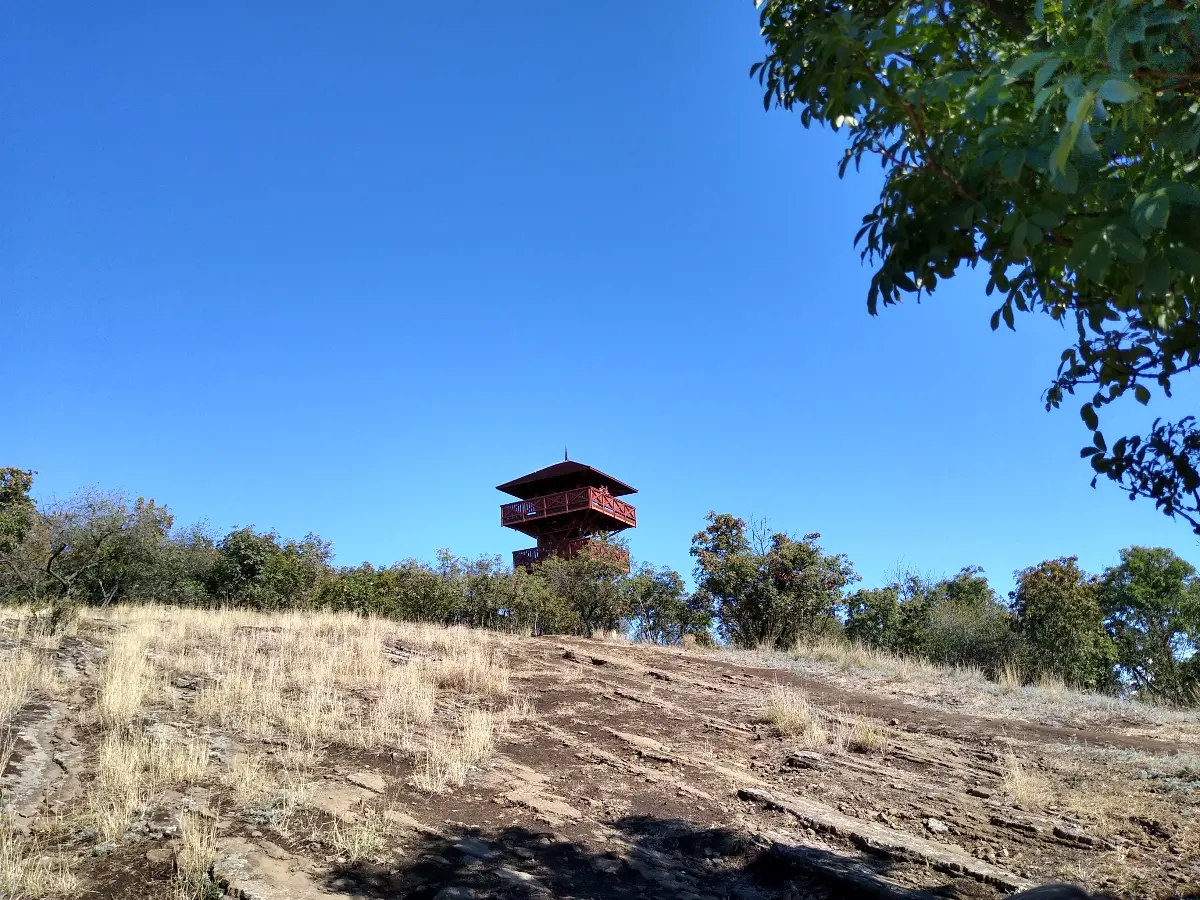
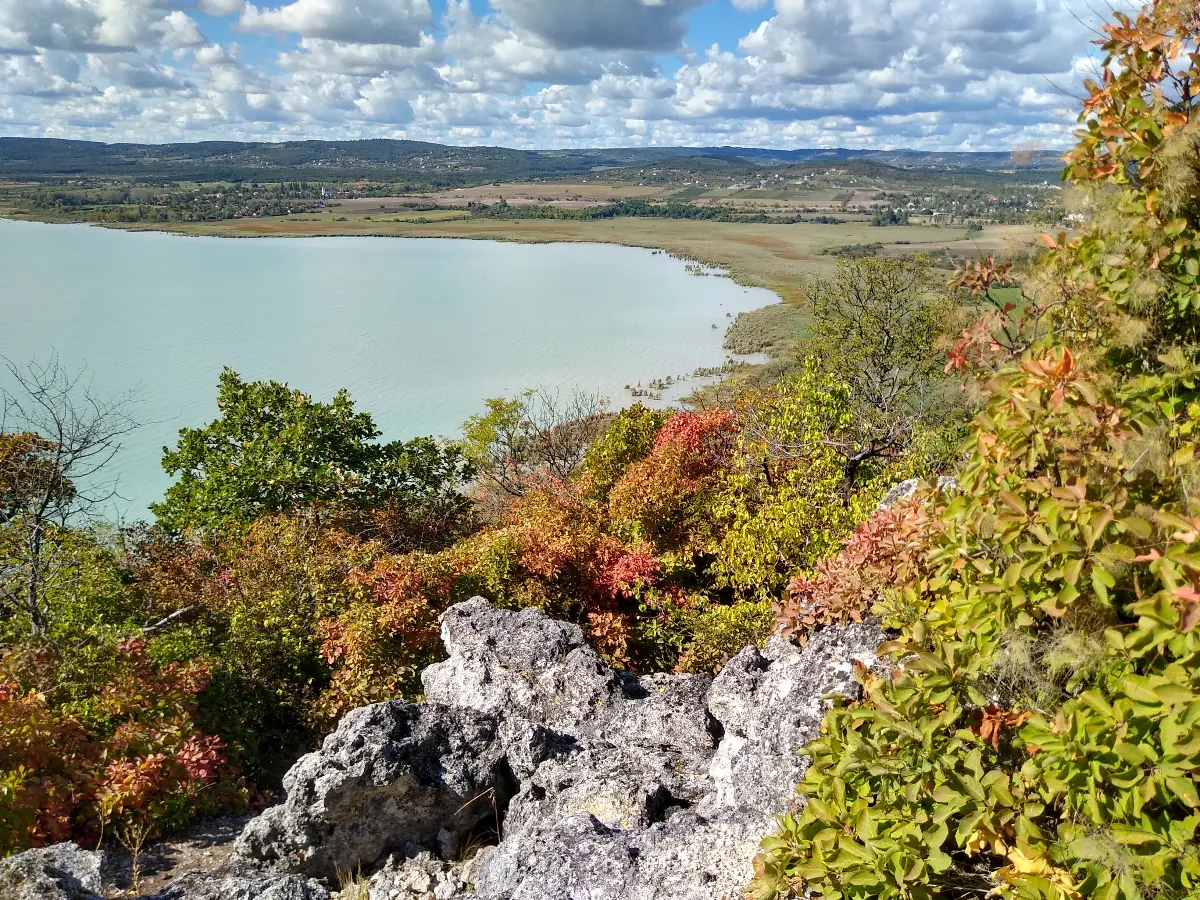
The first part of the trail starts from the ruins of the Apáti church and takes about half an hour uphill along the forest path to Őrtorony-kilátó (Watchtower Lookout). In the autumn months, there are plenty of hawthorn and rosehip crops. From above, the mirror of the Külső-tó (‘Outer Lake’) is barely visible in the reeds. For a long time, its water was drained through canals, and it was arable land. Restored to its natural state in the second half of the 20th century, it is now a protected site where many rare birds nest.
Protected natural treasures of the Tihany peninsula: the spring cones
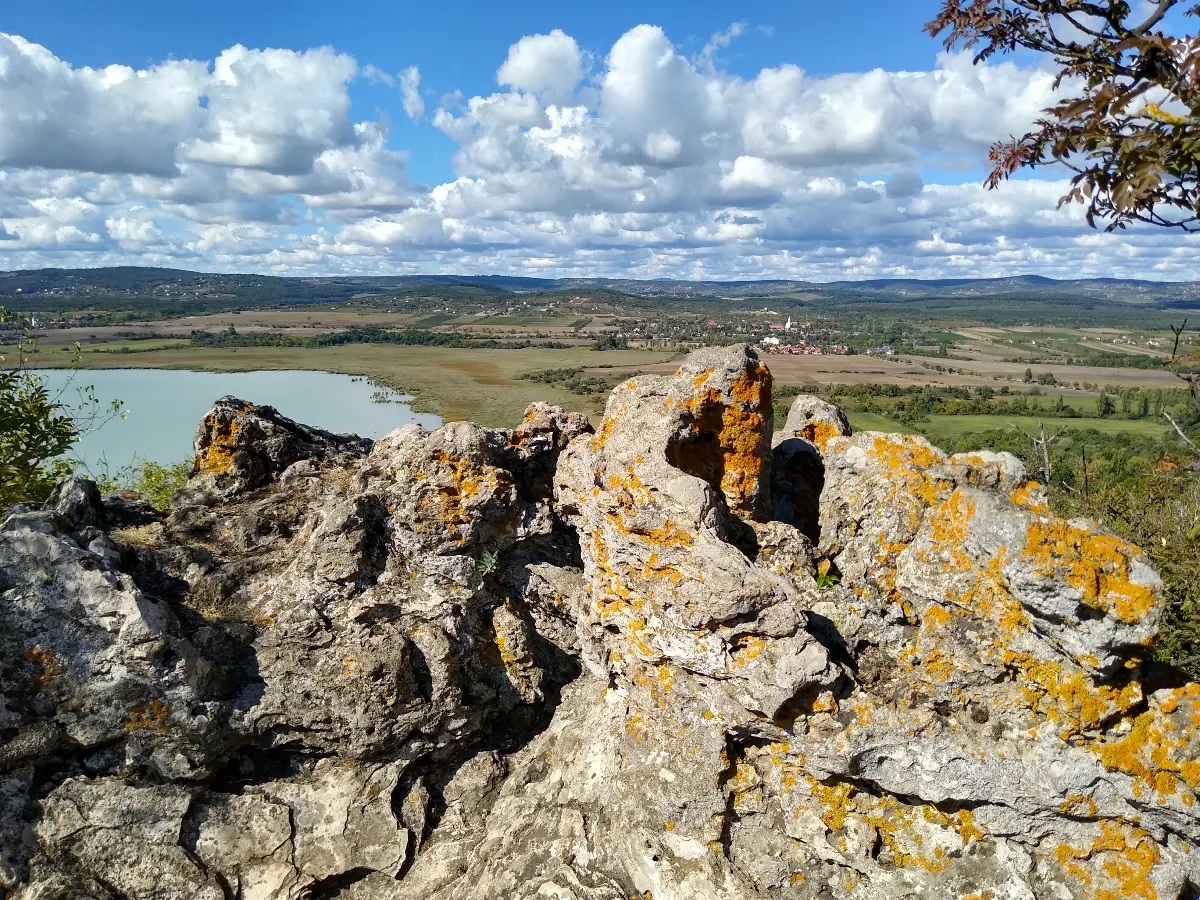
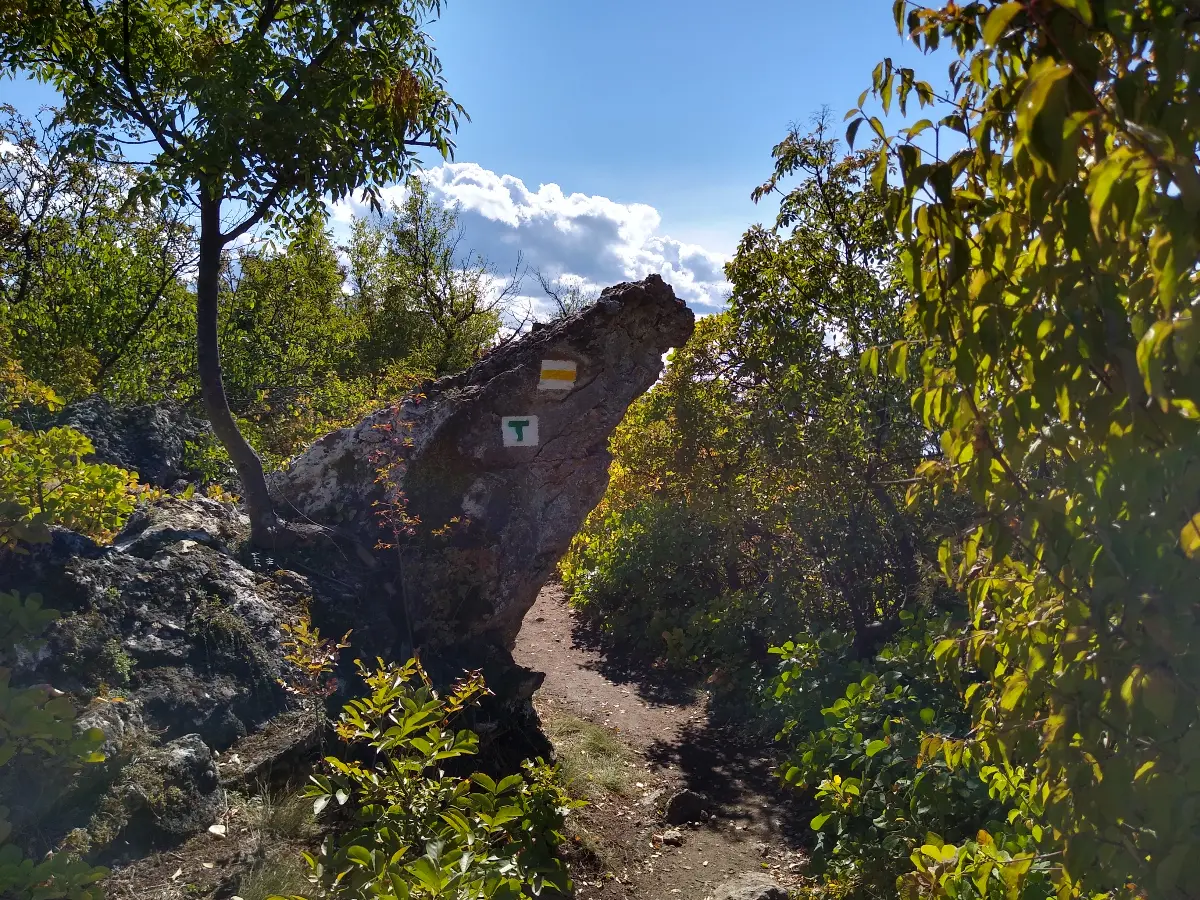
After climbing the lookout, head towards the wild and scenic Nyereg-hegy (‘Saddle Hill’). To do this, follow the yellow sign and the green T, which marks the trail. After a short hike, special rock formations emerge from the bushes, the so-called Tihany spring cones. The spectacular natural formations were created by hot water springs erupting after volcanic activity in the area. The hot water and steam brought dissolved minerals, mainly calcium carbonate, which were deposited around the springs over time. The resulting conical formations are of considerable geological value and are unique in Europe. The largest and most spectacular of the spring cones in Tihany is the “Golden House”, which can be reached from the Belső-tó (‘Inner Lake’) of Tihany.
Hello Hungary’s tip: While taking a walk around Inner Lake in Tihany, be sure to keep an eye out for areas with short-cut grass: there’s a good chance you’ll spot the highly protected ground squirrels here. These nimble little animals sometimes venture quite close, but keep in mind that feeding them is prohibited and can be harmful to them. With a little patience, you can enjoy a particularly delightful experience in nature!
Autumn cavalcade of colours on the Nyereg-hegy (‘Saddle Hill’)
The spring cones and their surroundings are a priority nature conservation area, and in 2003, this part of the Tihany peninsula was awarded a European Diploma for their preservation and nature conservation.
Not only are they interesting from a geological point of view, but they are also truly spectacular. Especially here on the ridge of Nyereg-hegy, where we can take a closer look at them along the footpath and nature trail.
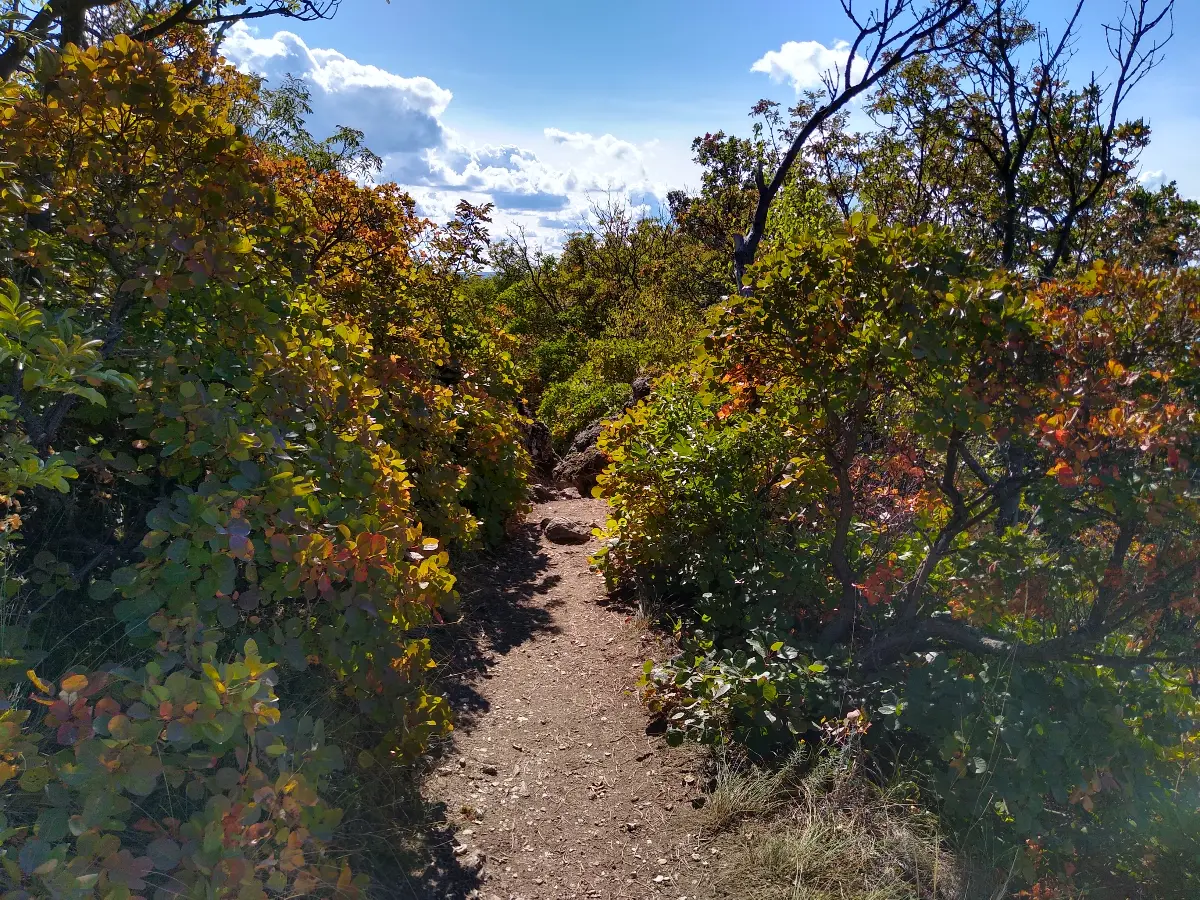
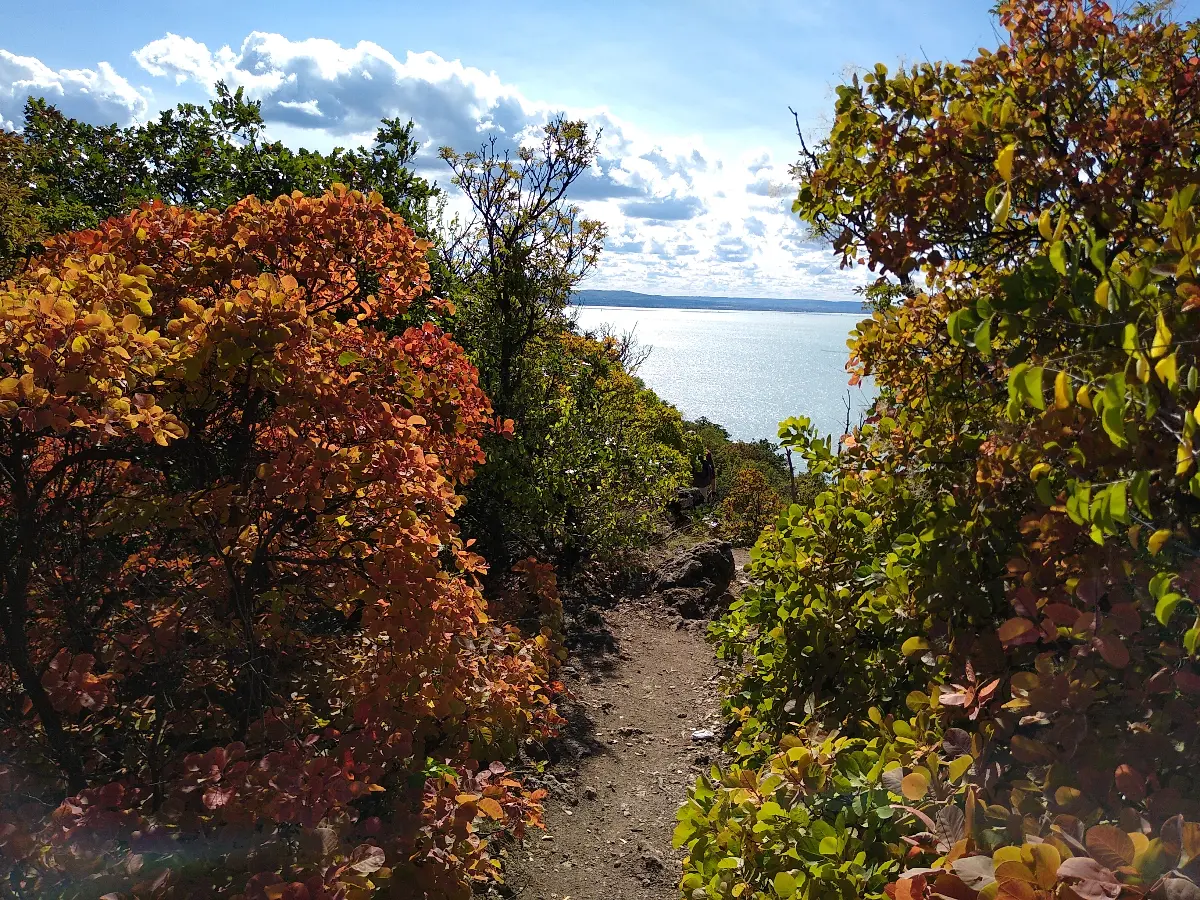
There is an exciting contrast between the brightly coloured rocks and the colourful leaves of the smokebush. In autumn, the characteristic plant of the Balaton highlands takes on stunning shades of colour, from yellow to orange to flaming red. A useful plant, in the past the material extracted from its bark and leaves was used by tanners, or leather craftsmen, to process hides. It provides food and habitat for many species of insects, and its flowers in early summer are as magnificent as its leaves in autumn. It is also known colloquially as the “wig tree” because of its complex, boxy inflorescences. In the summer months, it attracts bees and other pollinating insects! Its fruit is an important food source for birds. It is slightly poisonous, so be careful not to touch the plant with bare skin as it can cause a rash.
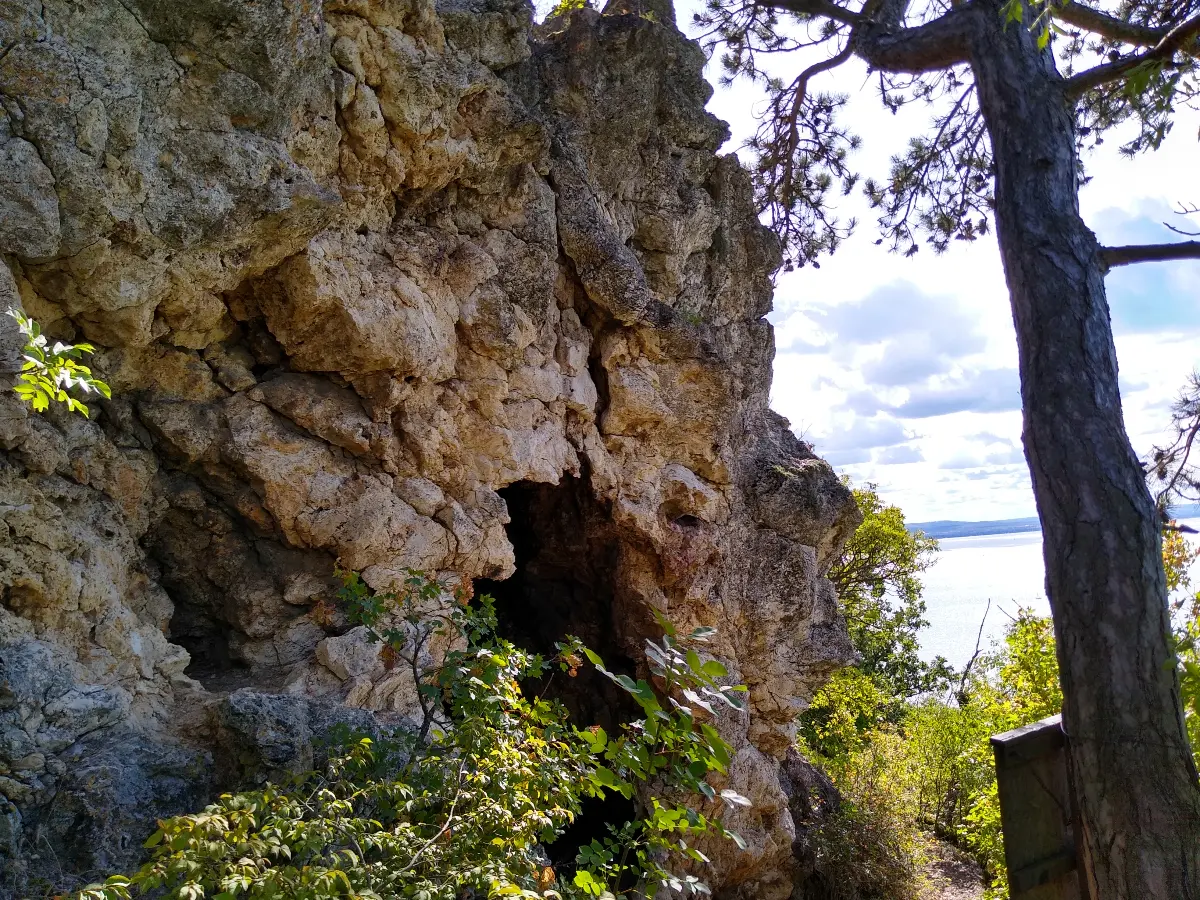
As you reach the end of the ridge, you can detour at the T-sign to the spring cave in the foothills of Csúcs-hegy (‘Peak Hill’). In the cavity formed in the geyserite rock, the work of the water can be clearly observed. Legend has it that on one occasion Jóska Sóbri, the dreaded outlaw of the Bakony, took refuge in it.
It is also worth stopping for a moment on the small plateau of Csúcs-hegy above the cave. At 232 metres above sea level, we reached the highest point of the peninsula. On the southern slope of the hill you can still find the ancient lavender plantation planted by Gyula Bittera in the 1920’s. The plant, which prefers a Mediterranean climate, thrives best here. This was evidenced by the high quality of the oils produced, which even surpassed those of France.
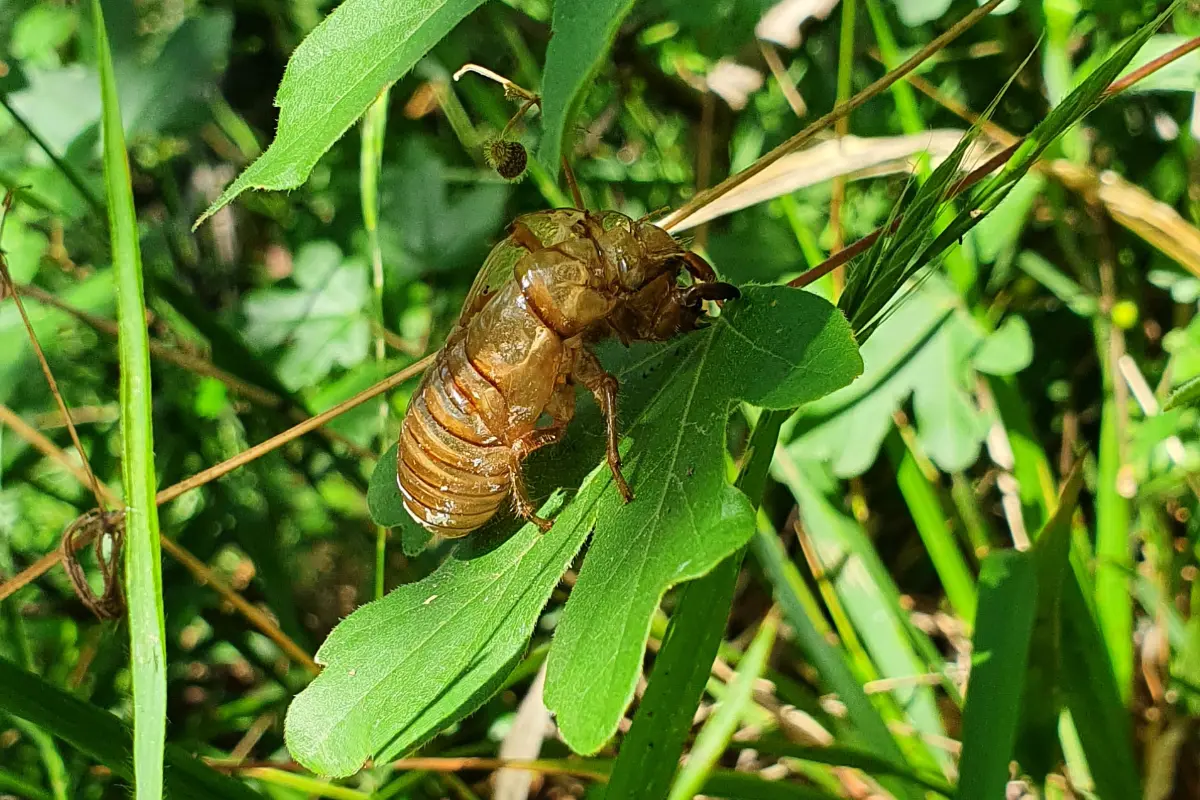
The Mediterranean-like climate is also reflected in the peninsula’s fauna, such as the great singing cicada, which is less common in the autumn months but is a staple of the forest in the summer months. In spring, the larval skin of the insect, which is about 3-5 cm in size, hangs everywhere in the bushes around the Csúcs-hegy.
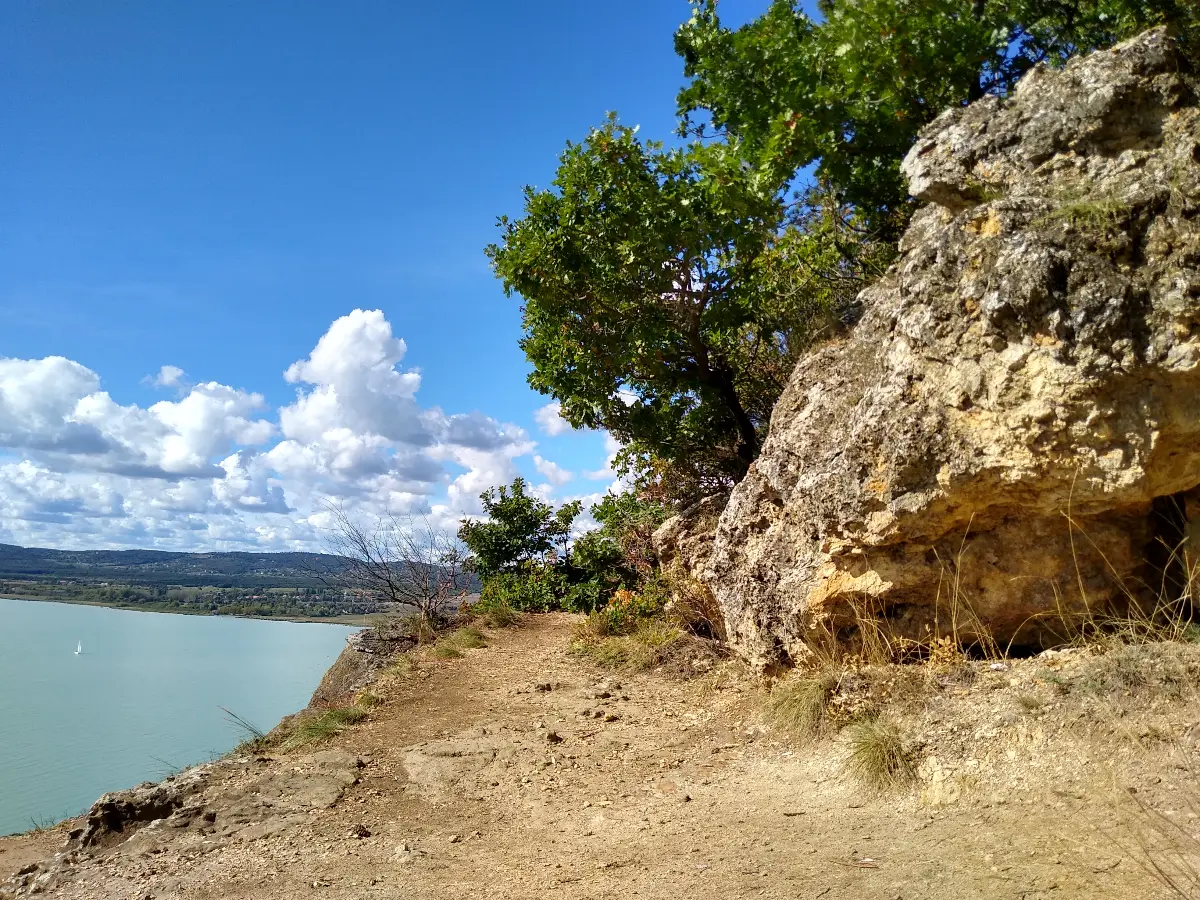
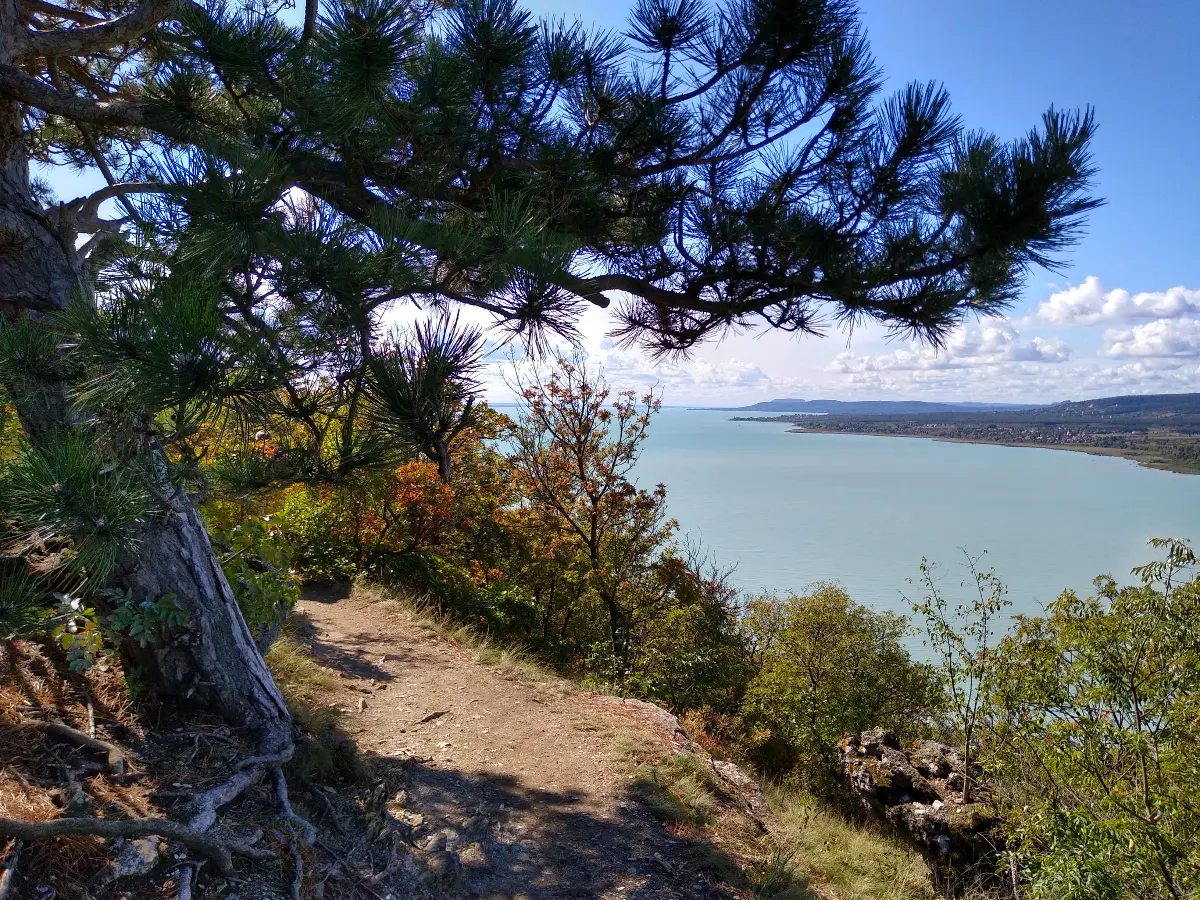
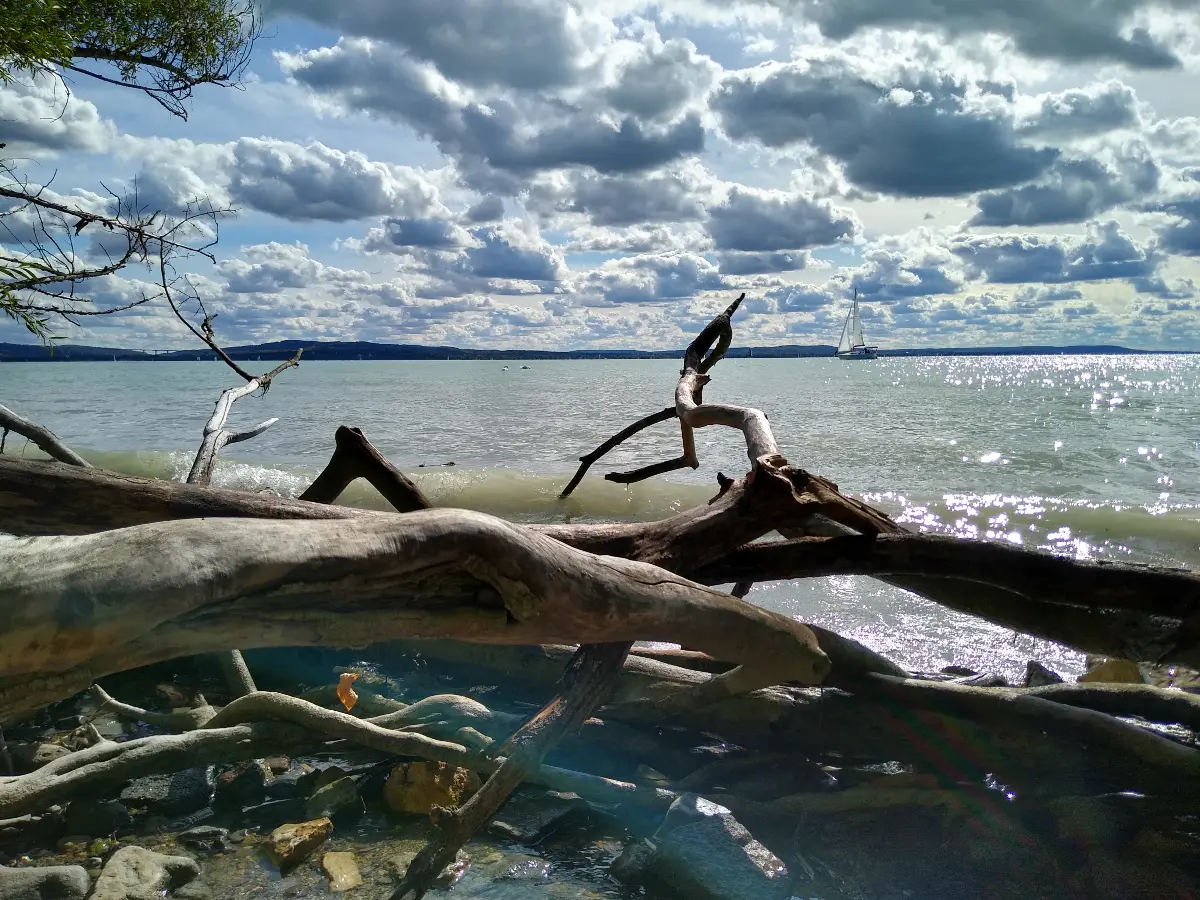
From Csúcs-hegy (Csúcs Hill), only the yellow sign shows the way to the forest school. Along the steep rock face, there is a fantastic panorama of the western basin of Lake Balaton, and in good weather you can see Badacsony. The path is quite narrow in places, with a gully underneath, so be careful on this section!
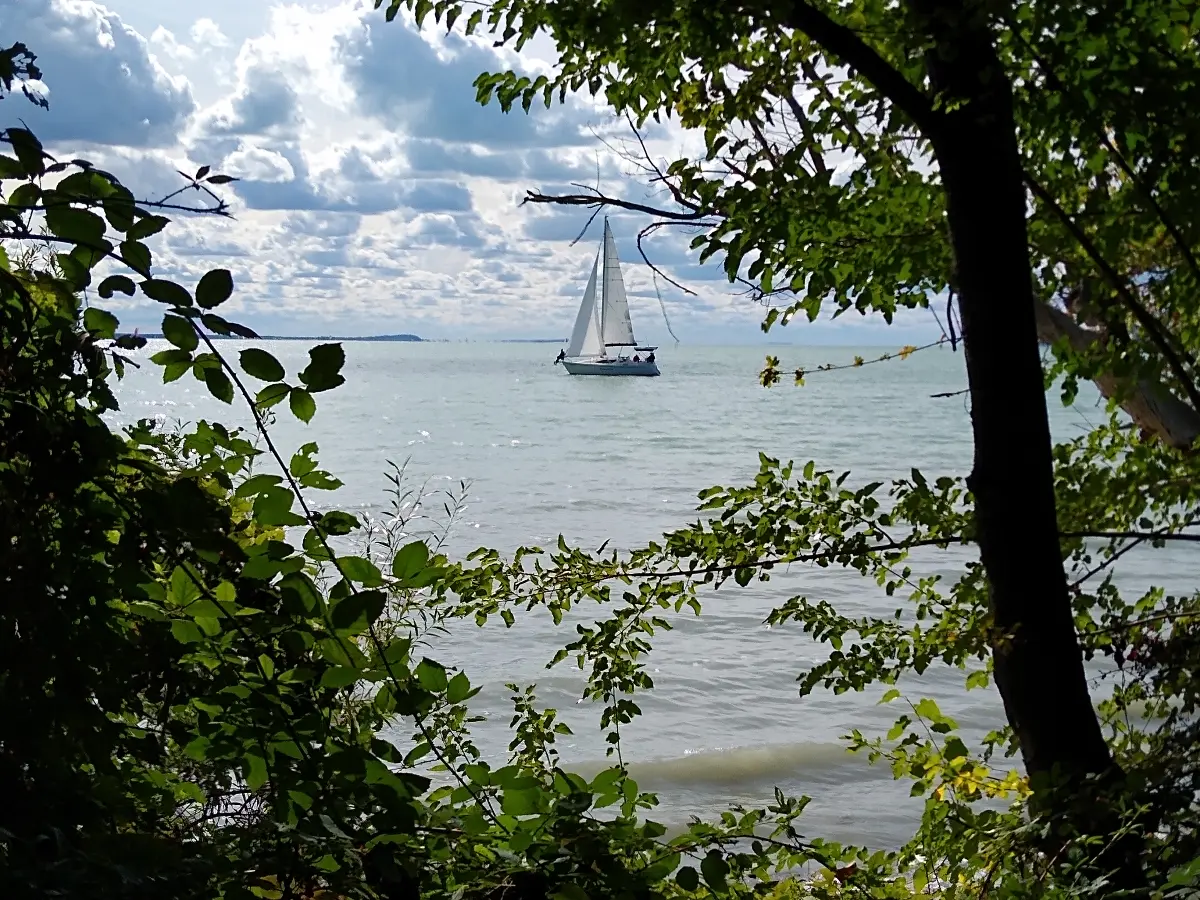
At the end of the forest road, you reach the asphalt road along Sajkodi Bay. You can walk from there back to Sajkod and then to the parking lot. The natural shoreline of Lake Balaton is a special experience along the way. In addition to the red sandstone scatters that were created in the 20th century to protect the shoreline, there are only a few places on the shores of Lake Balaton where you can still find unspoilt nature. The large dung beetle, the green lizard, Hungary’s largest lizard species, is often seen here, but don’t be surprised if a metre-long grass snake glides across the road ahead.
At the end of the tour, you can also take a rest on the beach of Sajkod or visit the Apáti Restaurant! And if we return to the Inner Lake, it’s well worth visiting one of Hungary’s most modern lavender distilleries, Lavender Tihany, where you can observe every step up close – from lavender cultivation to the production of natural cosmetics in the on-site demonstration laboratory. At the Visitor Center, you can also view an exhibition showcasing the history of lavender in Tihany.
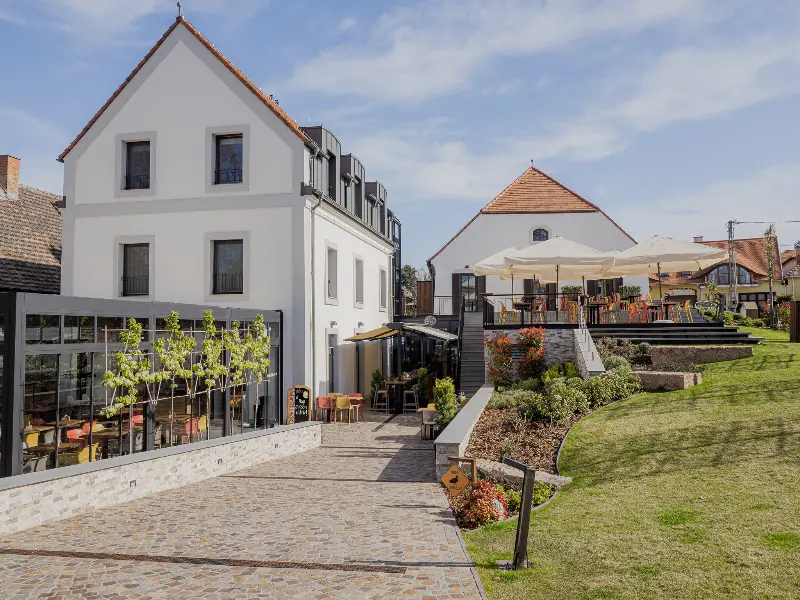
For coffee lovers, we warmly recommend the Kotyogós Coffee Terrace, located next to the Inner Lake, with its cozy, family-friendly atmosphere. In addition to excellent coffees, the drink menu features hot chocolates, unique refreshments, and matcha, but it’s worth stopping by for more than just a drink. The food menu includes sandwiches, salads, furthermore, a breakfast menu, and children can choose from a special “Kotyogós Toddler Menu.”
When the weather is nice, you can relax in the garden, on the terrace, or even in the lounge chairs by the lake, while listening to and observing the wildlife of Belső Lake. It’s an ideal stop before or after exploring the area, and it’s also worth checking out their schedule of events, as the owners host exciting activities here.