An article from Turista Magazin.
What exactly is this article about?
- A small lake in the middle of a tiny forest
- The road leading there
- The formation and history of Crater Lake
I don’t remember exactly how I stumbled upon this little oasis on the edge of Hortobágy, but I certainly didn’t know what to make of the “Crater Lake” label on Google Maps in the middle of the Great Plain at first glance. As far as I know, there has never been a volcano here, so what on earth could this be?
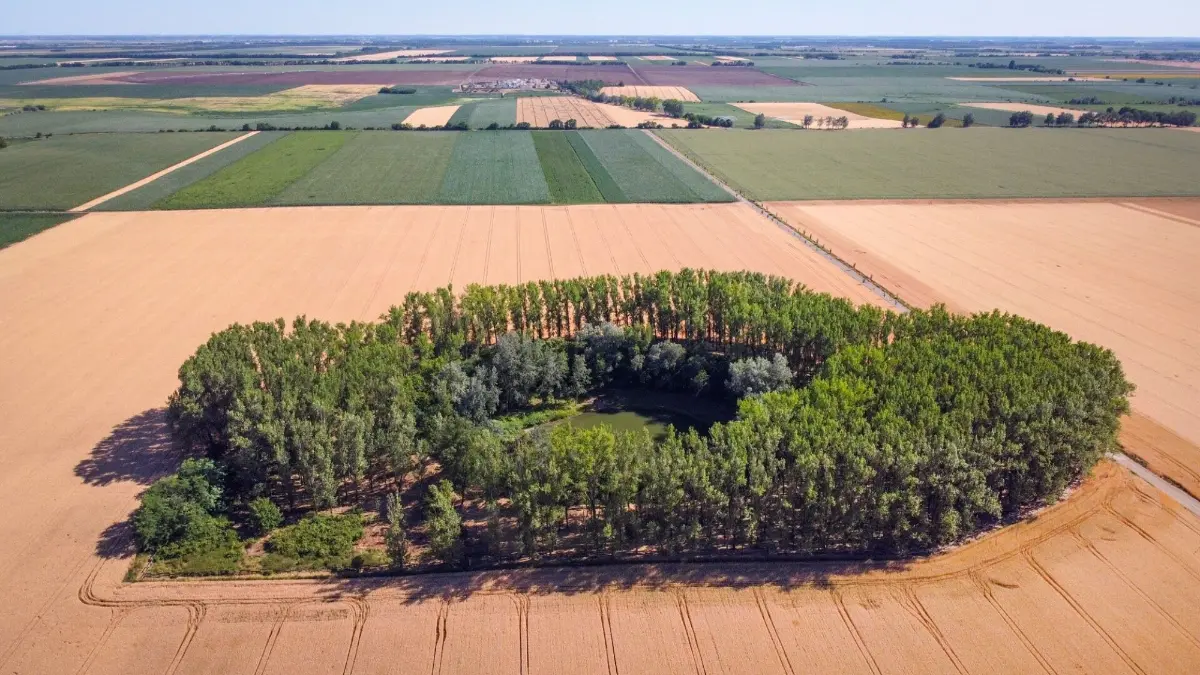
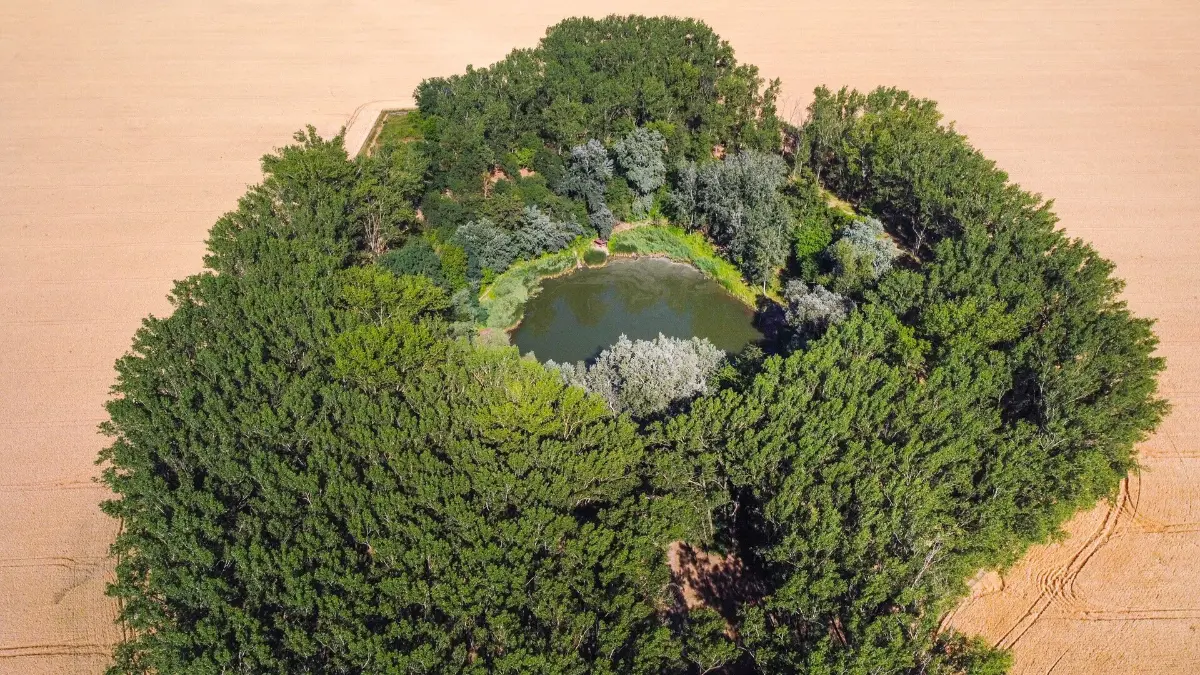
Even from the satellite view, it can be clearly seen that this isn’t some cleverly named restaurant, an adventure park for tourists, or even a thermal bath (the latter wouldn’t be unusual in the area), but truly just a small pond in the middle of the fields. And this little pond is surrounded by a tiny strip of forest, as if a speck were gazing back up from the earth.
Fortunately, I quickly found the answer to the origin and history of Crater Lake, which is now one of Nagyhegyes’s points of pride, though its creation was more of a frightening event than a happy one. But more on that a bit later.
The Road to the Oasis
Of course, I set out to see it in person, but I’m sure not many people would want to venture into the wilderness in a 40-degree heatwave – just like me – yet that’s exactly the weather I had when I managed to complete this little excursion. I was confident that the trees and the proximity of the water would protect me from heatstroke; at the very least, I could test the catchy headlines claiming this is an oasis in the heart of the Great Plain.
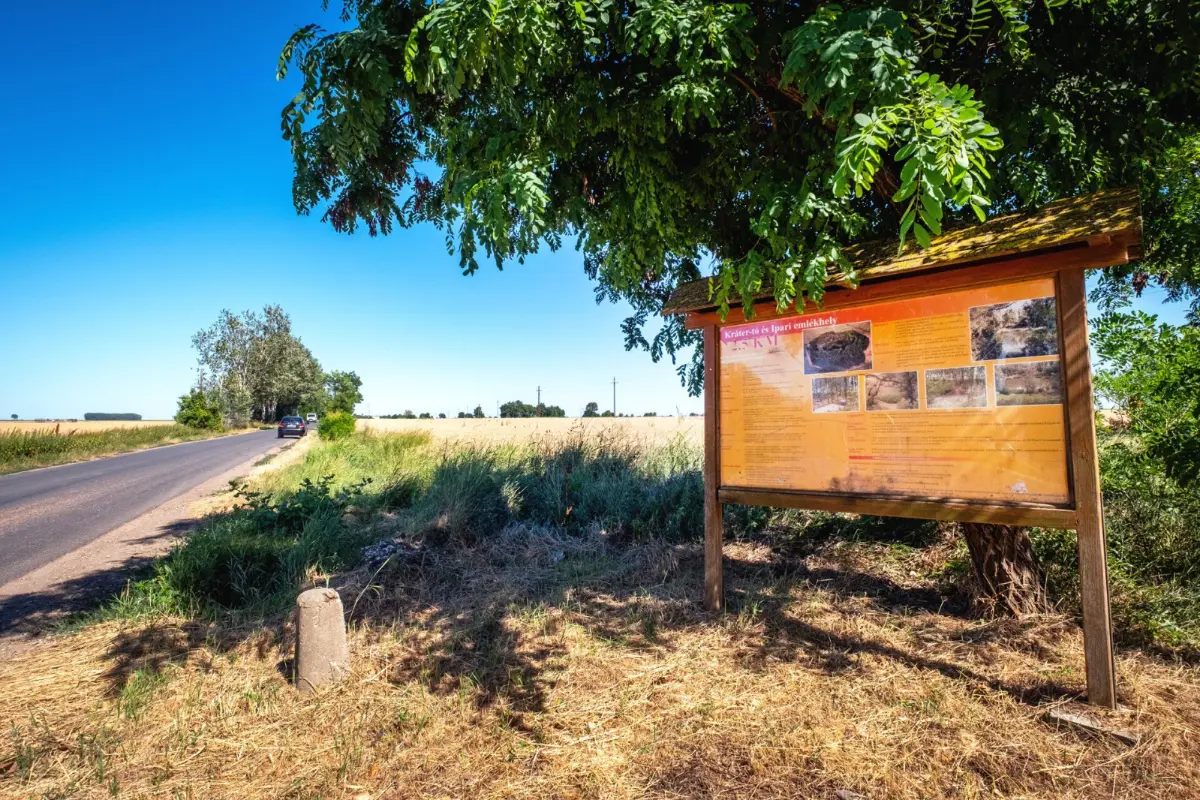
You can reach Crater Lake in Nagyhegyes via a paved road that runs straight from the town, and the journey – barely 5 kilometres long – can be covered by bike in as little as 15 minutes. However, be prepared for the fact that, since there is active agricultural activity in the area, you are sure to encounter large farm machinery and trucks. The single-lane road is narrow even for two cars, and I had to pull over surprisingly often, so despite being in the middle of nowhere, there was plenty of traffic.
And it wasn’t just the road that was bustling; I was also surprised that, even though it was a weekday, I wasn’t the only one who had come to visit the lake. In addition to being a pleasant day-trip destination these days, this unique lake also functions as a fishing spot, so there were anglers here, couples looking for romance, and families who likely arrived with the same curiosity as I did – namely, to discover this interesting place.
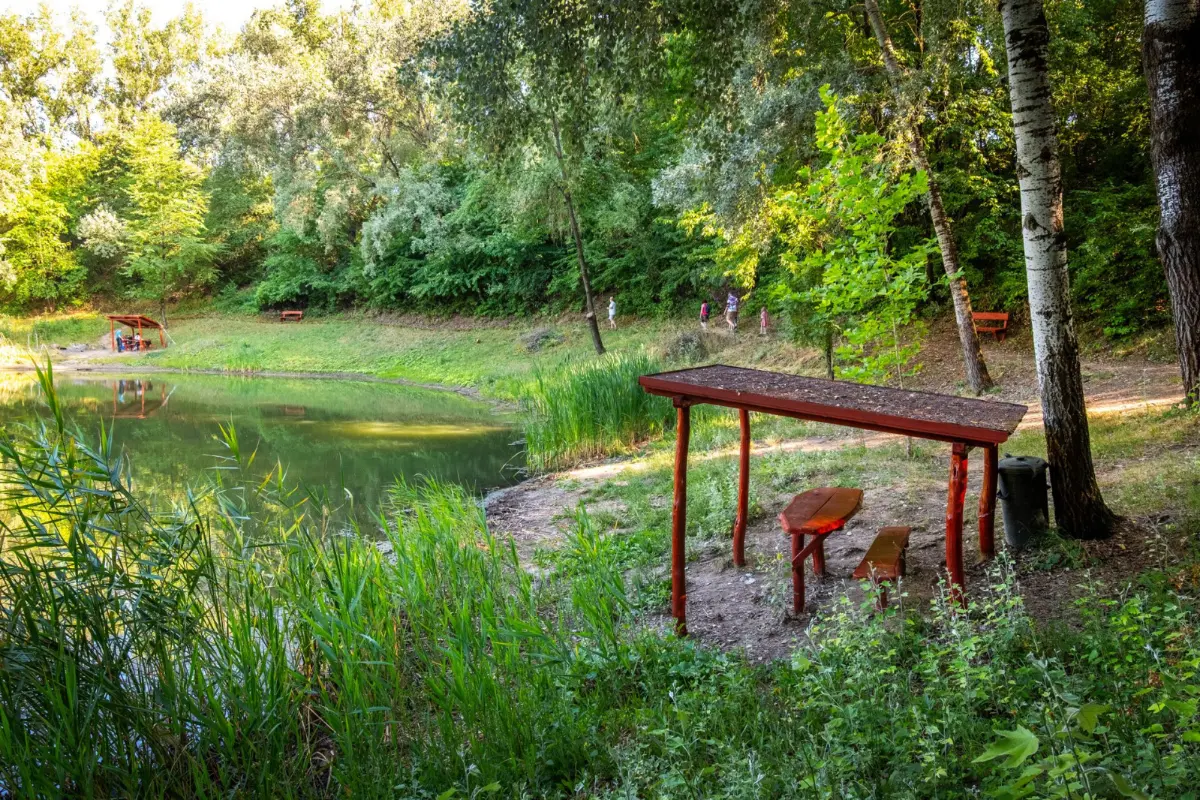
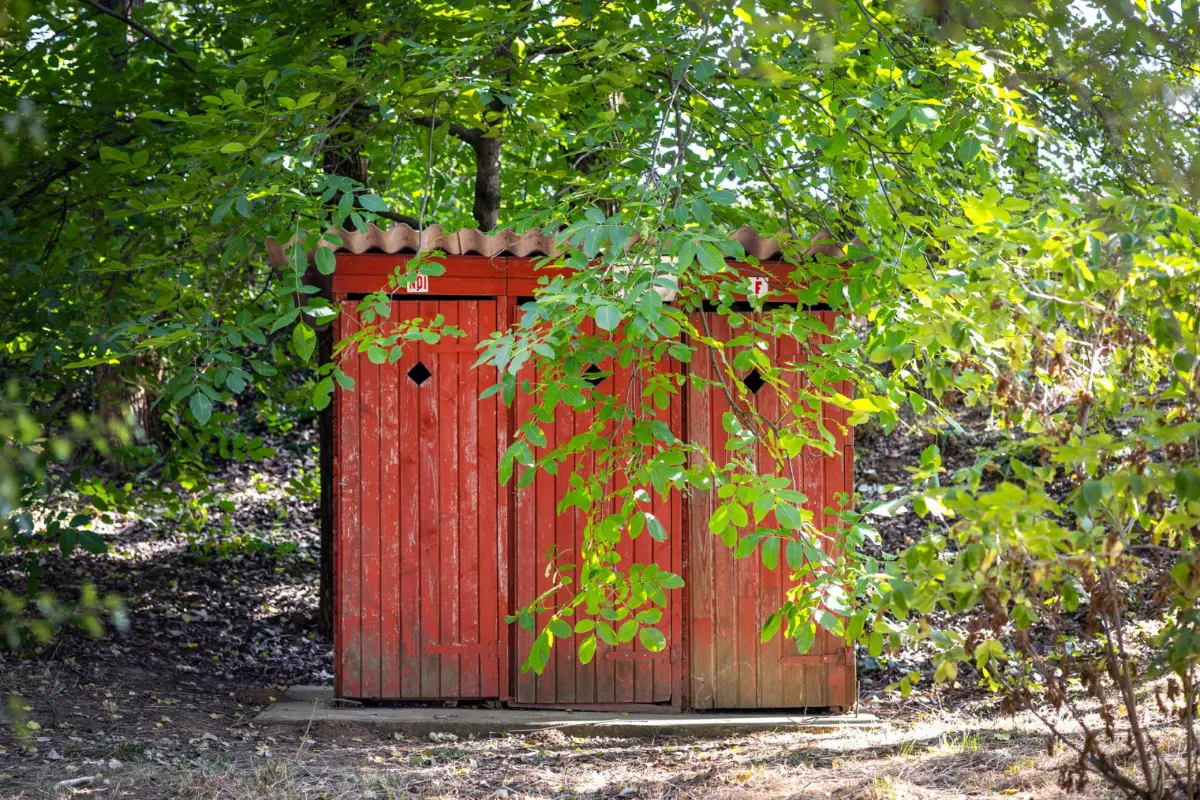
Amid the golden wheat fields, the small, lush green forest hiding the lake is visible from afar. The heat is scorching, so I quickly seek shelter in the shade of the trees upon arrival. As I make my way toward the lake, I notice that, in addition to benches and a small playground, restrooms have also been installed – which is welcome news, since such small tourist spots in nature tend to get more than just footprints after a while.
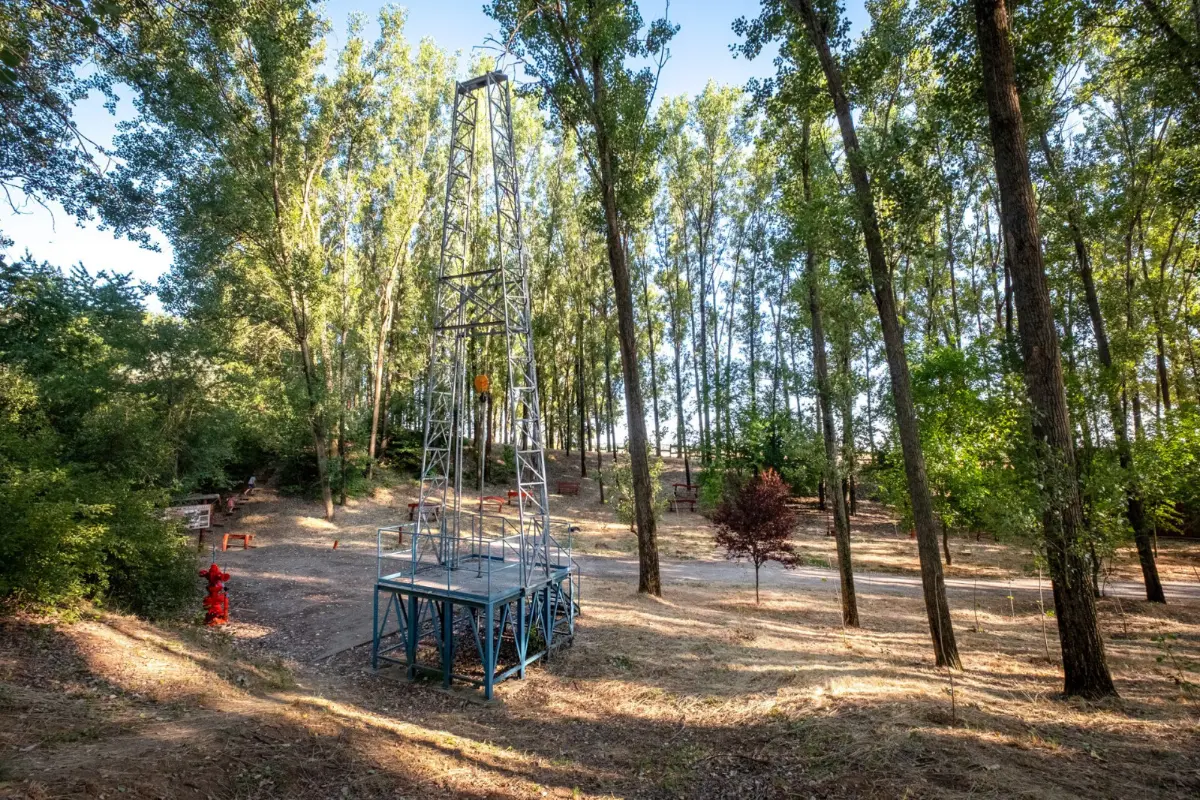
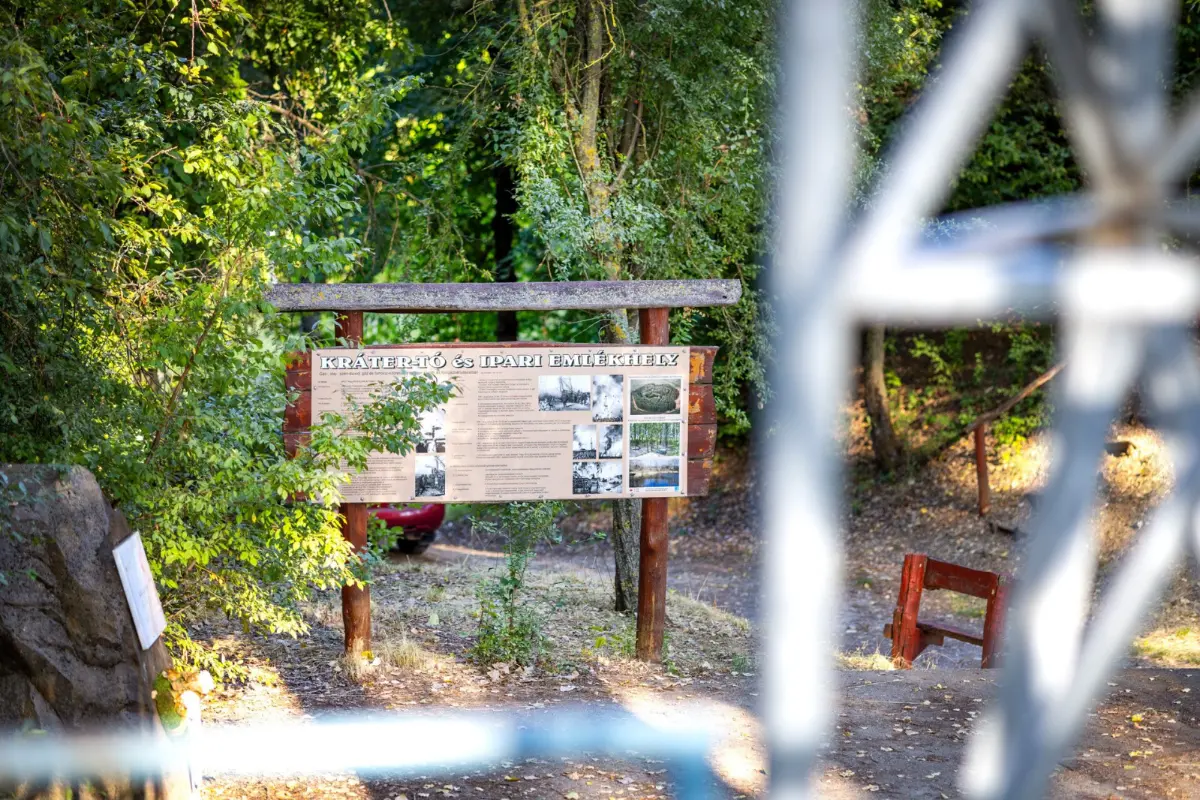
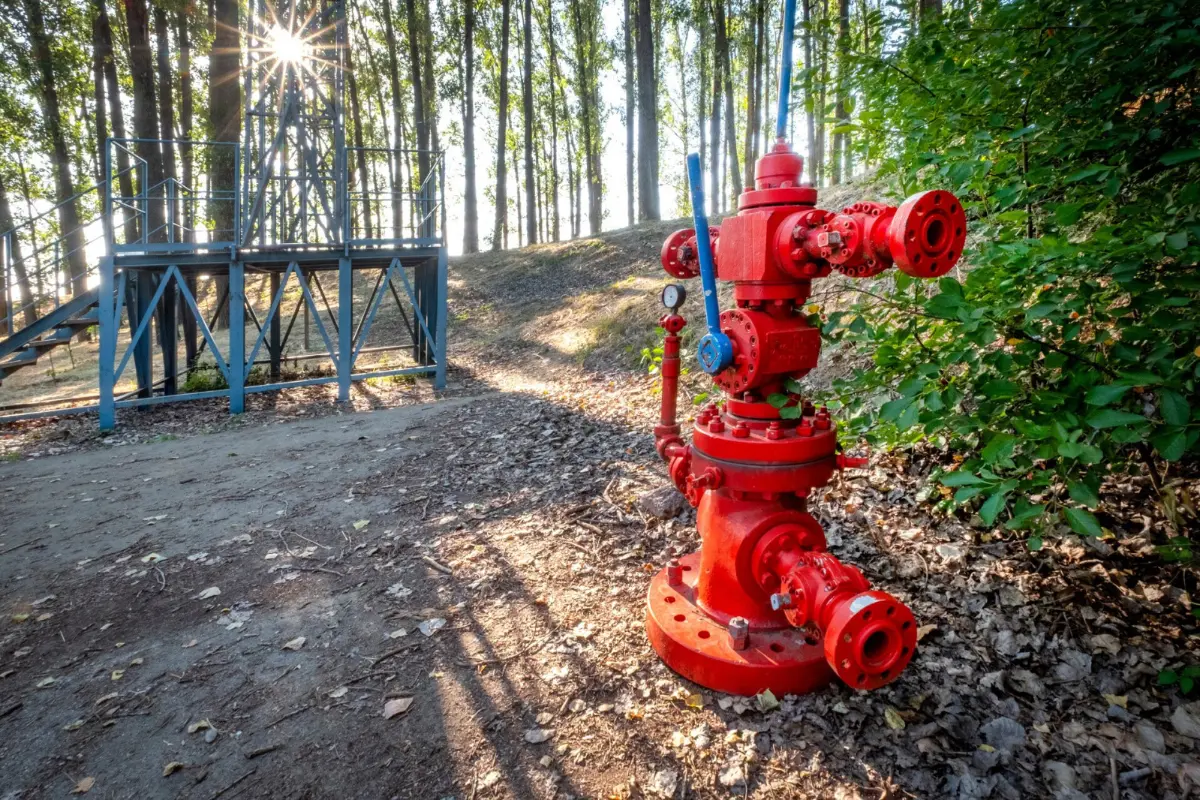
A small memorial site has also been set up among the trees, where a mini drilling tower, a memorial stone, and an information board make it clear that we haven’t arrived at a naturally formed lake, but are now enjoying the result of a failed drilling operation.
The crater and the lake were actually created by a massive gas eruption.
After the disaster in 1961, the site remained in the ownership of the extraction company for a long time, but in 2004, the municipality of Nagyhegyes purchased the area and developed it into a great recreational spot with rest areas, barbecue pits, and even piers available for anglers on the small lake.
There are two paths to walk around the area: one runs alongside the lake, which is surrounded by reeds, where lush vegetation was teeming with butterflies and pollinators when I was there. On the other hand, you can also take a walk along the top of the nearly 20-meter-high embankment built around the lake, though unfortunately you can no longer see the lake from there today because the trees and bushes have grown so tall.
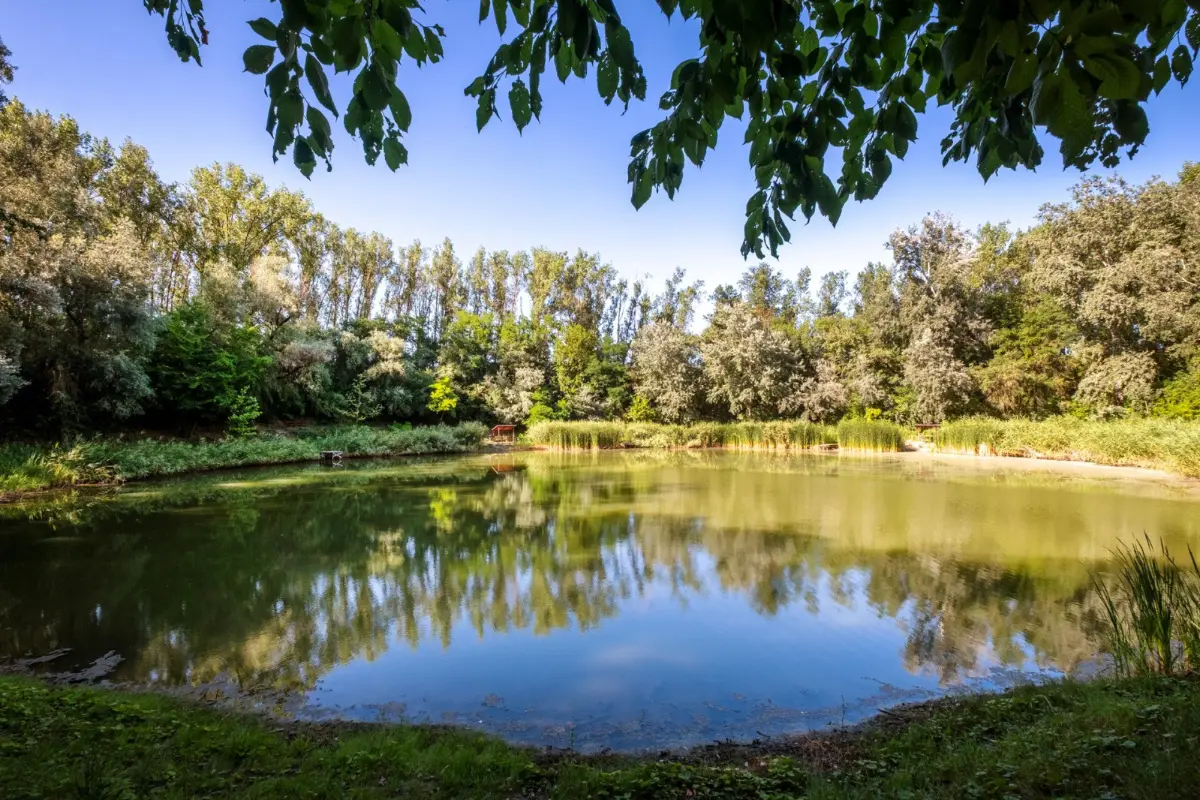
The lake, which is only 150 meters in diameter and about 5 meters deep, is typically surrounded by poplar trees, but there are also many hawthorn bushes, and if you like wild berries, you’ll find wild plums – or cherry plums – in the area. After all, if you need to go, there are outhouse toilets in the woods.
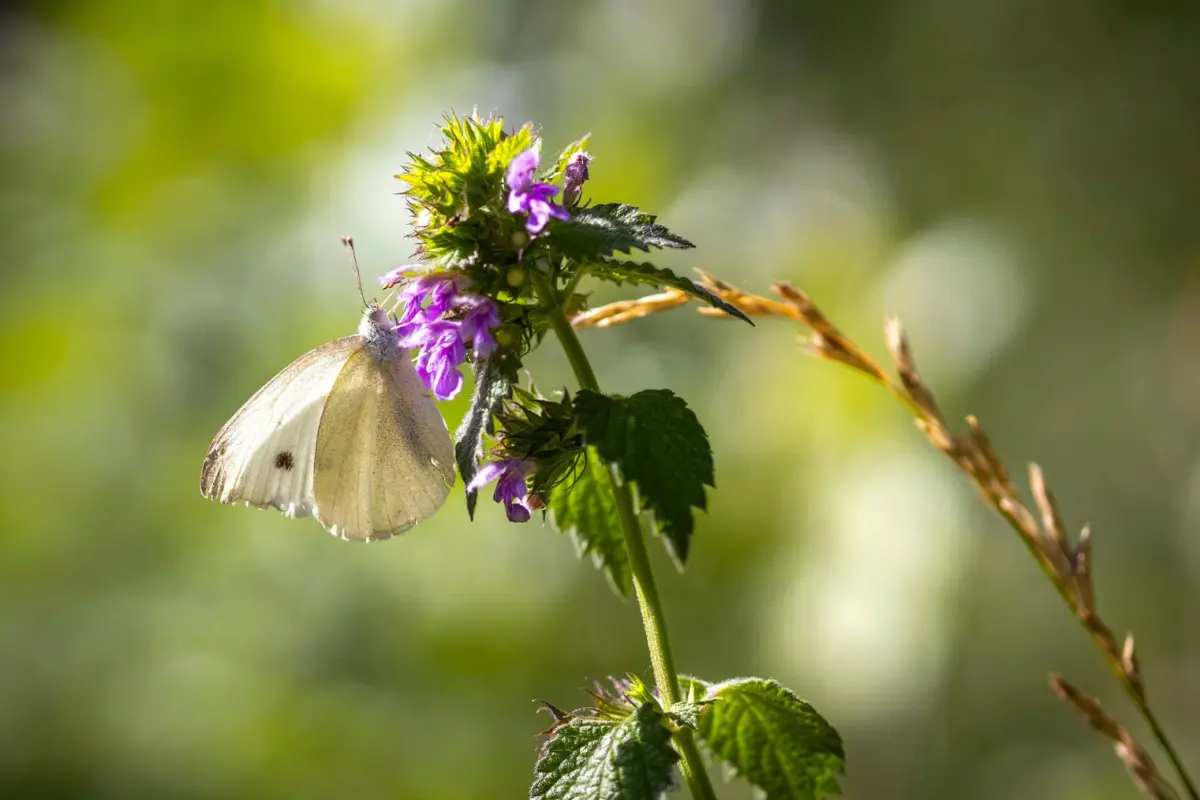
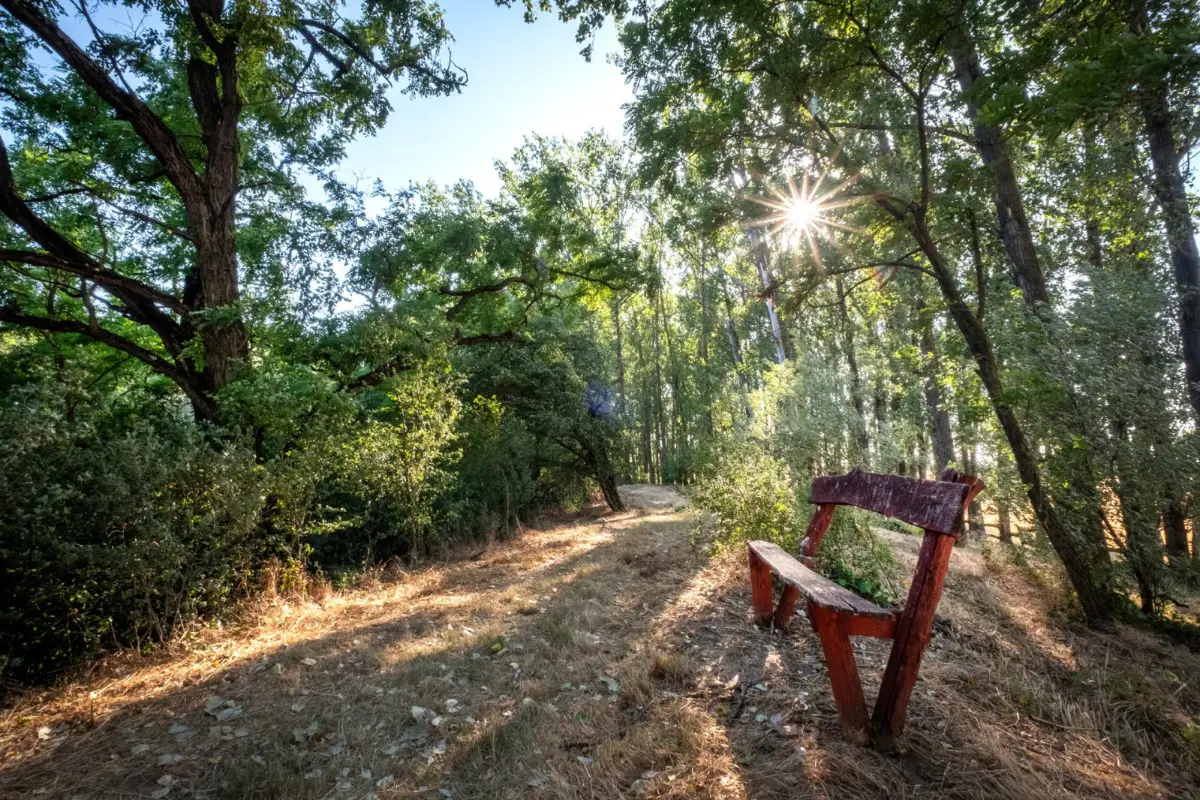
It’s true that it was much more pleasant to sit on the shady benches along the walking path than to stand out in the open, so it really felt like I was catching my breath in an oasis, a feeling reinforced by the abundance of insects and birds and the croaking of the frogs, since this place is also a small refuge for living creatures in the agricultural desert. One of my favourite songbirds, the yellow-breasted warbler, was trilling in the trees, but I also saw a blackbird; the presence of the other birds, however, I could only hear.
I’m sure everyone is already itching to know the exact story behind the lake, which you can also learn from the signboard mentioned earlier. There you’ll find a detailed description of the drilling rig, the safety equipment, the drilling process, the events leading up to the accident, and the exact sequence of events.
The birth of crater lake
Before delving into the specific sequence of events, however, it is worth noting that this region is a very rich hydrocarbon-bearing area, which people had already been trying to explore and exploit as early as the first half of the last century. There were also byproducts of this activity; for example, instead of gas, thermal water sometimes gushed forth, which is how the still-popular 73-degree Celsius thermal water of Hajdúszoboszló was discovered in 1925. During the exploration, in early 1959, a massive 30-billion-cubic-meter gas field was discovered between Nagyhegyes and Hajdúszoboszló, which was uncovered by deepening the well marked Hsz 2. It can be said that Nagyhegyes and the surrounding area became the natural gas production center of the Great Plain at that time, and gas production continues to this day from several wells.
At the time, severe gas blowouts were not uncommon, as the reserves were at very shallow depths and the technology was not yet state-of-the-art, but it can be said that
the 1961 blowout that caused the formation of Crater Lake was the largest.
According to the information sign, a dry gas blowout first occurred at Well No. 36. They tried to stop it in every way possible – for example, they dropped the drill bit into the well and fiddled with the blowout preventer – but since I don’t know much about this kind of drilling, I didn’t understand much of this part of the description on the sign posted at the site. In any case, I’m sure the sign’s content is a real treat for those interested in this topic.
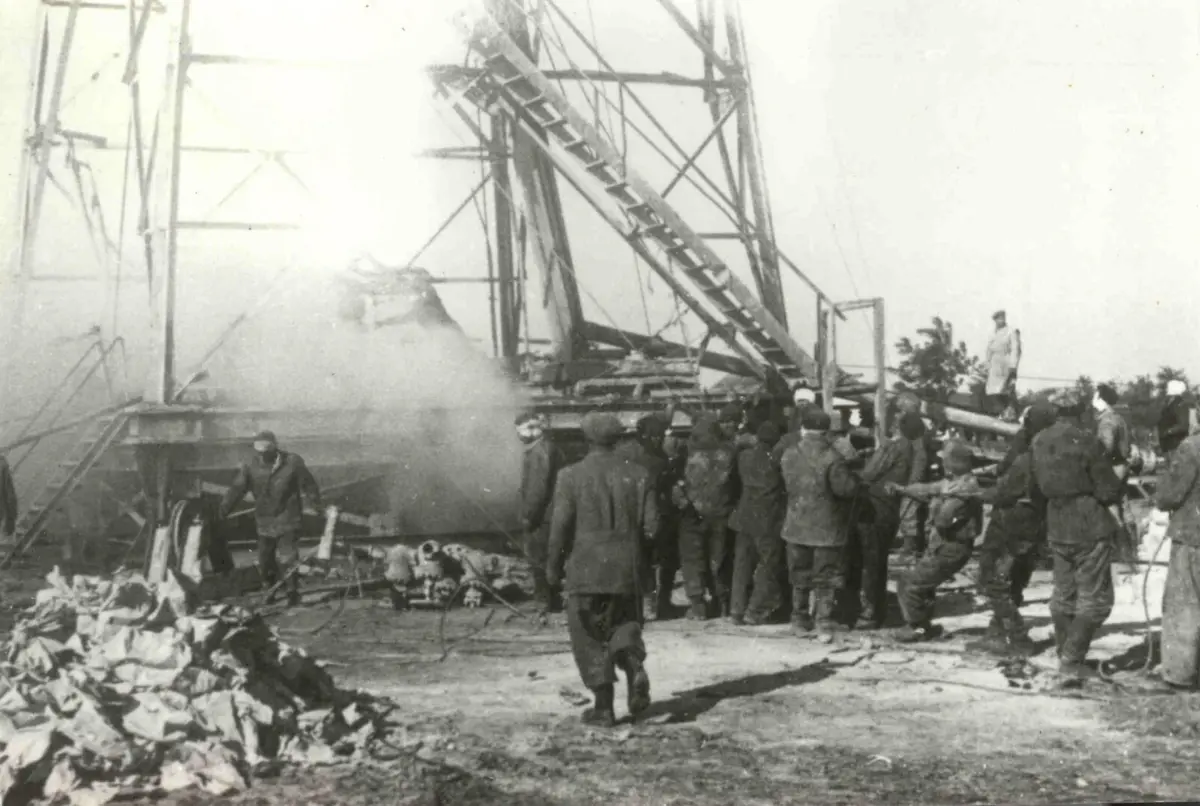
What I did understand from the description, however – and what I also learned from other sources – is that although they managed to stop the outflow at the wellhead, at 8:30 p.m. on August 23, increasingly intense gas bubbling began in the backup slurry pit, which was a harbinger of the disaster. The ground cracked over a length of 500 meters, and the gas began to escape into the open air along the entire length of the crack. This is what is known as a wild gas blowout, since the gas did not escape at all where the experts had intended.
The continuously flowing natural gas did not ignite that night, but it caught fire at 5:45 a.m. the next morning.
We will never know exactly why, as there was no external cause. We know this because, due to the gas blowout, the fire department and the army were already on site at that time, having cordoned off the area, and they observed no external influence.
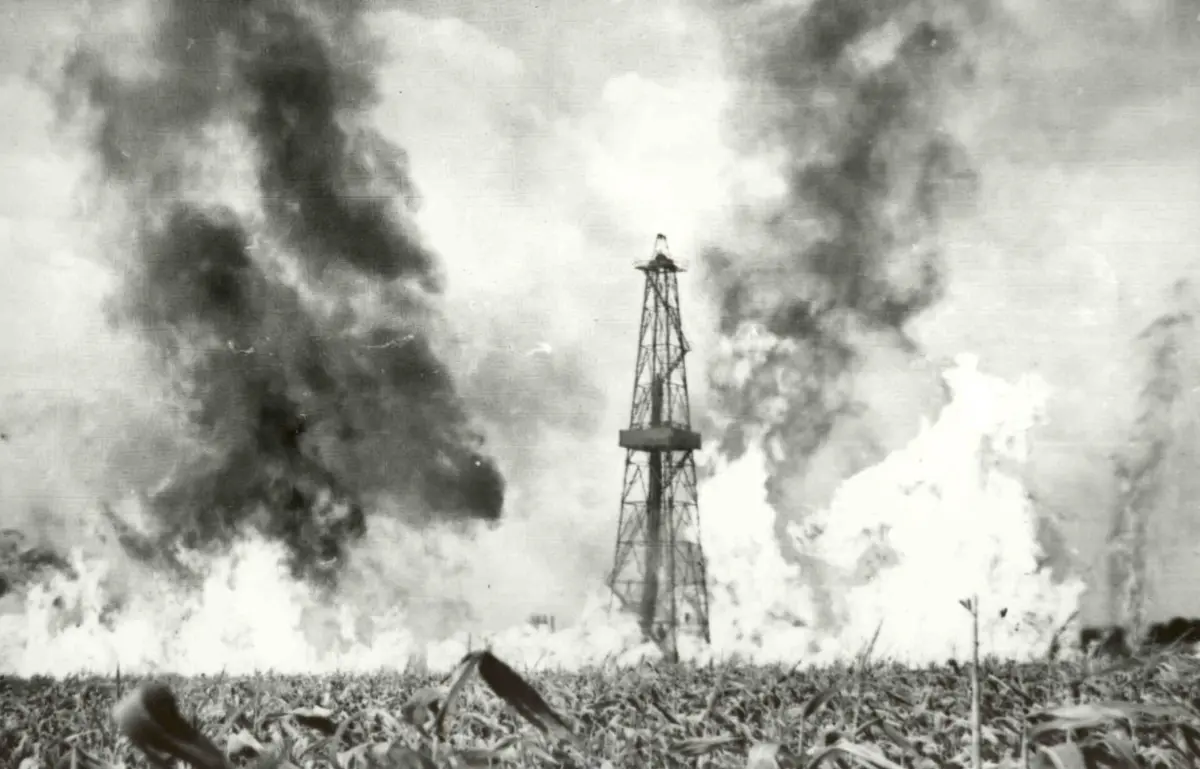
The column of flame shot up 100 meters high (though I read somewhere that it was 200 meters), destroying everything in its path; it even crept up the drilling rig, which eventually toppled into the mud crater that had formed next to it due to the layers of soil loosened by the eruption.
The 45-meter-tall metal monstrosity was swallowed up by the crater without a trace.
The magnitude of the flame is best conveyed by the testimonies of locals who were living in the area at the time; according to them, the column of flame was so large that it could be seen even in Debrecen, 20 kilometres away, and it cast a light as bright as daylight into the night. They also recounted that, due to the intense heat, children ate corn cooked in its husk and roasted sunflower seeds for days afterward, as there were already farmlands around the well at that time.
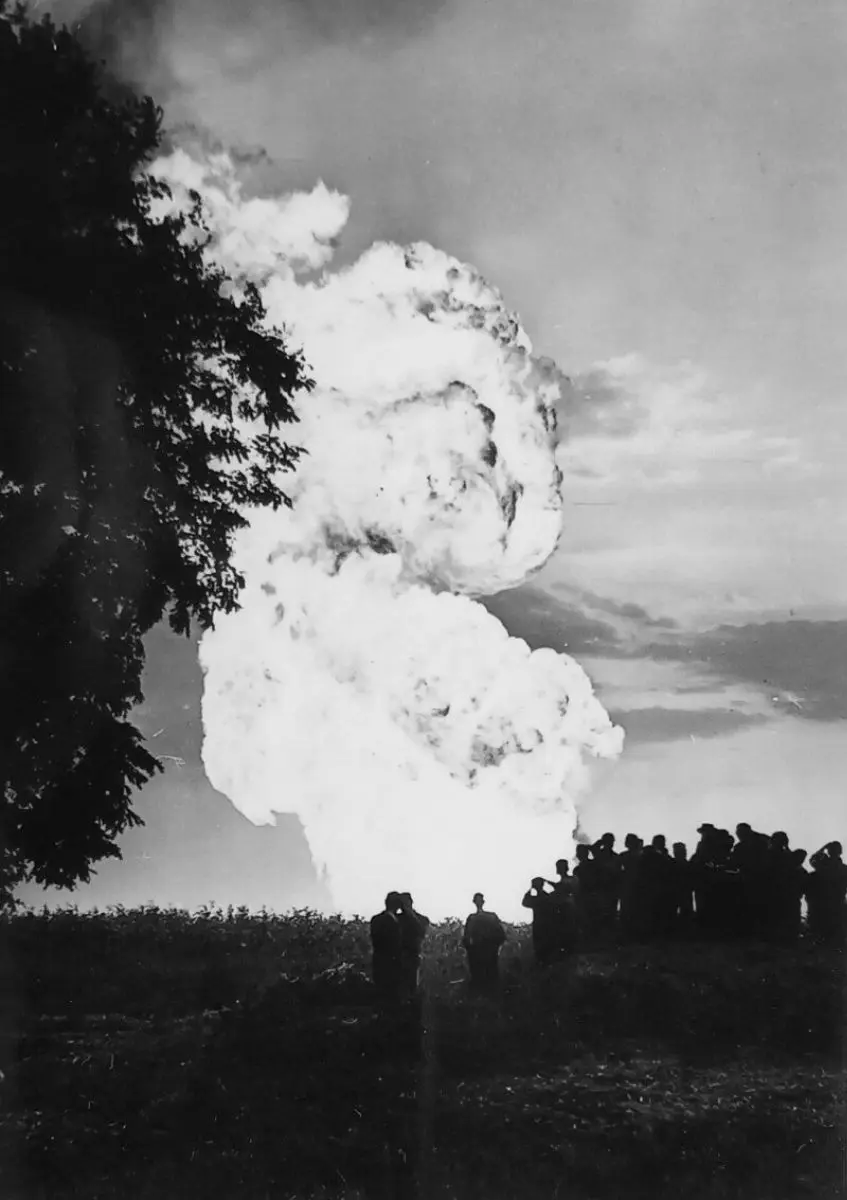
I also spoke personally with a former eyewitness, Zoltán Papp, who is a dear acquaintance and neighbour of mine in Tiszafüred. At the time of the incident, he lived in the village of Újfehértó, which is more than twice as far from the site of the former disaster as Debrecen. He was 13 years old then, but he remembers that evening very well, when a reddish-yellow glow appeared in the evening sky.
“It was already dusk, and it looked as if something was on fire near the market, on the Main Square. Some kids older than me hopped on their bikes and rode over to the square, but when they came back, they said nothing was burning there; instead, they’d found out that a gas well had caught fire much further away. I don’t know exactly how they could have known that at the time, since back then there were phones only at the town hall, the post office, and a few other official places. It’s possible the well had caught fire earlier, but we hadn’t seen it during the day, and the authorities had already been notified by then; it’s likely that many people rushed to the Main Square to find out what had happened. I remember this being a topic of conversation among people for days.”
Then it suffocated itself
From the pieces of earth and debris escaping from the burning well along with the gas, an earthen embankment several meters high began to form around the crater, and on August 26, the fire died out just as suddenly as it had started. Although they continuously tried to contain the fire using all sorts of techniques, human intervention proved unsuccessful. Eventually, the crater extinguished itself and also stopped the gas leak, specifically because, after some time, so much gas had escaped into the air due to the eruption that the pressure in that layer dropped enough to allow water to flow from the aquifer into the crater. Thus, the mud formed by the excavated earth and water smothered the fire, and after six days, the gas leak, as well. First, the fire in the eastern crater died down, then at 8:30 p.m. on the 26th, the western one also calmed down and went out. True, it raged fiercely beforehand, hurling chunks of earth 15–20 meters high.
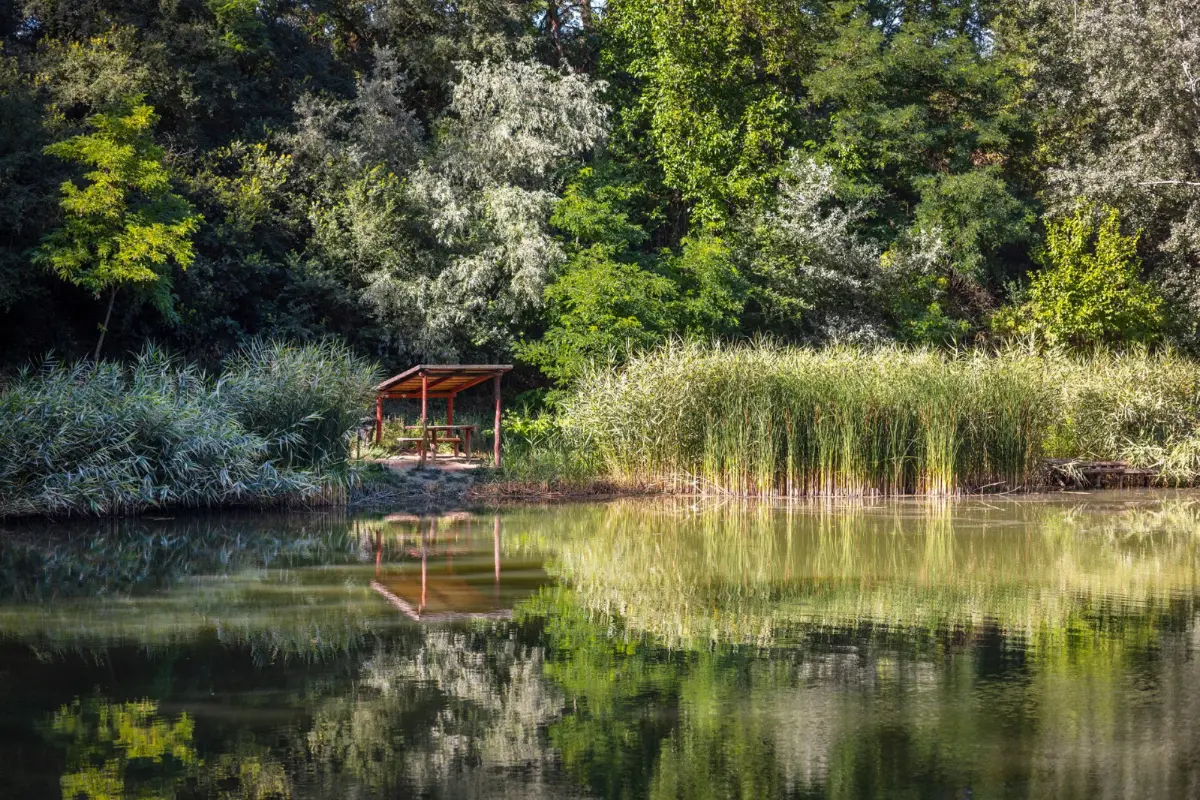
The information board provides explanations for the causes of the eruption from geological, technical, and human perspectives, but these are quite technical, so they’re useful for those who understand them – but the bottom line is that no one was injured during the disaster. After the event, which lasted barely a week, groundwater appeared in the crater, and to this day it feeds the lake – in fact, the lake’s surface level reflects the groundwater level – along with rain falling from above, which is now a rarity in the Great Plain landscapes. After the disaster, to control further gas emissions, in addition to the drilled wells, starting in September 1961, additional water was fed into the crater alongside the groundwater that had appeared, as a precaution. This is how the tiny lake in the crater came to be.
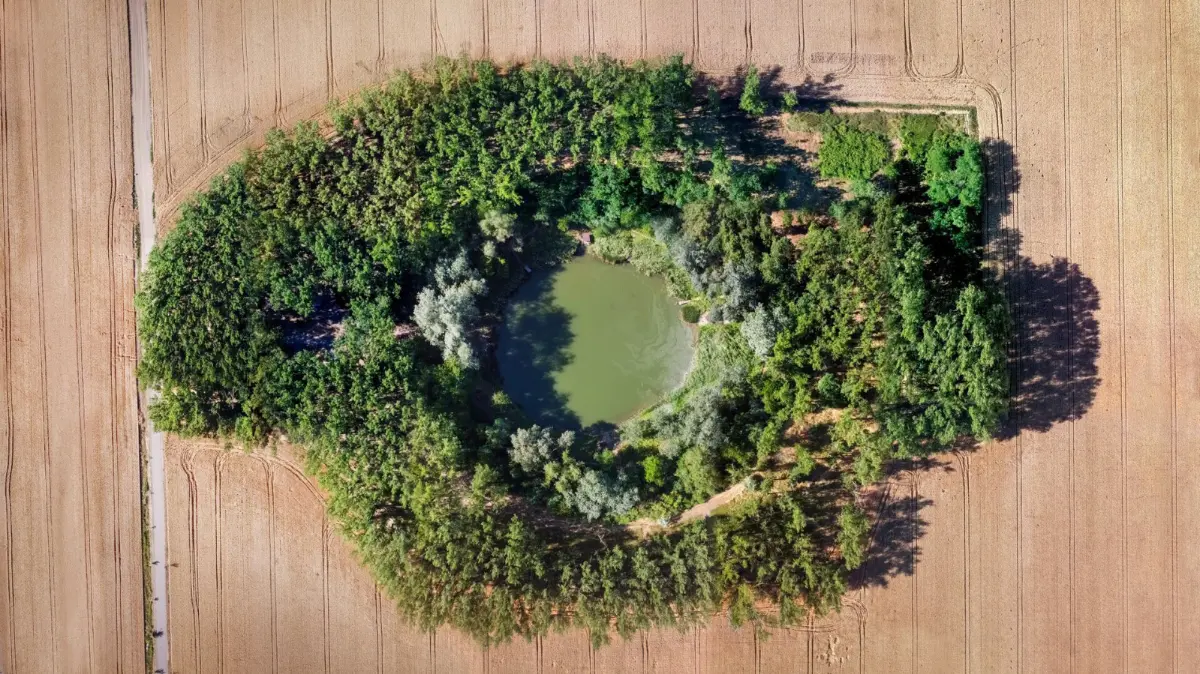
We cannot even imagine the terror that must have gripped the locals at the sight of the column of flame, but the site of the terrible disaster is now an island of tranquillity and a small natural refuge for both people and animals. Fish were introduced into the lake, which is currently managed by the Crater Fishing Association. In addition to relaxing and picnicking, those with a fishing license can catch, among other things, beautiful large carp here, but there are reportedly huge catfish in the lake, as well. One of them is shrouded in numerous legends, much like the Loch Ness Monster, but it’s said to be no myth that a large catfish once dragged a duck that had landed in the middle of the lake down into the water with it.
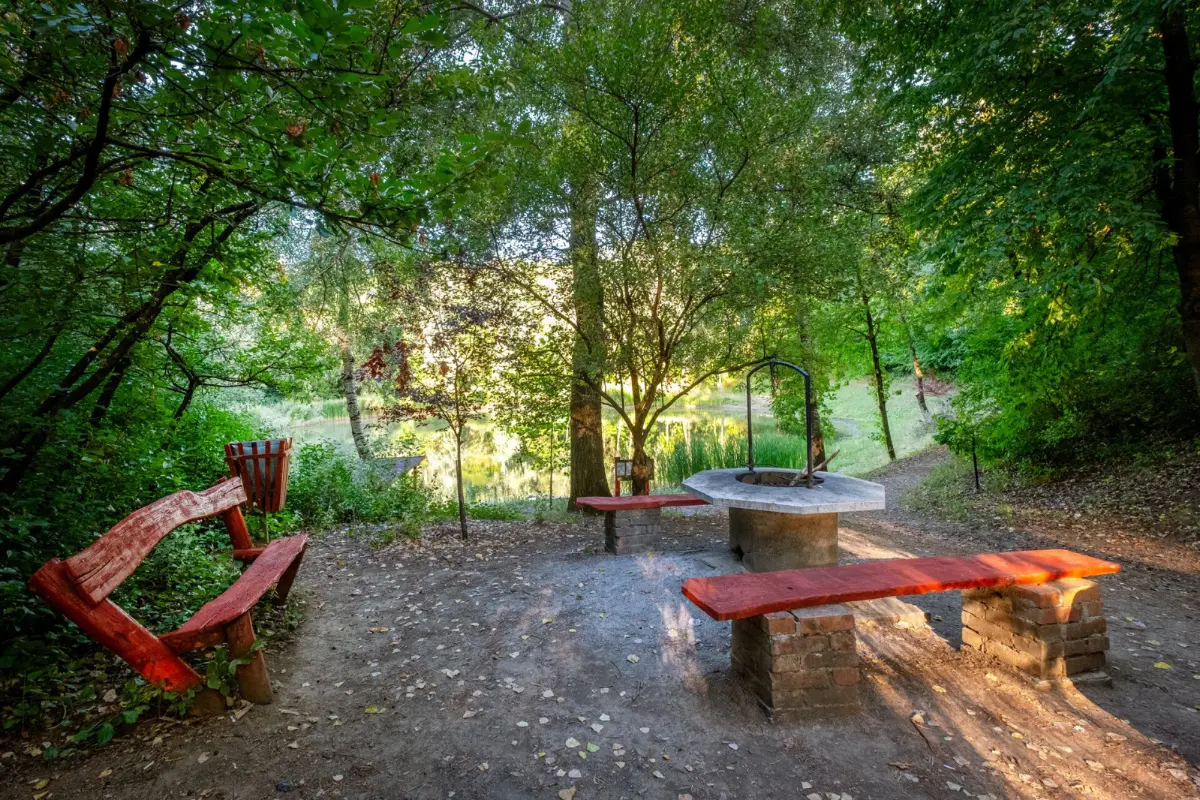
Since the chances of witnessing such a catch are very slim, I highly recommend a visit to Crater Lake even for those who are simply looking for a little peace and quiet or a refreshing break from the summer heat. Incidentally, the Crater Lake in Nagyhegyes is a truly unique industrial heritage site of national significance, so it’s definitely worth a visit if you’re in the area.
Explore the country with the Hungarian Hiking Association!
If you’d like to learn more about our country’s natural and cultural treasures, visit the website of Turista Magazin, published by the Hungarian Hiking Association, for tips and ideas, or download the Természetjáró app, which recommends the best hiking, biking, and water tours across the country.
Photos: Hungarian Hiking Association (Turista Magazine) / Krisztina Pálvölgyi / MTSZ (Photos 1–17)