Helyszín címkék:
An autumn day out in the Nagyvázsony area – Museums, a castle and forest adventures
Kilár Boróka
What this article is about:
- Kinizsi Castle
- The ruins of the Pauline monastery in the woods
- The Post Office Museum
- To the Tálod ruins via the National Blue Trail
In the footsteps of Pál Kinizsi
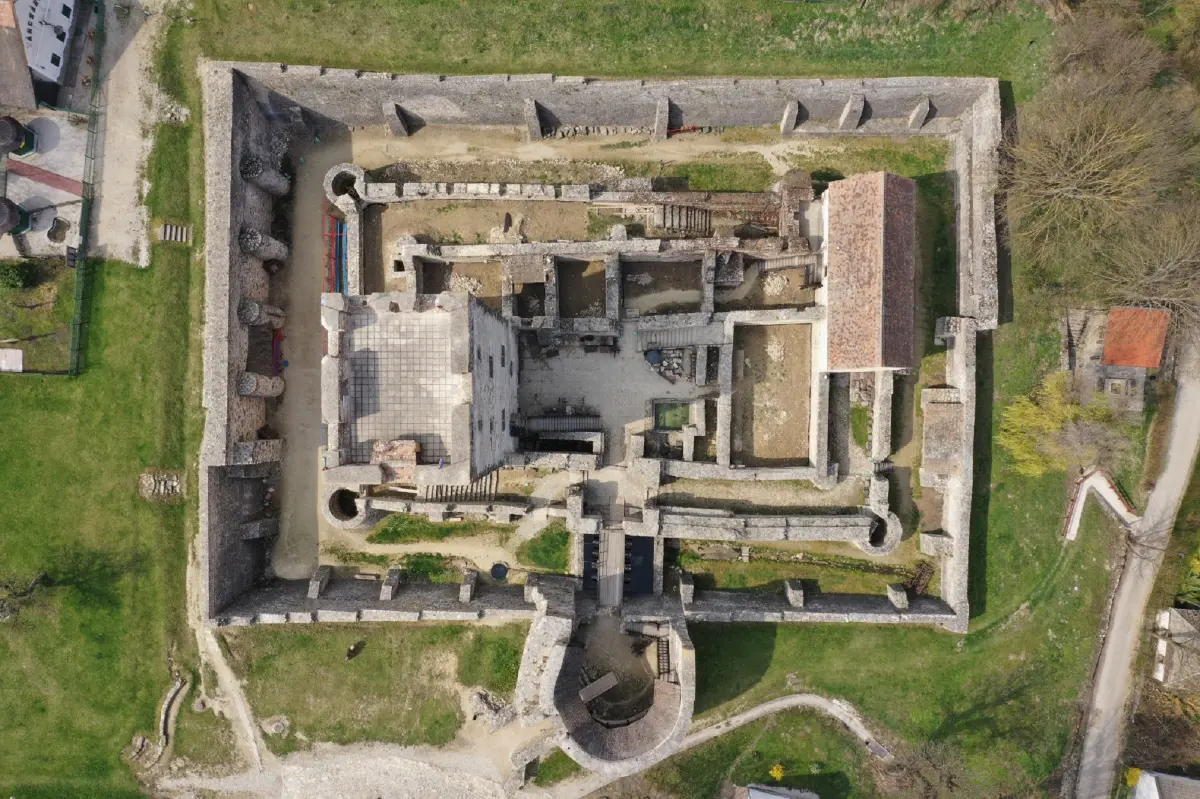
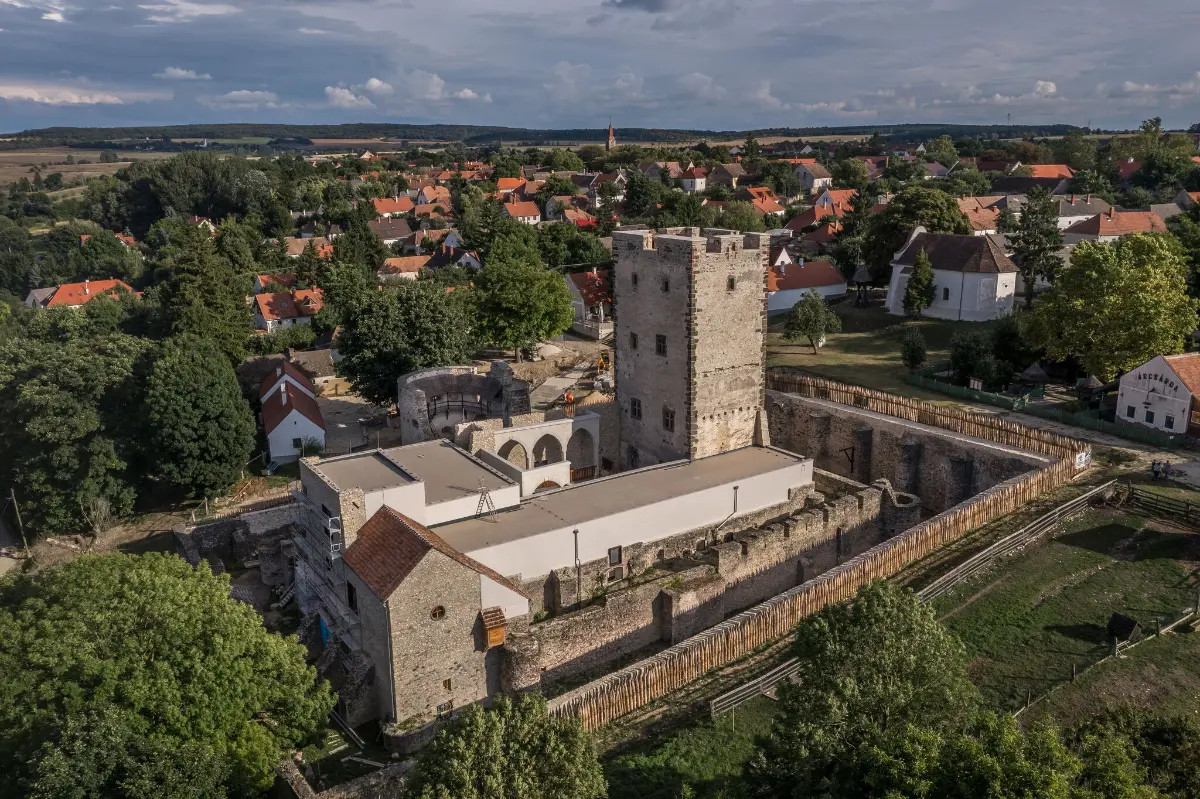
It’s well worth starting the day at Kinizsi Castle. You can leave your car in the Castle Car Park, then set off along Sörház Street and reach the castle in no time at all. The tall, squat residential tower is an exciting sight even from the outside, but the real discovery begins inside. The history of the fortress dates back to the 15th century; in 1472, King Matthias granted Nagyvázsony to Pál Kinizsi. The famous military commander had the castle extensively rebuilt, and over time, it became a major estate centre and a fortified residence.
It’s worth heading straight up: several levels of the approximately 25-metre-high residential tower are open to visitors. Along the way, you can peek into various rooms, and in the castle courtyard you can take a closer look at the surviving parts of the former complex. Don’t just look for the larger rooms – take note of the thickness of the walls, the narrower passageways and the staircases, too, as it is through these that we can truly understand how a medieval fortified residence functioned.
At the castle’s exhibitions, we can learn about the story of Pál Kinizsi. His name is most often associated with the Battle of Kenyérmező in 1479, and numerous legends have been linked to him for centuries. According to one of the best-known legends, Kinizsi served water to King Matthias on a huge millstone, and it was then that the king took notice of his extraordinary strength. However, the story is a legend, not a proven historical event – which clearly illustrates just what a legendary figure Kinizsi has become in the memory of later generations.
A brief detour to the Paulines
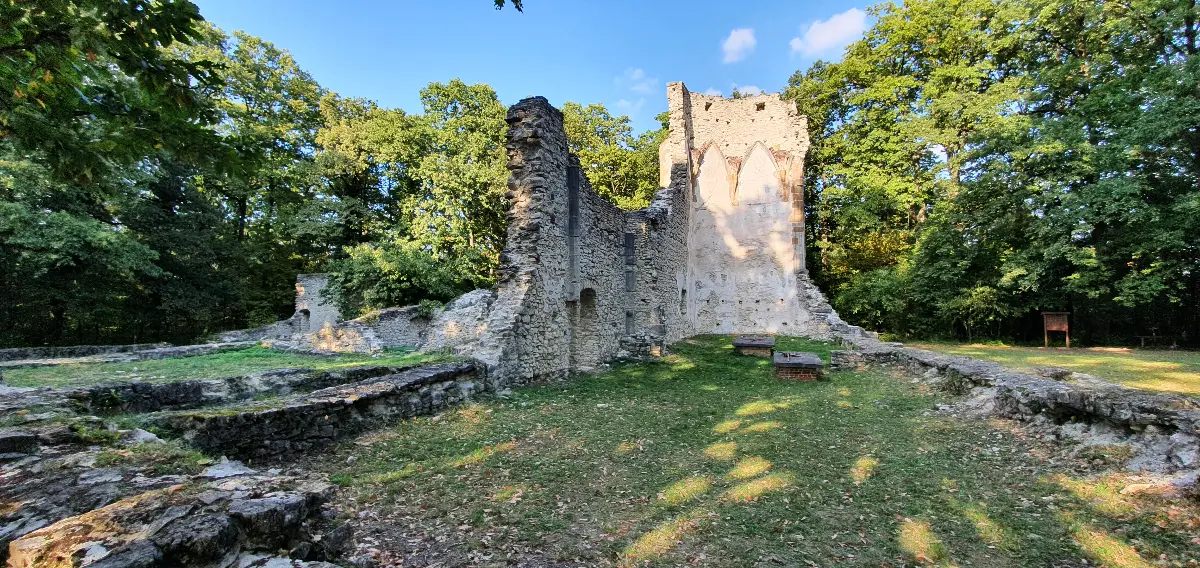
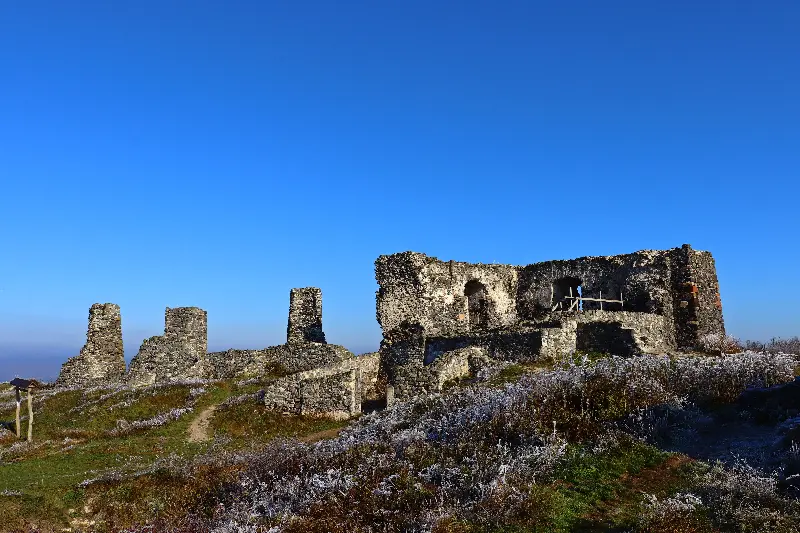
Near the castle, we find the ruins of the Pauline monastery at Nagyvázsony, which are also closely linked to the story of Pál Kinizsi. Kinizsi and his father-in-law, Balázs Magyar, founded the monastery in 1483, and its church was consecrated in honour of Saint Michael.
Following his death in 1494, Pál Kinizsi was buried in the Paulite church, in accordance with his wishes. After the monastery fell into ruin, Kinizsi’s grave was also desecrated. His gravestone is now kept in the chapel of Nagyvázsony Castle.
Off to the Post Office Museum!
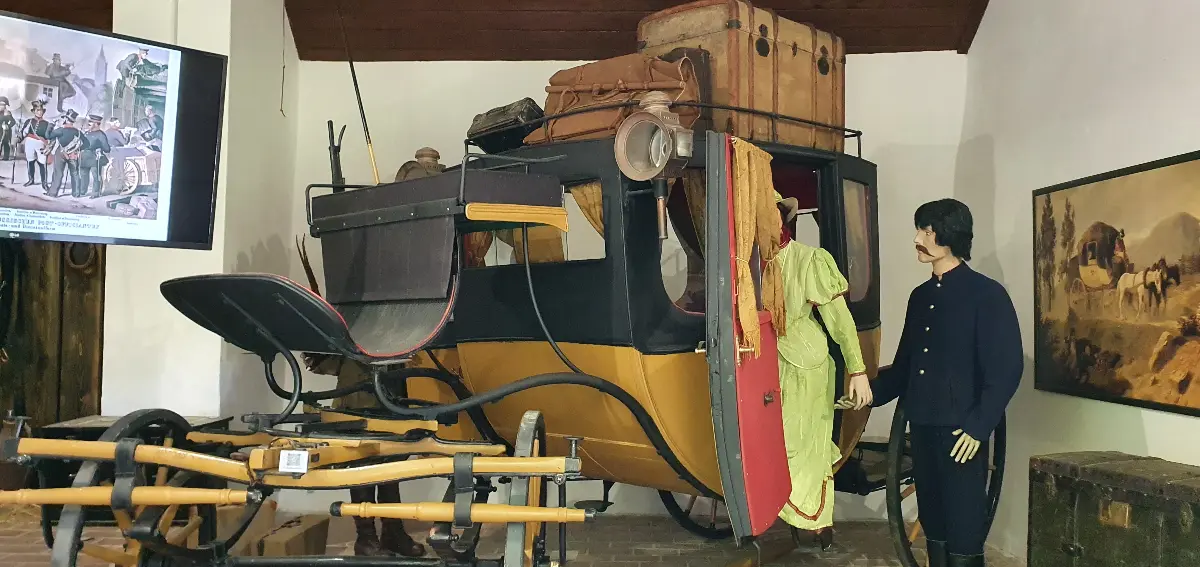
If you’d like to discover a completely different era than the Middle Ages, head to the Nagyvázsony Postal Museum, where you can gain a glimpse into the older world of travel and transport.
At first glance, it may seem surprising that a postal museum is located here, yet Nagyvázsony was once an important stop on the postal route between Buda and Graz. Along the road connecting the two major cities, post stations were situated roughly every 15 kilometres, where postmasters always kept fresh horses ready for the next leg of the journey.
In the museum, you can view old postal artefacts, means of transport and telecommunications memorabilia. In the courtyard, there is also a so called ‘delizsánsz carriage’ (stagecoach), that is, a period post coach.
The museum is a great outing for children, too, as they can learn how people travelled in the days when horses still carried the post. What’s more, they can even try out the old landline telephones on display, giving them a taste of what it was like to make a phone call in the pre-smartphone era.
A forest hike to the ruins of Tálod
In the Nagyvázsony area, it’s well worth putting on your walking boots; for example, you can go hiking along the National Blue Trail. One interesting destination is the former settlement of Tálod, which was first mentioned in writing as early as 1171. The medieval village was destroyed during the Turkish wars, but the remains of its church have survived in the forest. Standing by the ruins of St. Helena’s Church, it is fascinating to imagine that houses, streets and an entire village once stood where this quiet forest now lies.
Continuing along the Blue Trail from here, we can also reach the ruins of the St. Elizabeth Monastery in Tálod. Next to the medieval Pauline monastery lies the Kinizsi Spring, where we can take a short break. The Tálod monastery’s estate once included a fishing pond, the earthen embankment of which can still be found in the area today. Fish was an important part of the Lenten diet of Paulines.
On the way back, we can follow the National Blue Trail, but if we choose a different route, we can also head towards Leányfalu following the green signposts. The village was once home to numerous potters who made bowls, plates and pots, amongst other things.