Helyszín címkék:
A lost legend of Lake Balaton: 5 + 1 interesting facts about the Tihany echo
Kilár Boróka
- Legends of Tihany: echoes and goat's hooves
- The etiquette and secrets of echoes
- Where did the echoes of Tihany disappear to?
- How can we make them sound?
Many people think that the Tihany echo has disappeared by now, but if you shout from the right spot, the sound still bounces off the abbey walls. It is true that the echo is not as strong or as easy to trigger as it used to be, but the phenomenon still exists today. If you want to try it, it’s a good idea to know a few old stories and little tricks. Here are 5 1 interesting facts about the Tihany echo!
What does the legend say?
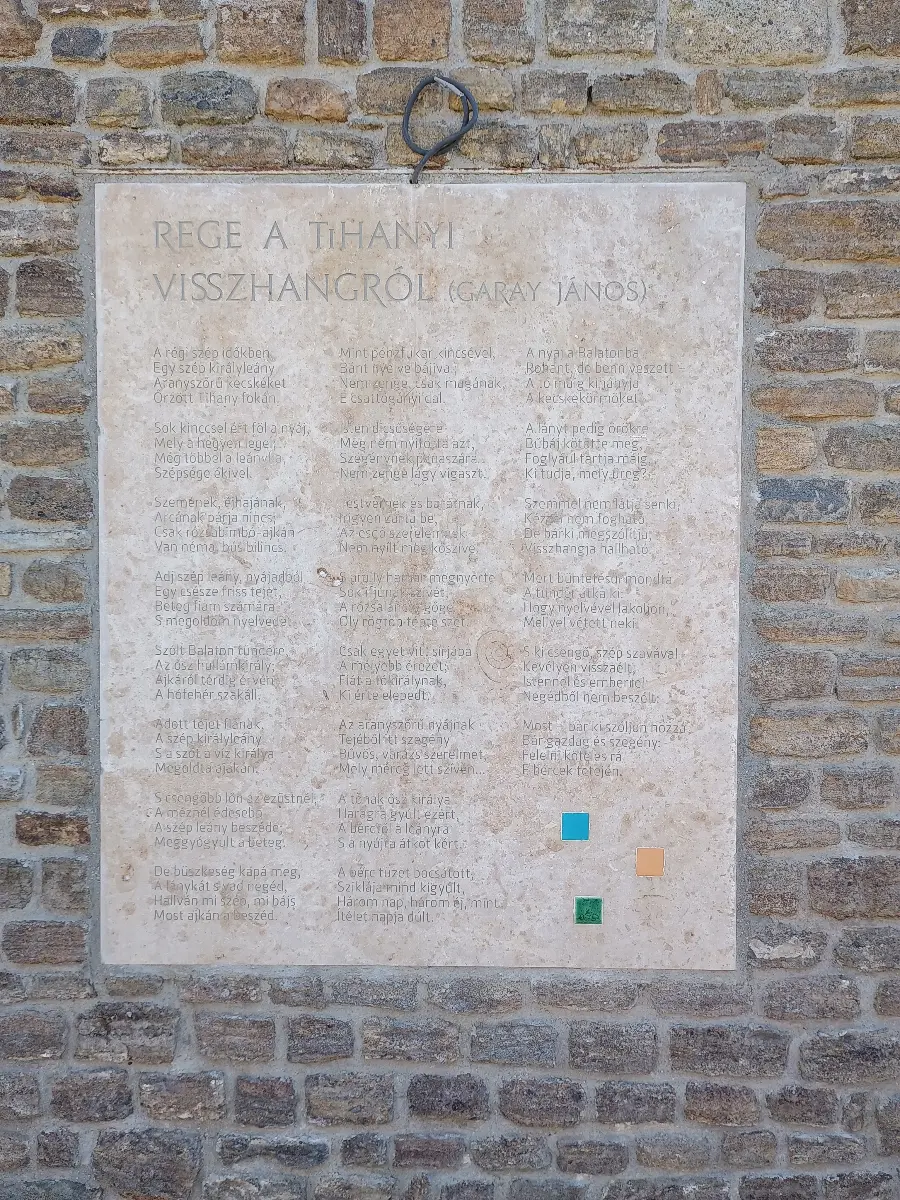
Countless legends and stories have been born about the echo of Tihany. Not only did the locals pass on the tales, but they also sparked the imagination of our great poets: Mihály Csokonai Vitéz and Vörösmarty were also inspired by this phenomenon. The best-known adaptation is associated with the name of János Garay. According to his poem, the fairy of Lake Balaton, the gray-haired Wave King, locked a haughty girl from Tihany between the rocks, and we can still hear her plaintive voice today.
According to legend, the girl’s herd of golden-haired goats drowned in Lake Balaton, and since then the lake has been “vomiting goat hooves”, which have become a peculiar symbol of Tihany. Science offers a simpler explanation for the origin of these tiny pebble-like fossils: they are actually the fossilized remains of an ancient shellfish, Congeria ungula caprae. Regardless of this, generations of children in Tihany have sold goat hooves as souvenirs, earning pocket money to buy movie tickets or sweets.
The Tihany echo was already very popular during the Reform Era.
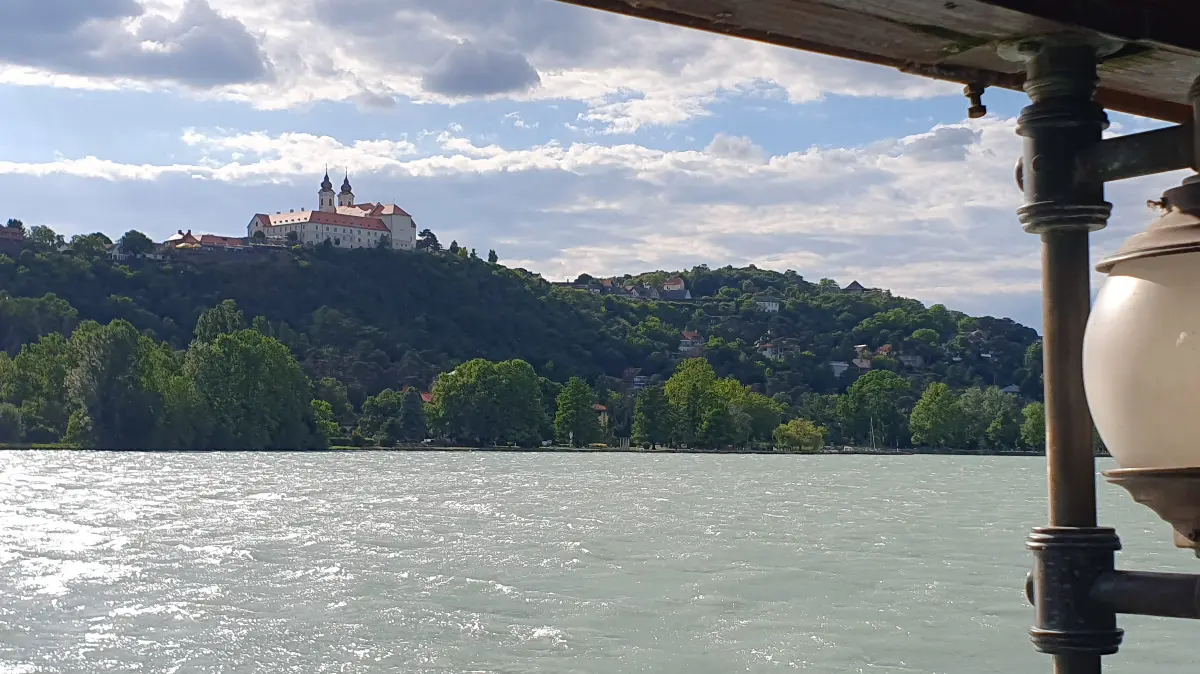
Two hundred years ago, poets, scientists, and curious travelers set out on a journey to hear the famous Tihany echo with their own ears. Their task was by no means easy: there were no roads, parking lots, fast food stands, or ice cream parlors, and until 1910, there was not even a proper harbor to serve arrivals.
At the same time, travelers during the Reform Era enjoyed comfort, so they usually approached the peninsula aboard the famous Kisfaludy steamboat. Without a harbor, landing was adventurous, and the fishermen of Tihany took them ashore in small boats. We can rightly assume that this could not have been life insurance – so it is all the more fortunate that today we can arrive in Tihany much more comfortably and with dry feet on BAHART’s boats.
200 years ago, you had to work hard for the echo
The real challenge came after landing. In the absence of paved roads, curious travelers – dressed in their elegant Reform Era attire – climbed the narrow paths trodden by water-carrying women to reach the hills of Tihany. After overcoming the nearly 80-meter difference in elevation, slightly out of breath but all the more excited, they arrived at Echo Hill, or as it was once called, Ekho Hill. Here, the moment has finally arrived to test the legendary Tihany echo.
Echo etiquette: you have to know how to shout!
The echo in Tihany was a rarity in Europe, as records show that the sound reflected off the abbey walls could carry up to twelve syllables, meaning that this was the maximum number of syllables that could be shouted before the first syllable returned.
It wasn’t right to just shout anything at the abbey. There was a certain etiquette to echoing. For generations, the first line of Károly Kisfaludy’s poem Mohács was considered the most worthy trial:
“Field of mourning reddened by heroic blood, I greet you with a sigh.”
What is the “echo-breaking house” and how was the echo in Tihany corrected?
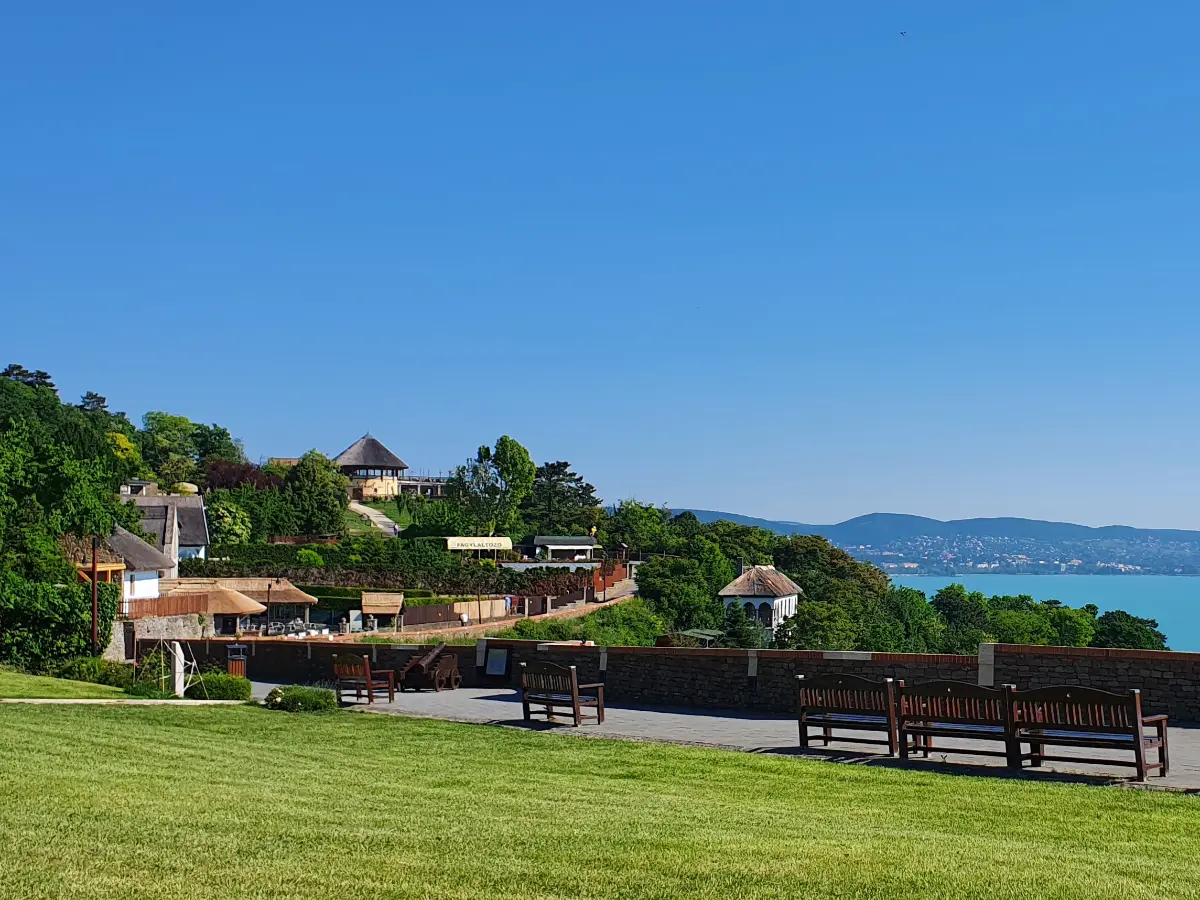
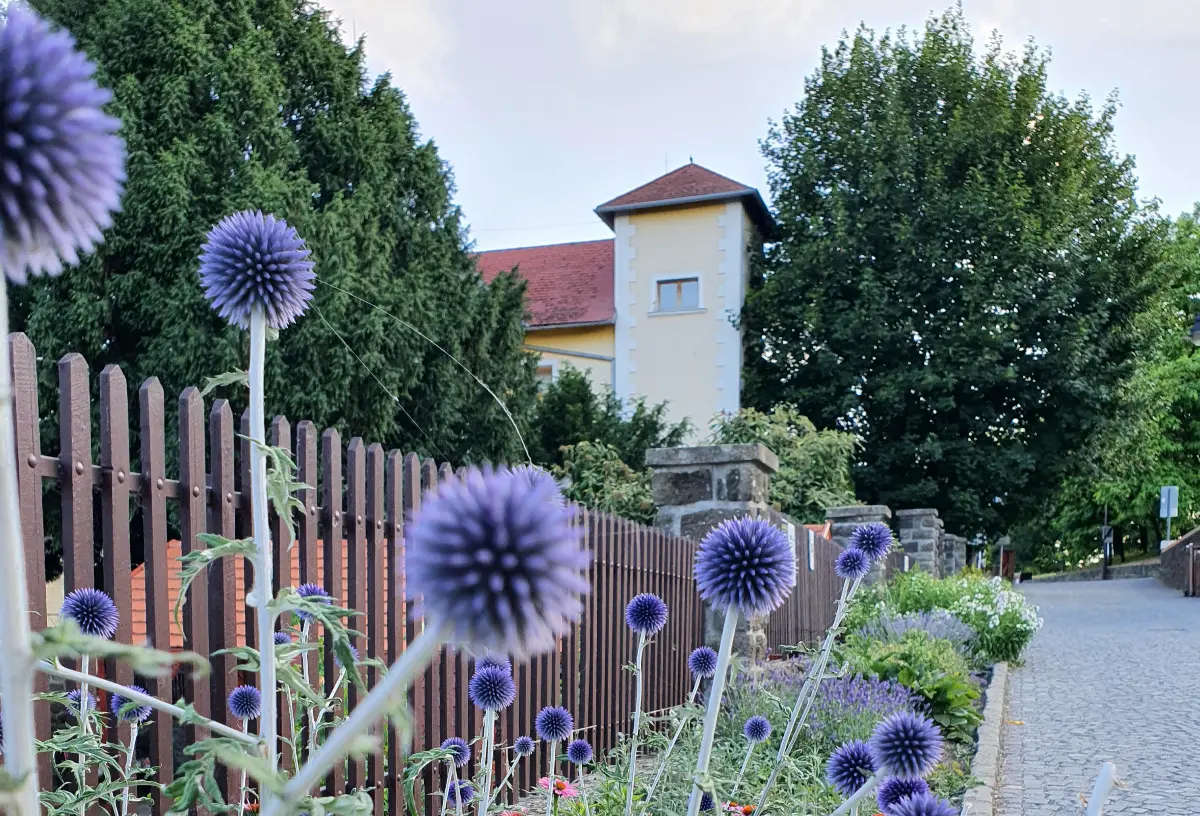
If you look toward the abbey from the top of Echo Hill, you can see a yellow towering villa among the trees on the right – the infamous “echo-breaking house”. Built in 1893, it was the first villa building in Tihany. When the echo began to fade, the villa building quickly became suspicious, but if we look closely, we can see that it does not interfere with the sound. Yet there was a time when local people collected 20 fillérs (cents) in from tourists to demolish it.
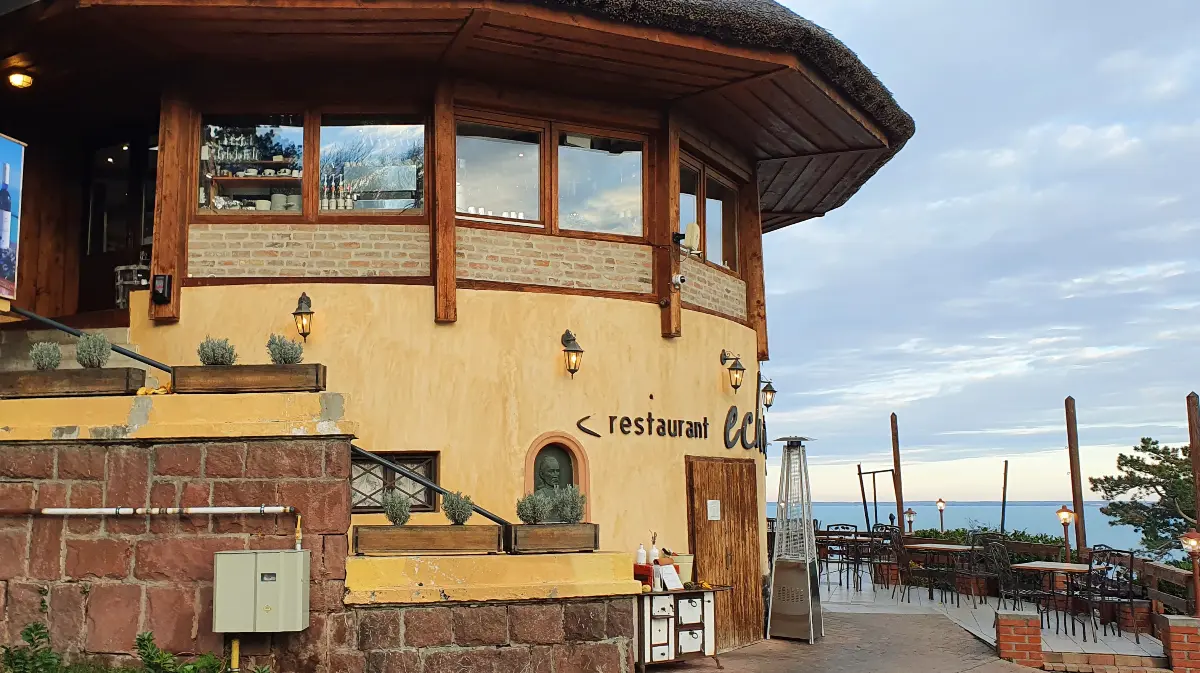
Not far from it, also on top of the Echo Hill, stands the Tihany Echo building. Today it operates as a restaurant, but it was once one of the village’s most important facilities: the waterworks. From here, fresh water was supplied to public wells and later to households, bringing enormous relief to everyday life. Until then, women had to carry water home from the shores of Lake Balaton every day.
As the echo became weaker, a lookout tower was built on top of the water tower, and the famous “shouting man” was put into service, who helped visitors to make the echo sound with a huge gramophone horn.
1 What remains today of the famous Tihany echo?
In the past, although it was difficult to climb to the top of the Echo Hill, the echo could be heard by anyone. Today, however, anyone can get there, yet it is becoming increasingly difficult to bring the sound to life. There are several reasons for this. For example, the hubbub of tourists, the noise of the village, and the roar of cars, which often drown out the echo. It also matters where we shout from. In the past, echoes could be heard from almost anywhere on Echo Hill because there were not so many trees and bushes in the way.
Today, if you want to try it out, it is worth going up to the small park in the middle of the hill and standing next to the “Shouting Stone”, facing the abbey wall, making sure that nothing obstructs the path of your voice. It is best to try it in the evening, when the village has quieted down. In such cases, success is almost guaranteed.
If you are curious about the history of goat hooves, you can read János Garay’s poem at the bottom of the IV. Károly lépcső (Charles IV Stairs) leading to Tihany Abbey. It is also worth visiting the Tihany Tourinform office, where you can get maps and useful tips for exploring the peninsula. And under the glass top of the counter, we can even see real “goat hooves”. At the Lavender Visitor Center, you can learn more about the history of ancient fossils and how the unique landscape of the Tihany Peninsula was formed.
Once you have experienced the magic of echoes, it is worth diving into the gastronomic delights of the area: the Tihany Gastronomic Garden welcomes visitors with local flavors, while those with a sweet tooth will find what they are looking for at the Apátsági Rege Confectionery. The Tihanyi PIAC placc (Tihany Market Square) is a real treasure trove of delicacies and local products.