Two special modern castles in Hungary
The history of Bory Castle in Székesfehérvár
The artistic treasures and unique features of Bory Castle
Taródi Castle in Sopron and its builder
Excursion and culinary recommendations in Sopron and Székesfehérvár
When most people hear the word “castle,” they think of a fortress surrounded by strong, high walls and bastions – perhaps this was also the case for the men who brought the Taródi Castle in Sopron and the Bory Castle in Székesfehérvár to life as one-man projects, dedicating decades of their lives to leaving a lasting legacy in this way.
In both cases, they succeeded completely, so if your goal is to explore Hungary’s lesser-known places, it’s definitely worth visiting these sites, which can easily keep you occupied for hours, combining your visit with some sightseeing, a good lunch, or even sampling the best pastry shops.
Of the two buildings, the Bory Castle in Székesfehérvár is the older one, as its namesake, Jenő Bory (1879–1959) – highly regarded as both an architect and a sculptor – laid its foundation shortly after the end of World War I, in 1923. He did not leave quality to chance, as he worked with reinforced concrete and quartz concrete – the building materials that had suddenly become dominant in the era – and entrusted the work to others only in rare cases, thus proving his expertise not only as an architect but also as a mason and a roofer.
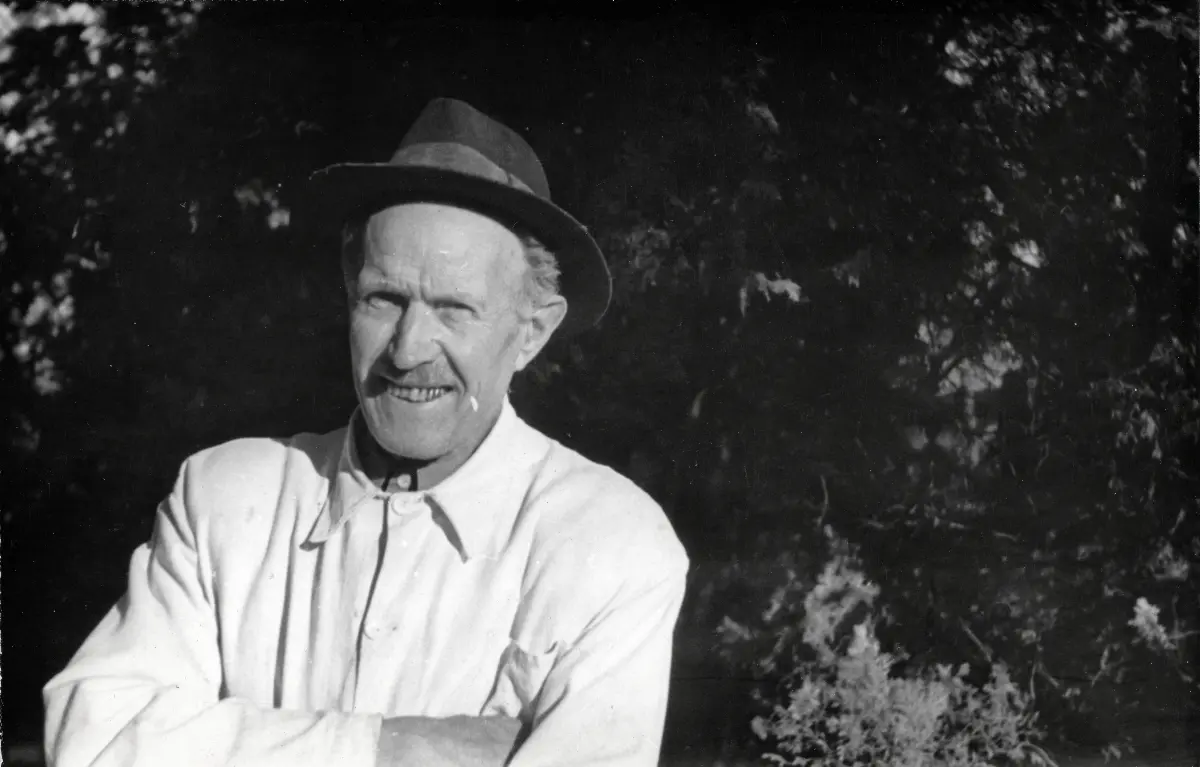
Márk Iván / Fortepan
The structure, the result of four decades of work, was completed by 1964 – five years after Bory’s death – and catches the eye even from a distance. An astonishing number of artworks have been gathered in the seven towers and thirty halls, while the courtyard arcade supported by a hundred columns features Bory’s sculptures – many of which still bear the minor and major scars sustained during World War II – along with busts of Hungarian kings, heroes, and historical figures.
For these reasons alone, the visit is unmissable if you are in Székesfehérvár, as in addition to the paintings and sculptures of the head of the family and his wife, Ilona Komócsin, and their daughter, Klára, you can also encounter the works of such brilliant artists as György Zala, who created the sculptures for the Millennium Monument in Hősök tere, Alajos Stróbl, who designed the Matthias Fountain at Buda Castle; the icon of Hungarian Art Nouveau, Aladár Kőrösfői-Kriesch, the world-famous portrait painter Fülöp László, and the legendary painter István Csók.
The castle, decorated with snails, coloured stones, ceramic fragments, mosaics, and seashells, is also a declaration of love to Bory’s wife, as depictions of Ilona or lines of love poetry written by the architect can be found in the most diverse places. The main source of inspiration, however, was not this, but rather the husband’s insatiable spirit of experimentation. He planned to gradually expand the wine press house and cellar on the plot he had purchased. He probably didn’t expect it to eventually grow into such a colossus, but we can be grateful that he never gave up for a single moment, persevering with his experimentation until his death.
Of course, he needed a bit of luck for this as well. After the communist takeover in 1945, thanks to the intervention of the Soviet city commander who had befriended Bory, nationalization was ultimately averted, and work could continue. Of course, this came at a price: starting in the 1950s, Bory Castle had to be opened to the public. Full-price tickets are currently available for 4,000 forints, but parents accompanying children, students, and seniors can enter the museum-like spaces for 3,000 forints.
The history of Taródi Castle in Sopron unfolded quite differently, as the structure – built in Felsőlővérek, far from the heart of the old town – was not built by an experienced engineer, but by a simple man from Sopron, the painter and decorator István Taródi (1925-2010). He was caught up in the castle-building fever at a very young age, and shortly after his 20th birthday, in 1945, he began building a wooden castle in the courtyard of the apartment building where his family lived. The eight-metre-tall structure, made from wooden planks gathered here and there, was completed in a few months, and then moved to the newly purchased hillside plot at the dawn of the 1950s. This did not bring Taródi true joy for long, so he soon decided: he had to build a stone castle.
He finally began the work in 1959, and for many years afterward, he spent every dawn and evening on the construction site. The living quarters, which would eventually become his permanent home, slowly took shape; however, this did not mark the end of the journey, as he continued the work with his grown sons and a few occasional helpers until his death in 2010 – a project that was featured by the Hungarian Film Newsreel in 1975.
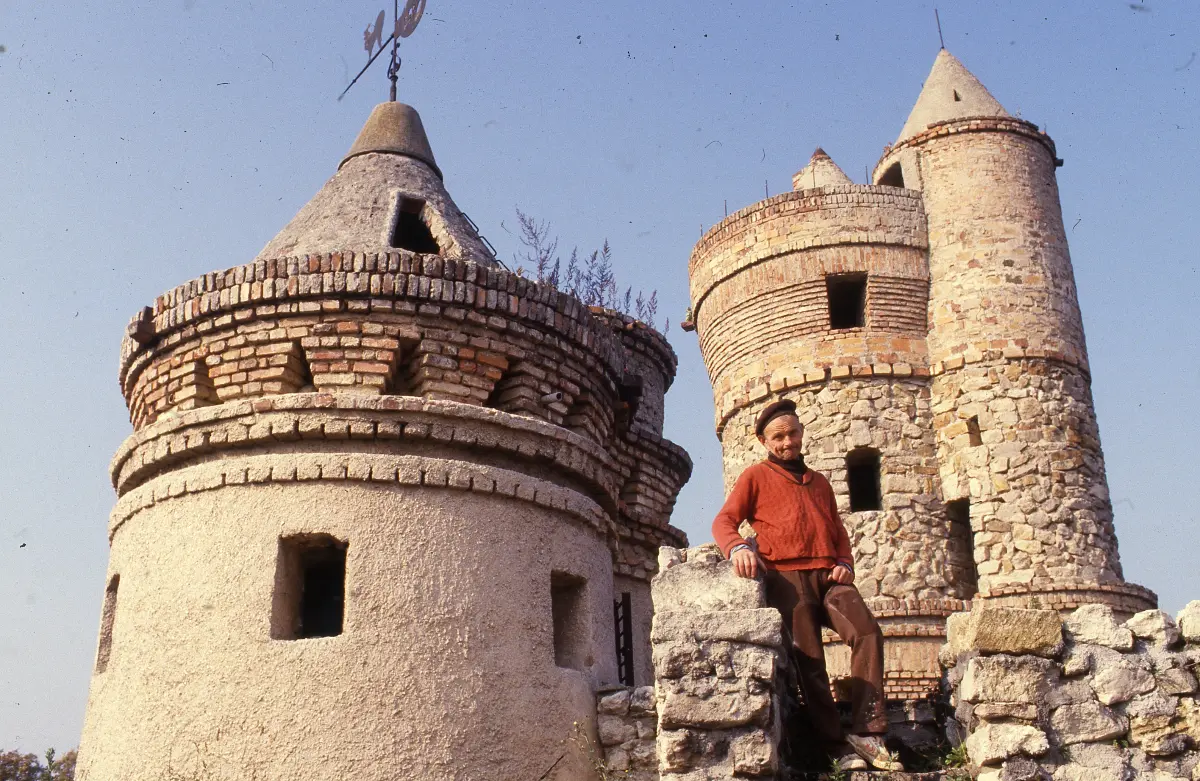
Urbán Tamás / Fortepan
The castle, which has a floor area of 4,300 square metres and also has its own well, was eventually built with two hundred wagons of stone – mainly gneiss mined in the area – and bricks. Inside the castle, accessible via a drawbridge towering over the moat, visitors will find a knights’ hall, a wine cellar, and numerous interesting antiquities.
Taródi Castle was also featured in the 1985 film *The Fantastic Aunt*, starring Éva Ruttkai and Ferenc Zenthe. It remains in the ownership of the family that built it, and part of it is open to the public: according to the official website, adults can enter for 2,000 forints, while seniors and students pay 1,000 forints.
Truly persistent explorers could even tour both buildings in a single day, though we don’t recommend it, as both Székesfehérvár and Sopron are full of wonderful places worth visiting. Even if you don’t make time for those, it’s worth scheduling at least a good lunch or a pastry break to treat yourself. For the former, we recommend, for example, the venison stew with sheep’s milk cheese dumplings at Diófa (Székesfehérvár, Kadocsa út 32/a) or the Jégverem Fogadó (Sopron, Jégverem utca 1), which serves generous portions. For a delicious pastry, Krém Cukrászda (Székesfehérvár, Szabadságharcos út 40) or Hoffer Cukrászda (Sopron, Várkerület 86) are excellent choices.
Do you enjoy similarly exciting stories, time-travelling adventures and secret spots? Then you should explore the country on organised city walks! For example, on Imagine’s programmes – they’ve been organising city walks, exclusive building tours, food tours and team-building events across the country for over 15 years.