Helyszín címkék:
Dörgicse in autumn – A stroll amongst ruined churches and along forest paths
Kilár Boróka
What is this article about?
- A hike in Dörgicse along ruined churches and forest paths
- From the village centre to the ruins of St. Peter’s Church
- Forest paths and limestone cliffs in the Kű Valley
- A detour to Halom Hill
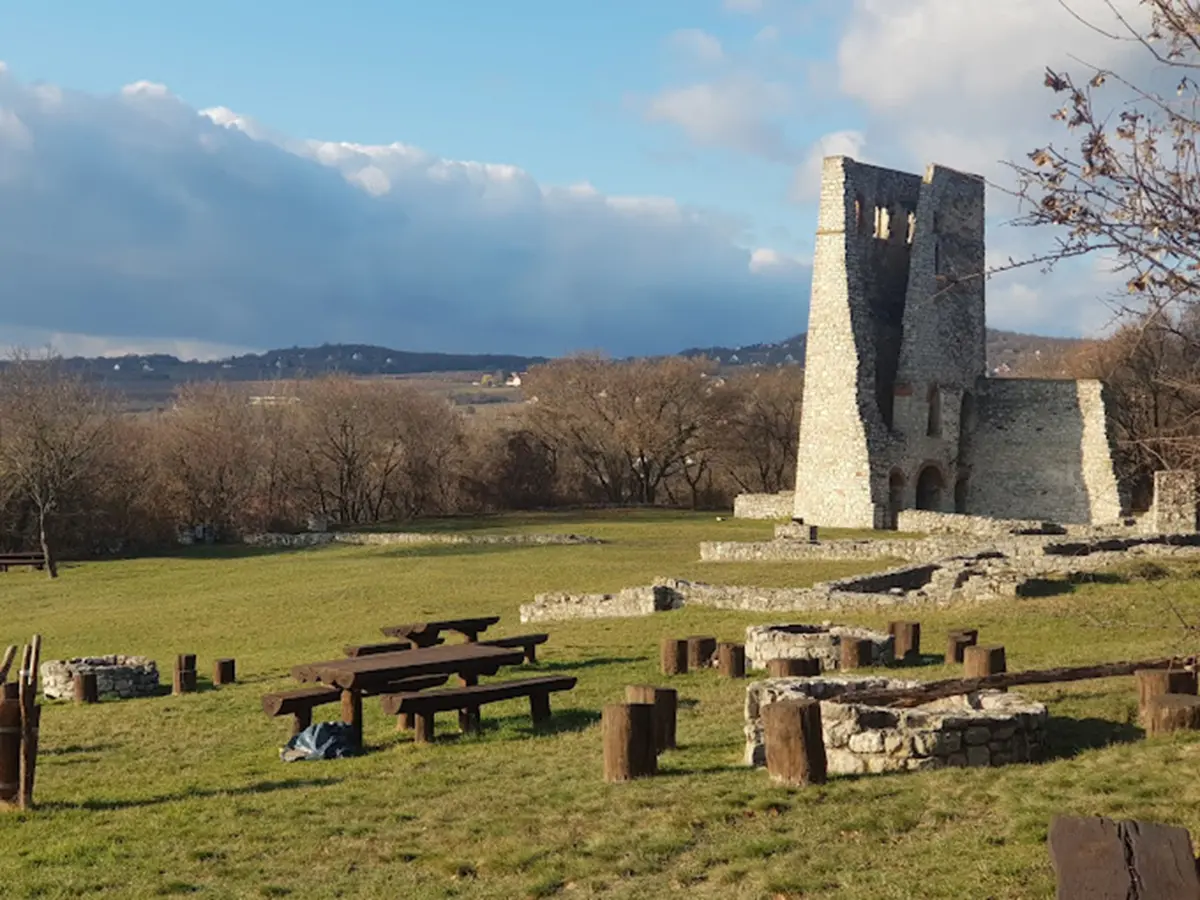
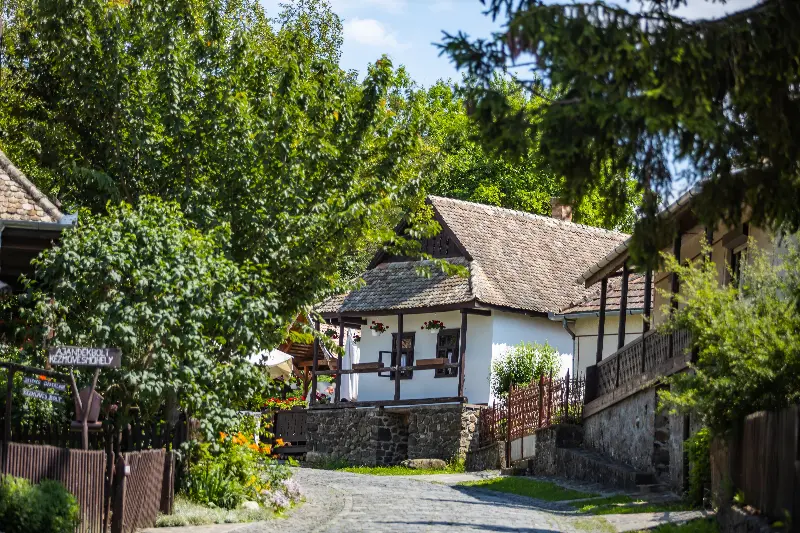
In Dörgicse, you can discover the remains of three former settlements in a single outing. Felsődörgicse, Alsódörgicse and Kisdörgicse were once separate villages, and the ruins of their medieval churches can still be seen today. With a pleasant half-day ramble, you can visit all three ruined churches.
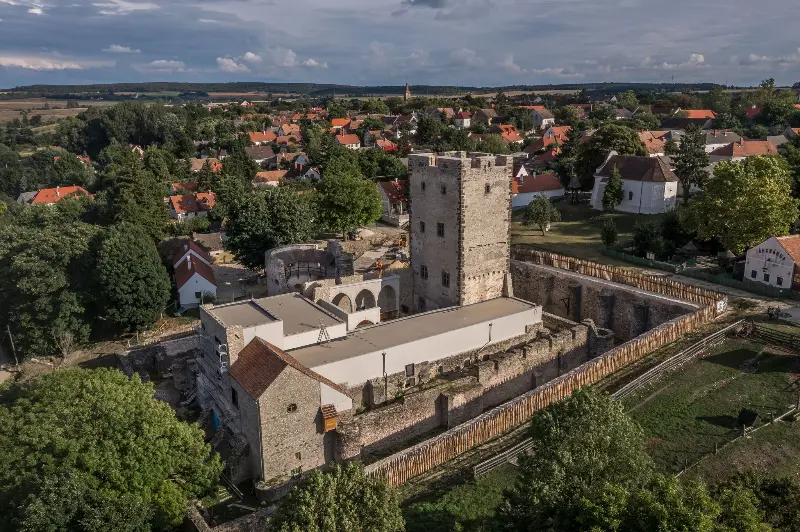
Let’s start our walk at the ruins of the Church of Our Lady in Alsódörgicse! You can get there by car and park right next to it. The hillside offers a lovely view of Lake Balaton. Today, only the tower and the walls remain of the 13th-century church, which was once surrounded by a cemetery and a stone wall. On the southern side, the remains of a complex comprising nine rooms have been uncovered, whilst to the north-west of the tower, an Árpád-era stone house built into the ground has been unearthed. Thanks to the hillside’s good acoustics, concerts and other cultural events are still held here today.
From the village centre to the ruins of St Peter’s Church

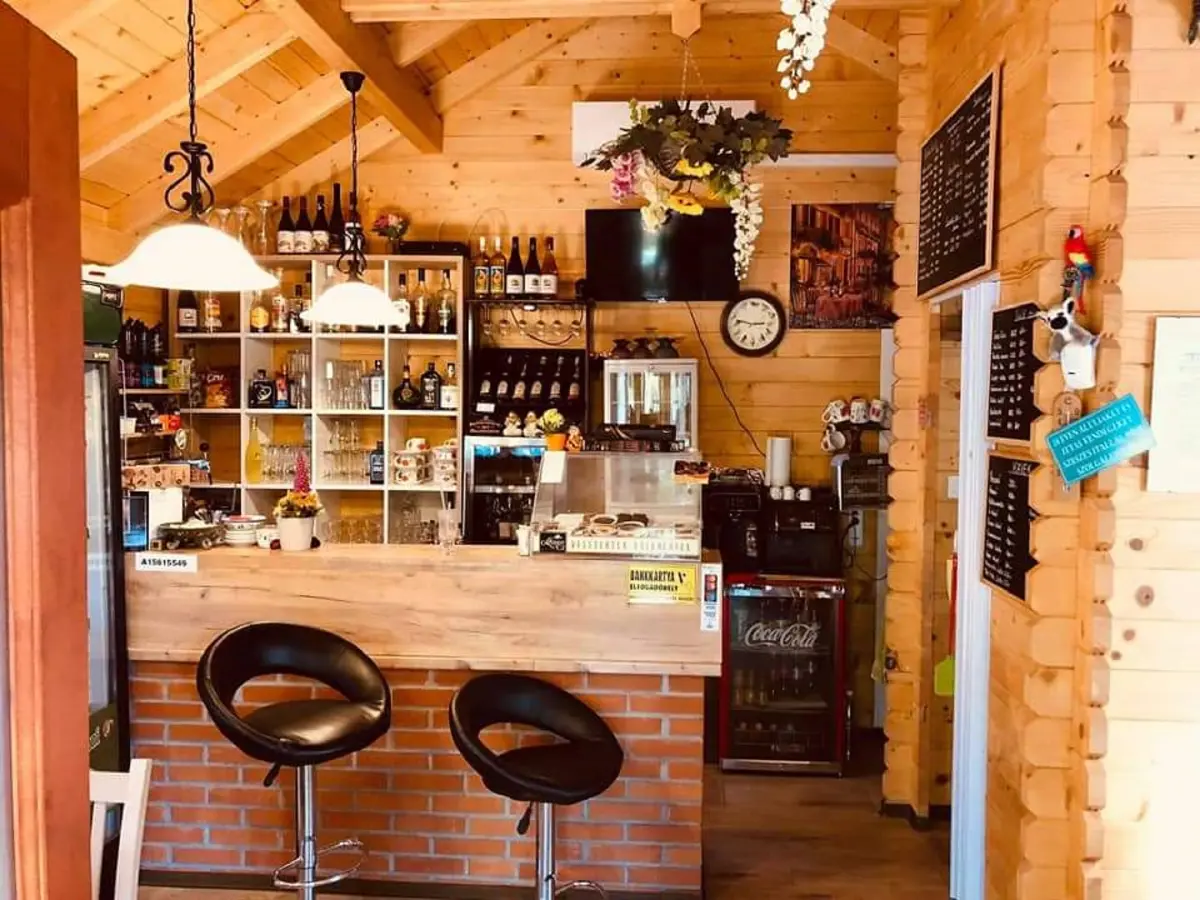
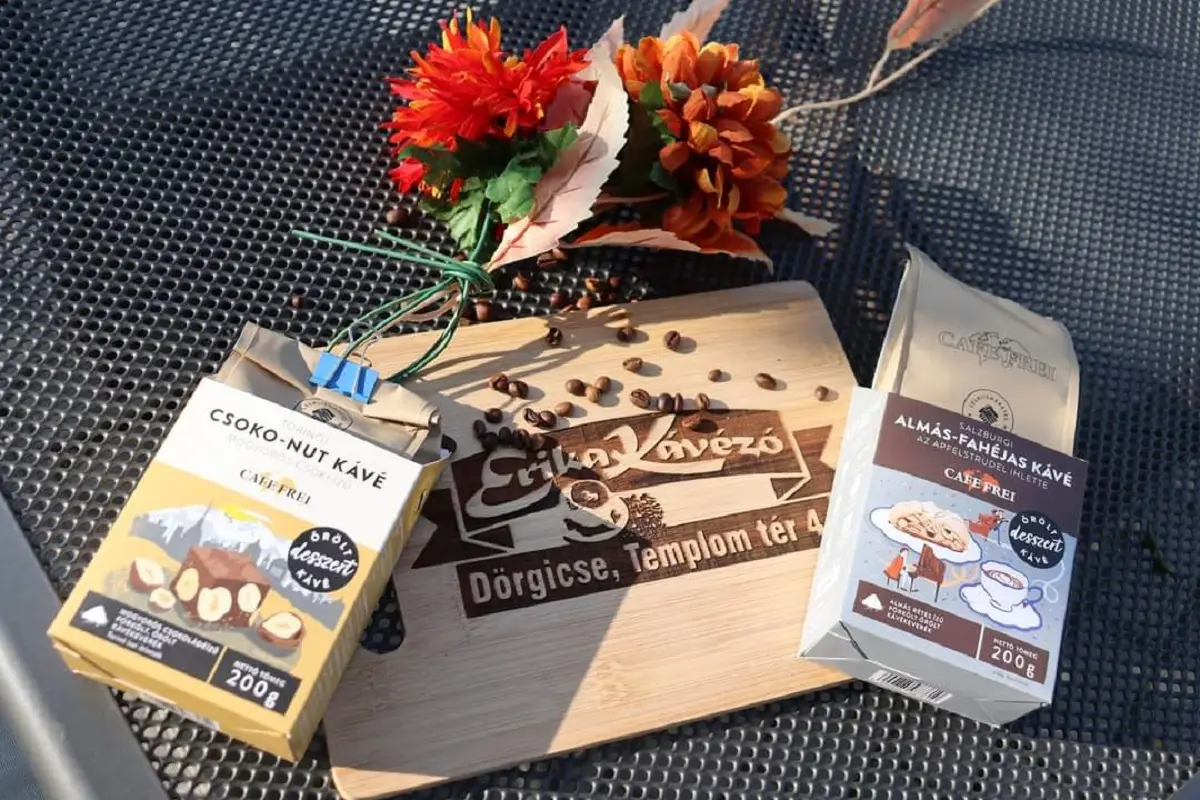
After visiting the ruins in Alsódörgicse, let’s take a stroll into the centre of Dörgicse, where there are also interesting sights to see around Templom Square. In addition to the late Baroque, Classicist-style St. Emery’s Church, it is also worth popping into the Millennium Memorial Park, where the Regős statue by Dörgicse-based sculptor István Nagy stands. We can take a short break at the nearby Erika Café, whilst at the Pipitér Dörgicse shop and café we can pick up delicacies from local and Lake Balaton producers to take with us on our journey.
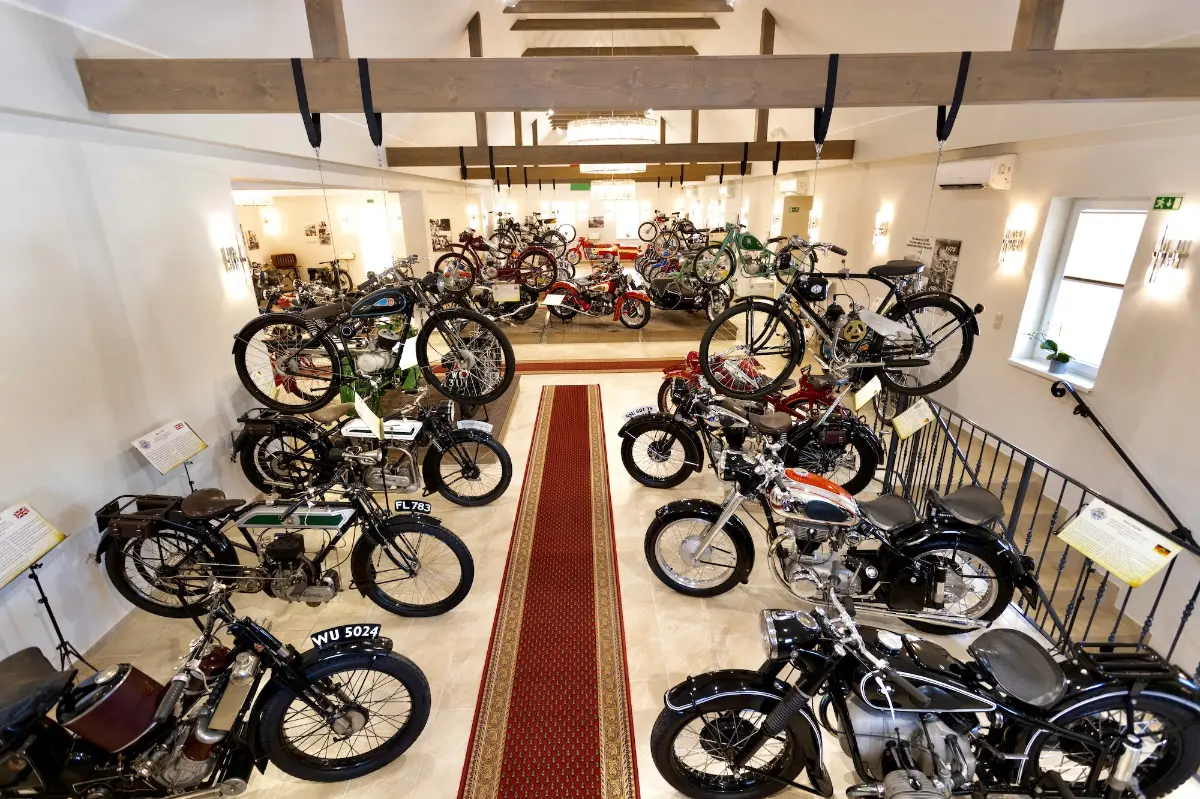
Next, heading towards Felsődörgicse along the main road, we’ll find the Kaáli Car and Motor Museum. The entire collection comprises 160 vehicles and features numerous well-known examples of Hungarian motor vehicle manufacturing, including brands like Pannónia, Csepel and Danuvia. Visits are possible by prior appointment as part of a guided tour, therefore it’s worth planning this detour before setting off.
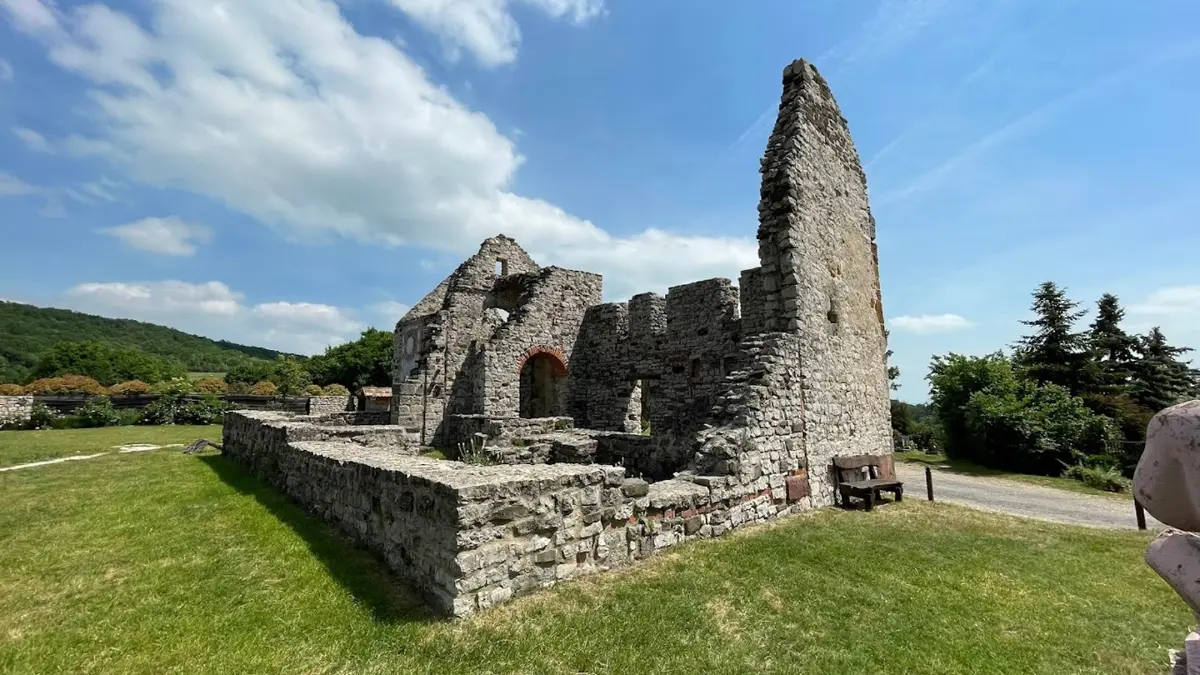
Just past the next bend, behind the Lutheran church with its thick walls and loopholes for windows, lie the ruins of the medieval St. Peter’s Church. This is one of the oldest churches in Dörgicse. The earliest parts date from the first half of the 12th century, and the walls of a Roman tomb were reused during its construction. It was subsequently extended on several occasions, therefore architectural traces from different centuries can be spotted amongst the ruins.
A settlement once stood around the medieval church. By the 19th century, the building had fallen into ruin, and for a time it was even used to store hay. Archaeological excavations began in 1959, and the restoration work was completed within a year.
Forest paths and limestone cliffs in the Kű Valley
If you’d like to visit the third church ruin, as well, you can continue the walk through the Kű Valley. After passing through the village streets, the path leads into the forest, where you’ll walk between cliffs of Füred limestone, some of which are around ten metres high. Several small caves and hollows have formed in the rock faces, and the area is also a popular training spot for rock climbers. The Kű Valley is what is known as a dry valley, meaning that no permanent water flows through it nowadays.
On emerging from the valley, near the road between Dörgicse and Vászoly, we can also stop off at an old Baroque stone bridge. Local tradition long held the bridge to be of Roman origin; however, according to heritage records, it was built in the 18th century.
From here, it is just a short detour to the ruins of St. Nicholas’s Church in Kisdörgicse. Turning off the yellow trail, a short, unmarked path leads to the small church standing on the site of the former village of Kisdörgicse. The Árpád-era building is thought to have been constructed in the second half of the 12th century and was consecrated in honour of St. Nicholas. The church was abandoned by the end of the 16th century, and the ruins were restored using reconstructive methods in 2022.
Panorama from Halom Hill
If you’re not too tired yet, it’s worth heading towards Halom Hill. The 399-metre-high hill is one of the highest points in the area, and at its summit stands the Kossuth Lookout Tower, built in 1962. The name is no coincidence: Lajos Kossuth’s wife and children took refuge in nearby Mencshely in 1849, which is why the lookout tower was named after Kossuth.
On a clear day, from the lookout tower, you can see from Tihany all the way to Badacsony, taking in the characteristic landscapes and hills of the Balaton Uplands, including Hegyestű, Csobánc and Szent György-hegy (St. George Hill). The panorama is particularly beautiful in autumn, when the vineyards and forests take on their autumnal colours.
Dörgicse is not only interesting for its ruined churches and hiking trails. The area forms part of the Balatonfüred–Csopak wine region, and amongst the vineyards you can sample local wines at several wineries.